LATEST POSTS.

Get featured
on Skene!

Maranda DeBusk: The Art of Collaborative Transformation.

source: Pableaux Johnson

Powered by collaboration, curiosity, and a deep commitment to human connection, Maranda DeBusk is a seasoned lighting and media designer whose design work goes beyond just lighting a stage—they spark dialogue, invite presence, and create space for transformation. Whether working on a large-scale musical or an intimate community-based project, Maranda’s process is rooted in trust, observation, and the belief that the most meaningful work happens when artists truly listen to each other.

Refusing to be boxed in by convention, they embrace an interdisciplinary approach that values learning, exploration, and the unexpected. They see inspiration everywhere—in a passing shadow, in the rhythm of a song, in the way someone moves through space—and weaves those threads into dynamic, emotionally resonant designs.

Maranda’s story is one of artistic fluidity and fearless collaboration, where every project becomes a conversation and every cue carries intention. Their work reminds us that theatre is not just a product but a process, a living exchange between people, place, and purpose. We’re thrilled to feature Maranda in this new edition of PROFILES.

advertising
partner content

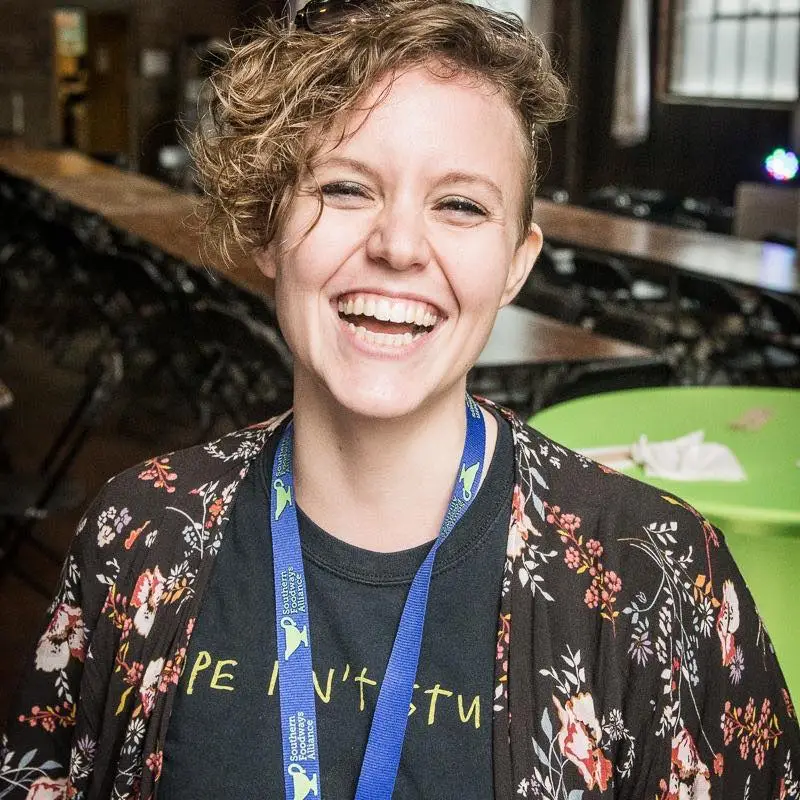
Maranda DeBusk

they/them
Lighting & Media Designer
United States
K2, source: Casey Gardner Ford

1. What sparked your interest as an artist and how has that spark evolved over time?

Community. We moved around a lot when I was in middle/high school. I quickly learned that the students who were into theatre, music, and creative writing were the ones who were most welcoming to the new kid. I didn’t realize it at the time, but I was learning that artists are my people.

Then, in 2013, I was introduced to the idea of theatre as community engagement. Up until this point, I had participated almost exclusively in the typical small regional American style of theatre. Suddenly, I was living in a place I had never been before, learning how to experience community outside of the proscenium, and making theatre to tell personal and communal stories rather than generate box office receipts. First, theatre gave me community. Then it taught me how to make community.

2. Can you share the story behind one of your favorite works and what it means to you?

Truthfully, I don’t think I have a favorite work. I love the community engagement work that I do because I can see its purpose and impact. I love the big musicals because combining lights and music feels so satisfying. I love travelling to different places because it means I get to see different groups of friends on every show. I have shows that I enjoy watching more than others. I have shows that I think I did great work on, and shows I think I did the best I could given the circumstances. I have companies that I love working for, and places I love to return to, and collaborators I love to be on teams with. And it’s the sum total of all of them that is my favorite. I love all of the trees because together they make the forest, and the forest is beautiful.

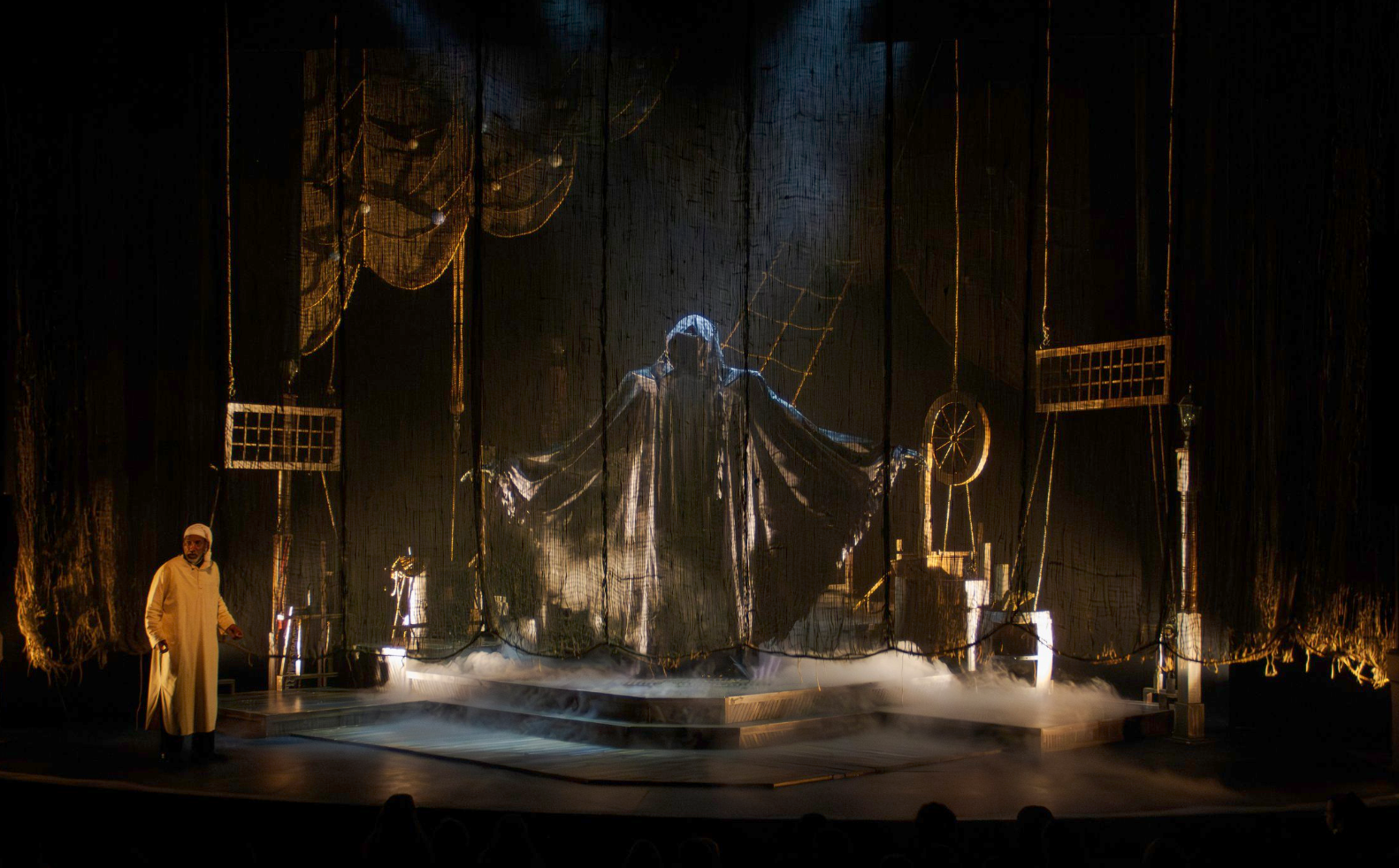
A Merry (Little) Christmas Carol, source: Sam Flynn

3. What is your creative process—do you follow a routine or does inspiration come spontaneously?

I like to think that the inspiration strikes because of the routine. Like muscle memory. I’ll start with the input – a text, a piece of music, choreography, a prompt, whatever – and then I start a series of associations. This feels like… And also like… And also like… until I’ve got all sorts of avenues to wander down. So I do. And as I research and sit with the work, I start to look for how those avenues relate to each other. What do a metallic tang, isolation, and offset angles have in common? And then I let that sit. I’ve filled myself with content and analysis and ideas, and then I wait for it to finish synthesizing them all. And one day, I’ll look up and have that a-ha! moment – the key to how it all fits together. Inspiration is the product of input and timing.

4. What has been your biggest challenge as an artist and how did it influence your growth?

For the longest time, I thought I needed to fit into a category. I thought that in order to be successful in my work that I needed to choose a single direction and follow it unwaveringly. But every time I tried, I failed. I like knowing lots of things. I love learning. I love approaching work from many different perspectives. And because I kept failing at narrowing my focus, I often felt like I didn’t fit in. Other people at my level were doing things that were more technically sophisticated, using software that I didn’t know, following some set of standards that I had never seen. I chalked it up to my lack of focus. If I just tried harder, I could be like them.

The secret was that I didn’t need to be them. I needed to be me. The work I wanted to make and the people I wanted to make it with were looking for me (not me pretending to be everyone else). When I realized that, everything changed. Outside interests aren’t distractions, they’re inspiration. Maybe I don’t know exactly how to use a particular piece of technology, but I’ve practiced learning lots of things, and I bet I could learn that too. Working in multiple disciplines helps me to understand my collaborators better. My lack of focus is not a detriment – it’s an asset.

source: Maranda DeBusk

5. Who or what inspires you the most, and how is that reflected in your work?

Everything is inspiration – the way the light comes in through the blinds in the morning, the TV show I binged last night, the person dancing with abandon in their car to a song I can’t hear from the next lane. Life is inspiring when you remember to stay present. And I think that shows up in my work all the time. If I just finished an excellent book, and it’s still swimming around in my head when I put in a new script – that script is getting filtered through the same thought soup as the book. Whether it’s in the structure or the references or the tempo and rhythm or the complexity of character – whatever part of life is closest to me in the moment contributes to the art I’m making at the same time.

6. What do you think is the most exciting thing happening in your field right now?

I’m so excited to see more and more work that is outside of the norm. Especially in the States, where so much of what we do is budget driven, folks are often hesitant to try new things. It can be a risky investment when the difference between success and failure is whether the theatre stays open or not. But the future of the artform is not going to be a rigid adherence to traditional models. I have a friend who was producing entirely staged productions inside of a MMORPG (massively multiplayer online role playing game).

Experiential work. Community engaged work. Using theatrical tools for potentially non-theatrical applications. The opportunities are endless if we get ourselves out of our boxes. The world is outside of the Stage Door – rather than sitting in the dark waiting for the world to come to us, let’s go out there and meet it.

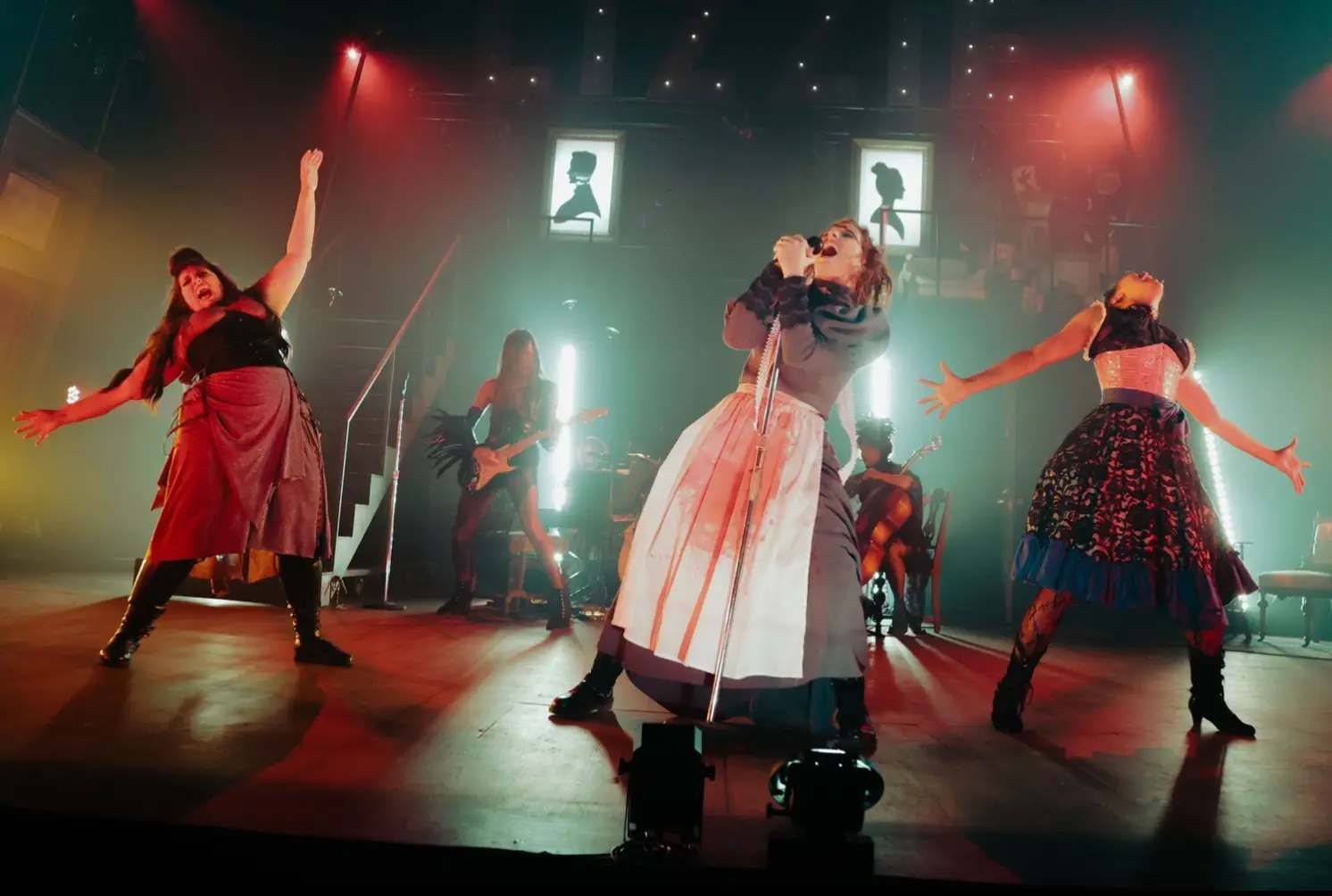
Lizzie, source: Casey Gardner Ford

7. What advice would you give to artists or creatives who are just starting out?

This industry will be what you make it. The larger the ship, the longer it takes to turn it around. But that doesn’t mean you stop turning the wheel. And have fun while doing it.

8. How do you hope your work will connect with people or leave an impact?

Someone who is experiencing the work like an audience member – I hope that they walk away with a feeling. If they leave the theatre hopeful or uplifted or sad or contemplative or blazing with rage at the injustices around us – light helped to get them there. Light takes us to meaning by bypassing the logic and going straight for the sensation. I hope folks feel, and investigate that feeling, and then go out and find more people to talk to about it or to do something about it. Chain reaction.

For collaborators – I hope that they walk away with a sense of possibility. I once heard someone say that we change lives, but we don’t save lives the way a surgeon or a rocket scientist might. Yet we often whip ourselves up into a place of stress and aggression within our small sphere of influence. That stress comes from a place of anger when our expectations don’t match our reality. But we are infinitely creative beings – if we can’t change our reality, then we can change our expectations. Not lower. Change. I can light a show beautifully with 600 stage lights. I can also light a show beautifully with 6 clip lights from the hardware store. Neither show is better or worse. They’re just different. I hope that when I leave a process, that rather than getting frustrated at what isn’t, folks remember to get excited about what can be.

Violet, source: Maranda DeBusk

Support artists—share this

More like this, twice a month.

Off-Book is the Skene newsletter for artists and makers. Profiles, opportunities, and editorials, free. New subscribers also receive the 2026 Performing Arts Survival Guide.

About the Author

Leave a Reply

Your email address will not be published. Required fields are marked *

Abingdon Theatre Company - Season 34

RELATED POSTS.

FREE FOR ARTISTS

Get the 2026 Performing Arts Survival Guide.

Practical career guidance for performing arts artists and makers. Take it with you.