

Érick Ismael: A Duel to the Death.
Mexican singer Érick Ismael on the discipline of the stage, training intuition,
Mexican singer Érick Ismael on the discipline of the stage, training intuition,

Chinese scenic designer and USITT YDMT award recipient whose work builds worlds
Roberto Mosqueda cuenta cómo escribió La Leyenda del Ermitaño a los 40,

A props master’s field-tested rules for collaboration in the theatre, from doing

Emerging lighting designer whose work on Broadway and beyond is guided by

Érick Ismael calls being an artist the best and worst thing that ever happened to him, and it began with almost no magic at all. Walking a high school hallway with his best friend, hunting for an easy elective, the two of them were called into a classroom, and that was the door into theatre. He signed up thinking it would be simple. He left having learned the lesson that marked him deepest: talent was never going to be enough.
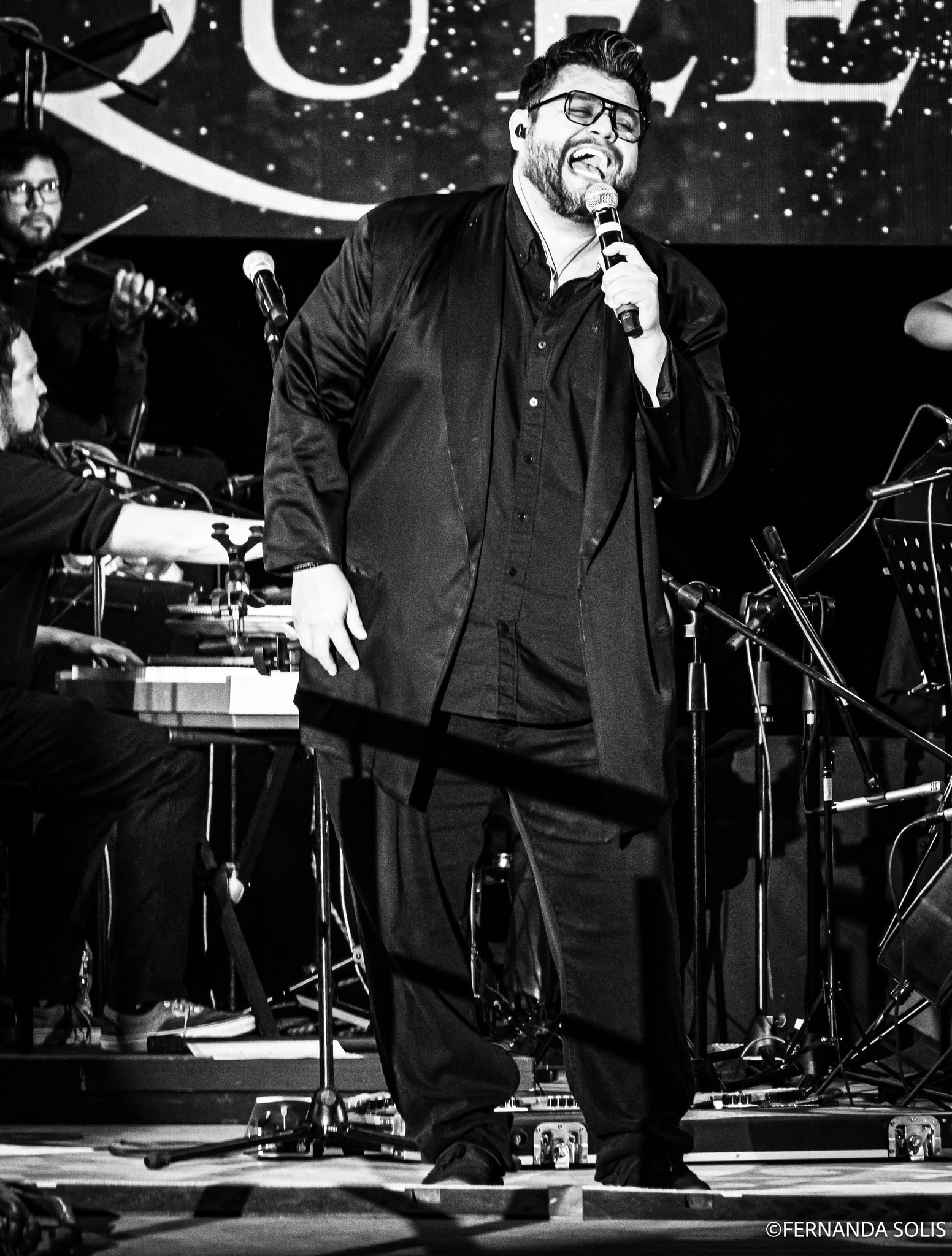
Everything since has run on that conviction. A singer, actor, director, and filmmaker trained in experimental theatre and musical revue, he treats the stage as a duel to the death, believing you must be worthy of standing on it, that without risk and preparation you may as well go to karaoke. He pushes this furthest as the vocalist of Gnosys, his progressive metal project. He does not wait for inspiration; he trains his intuition, filling a library of experience until the work can draw from it. He has fought to stay true to his vocation, and to make peace with being many things in a world that wants one label. His measure of impact is a single person, changed, in this edition of PROFILES.

Ser artista es lo mejor/peor que me ha pasado en la vida. No me imagino viviendo de otra manera. Y, curiosamente, todo comenzó de una forma muy poco mágica.
Iba caminando por un pasillo de mi preparatoria con mi mejor amigo. Buscábamos alguna actividad para cumplir con los créditos de la escuela cuando, desde un salón, Josafath nos gritó: “¡Ustedes dos, vengan!”. Y así conocí el teatro.
Nos inscribimos porque pensamos que sería fácil. Terminamos siendo alumnos de un maestro obsesionado con perfeccionar su trabajo, y creo que esa fue la huella más profunda que dejó en mí: entender que el talento no era suficiente.
A partir de ahí exploré el canto, la actuación, la dirección y la escritura, pero siempre bajo la misma premisa: tratar de volverme cada vez más digno técnicamente de aquello que quería hacer. Cambió la disciplina, cambió el escenario, pero esa obsesión nunca se fue.
Being an artist is the best/worst thing that has happened to me in life. I can’t imagine living any other way. And, curiously, it all began in a very unmagical way.
I was walking down a hallway in my high school with my best friend. We were looking for some activity to fulfill our school credits when, from a classroom, Josafath shouted at us: “You two, come here!” And that’s how I discovered theatre.
We signed up because we thought it would be easy. We ended up being students of a teacher obsessed with perfecting his work, and I think that was the deepest mark he left on me: understanding that talent was not enough.
From there I explored singing, acting, directing, and writing, but always under the same premise: trying to become more and more technically worthy of what I wanted to do. The discipline changed, the stage changed, but that obsession never left.
Soy cantante, actor, director y escritor de cine, y también he producido teatro. Pero mi formación sobre el escenario viene principalmente del teatro experimental y la revista musical. De ambos me quedó una idea que después llevé a cada show como cantante: estar en el escenario es un duelo a muerte.
Me enseñaron que hay que ser digno de estar ahí. Que si vas a subirte sin riesgo, preparación y la intención de hacer algo extraordinario, quizá sea mejor ir a un karaoke.
Uno de los lugares donde más he podido llevar esa idea al extremo es Gnosys, mi proyecto de metal progresivo. Soy el vocalista de una banda formada por un grupo de enfermos que sólo piensan en tocar cada vez mejor, componer música cada vez más completa y exigirnos más de lo razonable.
En otros tiempos quizá esa obsesión habría sido un defecto. Hoy tiene un valor diferente: vivimos en una época en que una máquina puede generar música en segundos, pero todavía no puede subir al escenario por nosotros.
I’m a singer, actor, director, and filmmaker, and I’ve also produced theatre. But my training on the stage comes mainly from experimental theatre and musical revue. From both, I kept an idea that I later carried into every show as a singer: being on stage is a duel to the death.
They taught me that you have to be worthy of being there. That if you’re going to get up there without risk, preparation, and the intention of doing something extraordinary, maybe it’s better to go to a karaoke bar.
One of the places where I’ve been able to take that idea to the extreme is Gnosys, my progressive metal project. I’m the vocalist of a band made up of a group of sick people who only think about playing better and better, composing more and more complete music, and demanding more than is reasonable from ourselves.
In other times that obsession might have been a flaw. Today it has a different value: we live in an era where a machine can generate music in seconds, but it still can’t get on stage for us.

Para crear algo, hay que ponerse a crear algo. Para escribir, hay que sentarse a escribir. Me enseñaron que un show se prepara con cien ensayos para que el ciento uno no salga tan mal.
La repetición hasta el hartazgo es la clave. Cuando llega el estreno, tienes tu cue y toca entrar en acción, agradeces las cien veces que lo hiciste antes. No me imagino el escenario de otra manera. No importa si es un espectáculo pequeño ni el recinto: hay que ensayar.
Curiosamente, mis momentos más creativos (componiendo un álbum o escribiendo una historia) también han ocurrido cuando me he obsesionado con algo. No hay demasiada magia detrás: hay que dedicarle horas hasta que empiezan a suceder cosas interesantes.
Y en estos tiempos agregaría algo mucho menos romántico: desaparecer de las redes sociales por un rato se ha vuelto una parte fundamental de mi proceso creativo.
To create something, you have to start creating something. To write, you have to sit down and write. They taught me that a show is prepared with a hundred rehearsals so that the hundred-and-first doesn’t come out too badly.
Repetition to the point of exhaustion is the key. When opening night arrives, you have your cue and it’s time to spring into action, and you’re grateful for the hundred times you did it before. I can’t imagine the stage any other way. It doesn’t matter if it’s a small show or the venue: you have to rehearse.
Curiously, my most creative moments (composing an album or writing a story) have also happened when I’ve become obsessed with something. There isn’t much magic behind it: you have to devote hours to it until interesting things start to happen.
And in these times I would add something much less romantic: disappearing from social media for a while has become a fundamental part of my creative process.
Get Off-Book, Skene’s free newsletter for artists and makers—plus the 2026 Performing Arts Survival Guide.
Creo que hay dos guerras distintas.
La externa ha sido mantenerme fiel a mi vocación. En el camino han aparecido oportunidades económicamente interesantes que he rechazado porque no se alineaban con mis intereses artísticos. Suena heroico contado así, pero en realidad ha sido una lucha de años: encontrar la manera de hacer cosas que me den tranquilidad económica sin truncar mi vida artística.
La otra guerra es interna: ¿Qué soy? ¿Cantante, director de cine, productor, actor, administrador financiero, editor? ¿Todo? ¿Nada?
Siempre he sido “versátil”, y descubrí que la versatilidad no necesariamente encaja bien en un mundo que necesita ponerte una etiqueta. Incluso en esta entrevista tiene más sentido hablar de mi trayectoria como performer que de mi trabajo como cineasta o compositor; del mismo modo, cuando hablo de cine, rara vez importa lo que hago sobre un escenario.
Por supuesto que todas esas disciplinas se alimentan entre sí. Pero cuando llega el momento de elegir proyectos, construir una carrera y, simplemente, sobrevivir, esa ambigüedad también genera conflicto.
I think there are two different wars.
The external one has been staying true to my vocation. Along the way, economically interesting opportunities have appeared that I’ve turned down because they didn’t align with my artistic interests. It sounds heroic told this way, but really it’s been a years-long struggle: finding a way to do things that give me financial peace without cutting my artistic life short.
The other war is internal: What am I? A singer, a filmmaker, a producer, an actor, a financial administrator, an editor? Everything? Nothing?
I’ve always been “versatile,” and I discovered that versatility doesn’t necessarily fit well in a world that needs to put a label on you. Even in this interview it makes more sense to talk about my career as a performer than about my work as a filmmaker or composer; in the same way, when I talk about film, what I do on a stage rarely matters.
Of course all of those disciplines feed one another. But when the time comes to choose projects, build a career, and simply survive, that ambiguity also creates conflict.

Para mí, el misterio de la inspiración tiene una explicación neurológica. No intento llamar a la inspiración, sino entrenar la intuición.
Si tengo que montar un show donde voy a cantar progresivo, me pongo de pie en el salón de ensayos, pongo la música y comienzo a trabajar con el cuerpo. A partir de ahí confío en que mi cerebro haga asociaciones: que recurra a patrones, recuerdos, referencias y habilidades que he ido acumulando y automatizando durante años.
Gran parte de lo que llamamos intuición funciona así: no necesariamente podemos explicar de dónde salió una decisión, pero detrás existe una enorme biblioteca de experiencias y una capacidad entrenada para reconocer patrones y relacionarlos.
Entonces mi trabajo ocurre mucho antes de necesitar una idea: consiste en llenar esa biblioteca. Ver, escuchar, leer, estudiar, ensayar, equivocarme. Y después entrenar la intuición para que sepa buscar dentro de ella.
No espero a que llegue la inspiración. Intento darle a mi cerebro suficiente material para que tenga de dónde sacarla.
For me, the mystery of inspiration has a neurological explanation. I don’t try to summon inspiration; I try to train intuition.
If I have to stage a show where I’m going to sing progressive, I stand up in the rehearsal room, put on the music, and start working with the body. From there I trust my brain to make associations: to draw on patterns, memories, references, and skills I’ve been accumulating and automating over years.
Much of what we call intuition works like this: we can’t necessarily explain where a decision came from, but behind it there’s an enormous library of experiences and a trained capacity to recognize patterns and relate them.
So my work happens long before I need an idea: it consists of filling that library. Watching, listening, reading, studying, rehearsing, making mistakes. And then training intuition so it knows how to search within it.
I don’t wait for inspiration to arrive. I try to give my brain enough material so that it has somewhere to draw it from.
La inteligencia artificial. Está reduciendo brutalmente las brechas tecnológicas para crear arte y, paradójicamente, creo que eso hará todavía más grande la brecha del live performance.
No es la primera vez que sucede. El sintetizador, el MIDI y después las librerías virtuales hicieron posible producir una orquesta sin contratar una orquesta. Un violinista pudo perder trabajo en una sesión de grabación, pero nadie inventó con ello una manera de sustituir lo que significa verlo tocar extraordinariamente bien frente a ti.
Ahora está ocurriendo algo parecido, pero simultáneamente en casi todas las disciplinas. Cada vez será más fácil generar una canción, una voz, una imagen o una película con una barrera técnica mucho menor. Me parece fascinante.
Y al mismo tiempo, hay algo que se vuelve relativamente más escaso: hacerlo de verdad, en ese momento, frente a alguien.
Puedes generar una voz perfecta. Pero todavía tienes que subirte al escenario, abrir la boca y cantar.
Artificial intelligence. It’s brutally shrinking the technological gaps for creating art and, paradoxically, I think that will make the gap of live performance even bigger.
It’s not the first time this has happened. The synthesizer, MIDI, and later virtual libraries made it possible to produce an orchestra without hiring an orchestra. A violinist may have lost work at a recording session, but no one thereby invented a way to replace what it means to see them play extraordinarily well in front of you.
Now something similar is happening, but simultaneously in almost every discipline. It will be easier and easier to generate a song, a voice, an image, or a film with a much lower technical barrier. I find it fascinating.
And at the same time, something becomes relatively scarcer: doing it for real, in that moment, in front of someone.
You can generate a perfect voice. But you still have to get on stage, open your mouth, and sing.
Voy a suponer que alguien realmente me pide este consejo, porque es difícil ser genérico. Se me ocurren dos cosas.
Primero: ser reconocido importa. Hay que abrazar esa premisa desde el enfoque filosófico que uno prefiera; Hegel sería mi elección. Como artistas solemos decir que nuestro trabajo responde a intenciones más elevadas y que buscar reconocimiento es una especie de gran villano. No estoy diciendo que haya que abrazar la arrogancia, sino aceptar que somos seres humanos y que ser vistos, reconocidos y aplaudidos produce satisfacción. Hay que aprender a atesorarla sin depender de ella.
Segundo: si tienes un mensaje que transmitir, quizá sea mejor hacer un meme y volverlo viral, o dar una entrevista a SKENE. El arte ya está enviando innumerables señales al público. Imponerle además la intención fría y apostólica de enseñar una lección puede contaminar una obra.
Haz el trabajo. Hazlo lo mejor que puedas. Y después deja que hable por sí solo.
I’m going to assume that someone is really asking me for this advice, because it’s hard to be generic. Two things come to mind.
First: being recognized matters. You have to embrace that premise from whatever philosophical angle you prefer; Hegel would be my choice. As artists we tend to say that our work answers to higher intentions and that seeking recognition is a kind of great villain. I’m not saying you should embrace arrogance, but rather accept that we’re human beings and that being seen, recognized, and applauded produces satisfaction. You have to learn to treasure it without depending on it.
Second: if you have a message to convey, maybe it’s better to make a meme and make it go viral, or give an interview to SKENE. Art is already sending countless signals to the audience. Imposing on top of that the cold, apostolic intention of teaching a lesson can contaminate a work.
Do the work. Do it as well as you can. And then let it speak for itself.
Estamos aquí de paso. Entonces sólo resta pasarla bien y amar a los demás. A algunos nos toca intentar hacerlo desde el arte. No importa el número de personas, los likes ni el tamaño del recinto. Si un par de personas, además de tu familia, te quieren, te entienden y quieren ir a verte a un recital, ya es suficiente para decir que dejaste algún impacto.
Porque, ¿cuántas visualizaciones hacen falta para considerar que generaste impacto? ¿Cuántas personas tiene que haber en un recinto?
Yo prefiero pensar en una sola. Si alguien sale de uno de mis shows diciendo: “esto me hizo pensar en mi vida”, eso… uff, es gloria.
Y si además alguien dice: “nunca había visto algo así” o “nadie lo hace como él”, ya es un extra.
Todo lo demás importa mucho menos.
We’re here just passing through. So all that’s left is to have a good time and love others. Some of us happen to try to do it through art. The number of people doesn’t matter, nor the likes, nor the size of the venue. If a couple of people, besides your family, love you, understand you, and want to go see you at a recital, that’s already enough to say you left some impact.
Because how many views does it take to consider that you generated impact? How many people have to be in a venue?
I prefer to think of a single one. If someone leaves one of my shows saying, “this made me think about my life,” that… oof, that’s glory.
And if on top of that someone says, “I’d never seen anything like it” or “nobody does it like him,” that’s a bonus.
Everything else matters much less.

Share this story
We use cookies to optimize our website and our service functionalities.
Practical career guidance for performing arts artists and makers. Take it with you.