
LATEST POSTS.

Get featured
on Skene!

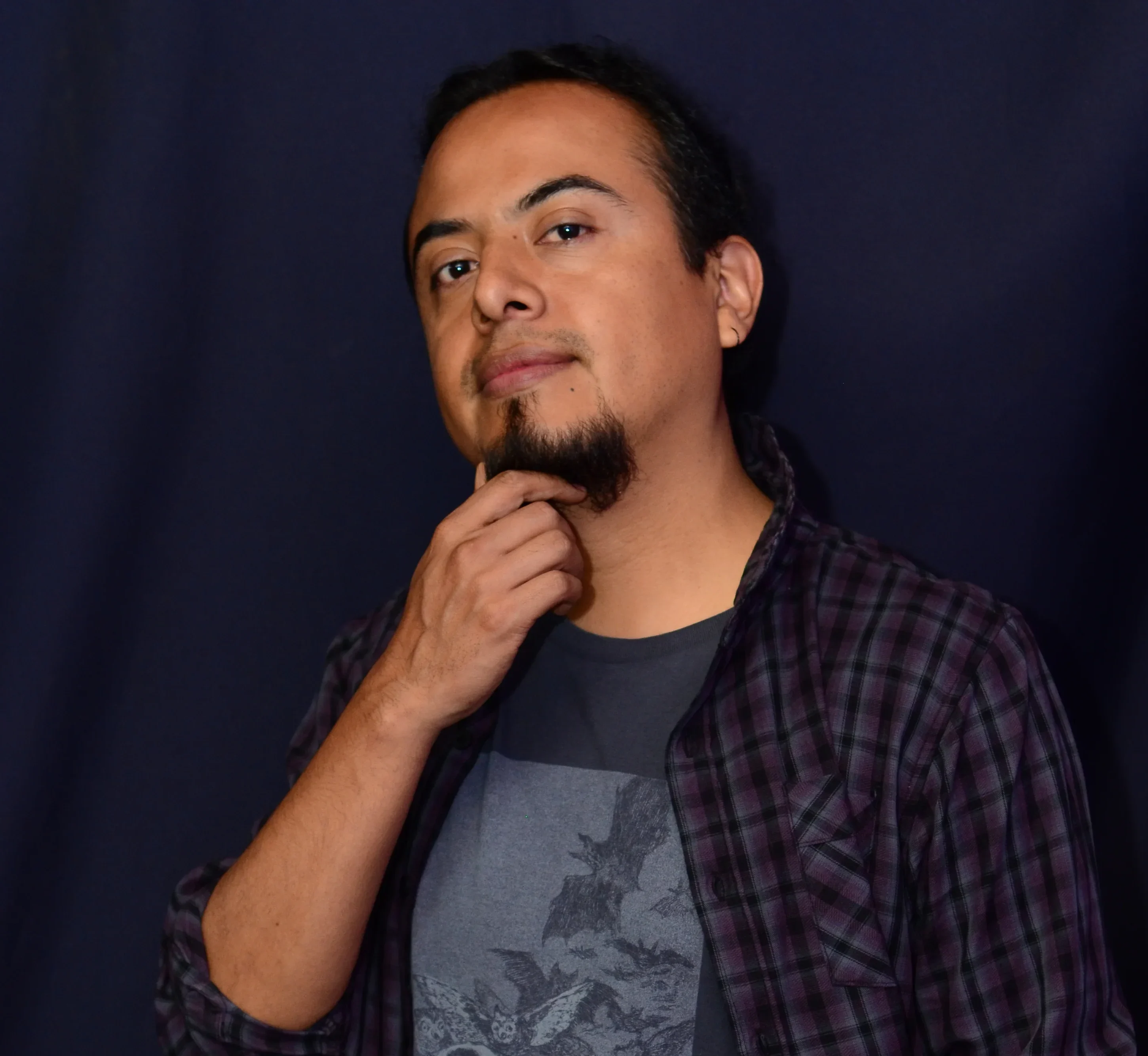
Edwin Tovar: Bach in My Mind.

source: Edwin Tovar.

Edwin Tovar did not set out to become a composer. He set out to play guitar, then discovered the drums, then found his way into a conservatory, and then realized that none of those instruments were quite the point. The point was sound itself, in all the forms it could take.

His practice now spans classical performance, contemporary composition, sound design for television, film, and theatre, and the percussion ensemble RAGA, which he has been directing for over twenty-five years. Bach lives somewhere in his subconscious, surfacing in the rhythmic polyphony that runs through his work like a watermark. Arab and Balkan rhythms surface too, alongside whatever the next project demands.

He does not wait for inspiration. He trusts that it arrives.

Edwin Tovar is a composer and percussionist who has spent a lifetime learning to get out of the way of the music, in this edition of PROFILES.

advertising
partner content

Edwin Tovar

he/hem
Music Composer
Mexico
RAGA, source: Edwin Tovar.

1. ¿Qué despertó tu interés como artista y cómo ha evolucionado esa chispa con el tiempo?

Desde niño tuve contacto con la música a través de mis padres quienes siempre escuchaban música todo el tiempo, desde los Beatles hasta Bach pasando por Carl Orff Vangelis y Kitaro Tenco entre otros, de ahí nació en mí el interés por aprender a tocar un instrumento musical que desde los 10 años comencé a tocar la guitarra, posteriormente y con la ayuda de amigos de la secundaria forme mi primera banda que curiosamente me hizo darme cuenta que mi instrumento no era la guitarra sino la batería (las percusiones) fue ahí cuando comencé mis estudios de batería en forma particular y de ahí mi maestro me motivo a realizar mi postulación para entrar a una escuela profesional de musica, es entonces que entro a las Escuela Superior de Música del INBAL y ahí realizo la licenciatura en percusiones.

Actualmente continuo trabajando y viviendo de la musica en múltiples formas estilos y disciplinas ya que a lo largos de estos años he encontrado que mi forma de expresión va desde la musica clásica, la música contemporánea, la música popular, el diseño sonoro en televisión, cine, teatro y artes escénicas en general, mi trabajo como ejecutante y compositor se nutre en cada proyecto, concierto y trabajo en el que tengo la fortuna de participar.

1. What sparked your interest as an artist and how has that spark evolved over time?

From childhood I had contact with music through my parents, who were always listening to it, from the Beatles to Bach, passing through Carl Orff, Vangelis, Kitaro, and Tenco, among others. From that environment grew my interest in learning to play an instrument, and at ten years old I started playing guitar. Later, with the help of friends from middle school, I formed my first band, which curiously made me realize that my instrument was not the guitar but the drums. That is when I began studying percussion formally with a private teacher, and my teacher encouraged me to apply to a professional music school. I was accepted into the Escuela Superior de Música of INBAL, where I completed my degree in percussion.

Today I continue working and living through music in multiple forms, styles, and disciplines. Over the years I have found that my range of expression spans classical music, contemporary music, popular music, and sound design for television, film, theatre, and the performing arts in general. My work as a performer and composer is nourished by every project, concert, and collaboration I am fortunate enough to be part of.

2. ¿Puedes compartir la historia detrás de una de tus obras favoritas y lo que significa para ti?

Una de mis piezas favoritas se titula Luces Interiores y es una obra que escribí hace mas de 25 años, para uno de mis proyectos que a la fecha tengo el gusto de seguir dirigiendo y participando, el grupo de percusiones RAGA fue el pretexto para estrenarme como compositor de música contemporánea.

Esta obra es una pieza para trío de percusiones en donde la marimba de concierto es la que lleva la parte principal melódica y los tambores, las congas, los woodblocks además de diversos platos, gongs, crótalos son acompañantes de esta pieza inspirada en ritmos árabes balcánicos, esta pieza es muy significativa ya que es la primera pieza que escribí y que tuve la fortuna de tocar en distintos festivales y foros del país, además de poder grabarla en el segundo disco del grupo RAGA, ahí queda inmortalizada y queda el registro auditivo de esta pieza para ensamble de percusiones.

2. Can you share the story behind one of your favorite works and what it means to you?

One of my favorite pieces is titled Luces Interiores, a work I wrote more than twenty-five years ago for one of my projects that I still have the pleasure of directing and performing with today: the percussion ensemble RAGA. It was the occasion that introduced me as a composer of contemporary music.

The piece is written for a percussion trio in which the concert marimba carries the principal melodic line, accompanied by drums, congas, woodblocks, cymbals, gongs, and crotales, all inspired by Arab and Balkan rhythms. It is deeply meaningful to me because it was the first piece I ever wrote, and I had the fortune of performing it at various festivals and venues across the country. It was later recorded on RAGA’s second album, where it lives on as a permanent auditory record of this work for percussion ensemble.

RAGA, source: Edwin Tovar.

3. ¿Cómo es tu proceso creativo—sigues una rutina o la inspiración surge espontáneamente?

La inspiración siempre llega espontáneamente, aunque hay ciertos procesos en que se tiene que pensar y diseñar, hacer bocetos y pruebas, pero normalmente en mi caso siempre la música va llegando de forma espontanea y dinámica.

3. What is your creative process—do you follow a routine or does inspiration come spontaneously?

Inspiration always arrives spontaneously. There are certain processes that require thinking and planning, making sketches and tests, but in my case music almost always comes in a spontaneous and dynamic way.

4. ¿Cuál ha sido tu mayor desafío como artista y cómo influyó en tu crecimiento?

Los desafíos normales de la música, una disciplina desafiante por naturaleza, en la carrera aprendes a que tienes que estudiar diario muchas horas, el dominio de la técnica para ejecutar un instrumento siempre te exige muchas horas de trabajo y dedicación, yo digo que la carrera de ejecutante musical profesional es como la de un atleta de alto rendimiento en donde la preparación diaria de tu mente y cuerpo es vital para el dominio de tu instrumento, no es una carrera fácil ya que sacrificas tiempo de tu vida por estar en un salón estudiando, practicando no es sencillo, pero eso, la disciplina, es lo que va moldeando tu crecimiento personal ya que aprendes valores que puedes aplicar a tu vida, disciplina, constancia, memorización, ejercicio, orden, sensibilidad, entre otras cosas son las que obtienes al dedicar tu vida a la música.

4. What has been your biggest challenge as an artist and how did it influence your growth?

The ordinary challenges of music, a demanding discipline by nature. In this field you learn early that you have to study many hours every day. Mastering the technique required to play an instrument demands enormous time and dedication. I often say that the career of a professional musician is like that of a high-performance athlete: the daily preparation of your mind and body is essential to mastering your instrument. It is not an easy path. You sacrifice time in your life to be in a room studying and practicing. But that discipline is what shapes your personal growth. You develop values that carry into every part of your life: discipline, consistency, memorization, physical conditioning, sensitivity. These are the things you gain when you dedicate your life to music.

5. ¿Quién o qué te inspira más y cómo se refleja esa inspiración en tu trabajo?

Mi mayor inspiración es Johann Sebastian Bach compositor Alemán del periodo barroco, desde niño fui influenciado por su maravillosa música, y quedo ahí, en mi subconsciente, a la fecha hay muchas referencias en mi creación de este compositor, polifonía rítmica es la que aparece mucho en mi trabajo.

5. Who or what inspires you the most, and how is that reflected in your work?

My greatest inspiration is Johann Sebastian Bach, the German composer of the Baroque period. From childhood I was drawn to his extraordinary music, and it settled somewhere in my subconscious. To this day, many references to his work appear in my compositions. Rhythmic polyphony in particular surfaces frequently throughout my work.

RAGA, source: Edwin Tovar.

6. ¿Qué crees que es lo más emocionante que está ocurriendo en tu campo en este momento?

Mucha versatilidad artísitca, mucha innovación, actualmente en tiempos de Inteligencia Artificial y desarrollo tecnológico se pone interesante la creación e interpretación musical, me emociona tener herramientas tecnológicas que te proveen de posibilidades ilimitadas para poder expresar ideas por más extrañas o increíbles que se puedan creer, pensar y ejecutar.

6. What do you think is the most exciting thing happening in your field right now?

Tremendous artistic versatility and innovation. In the current era of artificial intelligence and technological development, musical creation and interpretation are entering exciting new territory. What excites me is having technological tools that offer virtually unlimited possibilities for expressing ideas, no matter how strange or unexpected they might seem to think or execute.

7. ¿Qué consejo le darías a artistas o creativos que están empezando?

Que sean constantes, honestos y congruentes con sus ideales y creencias, gustos e intereses, que dejen de lado el ego y pongan a disposición del arte, de la música su naturaleza creativa más pura.

7. What advice would you give to artists or creatives who are just starting out?

Be consistent, honest, and true to your ideals, beliefs, tastes, and interests. Set the ego aside and place your purest creative nature at the service of art, at the service of music.

8. ¿Cómo esperas que tu trabajo conecte con las personas o deje un impacto?

A través de la empatía, de la sensibilidad, la imaginación, la sorpresa, a través de lo lúdico, y con la fuerza de la naturaleza sonora poder llegar y tocar a las personas de una manera humana.

8. How do you hope your work will connect with people or leave an impact?

Through empathy, sensitivity, imagination, and surprise. Through play, and through the force of sound itself, I hope to reach and move people in a genuinely human way.

Support artists—share this

More like this, twice a month.

Off-Book is the Skene newsletter for artists and makers. Profiles, opportunities, and editorials, free. New subscribers also receive the 2026 Performing Arts Survival Guide.

About the Author

Leave a Reply

Your email address will not be published. Required fields are marked *

Abingdon Theatre Company - Season 34
advertising
Abingdon Theatre Company - Season 34

RELATED POSTS.

FREE FOR ARTISTS

Get the 2026 Performing Arts Survival Guide.

Practical career guidance for performing arts artists and makers. Take it with you.