
Latest posts.

Jack Golden: When a Moment Sings.

Scenic designer Jack Golden reflects on collaboration, instinct, and making strange and meaningful theatre through design and teaching.

Get Featured or Publish with Skene!

Christopher Scott Murillo: Spaces Worth Believing In.

source: DUPLA/Jason Sullivan.

Christopher Scott Murillo grew up a few freeway exits from Disneyland, and he will tell you that matters. As a kid he was always doodling, sketching, building things out of Legos. The regular trips to the park gave those instincts a destination: immersive worlds, live storytelling, the particular magic of a space designed to make you believe something. He did not know yet what to call what he wanted to do. He just knew he wanted to be inside it.

That intuition carried him from high school studios to UCLA, from regional theatre to television production design, from UCSD’s MFA program to the classroom at UC Riverside, where he now works as both educator and professional designer. His path has not been a straight line so much as a deepening: each new context adding a layer to how he understands what design is for and who it is for.

His answer to that question is the same one it has always been. The audience. The ever-changing, unpredictable, demanding audience that terrifies him a little and pulls him back every time he considers walking away.

Christopher Scott Murillo is a scenic designer and educator who has spent a career making spaces worth believing in, in this edition of PROFILES.

advertising
partner content

Christopher Scott Murillo

he/him
Scenic Designer
United States
Cinderella: A Salsa Fairy Tale, source: Robert Huskey.

1. What sparked your interest as an artist and how has that spark evolved over time?

I grew up in Santa Ana, California, just a few freeway exits from Disneyland. As a kid, I was always doodling, sketching, and building things out of Legos, which eventually led me to study drawing, painting, and sculpture in high school. Around that same time, I was also making regular trips to Disneyland with family and friends, and that’s really where I discovered the “magic” of storytelling and live performance.

I became fascinated with immersive worlds and set design, and that curiosity led me to pursue a degree in Theater at UCLA (TFT ’07), focusing on design. From there, I found my way into theater, designing sets, props, and costumes. That work eventually expanded into production design and art direction for television. My passion grew further and I continued my education at UCSD in La Jolla, CA where I received my MFA in Design for Theatre and Dance. Over time, I found myself entering the classroom and teaching young designers about the field of design for stage and screen. This is how I ended up in my current role as both an educator and professional designer at UC Riverside.

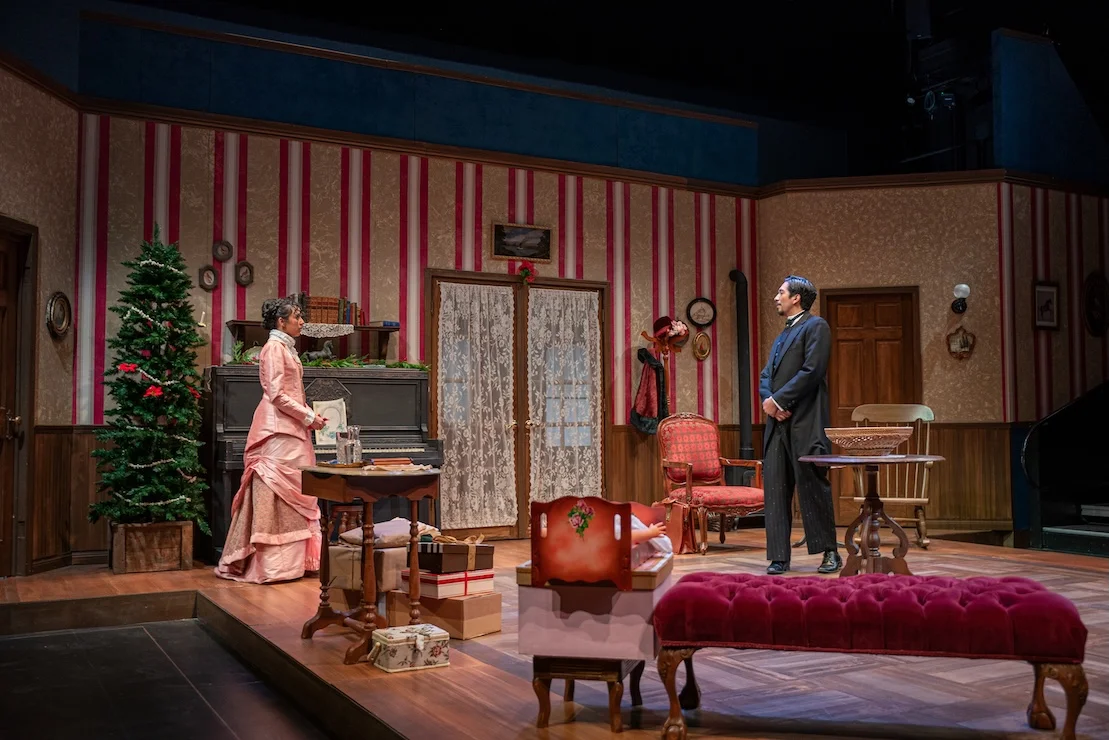
A Doll's House, source: Dennis Cha.

2. Can you share the story behind one of your favorite works and what it means to you?

Looking back, one of my favorite productions I’ve designed was Hair: The American Tribal Love-Rock Musical, directed by Oanh Nguyen at the Chance Theater in 2009. It was only my fourth or fifth professional scenic design credit, and I was still very much discovering my creative process and design aesthetic. What made that experience so special was the energy in the room and around the process. So many of us were around the same age, all at the beginning of our careers, figuring things out together.

What’s really meaningful is that many of those collaborators are still people I create theater with today, nearly two decades later. That production didn’t just deepen my passion for scenic design, it also introduced me to a community of artists who shared a genuine love for storytelling and live performance.

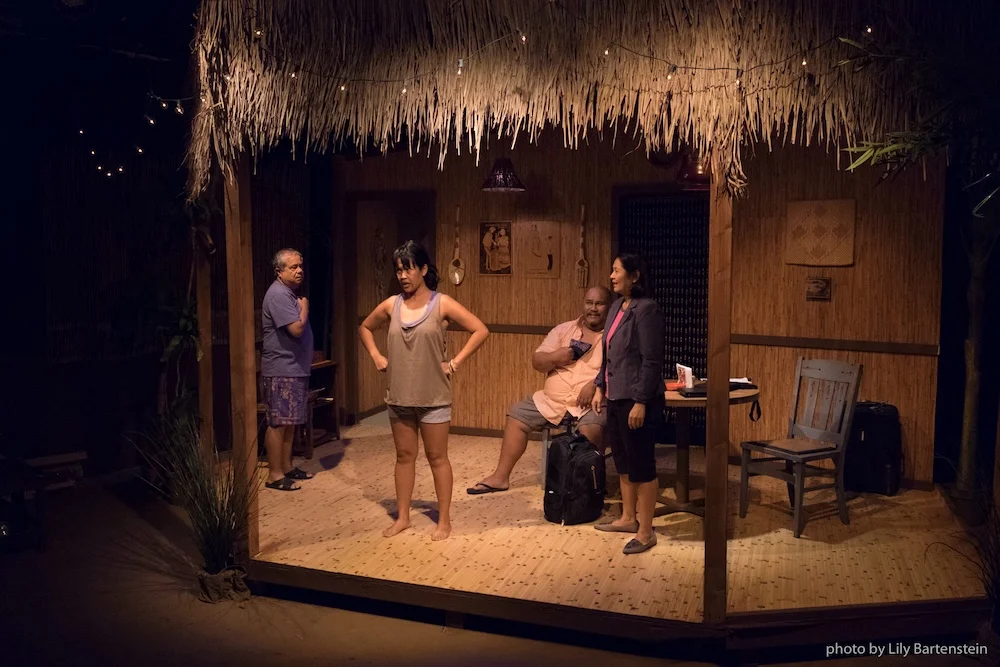
Bloodletting, source: Lily Bartenstein.

3. What is your creative process—do you follow a routine or does inspiration come spontaneously?

At this point in my career, my creative process is pretty structured. Whenever I start a new design, I follow a fairly standard creative process: read the script, talk with the director, gather visual research, then move into sketching, modeling, drafting, and rendering. That framework keeps me grounded and helps me stay engaged at every step.

That said, I also make space to keep things interesting and engaging. I really let myself “go down the rabbit hole” searching for a personal connection to the piece, something that helps me find a way in. That sense of connection brings authenticity to the work. Sometimes it means visiting a real location for inspiration, or just spending hours wandering through a library or bookstore, flipping through books and images until something inspires me.

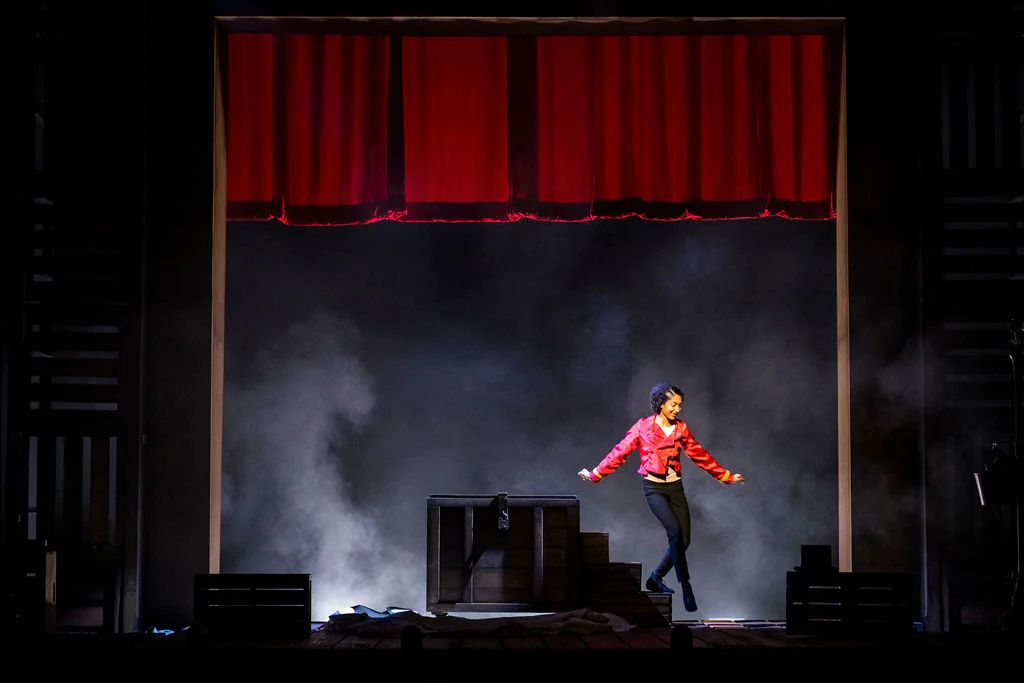
Blackbox: An Epic Poem with Magic, source: DUPLA/Jason Sullivan.

4. What has been your biggest challenge as an artist and how did it influence your growth?

One of the hardest parts of being an artist is not always knowing what’s next, or what challenges a design might bring up once it’s in production. Over time, though, I’ve come to really appreciate that sense of risk and the thrill that comes with being a creative professional and designer.

Early in my career, the uncertainty, especially those slower periods were tough. It created a lot of anxiety, and there were moments when I seriously considered stepping away and changing careers all together. But every time I considered it, something unexpected and exciting would pull me right back in and remind me why I love being a designer and creative professional.

The Chinese Lady, source: Doug Catiller.

5. Who or what inspires you the most, and how is that reflected in your work?

The ever-changing audience of a live performance probably inspires me the most, and, in some ways, terrifies me. As a designer and storyteller, I feel a real responsibility to meet, and hopefully exceed, their expectations. I owe it to them to bring my best work and to help create an experience that stays with them. An experience they keep thinking about and talking about well after they leave the theater.

I’m also deeply inspired by the next generation of storytellers. I find it energizing to hear what stories excite them and what they want to see on stage. Just as importantly, I value their responses to the work we create. For example, what feels engaging, relevant, or meaningful to them. Taking the time to listen to both audiences and emerging artists, even in quiet or indirect ways, keeps our work evolving and ensures that theater continues to grow and change.

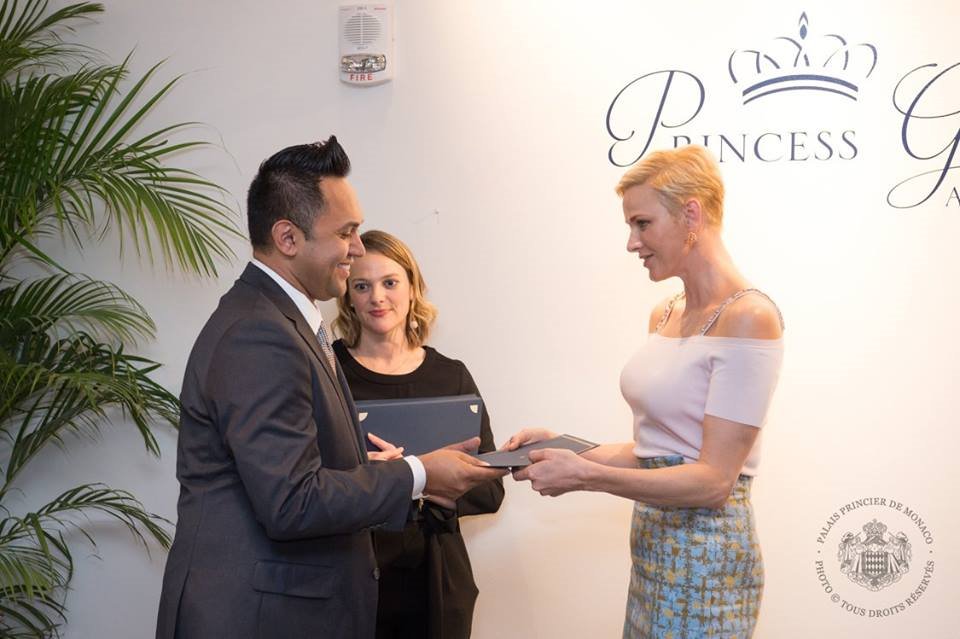
source: Princess Grace Foundation- USA.

6. What do you think is the most exciting thing happening in your field right now?

Advancements in technology, AI, and how we all create and work as artists feels to be contracting and evolving quickly right now. It is exciting, and sometimes terrifying. I think in the end as artists, we will discover and find ways to achieve some kind of work-creative-life equilibrium.

WET: A DACAmented Journey, source: Aaron Lee Dowell.

7. What advice would you give to artists or creatives who are just starting out?

I often remind aspiring artists and creatives to give themselves permission and time to be creative. With technology and media taking up so much of our attention, it can be really easy to lose that space where creativity actually happens.

For me, “holding space” for creativity has become one of my own guiding creative principles. Sometimes that simply means pausing to observe the world around you, or sitting down to sketch without any pressure or expectation. Stepping away from the digital and media-driven world for a bit can really help feed your creative spirit and keep it alive.

Sometimes the Rain, Sometimes the Sea, source: C. Murillo.

8. How do you hope your work will connect with people or leave an impact?

I hope that people who see and experience my work are able to connect with it in a personal way. As a set designer, my work is entirely visual, and it comes to life through collaboration with live performers and fellow designers in props, costumes, lighting, sound, and sometimes projection and media.

I really hope people who encounter and interact with my work notice the details and the time, care and specificity that was taken to create an authentic world for a story to unfold and be witnessed and experienced.

source: DUPLA/Jason Sullivan.

Support artists—share this

More like this, twice a month.

Off-Book is the Skene newsletter for artists and makers. Profiles, opportunities, and editorials, free. New subscribers also receive the 2026 Performing Arts Survival Guide.

About the Author

Leave a Reply

Your email address will not be published. Required fields are marked *

Abingdon Theatre Company - Season 34

Related Posts

FREE FOR ARTISTS

Get the 2026 Performing Arts Survival Guide.

Practical career guidance for performing arts artists and makers. Take it with you.