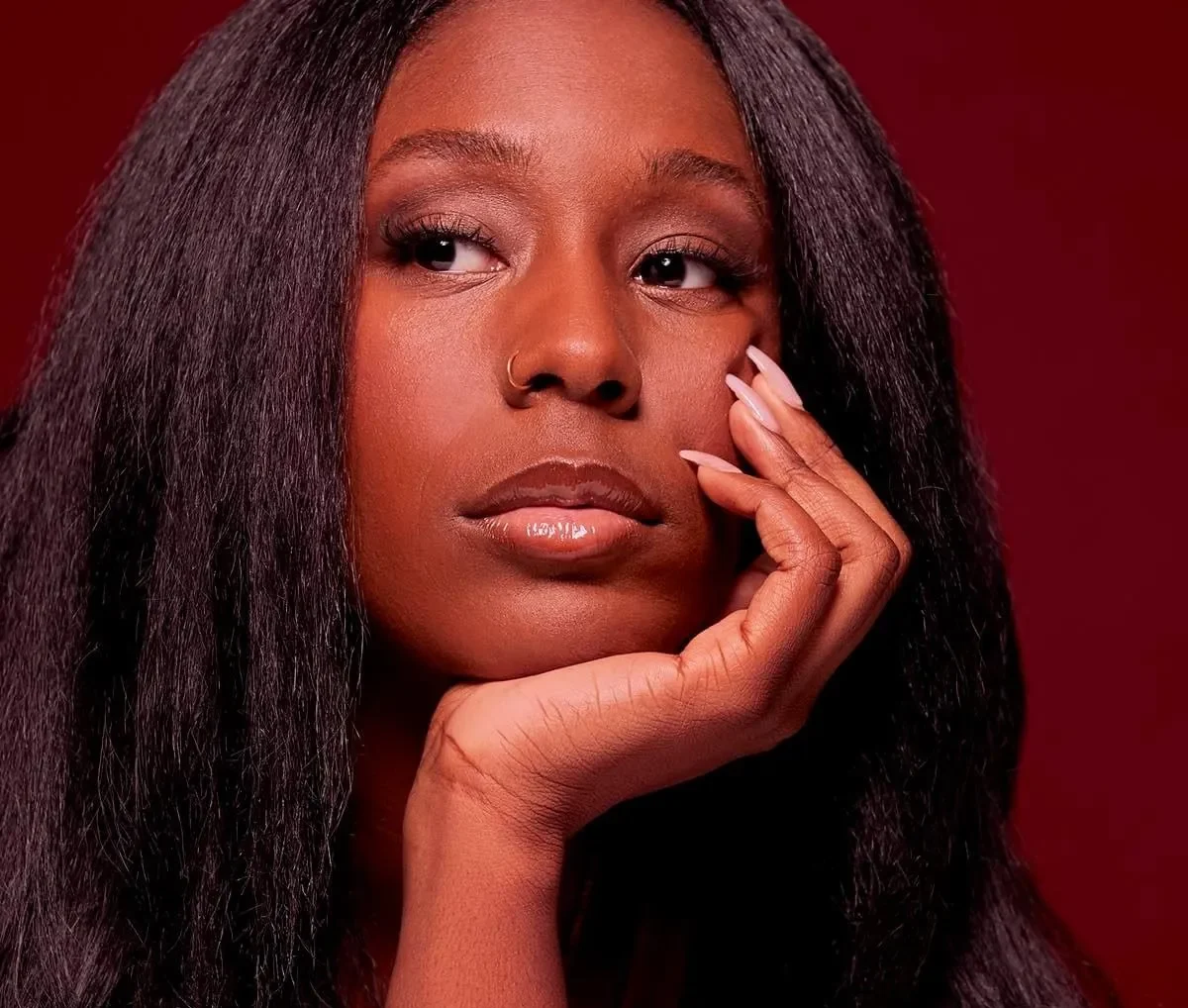
Tianyun Lan: A Conversation With the World.
Tianyun Lan is a costume designer and stylist whose work lives at the intersection of fashion, performance, and the construction of identity.

Tianyun Lan is a costume designer and stylist whose work lives at the intersection of fashion, performance, and the construction of identity.

Scenic designer Bella Rivera explores cultural roots, magical realism, and community-driven artistry in their immersive design practice.

Build a sustainable theatre career without burnout through boundaries, financial planning, rest, community, and creative renewal.

Six essential plays by Asian American playwrights every theater company should know — from David Henry Hwang to Lauren Yee and beyond.

Opera director Beatrice Ruobin Huang reflects on loss, collaboration, and creating meaningful connections between music, story, and audience.
For Courtney Banks, the spark of an artistic journey began backstage at a community college in rural Kansas, painting scenery for children’s shows. As an Indigenous and queer artist, finding an accepting space in theater was transformative—and that early sense of care and belonging has shaped her path ever since.
Now a seasoned production manager with credits including The Public Theater’s Mobile Unit and Lincoln Center for the Performing Arts, Courtney brings heart, humor, and radical inclusivity to every production. Whether coordinating bilingual Shakespeare in NYC parks or facilitating sensory-friendly performances with touch tours and quiet spaces, she builds environments where everyone—on stage or off—feels welcome.
In this edition of PROFILES Courtney shares her philosophy of people-first leadership, the influence of her trailblazing parents, and how she’s reshaping the industry through joy, vulnerability, and the power of asking questions.
I started my artistic journey as a volunteer scenic artist at my local community college for their children’s shows. I didn’t have an easy time in growing up in rural Kansas being Indigenous and queer. When I started working in this theater I found a community that was openly accepting to me and I never looked back. This first spark of care has driven the rest of my career. My drive is to help people find a comfortable place to discover and explore with their work whoever they may be, wherever they come from. As a production manager I try to work to create a platform for anyone to have their story told on stage or off it.
A work that has meant the most to me in my career was the Mobile Unit with The Public Theater in New York City. Mobile Unit is a program that tours through all five boroughs of New York and has stops at MDC (Metropolitan Detention Center) Brooklyn. I have always worked to do shows that bring in community, but I had not worked on something that took the show to the community. This program performs at parks, rec centers, and anywhere else it can fit. When I was with the Mobile Unit, we did A Comedy of Errors that was bilingual. It was a privilege to get to see the joy on audience members faces to not only see a spectacular piece of art but to hear it in their own language right outside their home. It was an inspiration on what art should be free, inclusive and kind.
My process as a Production Manager when a new show or design comes to me is to first find the heartbeat of the pieces. What makes this work alive and special? After I know that I can better work with artists and crew on how to approach the piece. When I know what the intention of something is; I find it easier to talk about budget, schedule and overall needs. It also helps build a relationship with the artists I am working with, in my experience people are happy to talk about the inspiration of their pieces. The easier way to do this I’ve found is just to ask. I ask a lot of questions in my process. What is this? What does it mean? What does it represent? What is the intention? After knowing the answers to those questions, I can start my work.
My biggest challenge as an artist has been how to feel confident in my own style. I feel that there is an image of what a manager looks like. They were grey, they always know the answer, they have never said anything wrong. That is not who I am and won’t ever be. I am loud, colorful and I think I am very funny (please don’t fact check that). I have had do to a lot of decolonization on myself and then as I have been doing that work, I have had to accept the consequence of it. Being a BIPOC person in a conference room has never been easy, and a being a loud colorful one is not always appreciated. Even though it is difficult making space for myself is making space for the next colorful, loud, joyful, funny person.
My parents inspire me more than anyone. My mother was a jet engine mechanic in a factory in the 1980s when women didn’t have strong footing in that work. She was the vice president of her union because I volunteered her at 4 years old in the middle of a meeting. She faced sexism and misogyny on a large scale in her work and it only drove her to be better. My father was an Indigenous man who was also working in the same factory. He got passed over for promotions for being Indigenous, and faced racism and prejudice in his work. I grew up watching my parents strike and picket for a better working world. They did not shelter me from knowing that the world could be hard but that shouldn’t harden us. Because of their struggle I strive to make the spaces I manage places for debate, exploration, and openness. I want the people that work with me to feel confident to do their best work. My parents inspire me to have a people first work mentality.
I think the most exciting thing that is happening in my field right now is there is a movement to make the arts more accessible for all. In my current position at Lincoln Center for the Performing Arts we have a wonderful accessibility team that we work with to make sure anyone can come see our events. Recently I have been working on events with “touch tours” where people can come feel instruments/props and listen to them being described before performances. We provide quiet spaces for people to take time alone if their experience is overwhelming. This work opens the door to a wider audience and community which is the bedrock of theater making.
The advice I would give to aspiring artists is that your art making follows you everywhere. In the last couple of years with Covid I have been laid off twice because of budget constraints. Both times I thought that I would never work a performance again. I thought that my worth was tied to the place that employed me. Both times I found a new company, a new team and a new community. I think this is an important sentiment especially now in the USA with our future being so uncertain. That wherever you are whatever the circumstances you are an artist.
I hope that after people work with me or work in the spaces I manage, they feel cared for and heard. I hope that the care and kindness I bring to this work will create a ripple effect for others to bring to their communities. I have worked with many people in this life that have led with unkindness, especially when I was starting my career. The hardships that I have felt in this industry being a BIPOC, queer, neurodivergent person are not uncommon. I know that I will never be able to completely change the hardships we face but my hope is that I am leaving this industry better than I found it.
Support artists—share this
Get our free Survival Guide for Actors, Directors, and Designers.
We use cookies to optimize our website and our service functionalities.