Alex Vásquez Dheming: Choreographing Light.
Salvadoran lighting designer whose expressionist practice turns light into narrative, emotion, and

Salvadoran lighting designer whose expressionist practice turns light into narrative, emotion, and

Japanese costume designer and cultural advocate whose research-driven practice interrogates representation, identity,

German scenic designer whose kinetic scenography builds sets that move with the

Mexican cultural worker, director, and playwright whose practice is rooted in collective

Classic plays for community theatre: Shakespeare, Greek tragedies, Chekhov—masterpieces with zero royalties.
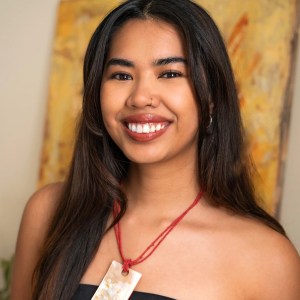
For Beatrice Ruobin Huang, opera is not a fixed tradition but a living encounter shaped by vulnerability, listening, and care. Her journey into directing emerged through rupture, reflection, and a deep reckoning with why art matters when certainty disappears. What followed was not a search for control, but for connection.
In her work, opera becomes a shared space where history, music, and human experience meet without hierarchy or distance. She approaches directing as an act of translation, one that welcomes newcomers while honoring the emotional and musical depth of the form. Collaboration sits at the center of her process, not as a tool, but as a value that shapes how stories are told and received.
Rather than imposing meaning, Huang listens closely to music, text, and the people around her, allowing discovery to guide each choice. In this edition of NEW TALENTS, she reflects on loss, curiosity, and the belief that opera is completed not onstage, but within the audience itself.
I began studying voice and piano at a very young age. At first, it was just something my parents wanted me to learn as a hobby, but music quickly became the space where I felt most alive. Singing gave me a profound sense of happiness and purpose, and for a long time, I was certain I would become an opera singer.
A few years ago, everything changed. I lost my voice. It was an unexpectedly dark chapter, as the direction I had always taken for granted suddenly vanished. That rupture forced me to rethink my life and explore different paths.
When you do something every day, it’s easy to say how much you like it. But only through loss did I truly understand what it meant to me. I realized I could not imagine my life without it. Fortunately, I met my first directing mentor, Helen, who guided me toward a new path. In directing, I finally found my way back.
The tears and reflections of that time have become nourishment for my artistic practice. That period also taught me the profound value of connection. The support I received from my professors and colleagues continues to shape the collaborative way I work today.
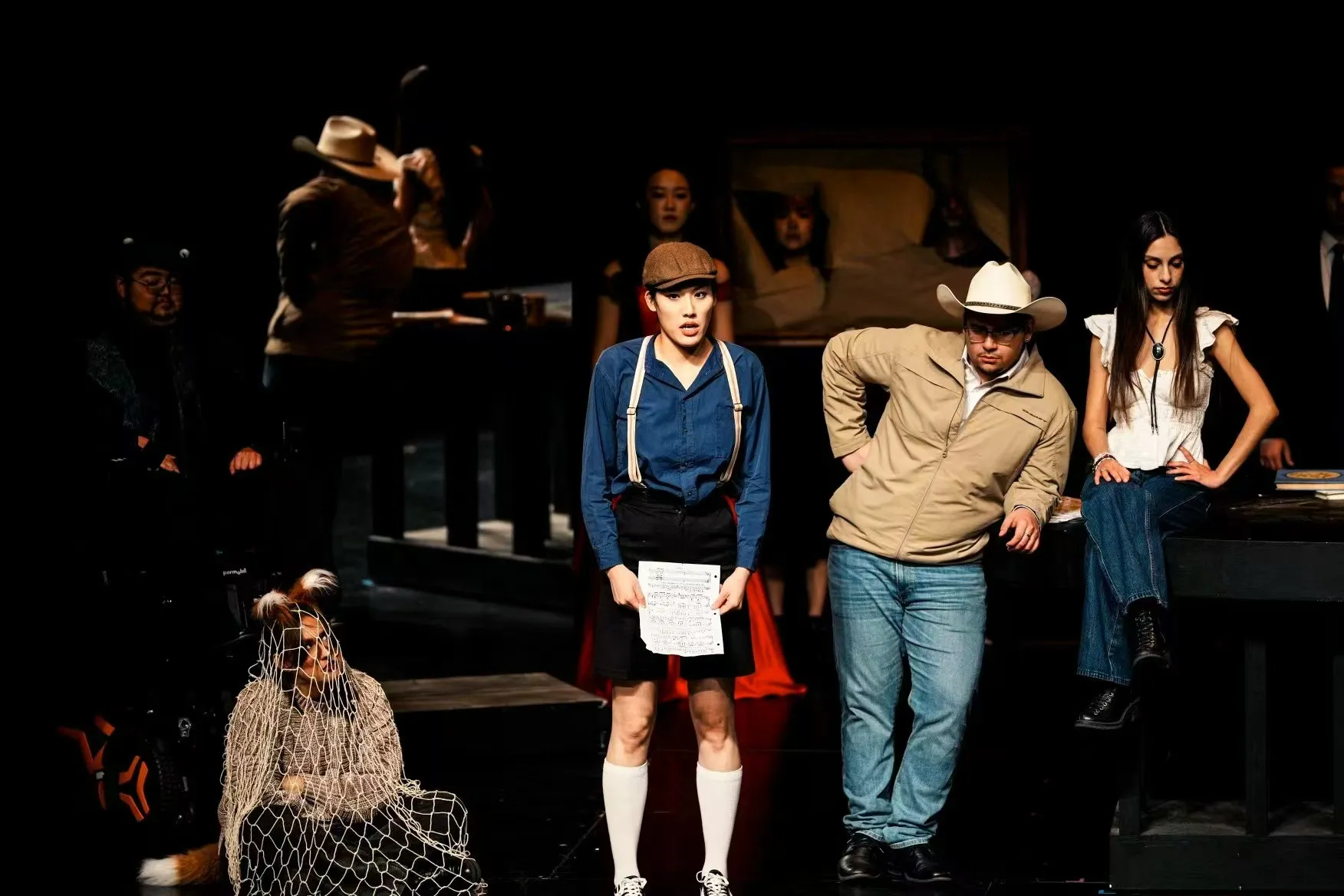
I often look back at my first production, Le Nozze di Figaro. It was raw and immature in many ways, but it made me realize this is exactly what I want to do. Like every production, we faced many challenges, yet the trust we shared bound us together, all working together to make the show fantastic.
What made this production special was that it introduced opera to newcomers. I took on a dual role as director and ‘narrator,’ giving audiences context between scenes. At first, I worried these interruptions might break the dramatic flow, but I soon found a solution: I became a ‘tour guide,’ leading the audience through Count Almaviva’s estate in chronological order.
The feedback was incredibly rewarding. Many said they never expected opera to be so engaging; it was moving to see the barriers between ‘high art’ and the public dissolve. This experience taught me that directing is more than just staging music. It is about acting as a bridge between an ancient art form and modern audiences, creating a shared human experience.
One of my greatest challenges was the intense urge to prove myself. Losing my voice felt like my life had been put on pause; returning to opera, I felt a heavy pressure to ‘catch up’ and make my mark immediately. This urgency pushed me to work twelve-hour days, and while that intensity led to rapid technical growth, I eventually felt like a machine, losing touch with life itself. I felt lost in the grind.
A friend helped me see this clearly. He said: ‘It’s good to keep running, but don’t do it out of a desire for revenge or to “settle a score” with fate. That creates an internal imbalance. You should create out of love for the world; otherwise, you are living for others.’
I began to consciously return to the moments when art brought me pure joy: the chills during a rehearsal when a scene suddenly came alive, the tears and embraces shared after a performance, or simply sitting in the audience, inspired by a great show and thinking, ‘I want to create something like this!’
I’ve learned that moving forward as an artist means repeatedly returning to the question of why I began. This reflection has reshaped my growth, helping me create from a place of love and honesty.
I find every collaboration offers fresh inspiration, as I am constantly learning from those around me. Recently, I was deeply inspired by directing the final trio from Kevin Puts’s The Hours.
My instinct was to amplify the echoes of female voices across history. Yet I questioned myself: was this truly in the music, or was I projecting an agenda because of my identity? Through discussions with my colleagues, I returned to the music and text; the fluid music felt like water carrying a historical resonance. I thought, ‘That’s it!’ and decided to use projections of female icons to visualize that legacy.
During staging, my supervisor, Garnett, reminded me that he didn’t see the characters anymore when they were just standing still, singing ‘and you try.’ I reworked the moment to reflect their distinct journeys: Laura and Virginia crossed into each other’s worlds, connecting through Mrs. Dalloway, while Clarissa made a strong, grounded cross downstage. She stood upon the legacy of those icons, representing a strong modern woman.
This process taught me that no matter how bold a director’s vision is, we must always go back to the music and always keep the character’s personality at the heart of the stage.
A great opera has so many layers of depth, which is also precisely why the art form can sometimes carry a sense of distance. As a director, I hope to bridge that gap and engage the audience so deeply that they feel compelled to step into the opera house again and again. I wish my work to be a catalyst for people to discover the history and the stories behind the music.
Whether people leave a comedy with a heart full of laughter or a tragedy moved to tears, if their hearts are truly touched and they find a resonance of themselves in those characters, that is the ‘hook.’ I strive to create this connection that sparks a curiosity lingering long after the curtain falls: What kind of background gave birth to this story? What were the composer’s hidden intentions in the score? Or even, why can the same opera be reimagined in so many different ways across different productions?
The most inspiring part of opera, to me, is that we, as creators, only bring the audience to the threshold. We open the door, but they are the ones who complete the journey.
Support artists—share this
Off-Book is the Skene newsletter for artists and makers. Profiles, opportunities, and editorials, free. New subscribers also receive the 2026 Performing Arts Survival Guide.
We use cookies to optimize our website and our service functionalities.
Practical career guidance for performing arts artists and makers. Take it with you.