LATEST POSTS.

Get featured
on Skene!

Harumi Hirata: Whose Stories do we Tell?

source: Louis Stein.

Harumi Hirata grew up between worlds. Ballet, opera, and Kabuki shaped her earliest understanding of what performance could do. Navigating her identity as both Asian and Japanese in the United Kingdom and the United States sharpened something else: an awareness of how visual storytelling either honors a culture or reduces it to surface. That awareness has never left her work.

Her practice moves between costume design, historical research, material experimentation, and cultural inquiry, and she treats all four as inseparable. Her study of Ryukyuan clothing and its relationship to Japanese mainland costume traditions brought that integration into its clearest focus. Working with Western tools to reconstruct garments rooted in local knowledge, specific fiber behavior, and embodied cultural practice made the gap between representation and authenticity impossible to ignore. It also clarified her responsibility. Costume, she understands, is never neutral. Every garment carries a history shaped by trade, migration, and cultural exchange, and what a designer does with that history is a moral as much as an aesthetic choice.

She is not interested in easy solutions or beautiful surfaces. She is interested in the questions a design can open.

Harumi Hirata is a costume designer and cultural advocate whose work asks where things come from and whose story is being told, in this edition of NEW TALENTS.

partner content

Harumi Hirata

she/her
Costume Designer & Cultural Awareness Advocate
Japan
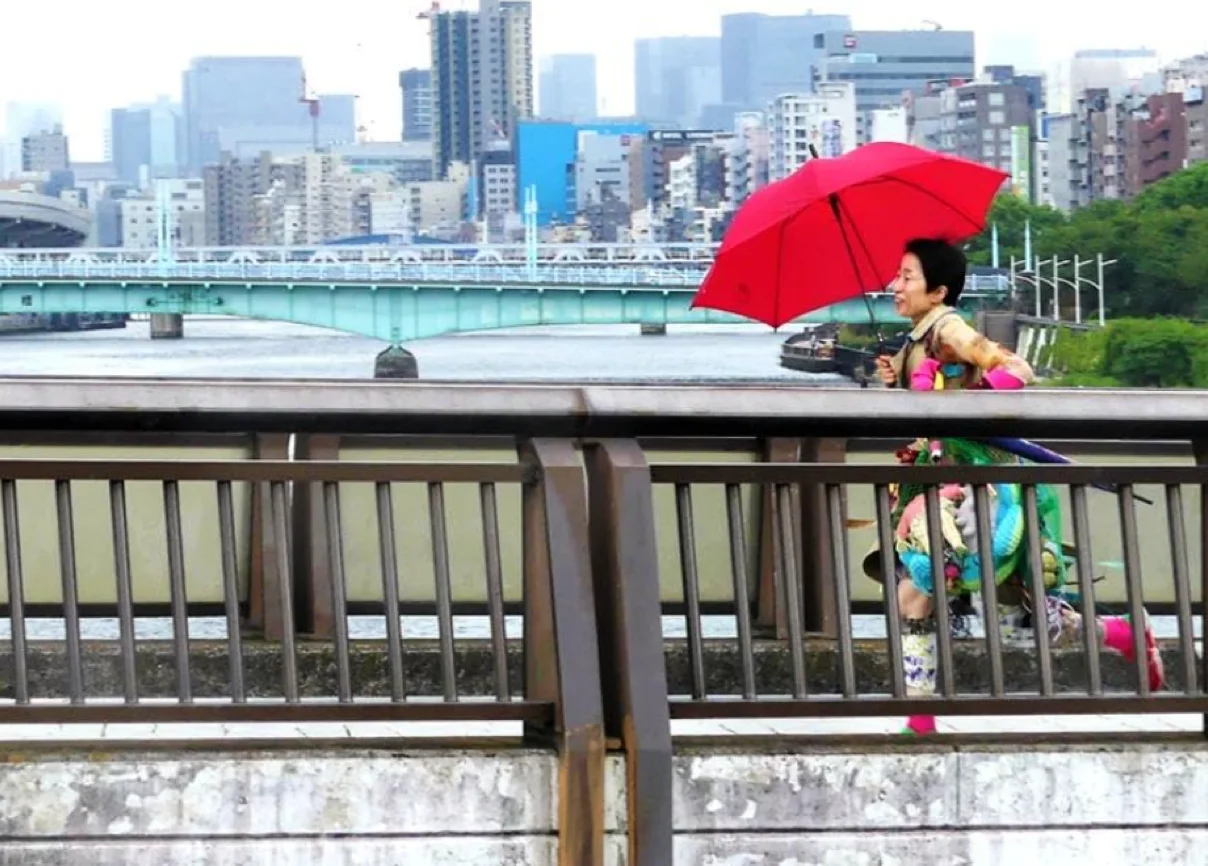
Doll Woman, source: Kenji Takama.

1. What sparked your interest as an artist and how has that spark evolved over time?

What first sparked my journey as an artist was a fascination with how stories, images, and clothing could communicate culture and emotion beyond words In Ballet. Then, growing up with parents who like Opera and Kabuki, in an environment that shaped me, and navigating my identity as both Asian and Japanese in the United Kingdom and the United States, I became deeply aware of how visual storytelling shapes people’s understanding of places, histories, and communities. Over time, that spark evolved from simply wanting to create visually compelling work into a desire to understand the cultural meaning behind design. My interest expanded beyond aesthetics and technique into research, history, and cultural representation. Today, that original curiosity still exists, but it has matured into a commitment to storytelling that is thoughtful, historically informed, and empathetic. I see art not only as a creative expression, but as a bridge between cultures and people.

The Caucasian Chalk Circle sketch, source: Harumi Hirata.

2. Can you share the story behind one of your favorite works and what it means to you?

My favorite work is my study and design examination of Ryukyuan clothing and its relationship to Japanese (mainland) costume traditions, as well as cultural representation in contemporary Western tools and resources. This project is particularly relevant to me because it integrates all aspects of my practice: costume design, historical study, material experimentation, and cultural inquiry into a singular body of work. In this work, I investigated how Ryukyuan identity and material culture may be transmitted through costume and performance while maintaining Okinawan historical and cultural singularity. The most important aspects of the project were to confront the physical limitations of reconstruction. Working with Western tools and supplies made it clear how much traditional techniques rely on local knowledge, fiber behavior, hand movement, and lived cultural practice. This effort has strengthened my feeling of responsibility as an artist and designer. It showed me that costume design can either reduce cultures to aesthetics or allow for greater understanding and empathy. As someone from a multicultural background, researching Ryukyuan translation helped me to think about identity, visibility, and representation in ways that seemed both intellectual and personal.

Antigone, source: Louis Stein.

3. What has been your biggest challenge as an artist and how did it influence your growth?

One of the most difficult challenges I’ve faced as an artist is bridging the gap between cultural authenticity and artistic translation/adaptation, especially while performing in Western theater environments. Realizing this changed my outlook on authenticity. I learned to see clothes as more than just an object; it was an embodied practice tied to labor, movement, and life experiences. Emotionally, this procedure was difficult because I felt a strong sense of responsibility for the cultures and civilizations I represented. I became painfully aware of how design might unintentionally reinforce stereotypes or reduce cultural identities to aesthetics. That insight inspired me to approach my work with more patience, humility, and a research-driven purpose. Still, these issues had a significant effect on my growth. They taught me to embrace complexity rather than seek easy solutions. They shaped my identity as a designer who prioritizes critical thinking and creativity. Most importantly, they showed me that embracing ambiguity, restrictions, and difficult problems, rather than avoiding them, may result in meaningful artistic creativity.

Othello, source: ABC TV.

4. Who or what inspires you the most, and how is that reflected in your work?

Travel, human interaction, and immersion in cultural and artistic areas provide the most powerful sources of inspiration for me. Visiting locations I’ve never been before, whether new cities or regions within a country, allows me to see how the environment influaences everyday life, behavior, and aesthetics. Speaking with locals is particularly vital to my technique since these talks frequently provide insights that cannot be obtained in written sources. They provide me with access to lived experience, memory, and complexity, which expands my understanding of culture beyond superficial representations.
Art museums and exhibitions are another valuable source of inspiration. They show me how different ages and societies have represented their identities through material culture, composition, and visual storytelling. I am particularly drawn to works that demonstrate cross-cultural contact, with influence and adaptation obvious in the design itself. Clothing, to me, is never isolated from culture. Every garment carries a historical, social, and emotional background influenced by trade, migration, and cultural exchange. No costume exists without a context, and no culture evolves in isolation. This concept immediately impacts my work in costume design, as I strive to reflect the interdependence of identities on stage. Instead of viewing each design as a standalone aesthetic item, I approach it as a narrative that connects character, history, and cultural memory.

Transformation, source: Daniel Fernandez Large.

5. How do you hope your work will connect with people or leave an impact?

I hope that the work I create inspires people to question more critically and sensitively about costume, culture, and storytelling. Rather than simply showing visually appealing designs, I want my work to prompt audiences to consider where pictures come from, how cultural identities are produced, and what histories are embedded in what we see onstage. At the heart of my philosophy is the belief that costume is never neutral. It carries history, work, and meaning that have been molded by cultural interaction, migration, and sometimes, misrepresentations. Because of this, I want my work to assist people in discovering the depth behind what may appear to be purely aesthetic choices. “Where does this come from?” or “Whose story is being told here?”, then I consider that an important impact. Ultimately, my purpose is not to provide definite solutions, but to spark discussion and interest. If my designs can make someone feel noticed or assist them in comprehending a culture other than their own, I believe the art has accomplished something meaningful beyond the stage.

Support artists—share this

More like this, twice a month.

Off-Book is the Skene newsletter for artists and makers. Profiles, opportunities, and editorials, free. New subscribers also receive the 2026 Performing Arts Survival Guide.

About the Author

Leave a Reply

Your email address will not be published. Required fields are marked *

Abingdon Theatre Company - Season 34

RELATED POSTS.

FREE FOR ARTISTS

Get the 2026 Performing Arts Survival Guide.

Practical career guidance for performing arts artists and makers. Take it with you.