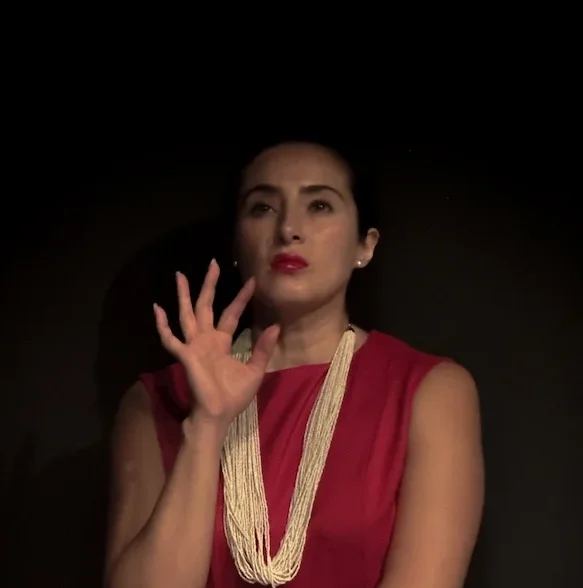
Alex Peña: Worlds of Paper and Light.
Scenic and production designer Alex Peña on world building, immersive environments, and crafting story driven spaces for stage and film.

Scenic and production designer Alex Peña on world building, immersive environments, and crafting story driven spaces for stage and film.

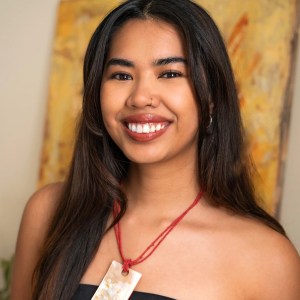
Kendall Bas is a Filipino scenographer whose work on La Perle and beyond treats every space as a stage where story and action meet.

Josafath Reynoso PQ Symposium flash talk explores digital platforms as scenographic spaces, living archives, and sites of performance and collective memory.

Grabación del taller Estrategias para un CV en diseño escénico con SKENE, ENAT y UT Austin por el Día Mundial del Teatro 2026.

Martín Acuña blends creative strategy and storytelling as a performing arts marketer and host of the Broadway podcast Backstage Talk.
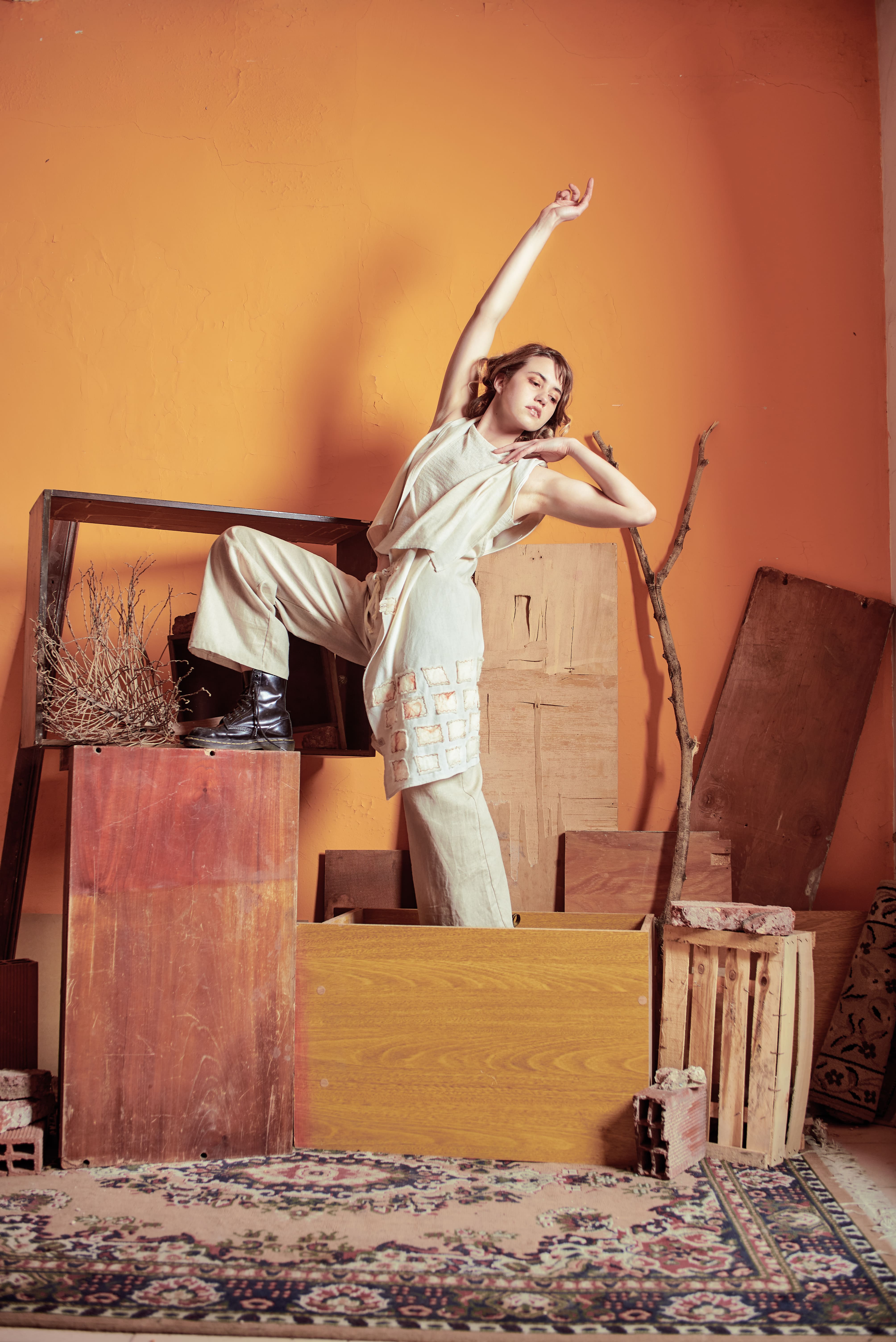
For Argentine multidisciplinary artist Natalia Martinez Sagan, art is not a profession—it’s a pulse. From the moment she could walk, dance, and make things with her hands, creativity has been a natural extension of her being. Raised in a loving and imaginative family, Natalia grew up attuned to beauty, care, and the quiet wisdom of nature. Today, her work reflects that deep-rooted connection: intuitive, sensitive, and driven by ecological values.
What sets Natalia apart is her unwavering commitment to intentionality. Whether transforming discarded materials into theatrical costumes or handmade collages, she brings a soulful reverence to everything she makes. Her process is slow by design—fueled by journaling, meditation, and listening deeply for when the materials themselves are ready to be transformed.
In this edition of PROFILES, we meet an artist who celebrates imperfection, honors emotional sensitivity as strength, and believes art can be a catalyst for positive change—for ourselves, our communities, and the planet we share.
I believe my journey as an artist began the moment I came out of my querida mamá. I have early memories of crafting and dancing at every opportunity; it all felt so natural to me, and I loved it deeply. I still do.
I was fortunate to be born into a family, not of professional artists, but of deeply creative and talented human beings, who supported every single one of my dreams.
My love for Mother Nature, which I discovered at a very young age, has always nurtured my path as an artist. Today, the two are completely intertwined. That initial spark has grown more intentional over time, becoming both brighter and, at the same time, slower, allowing me to honor my inner timing as a creative.
Embracing that I am a multidisciplinary artist and that no single discipline defines me has been life-changing. Equally transformative has been discovering and fully embracing that I am a Highly Sensitive Person (HSP), which makes my artistic life so much fuller and richer.
One of my favorite works is an Elizabethan-style collar I created for a photoshoot, made from slices of toilet paper rolls that I hand-cut, painted, and assembled. It reminds me that potential is everywhere, and that what we perceive on the surface doesn’t always reflect what lies beneath.
My most consistent routines that fuel my creative process are journaling and meditation. And I say “most consistent” because some days I skip them; I’m still learning to embrace that it is OK to approach something as a practice that is in development, rather than a strict routine. I’d say my creative process is very intuitive. I write down ideas as they come, sketch, save inspiration on Pinterest, collect discarded materials until they “speak to me” and I feel that the time has come to sit down and start creating…I believe inspiration is fluid, and when it feels out of reach, I’ve learned not to force it. Instead, I put down what I’m working on, go out for a walk, and trust that eventually, maybe in an hour, maybe in a week, I’ll find my way back to what I’m making.
Learning to price my art and what I have to offer to the world. Over time, I realized that pricing isn’t just about numbers, it’s about self-worth, boundaries, and sustainability, not only for the planet but for myself as a working artist. I’ve had to unlearn the idea that passion should come at the expense of fair compensation. Through this process, I’ve grown more confident in communicating the value of my work, honoring the time, care, and skill that go into it, and holding space for conversations around ethical pricing in the creative industries.
This challenge has taught me that growth isn’t always about producing more, but about standing more firmly in my values, honoring my worth, and advocating for the creative practice I want to build: heartfelt, intentional, and slow.
Mother Nature is my biggest inspiration. The deep reverence I feel towards her shows up in my work through my commitment to upcycling, repurposing, and using discarded materials in thoughtful, intentional ways. I see my artistic practice as a dialogue with the Earth, one where I try to minimize harm while creating beauty. Whether I’m building a nicho from old cardboard boxes or embroidering positive quotes on a second-hand jacket, I’m always thinking about how to give new life to what’s been cast aside. It’s my way of honoring the footprints of nature: transformation, renewal, impermanence. My work isn’t just inspired by nature visually; it’s shaped by ecological values and a desire to make art that treads lightly on the planet.
Seeing more artists and creatives being drawn to create more consciously, honoring the Planet, others, and ourselves, is incredibly exciting. There’s a growing awareness that creativity doesn’t have to come at the cost of environmental or social harm. People are asking better questions, exploring materials with intention, and embracing slowness, collaboration, and care in their processes.
Embrace everything that you are. If your heart is pointing you in a certain direction, even if you can’t see the full path ahead or don’t have clear role models in your field, trust that inner voice. Carve your own path. Become the reference. If what you feel called to create comes from your heart, you can’t go wrong.
And I would add: quiet the voice of the mind. As Ram Dass said, “The mind is a beautiful servant but a lousy master.” It’s a great practical tool, but not a reliable compass. Learn to meditate; the benefits will ripple into every area of your life, not just your creative process. Well, after all, life itself is one big creative process.
I hope my work invites people to slow down, reflect, and reconnect with themselves, with nature, and with the unseen value in what we often discard. Whether it’s through the materials I use, the stories I tell, or the spaces I create, I want to spark curiosity and conversations about sustainability, creativity, sensitivity, and interconnectedness.
If someone walks away feeling inspired to see beauty in the overlooked, or to create more consciously, or to honor their sensitivity as a strength, I would be very grateful and joyful.
Support artists—share this
Get our free Survival Guide for Actors, Directors, and Designers.
We use cookies to optimize our website and our service functionalities.