Plays for Young Performers: Engaging Contemporary Works.
Contemporary plays for student theatre: inspiring, ensemble-focused works that energize casts and

Contemporary plays for student theatre: inspiring, ensemble-focused works that energize casts and

Salvadoran lighting designer whose expressionist practice turns light into narrative, emotion, and

Japanese costume designer and cultural advocate whose research-driven practice interrogates representation, identity,

German scenic designer whose kinetic scenography builds sets that move with the

Mexican cultural worker, director, and playwright whose practice is rooted in collective
There’s a quiet power in the work of Luke Casserly—one that draws its strength from listening, observing, and distilling what’s already there. Hailing from the Irish midlands, Luke is a performance maker whose practice bridges ecology, scent, memory, and community. His works often unfold slowly, deliberately, shaped by deep collaboration and rooted in place. Whether he’s collaborating with a perfumer to bottle the scent of boglands or shaping participatory encounters around climate grief, Luke resists spectacle in favor of subtlety—and in doing so, leaves a lasting trace.
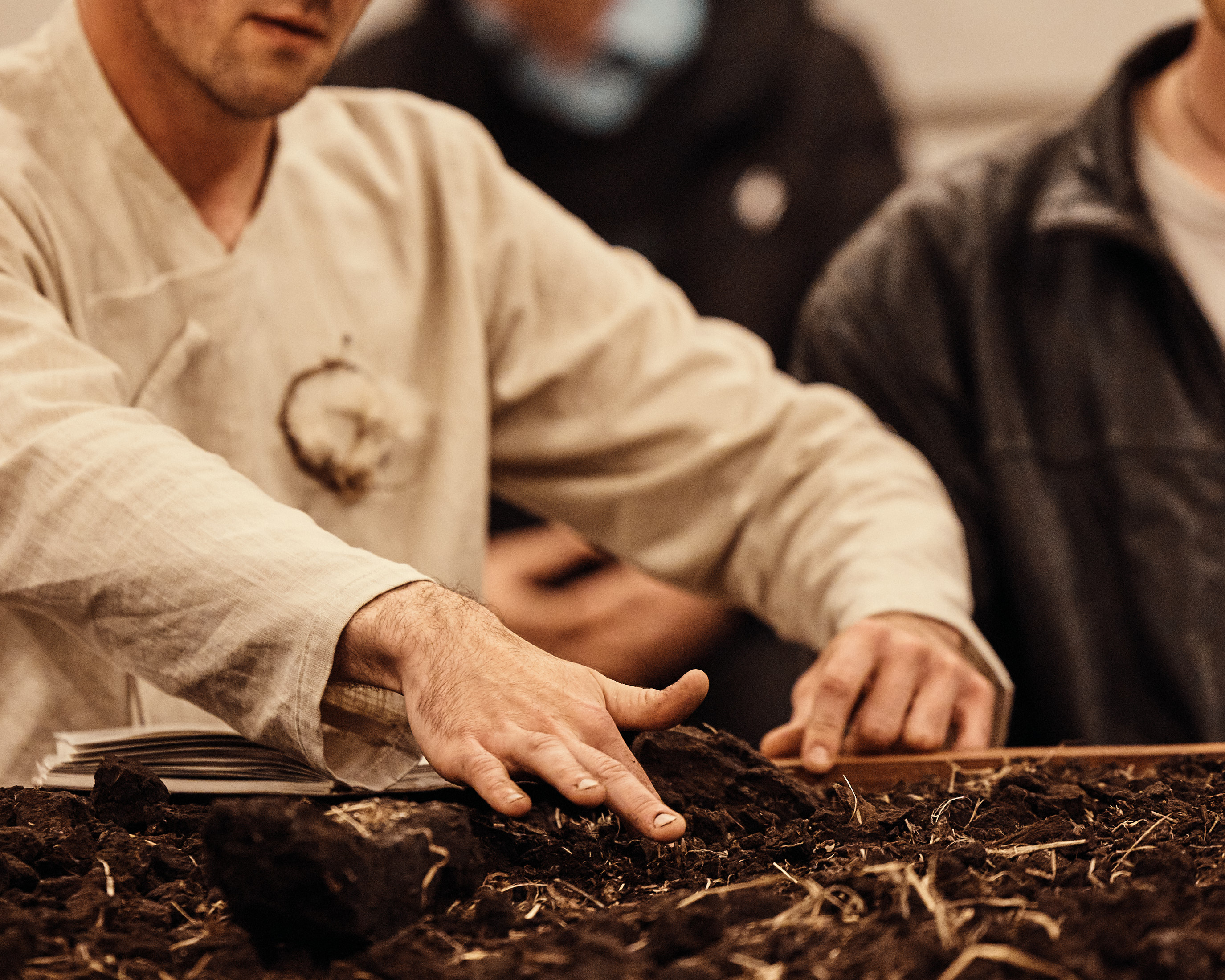
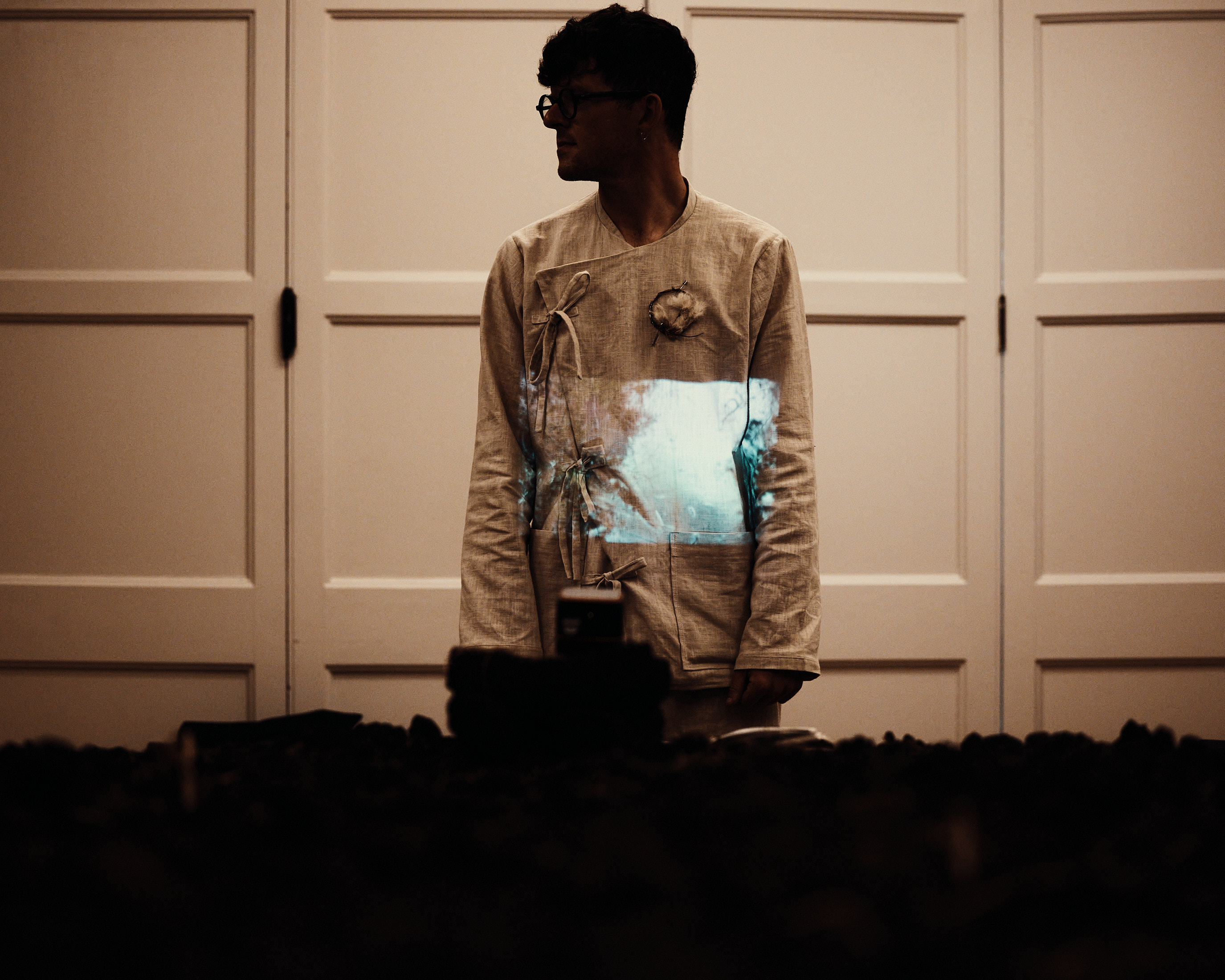
Informed by his early experiences in Youth Theatre and a deep personal connection to the peatlands where he grew up, Luke’s creative process is grounded in patient inquiry. His recent project Distillation serves as a striking example: a multi-sensory exploration of Ireland’s shifting relationship to land, history, and extraction. With humility and care, he approaches artmaking not as a product, but as an invitation.
In this edition of PROFILES, Luke shares the impulses and challenges that shape his work, the mentors who helped guide his path, and how he crafts performances that live beyond the stage—in scent, in conversation, and in the environments we carry with us.
My journey as an artist began in the Irish midlands where I grew up. I think the vast stretches of black earth in the peatlands landscape did something to my imagination. That early sense of wonder still drives my practice, and I often find myself returning to that landscape as a place of inquiry and inspiration. I think joining a Youth Theatre when I was a teenager was also a really formative experience in terms of showing me that creativity could be a shared pursuit, and how that could be made into a career.
I recently made a project called Distillation which immediately comes to mind. The project was a performative journey to the Irish bog landscape through scent – I created the piece in direct response to the closure of the peat extraction industry in Ireland. As part of the work, I collaborated with a perfume maker named Joan Woods to create a unique distillation of the Midlands bog where I grew up as the starting point for an olfactory encounter which looked at our human relationship to place.
As an artist who makes environmentally focused work, my process generally unfolds slowly and in a non-linear way. I often rely on extended periods of research and deep engagement with the places and communities I’m working with. For example, my most recent project involved an 18-month long collaboration with a perfume maker to create an original scent. As much as possible, I try to let the timeline of the creative process be determined by the nature of the work, as opposed to trying to squeeze everything into a conventional production timeline.
I think sustaining a career in the arts is always challenging. I’m often juggling multiple roles, in that I often creative produce my own work alongside making it. Wearing different hats is something I definitely enjoy, but it can be tricky to switch between creative and production modes. I think what I’m learning over time is the importance of carving out the time and space to be creative, whether that’s through taking time away from the work or participating in residencies which I’ve found really helpful in terms of chatting to other artists who are working in a similar way.
Something I’m consistently inspired by is approaching my work with the question ‘what’s already there?’ and resisting the temptation to generate more ‘stuff’. A few years ago, I think the automatic impulse for me would have been to invent something totally new, but nowadays I’m far more interested in returning to things that have been there the whole time – whether that’s a place, or a subject matter that’s been on my mind for a long time. I think it’s exciting to think about how to reframe something ordinary for an audience in an unexpected or unusual way.
I think it’s an exciting time in terms of the alignment between community, ecological, and artistic practices in Ireland at the moment. It feels as though there’s a real momentum and increasing support through organisations like Creative Ireland who are making longer-form, and meaningful work possible. I’m currently working on a number of place-making projects which feel really impactful in terms of the dialogue and connectivity that’s being generated. Sometimes just the conversation is the work.
I suppose I’d say to keep going, ask for feedback, and try to find mentors who can support you with the work you’re trying to make. Someone told me years ago that the infrastructure is in place to support you, which I found really empowering. I think sometimes it can feel isolating if things don’t going to plan, or if you receive a rejection for something you really wanted. It’s important to remember that there are organisations and people who exist to support you as an artist, so don’t be afraid to reach out and ask for help.
I’m interested in making work which has a positive environmental legacy beyond the moment of live encounter with an audience. I try to create gentle, subversive interventions in response to the climate crisis which hopefully avoid leaning into the anxiety, greenwashing, and didacticism that often revolves around our conversations on the environment. So I suppose my hope is that the work is welcoming, and invites everyone into the conversation in a meaningful way.
Support artists—share this
Off-Book is the Skene newsletter for artists and makers. Profiles, opportunities, and editorials, free. New subscribers also receive the 2026 Performing Arts Survival Guide.
We use cookies to optimize our website and our service functionalities.
Practical career guidance for performing arts artists and makers. Take it with you.