Emilio Bastré: Fragile Enough for a Strong Connection.
Emilio Bastré is a Mexican actor and member of the Compañía Nacional de Teatro whose work lives at the intersection of freedom and craft.

Emilio Bastré is a Mexican actor and member of the Compañía Nacional de Teatro whose work lives at the intersection of freedom and craft.

Six essential plays by Black British playwrights that American theatres should be producing — from Natasha Gordon to debbie tucker green.

Meet Mexican lighting designer Victor Zapatero, whose work blends observation, emotion, and creative intention. Discover his artistic philosophy.

Actor and playwright whose work moves between personal honesty and theatrical confrontation, building stories that leave no edges sanded down.

Scenic designer and Skene founder on community, mentorship, and building a creative career, in conversation with Mitzi Avila of Creative Blueprints.
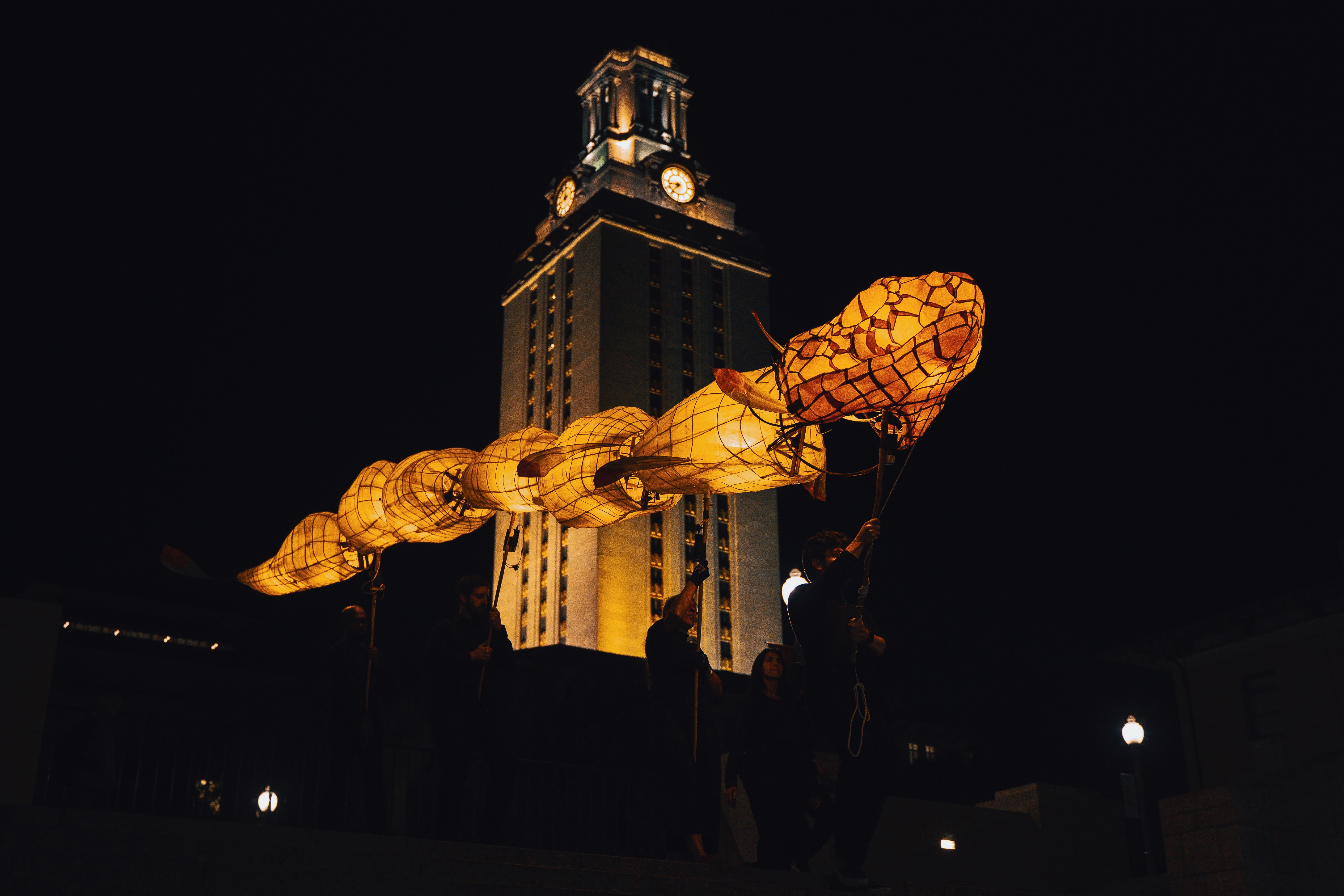
Long before he took the stage, Guatemalan playwright and director Khristián Méndez Aguirre was staging elaborate puppet shows beneath plastic chairs, drawing posters on lined notebook paper, and selling tickets to unsuspecting family members. That spark—equal parts imagination and stubbornness—never left him. Today, his work Glass Half Full, a puppet and object theatre company continues that childlike curiosity while rooting it in deep, collective practice.
Khristián’s artistic journey moves through environmental activism, bilingual performance, and radical dramaturgy. Whether directing Estado Vegetal in the wake of a devastating storm or designing his own show posters inspired by Portuguese illustrator João Fazenda, he approaches creation as both a craft and a political act. His work is shaped by big questions—why this story, here, now, with these people?—and by a commitment to expanding who belongs in theatre.
In this edition of PROFILES, Khristián reflects on risk, reverence, and reclaiming the joy of collective creation. His vision is generous, tender, and sharp-edged: tired of plays that preach recycling, he’s chasing new theatrical languages for a world on fire.

Mi familia me recordó hace algunos años que yo hacía obras de teatro debajo de las sillas de plástico, hacía los “afiches” en papel rayado, y obligaba a todos a comprar entradas para ir a verlo. Eran obras de marionetas con botellas de esas de Pepsi retornable, así que podríamos decir que mi estética no ha evolucionado mucho desde los 4 años.
Pero ya más en serio, en la licenciatura me enamoré mucho de la idea de hacer teatro no por el glamur del escenario –aunque eso se vale–, sino porque el teatro es una forma de hacer cosas mejores juntos. Es decir, lo que podemos lograr como un grupo, como un colectivo, siempre va a tener más potencial que lo que podemos hacer individualmente. Dejé el activismo ambiental por dedicarme al teatro, en búsqueda de esa colaboración, y eso me ha ayudado mucho a evitar trabajar en proyectos por ego.
Por mucho tiempo me dediqué ser director/productor, y todavía me gusta, pero me encontré limitado (y algo overwhelmed) de siempre tener que estar buscando un guión que me ilusionara para mi siguiente proyecto. Ahora tengo el privilegio de trabajar con una compañía de títeres y objetos que hace todo de creación colectiva (y donde comparto el trabajo de producción con mis compañeras), así que estoy profundizando en creación de marionetas, piezas al aire libre, y dramaturgia.
A few years ago, my family reminded me that I used to put on plays under plastic chairs, I’d make the “posters” on lined notebook paper, and I’d force everyone to buy tickets to come watch. They were puppet shows using those returnable Pepsi bottles, so you could say my aesthetic hasn’t evolved much since I was four.
But on a more serious note, during my undergraduate studies I really fell in love with the idea of doing theatre not for the glamour of the stage—though that’s valid too—but because theatre is a way of doing better things together. That is, what we can achieve as a group, as a collective, will always have more potential than what we can do individually. I left environmental activism to dedicate myself to theatre, in search of that kind of collaboration, and that’s helped me avoid working on projects driven by ego.
For a long time I worked as a director/producer, and I still enjoy it, but I found it limiting (and a bit overwhelming) to always have to look for a script that excited me for the next project. Now I have the privilege of working with a puppet and object theatre company that creates everything collectively (and where I share production duties with my colleagues), so I’m diving deeper into puppet-making, outdoor pieces, and dramaturgy.
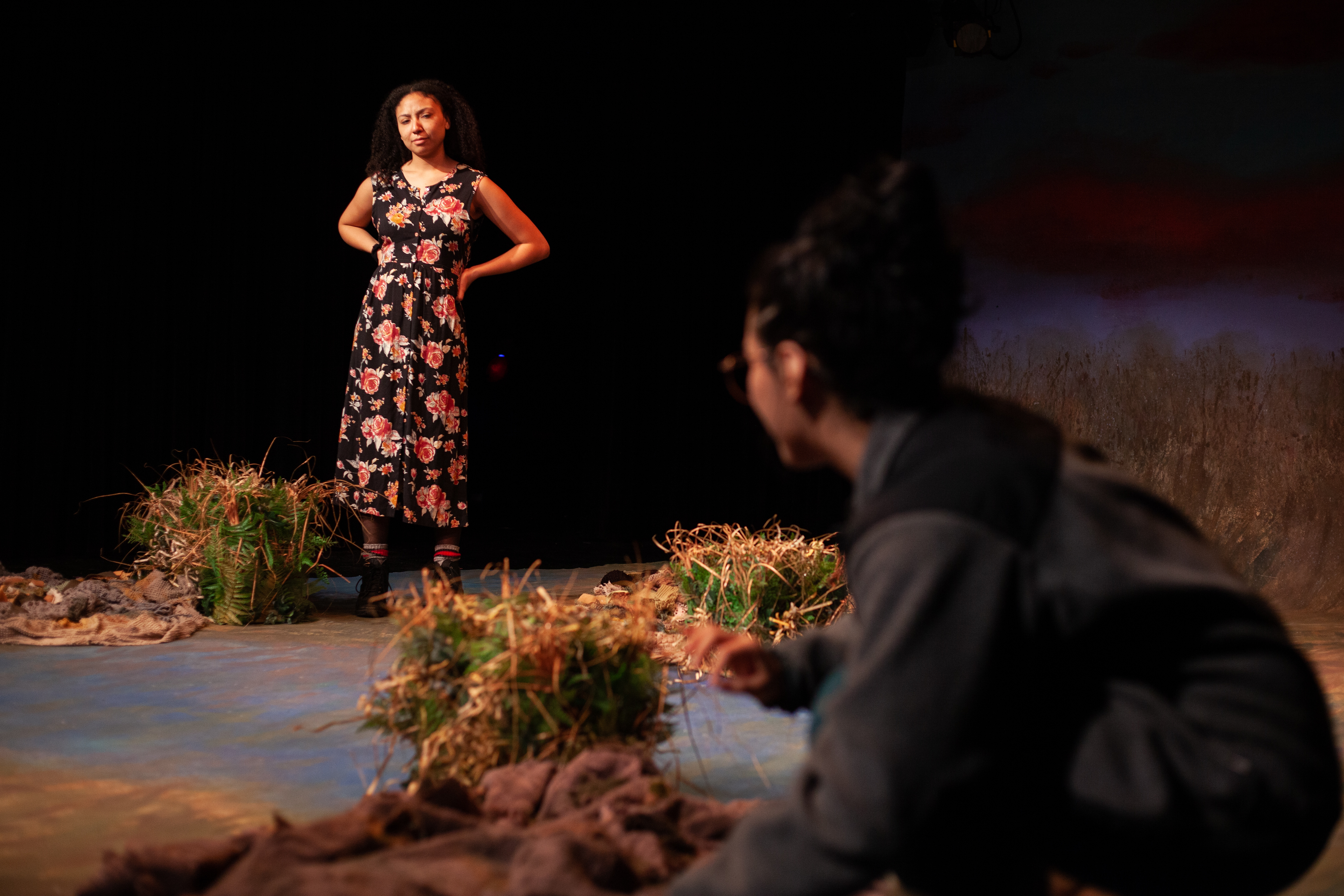
Estado Vegetal de Manuela Infante y Marcela Salinas me cambió a nivel molecular. Nunca había visto ese tipo de creación, tan precisa, tan inteligente, tan graciosa y tan humana a la vez. Pude verla en español 2019 en Austin, y tuve el privilegio de dirigir una producción bilingue en el Zilker Botanical Garden. Es el proyecto más difícil que he hecho: una producción bilingue donde el elenco cambiaba de papel al cambiar de idioma, presentada en un espacio que no estaba acondicionado para el teatro, y además el trabajo de artistas que yo admiro mucho.
Encima, la obra es sobre un árbol que causa un apagón, causando un accidente de moto que deja a alguien en Estado Vegetal, y nosotros la presentamos justo después de la tormenta del 2023 que quebró muchisimos árboles y causó muchos apagones. Una coincidencia dura y casi increíble. Esa producción fue la que me hizo reafirmar que el teatro tiene mucho que contribuir al momento ambiental y político en el que vivimos: nos deja interpretar qué es lo que nos está pasando.
Estado Vegetal by Manuela Infante and Marcela Salinas changed me on a molecular level. I had never seen that kind of creation before—so precise, so intelligent, so funny, and so human all at once. I got to see it in Spanish in 2019 in Austin, and I had the privilege of directing a bilingual production at the Zilker Botanical Garden. It’s the most difficult project I’ve ever done: a bilingual production where the cast switched roles when switching languages, presented in a space that wasn’t designed for theatre, and also a piece created by artists I deeply admire.
On top of that, the play is about a tree that causes a blackout, which leads to a motorcycle accident that leaves someone in a vegetative state—and we presented it right after the 2023 storm that broke countless trees and caused many power outages. A harsh and almost unbelievable coincidence. That production was the one that reaffirmed for me that theatre has so much to contribute to the environmental and political moment we’re living through: it allows us to interpret what is happening to us.
Soy alguien muy obsesivo. Cuando encuentro una artista cuyo trabajo me inspira mucho, lo estudio de manera muy minuciosa y hasta lo imito (siempre sin tomar crédito de lo que no es mio). Esto es, por supuesto, por inseguridad, pero al ir creciendo he podido tomar más riesgos sin sentir que estoy homenajeando a mis ídolos, sino persiguiendo otra cosa.
También, porque mis obsesiones me llevan por caminos muy peculiares, me ha tocado que escribir muchas subvenciones de fondos para poder crear estas puestas en escena, y eso me ha obligado mucho a pensar el “por qué” de cada proyecto. En el dramaturgismo de los Estados Unidos se pregunta mucho “¿por qué deberíamos trabajar en esta obra ahora?”, pero yo he llegado a preguntar “¿por qué deberíamos trabajar en esta obra ahora, aquí en este sitio, con y/o para estas personas?”. No siempre tengo buenas respuestas, pero la pregunta me obliga a tener un “por qué” bastante claro.
I’m a very obsessive person. When I find an artist whose work deeply inspires me, I study it very closely and even imitate it (always without taking credit for what isn’t mine). Of course, this comes from insecurity, but as I’ve grown, I’ve been able to take more risks without feeling like I’m just paying homage to my idols—instead, I’m pursuing something else.
Also, because my obsessions often take me down very peculiar paths, I’ve had to write many grant applications in order to create these productions, and that has really forced me to think about the “why” behind each project. In U.S. dramaturgy, there’s often the question: “Why should we work on this play now?” But I’ve come to ask, “Why should we work on this play now, here in this site, with and/or for these people?” I don’t always have good answers, but the question forces me to have a fairly clear “why.”
Decidir empezar. A pesar de traer el teatro en las venas, y haber hecho proyectos informales muy elaborados en la licenciatura, no fue sino hasta que estaba trabajando de oficinista que decidí que tenía que dedicarme al teatro. En parte esto fue porque no encontraba obras con las que me identificara tanto (gracias, de nuevo, Manuela y Marcela), pero también porque no crecí yendo al teatro ni tuve acceso a una educación que incluyera el teatro sino hasta mediados de la licenciatura. Cuando mis colegas o compañeros hablaban de teatro siempre estaba yo perdido, pero sabia que habia algo ahi que me atraía. Fue muy parecido a salir del clóset.
Deciding to begin. Even though theatre runs in my veins, and I had done very elaborate informal projects during undergrad, it wasn’t until I was working an office job that I decided I had to dedicate myself to theatre. Part of this was because I couldn’t find plays I truly identified with (thank you again, Manuela and Marcela), but also because I didn’t grow up going to the theatre, nor did I have access to an education that included theatre until midway through my undergraduate studies. When my colleagues or classmates talked about theatre, I was always lost, but I knew there was something there that drew me in. It was very much like coming out of the closet.
Hay un ilustrador portugués que se llama Jõao Fazenda, y su trabajo de ilustración siempre me ha parecido una linda estrella polar, estéticamente hablando. Sus ilustraciones son simples, pero emotivas, y me inspira muchísimo su uso del color y su lenguaje visual. Cuando he tenido los recursos para pensar en paletas de colores para suelos, escenografías y colores, él me ha inspirado muchísimo a jugar con el color y ver qué pasa. La inspiración se refleja mucho en los afiches para mis obras (casi todos los he hecho yo porque para mi los afiches son parte del dramaturgismo de las obras), pero también en las obras mismas. Es una mezcla entre algo que parece inocente y te baja las defensas y después te jala más profundamente.
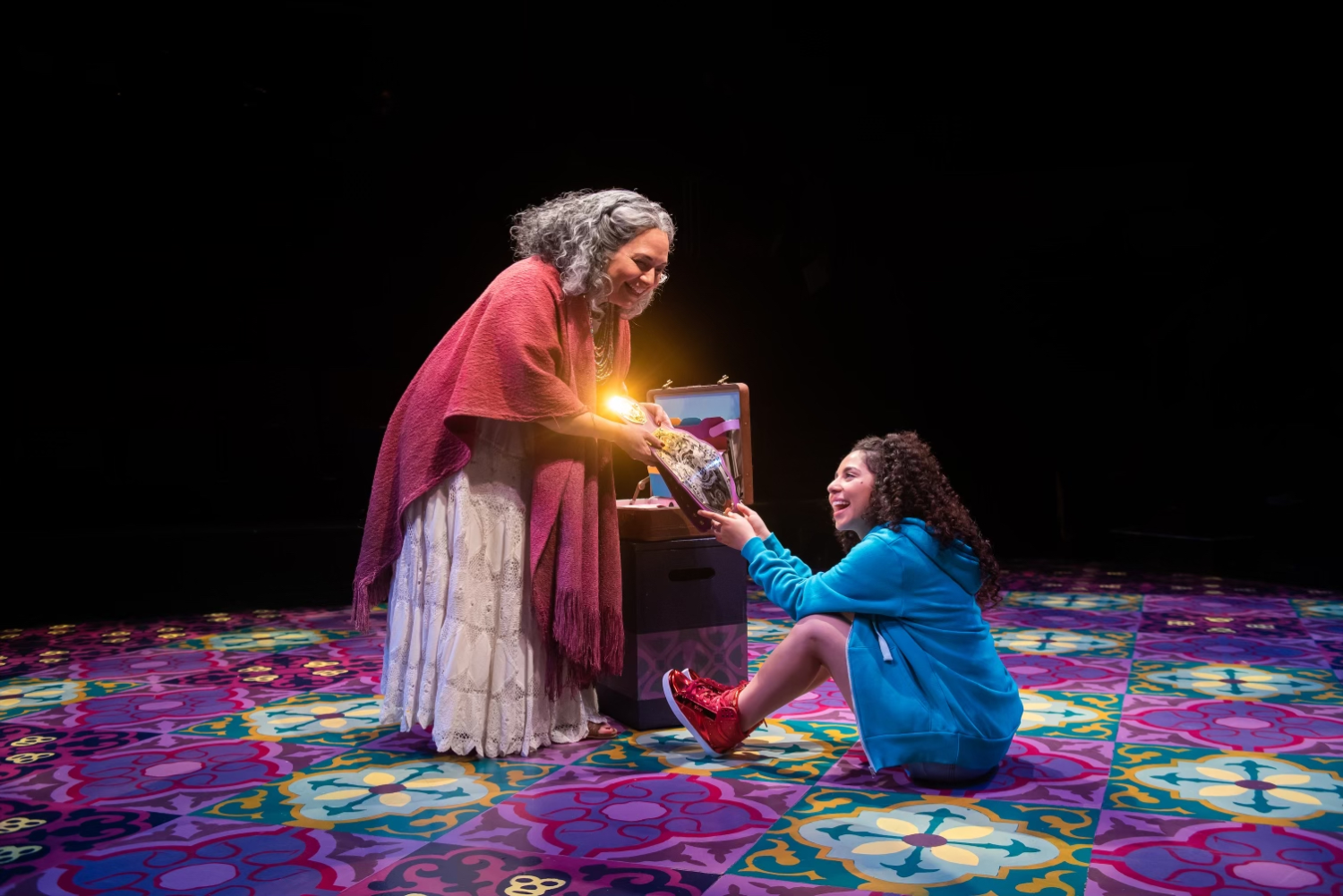
There’s a Portuguese illustrator named Jõao Fazenda, and his illustration work has always felt like a lovely North Star to me, aesthetically speaking. His illustrations are simple, but emotional, and I’m incredibly inspired by his use of color and his visual language. When I’ve had the resources to think about color palettes for floors, sets, and lighting, he’s inspired me a lot to play with color and see what happens. That inspiration shows up a lot in the posters for my shows (I’ve designed almost all of them myself because, to me, posters are part of the dramaturgy of a production), but also in the shows themselves. It’s a blend of something that seems innocent and lowers your defenses, and then pulls you in more deeply.
El teatro siempre se está muriendo y siempre está renaciendo, pero creo que estamos en un momento donde la industria está viéndose obligada a reconocer que el teatro tiene un papel que jugar en relación a la devastación ambiental. No me emociona que hayan catástrofes que nos obligan a tener esas conversaciones, pero si me emociona pensar que quizás hay nuevas formas de hacer teatro (de dirigir, de escribir, de actuar, de componer el dramaturgismo de una pieza) que tomen eso en cuenta. Estoy cansado de las obras que intentan obligarlo a uno a que recicle, y me emociona mucho las invenciones que van a emerger después de eso!
Theatre is always dying and always being reborn, but I think we’re in a moment where the industry is being forced to recognize that theatre has a role to play in relation to environmental devastation. I’m not excited that it takes catastrophes to push us into those conversations, but I am excited by the thought that maybe there are new ways of making theatre (of directing, writing, acting, composing the dramaturgy of a piece) that take that into account. I’m tired of plays that try to guilt you into recycling, and I’m really excited about the inventions that are going to emerge beyond that!
Todos los teatros, todos los artistas de teatro, y todas las obras empezaron en alguna parte. Lo que hoy se considera un clásico, tuvo muchísimos críticos en su momento. Hay que ser honesto (con nosotros y con nuestr@s colegas) sobre qué nos motiva a hacer teatro, y perseguir esa motivación de manera fiel. Y también, nada puede reemplazar el trabajo duro y la técnica.
All theatres, all theatre artists, and all plays started somewhere. What we now consider a classic had plenty of critics in its time. We have to be honest—with ourselves and with our colleagues—about what motivates us to make theatre, and pursue that motivation faithfully. And also, nothing can replace hard work and technique.
Si lo que hago hace espacio para que otras personas que tampoco se ven (o veían) en el teatro ahora se sientan capaces de pertenecer en este arte, siento que mi esfuerzo valió la pena.
También espero que mi trabajo haga para ellos lo que el teatro ha hecho para mí: expandir mis nociones de lo que es posible.
If what I do creates space for other people who also don’t (or didn’t) see themselves in theatre to now feel like they belong in this art form, then I feel my effort was worth it.
I also hope that my work does for them what theatre has done for me: expand my notions of what is possible.
Support artists—share this
Off-Book is the Skene newsletter for artists and makers. Profiles, opportunities, and editorials, free. New subscribers also receive the 2026 Performing Arts Survival Guide.
We use cookies to optimize our website and our service functionalities.