Latest posts.

Victor Zapatero: Light Holds Memory.

Meet Mexican lighting designer Victor Zapatero, whose work blends observation, emotion, and creative intention. Discover his artistic philosophy.

Get Featured or Publish with Skene!

Victor Zapatero: Light Holds Memory.

source: Victor Zapatero

Victor Zapatero is an artist who approaches light as both language and revelation. His journey began in a place of curiosity and quiet resistance, shaped by a desire to step outside the categories others tried to impose. That early instinct to question the world would later guide him into painting, theatre, dance, and the expansive universe of lighting. Today, he is one of Mexico’s most distinctive lighting designers, known for creating images that seem to breathe, shift, and speak their own emotional truths.

What sets Victor apart is not only his technical mastery, but the depth of intention behind every choice. His work invites audiences to feel before they think, to experience light as presence rather than decoration. He draws from nature, from cinema, from the inner landscapes that shape human resilience, and channels these influences into designs that linger long after the final blackout.

Victor turns observation into philosophy and craft into communion, inviting us to consider how light can hold memory, reveal fragility, and awaken a quiet sense of wonder. In this edition of PROFILES, we step closer to the world he builds one design at a time.

advertising
partner content

Victor Zapatero

he/him
Lighting Designer
Mexico
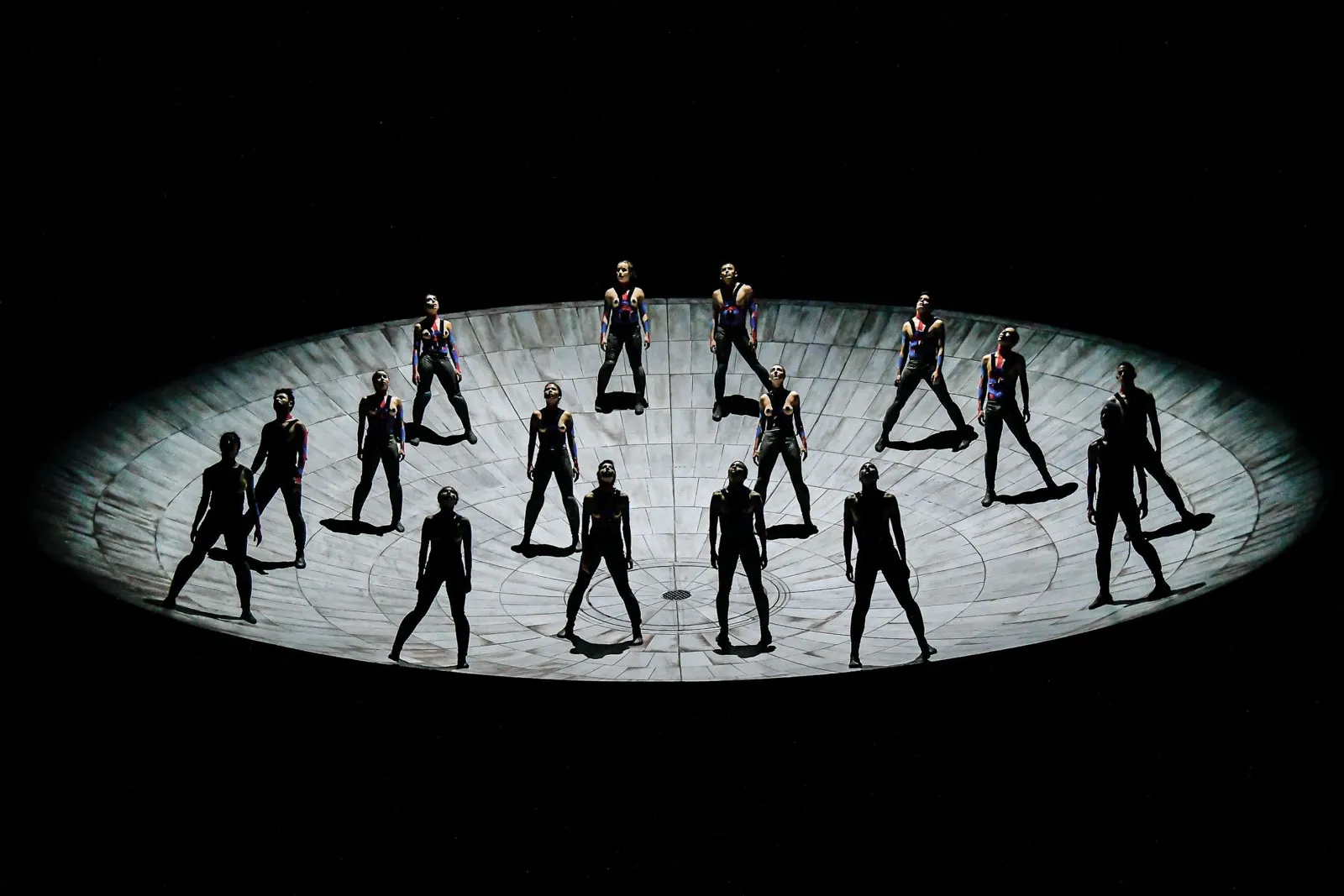
Omphalos Lluvia, source: Victor Zapatero

1. What sparked your interest as an artist and how has that spark evolved over time?

I believe the first spark came from my discomfort with the world around me. I saw people fitting into very stereotyped groups, and I didn’t fit into any of them—nor did I want to. From there, I became fascinated by paintings from different eras, and little by little I began to connect with the language of stage lighting thanks to a friend who invited me to collaborate on some concerts. From that point on, I studied stage directing and began lighting theatre productions, dance pieces, and later, opera.

2. Can you share the story behind one of your favorite works and what it means to you?

I recently began experimenting with light-based art pieces, driven by the intention of placing the viewer in direct contact with light itself. My first work in this line is called The Forest. The idea emerged in a very particular moment. My son, who was seven at the time, was about to undergo open-heart surgery. While he was in the operating room, I waited in his hospital room—nervous, unsure, and trying to hold myself together. I started thinking about what truly matters in life, and I arrived at a simple conclusion: the most important thing is to breathe. Breathing is such a common, automatic act that we often forget it—yet without it, life ends.

In that moment, I decided to create a light installation so I would never forget that experience. The Forest is deeply connected to the idea of vital oxygen, to the essence of life—always fragile in the face of death. I use layers of gauze to multiply the images, and the light falls directly on the viewers, like sunlight. A pulsing percussion echoes throughout the piece, because to remember is, literally, “to pass again through the heart.”

The Forest, source: Victor Zapatero

3. What is your creative process—do you follow a routine or does inspiration come spontaneously?

Each process is different, but I believe you always have to search for the origin or the fundamental intention behind every project: what is the reason for creating it, what it is meant to communicate. If that intention is deep and genuine, it becomes the first step toward discovering the best way to express it.

But to find the right path, you have to imagine every possible solution, and then begin discarding them—eliminating one by one until only the surprising and unique ones remain. The goal is always to propose a language that feels singular and unmistakably your own.

4. What has been your biggest challenge as an artist and how did it influence your growth?

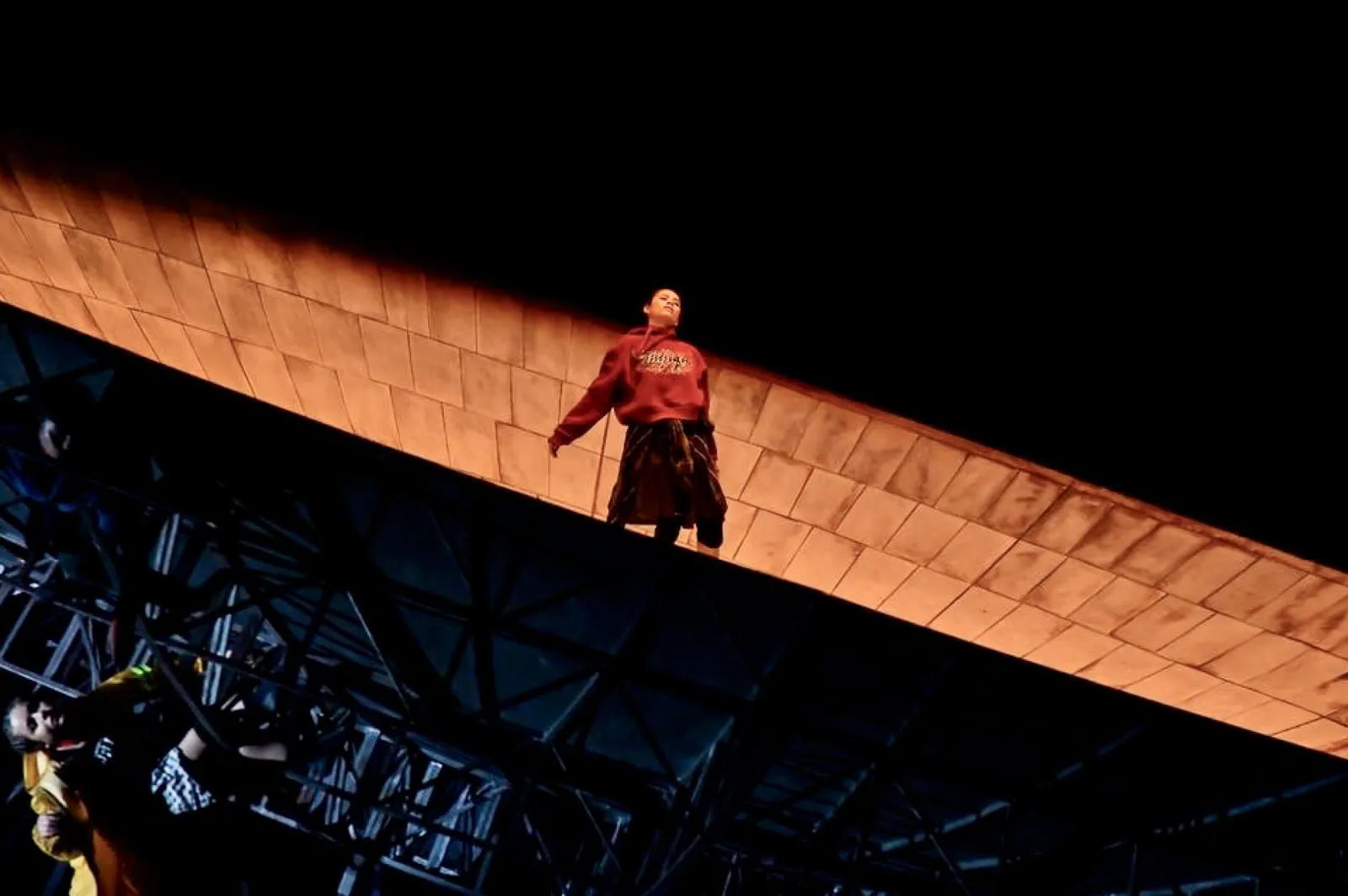
I think one of the most demanding projects I’ve ever worked on is Omphalos, by the renowned choreographer Damien Jalet. For this piece, he wanted a “cosmic light”—a type of illumination that felt unearthly. We used 2001: A Space Odyssey by Stanley Kubrick and Gravity by Alfonso Cuarón, with cinematography by Emmanuel Lubezki, as our main visual references.

One of my biggest challenges in this design was to create it in the most minimal way possible, using the smallest number of fixtures. The idea was to imagine a single light source for each scene—one that could bathe the entire surface of the antenna and generate a single, clear shadow for each performer.

Working with a three-dimensional model, I discovered that it was possible to create an eclipse effect inside the structure by using just one sidelight as the antenna rotated. In this way, the shadow gradually diminished across the surface while the light expanded until it finally completed the entire circumference. Only at that moment do the dancer-characters fully emerge within the space.

The Forest, source: Victor Zapatero

5. Who or what inspires you the most, and how is that reflected in your work?

Lately, I’ve been inspired by nature—spatially, visually, and on a sensory level. Nature has become my greatest source of inspiration. Spending time in natural environments sparks a deep inner dialogue and reflections about our role as humans on this planet. For me, these experiences challenge how I see myself and my place as an artist.

Moments in the mountains or the Mexican desert inspire me and nourish my spirit, helping me strengthen my beliefs.

6. What do you think is the most exciting thing happening in your field right now?

In my field and at this moment in my career, I feel a new window has opened through immersive installations. Until recently, I saw my main areas of work in theatre, dance, and opera. But now I’m very interested in creating my own art pieces—works where light interacts directly with the viewer and generates a new emotional response. Ideally, I want to move the audience through light. I believe art should touch the heart.

Touching a viewer emotionally today is not easy, and that challenge—experimenting with new, bold proposals—is what excites me the most right now.

Omphalos, source: Victor Zapatero

7. What advice would you give to artists or creatives who are just starting out?

As a lighting designer or visual artist, the first thing I recommend is to start observing. Observing is not the same as seeing. Observing means creating a mental photograph and analysis of every moment. Noticing objects, volumes, colors, distances, and depths, because all of that—along with shadows—is directly connected to light. By practicing constant observation exercises, almost without pause throughout the day and night, I believe a path toward being able to light begins.

There are also two qualities I value in any artist (young or experienced): imagination and originality.

8. How do you hope your work will connect with people or leave an impact?

I hope the images I design—often together with a set designer, director, choreographer, or costume designer—are unforgettable. Sometimes because they carry a beautiful aesthetic or a high degree of sophistication… other times because they’re improbable or impossible in everyday reality (appealing to the idea that in art everything is possible and we can use any metaphor).

But for me, the important thing is not to remain on the aesthetic level. With my designs, I aspire to go beyond the harmonious balance of volumes and compositions in order to awaken the viewer’s own emotions. Through light, I would like to make the spectator aware of their role within the story they are witnessing. I want the light to become a clear mirror that erases boundaries and triggers a deep stir in our innermost emotions.

Omphalos, source: Victor Zapatero

Support artists—share this

More like this, twice a month.

Off-Book is the Skene newsletter for artists and makers. Profiles, opportunities, and editorials, free. New subscribers also receive the 2026 Performing Arts Survival Guide.

About the Author

Leave a Reply

Your email address will not be published. Required fields are marked *

Abingdon Theatre Company - Season 34

Related Posts

FREE FOR ARTISTS

The 2026 Performing Arts Survival Guide.

Practical career guidance for performing arts artists and makers. Take it with you.