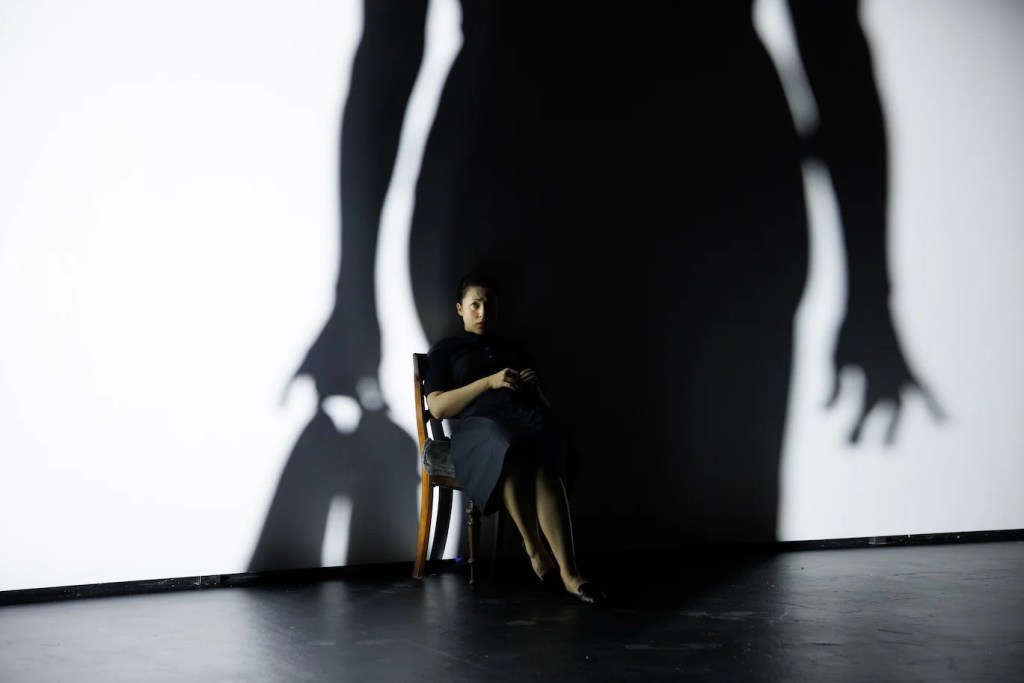
Gretchen Ugalde: I Am Their American Dream.
Scenic designer and emerging artist whose work builds worlds rooted in personal history, cultural identity, and a deep respect for the audience’s time.

Scenic designer and emerging artist whose work builds worlds rooted in personal history, cultural identity, and a deep respect for the audience’s time.

Demystify opera auditions from screening to callback. Learn how audition processes work and what companies look for at each stage.

Mexican singer and actress Sofía Montaño shares the artistry, discipline, and family legacy that shaped her journey to Cirque du Soleil.

Lily Bulman asks Helen Garcia-Alton, Tina Torbey, and Nia Banks the most personal question in theatre — what brought you here and keeps you coming back?

Explore alternative theatre training paths beyond MFA programs, from conservatories and apprenticeships to workshops and self-directed study.
Gretchen Ugalde was eighteen years old, newly back in the United States, and not yet sure where she fit, when she sat down in a community college theatre and watched The Diary of Anne Frank. Something shifted. She saw herself in Anne, felt the specific pull of a daughter who missed her father, and walked out of the theatre knowing, in the way you know things that have always been true, that she was supposed to make those worlds.
Her path into scenic design carried everything she brought to that first moment: a childhood in the Philippines shaped by Disney Channel’s version of American life, a family whose arrival in the United States felt like a miracle, parents who crossed oceans at eighteen and reminded her that their sacrifices were made so she could choose freely. She designs, she will tell you, because of them. She is their American dream, and that truth is the foundation everything else is built on.
Her work begins in the margins of a printed script, in the instinctive doodles and notes of a first encounter. From there it is shaped like clay, loose at first, then refined, always in conversation with the people around her.
Gretchen Ugalde is a scenic designer who believes two hours with an audience is never time to waste, in this edition of PROFILES.
My journey—or really, my active choice to become a scenic designer, began when I watched a production of The Diary of Anne Frank at my community college in 2014. I was 18 and had just moved back to the US. At the time, I didn’t quite understand what I wanted to study or where I fit in—it all felt overwhelming.
But sitting in that audience, something shifted. I was transported into the world of the play and, for a moment, forgot all the worries that existed outside the theatre. More than that, I saw myself represented in a way I never had before. I saw myself in Anne—especially because her father was her best friend. At that time, I missed my own father deeply, and that connection felt incredibly personal.
Walking out of the theatre, I had a realization (similar to the food critic in Ratatouille) where I reconnected with my childhood self and remembered a truth that had always been there: I loved art, stories, movies, and talking about journeys. Most of all, I loved painting, drawing, architecture, history, and studying art—and all of it suddenly felt like it was leading me toward scenic design.
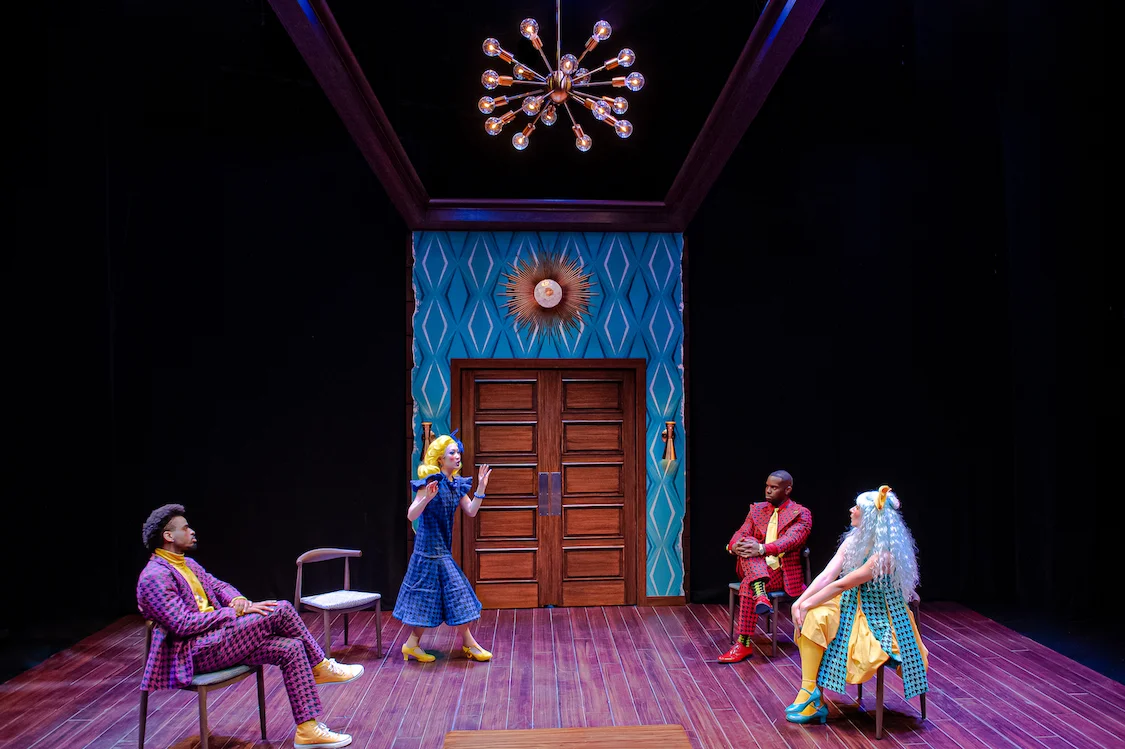
One of my favorite works is The Bald Soprano at the UC Irvine, directed by Mihai Măniuțiu. This project means a great deal to me because it marked the beginning of a new chapter—graduate school!
I came into grad school hoping not just to make things look good, but to truly make art. I’m incredibly grateful that my mentor, Efren Delgadillo Jr., assigned me this show in my first year. What made it especially exciting was how open-ended the script is, allowing for many possibilities. Our director grounded the design in two key ideas: to begin with a realistic base and gradually introduce absurdity.
I drew inspiration from my childhood in the Philippines, where my perception of the “ideal” American life was shaped by Disney Channel. Moving to the US, I quickly realized that life is far more complex than those portrayals—similar to the characters, who appear polished but reveal themselves to be awkward and chaotic.
Influenced by Arthur Sarnoff’s paintings, I designed a mid-century modern living room that appears perfect—whimsical, colorful, and composed—while incorporating absurd elements like a revolving door and unusual clock, to reveal the confusion beneath the surface of the characters’ lives.
My creative process always begins with…the script! I prefer working with a printed or physical copy so I can draw, write, and respond instinctively in the margins—whether it’s directly related or not. These notes and doodles become a record of my first impressions, and I often return to them as a way of tracking where my initial emotional connection began.
From there, conversation becomes essential. I value early discussions with the director, as well as collaborative exchanges with the design team.
I also look for inspiration in a variety of places: books, films, and personal conversations. Talking with my partner, my family and friends often help me uncover new ways of understanding a script. These conversations ground my work in lived experience and broaden my point of view.
I think of my process like shaping a block of clay. I begin with something loose and intuitive, then gradually refine and define it over time. I enjoy sketching and model-making as a way to test ideas, and I often use 2D/ 3D design software. Technology allows me to explore spatial storytelling while supporting a collaborative and evolving design process.
I think the biggest challenge I’ve faced as an artist is one that ultimately marked the beginning of my growth: coming into my own and truly believing in myself. I remember starting my journey in undergrad feeling excited and sure of what my heart was drawn to, but also very nervous about how “behind” I felt in theatre and design compared to those around me—especially while loving something I hadn’t yet fully developed strong skills in.
There are many things I wish I could go back and tell myself:
1. It’s okay to feel nervous—this work requires vulnerability and emotional openness.
2. I am not behind—I am exactly where I’m meant to be.
3. Trust in time and in the journey. This path is long, rewarding, and full of life.
This challenge has deeply shaped my growth. It’s why I feel so passionate about uplifting young artists. I’ve loved teaching Intro to Scenic Design over the past three quarters, and I hope to help students feel seen by acknowledging that this is a sensitive time—one filled with pressure to figure out where you belong. When you find a spark, trust it—and believe in yourself.
My deepest inspiration is my parents. In many ways, our family being in the United States feels like a miracle. My mother arrived in San Francisco at 18 with her siblings to claim their citizenship, granted after the passing of her father, a U.S. Marine. My father also came to the U.S. at 18, encouraged by his mother to broaden his opportunities and experience a different way of life—especially as he struggled to find a field of study that aligned with his interests in Cebu, where his passions for marine biology and archaeology weren’t readily accessible.
I often think about what it means to be that age and carry such big dreams. My parents made intentional, life-changing choices in pursuit of a better future. There was a time when I felt guilty choosing a career in the arts—one that isn’t always financially stable—but they reminded me that their sacrifices were made so I could have the freedom to choose a path that truly excites me.
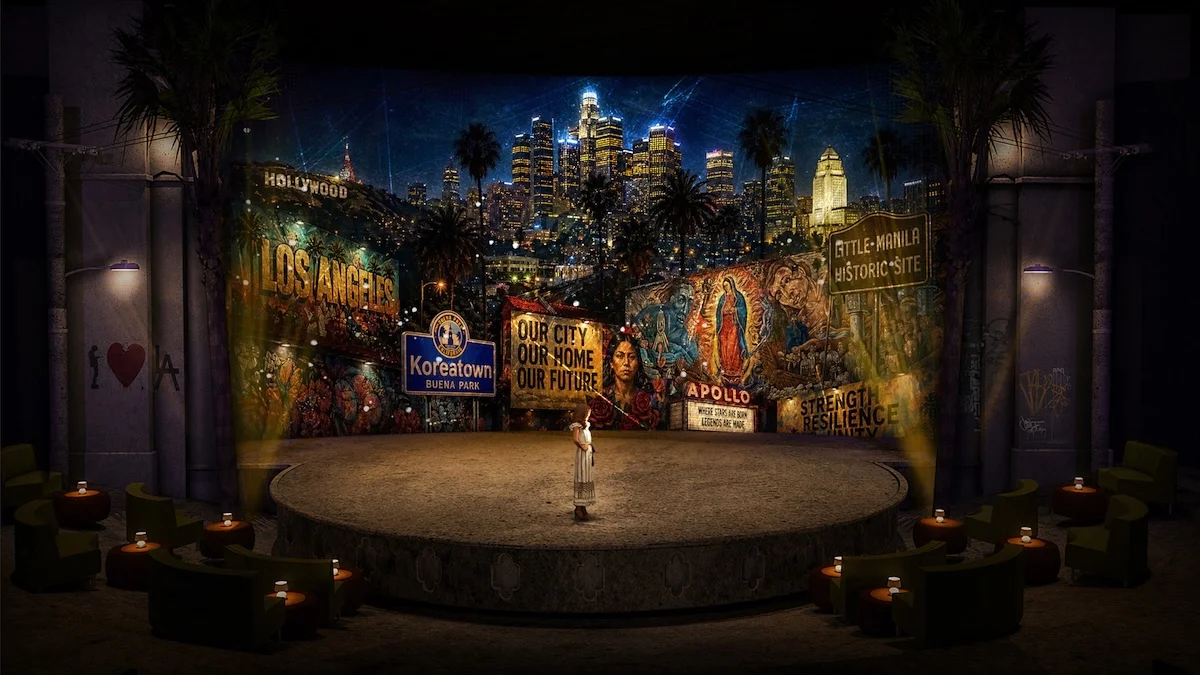
In many ways, I am their American dream. Because of them, I get to say, “I design spaces for live performance”—a dream I once wouldn’t have dared to imagine. That truth is the foundation of my work; it fuels both my dreams and my drive. I hope to tell stories across the country, carrying their courage with me as I make that possible.
If you feel a spark—even a small flutter at the idea of making art for a living—trust it! This world needs art. What artists offer is a moment to reflect, to be transported, and to reconnect with emotion. So many people are searching for a mirror, and as artists, we develop the tools and sensitivity to become that mirror in different ways.
If you notice that spark within yourself, don’t ignore it—honor it.
For a long time, I was nervous that this path might not be fruitful, and sometimes that feeling still returns. But more often, I’m surprised by how kind and generous the universe can be in taking care of those who stay committed to what they love.
I care deeply about not wasting the time we’re given. With every show, we have about two hours with an audience—time they’ve chosen to spend with us—and that motivates me to do everything I can to make that time meaningful.
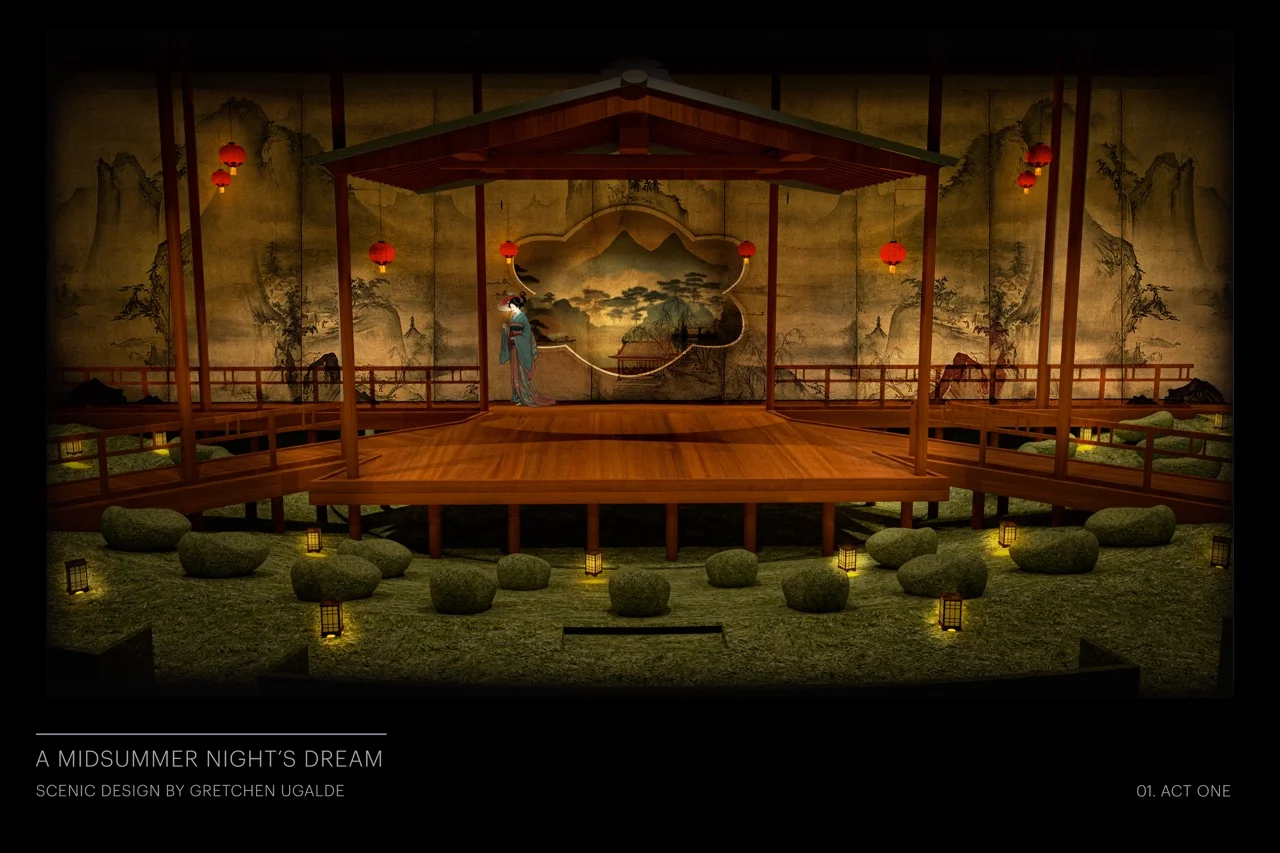
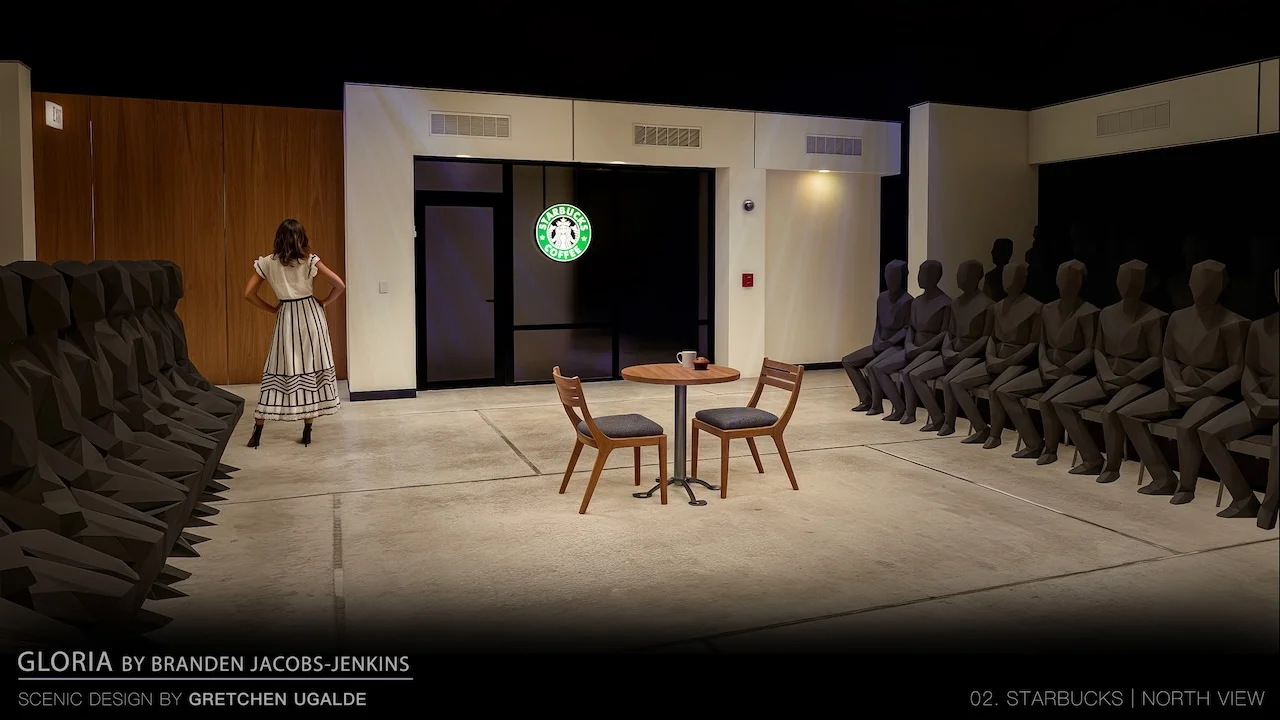
I strive to design spaces that transport, inspire, and hold attention—environments that support the performers and keep both eyes and hearts engaged on stage. For me, scenic design is about framing the experience in a way that allows the story to fully resonate.
I hope audiences leave with something that lingers—whether it’s a thought, a feeling, or a conversation that continues beyond the theatre. If someone walks out still thinking about what they saw, or talking about it with someone else, then I feel the work has done its job.
Support artists—share this
Off-Book is the Skene newsletter for artists and makers. Profiles, opportunities, and editorials, free. New subscribers also receive the 2026 Performing Arts Survival Guide.

We use cookies to optimize our website and our service functionalities.