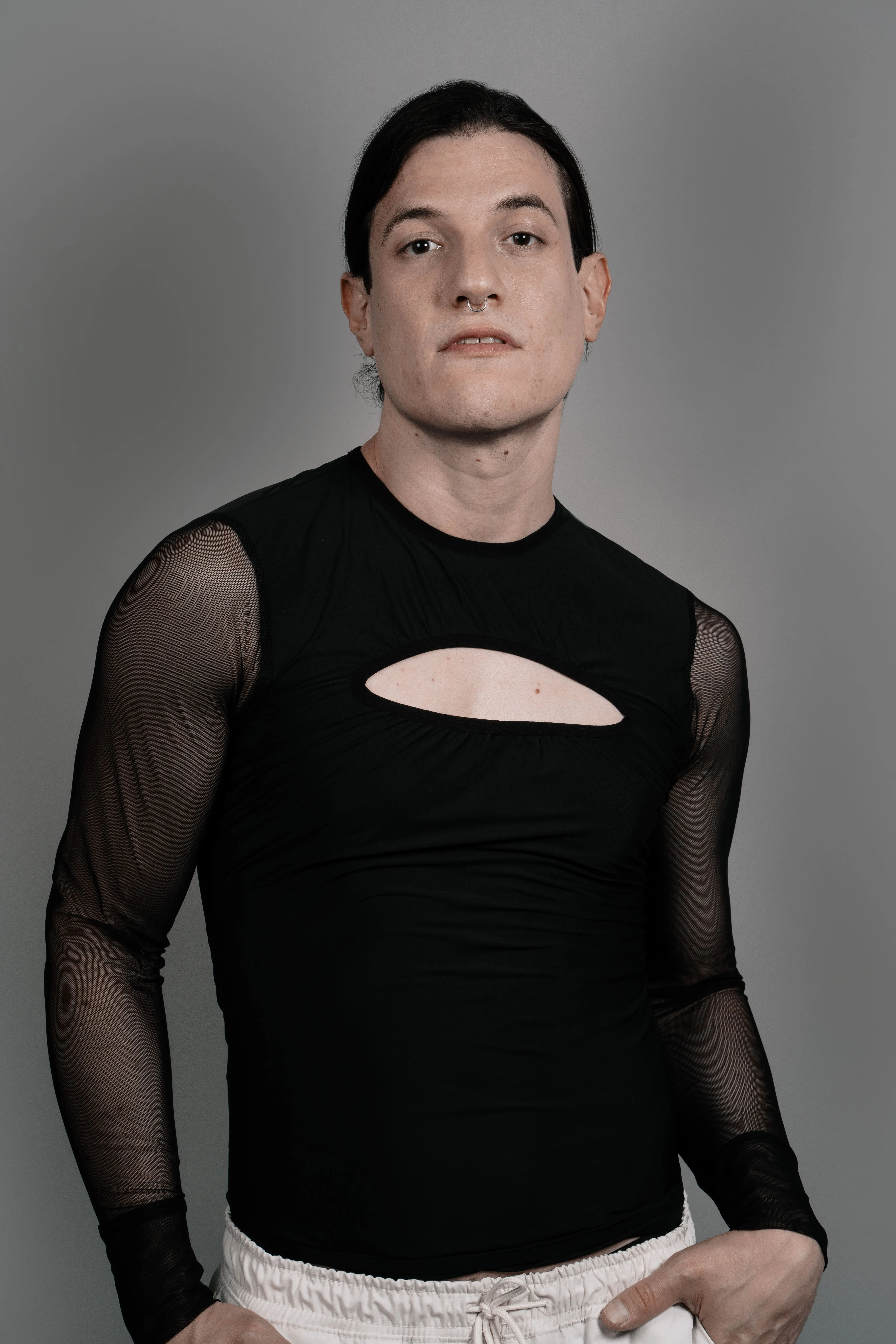
Emilio Bastré: Fragile Enough for a Strong Connection.
Emilio Bastré is a Mexican actor and member of the Compañía Nacional de Teatro whose work lives at the intersection of freedom and craft.

Emilio Bastré is a Mexican actor and member of the Compañía Nacional de Teatro whose work lives at the intersection of freedom and craft.

Six essential plays by Black British playwrights that American theatres should be producing — from Natasha Gordon to debbie tucker green.

Meet Mexican lighting designer Victor Zapatero, whose work blends observation, emotion, and creative intention. Discover his artistic philosophy.

Actor and playwright whose work moves between personal honesty and theatrical confrontation, building stories that leave no edges sanded down.

Scenic designer and Skene founder on community, mentorship, and building a creative career, in conversation with Mitzi Avila of Creative Blueprints.
Emilio Bastré found theatre the way many people find the thing that saves them: by accident, in a high school extracurricular, in a room where something unexpected happened. Their teacher made them fall in love with it. What theatre gave them was not just a stage but a permission: to play, to be free, to do what brings joy and have that be enough.
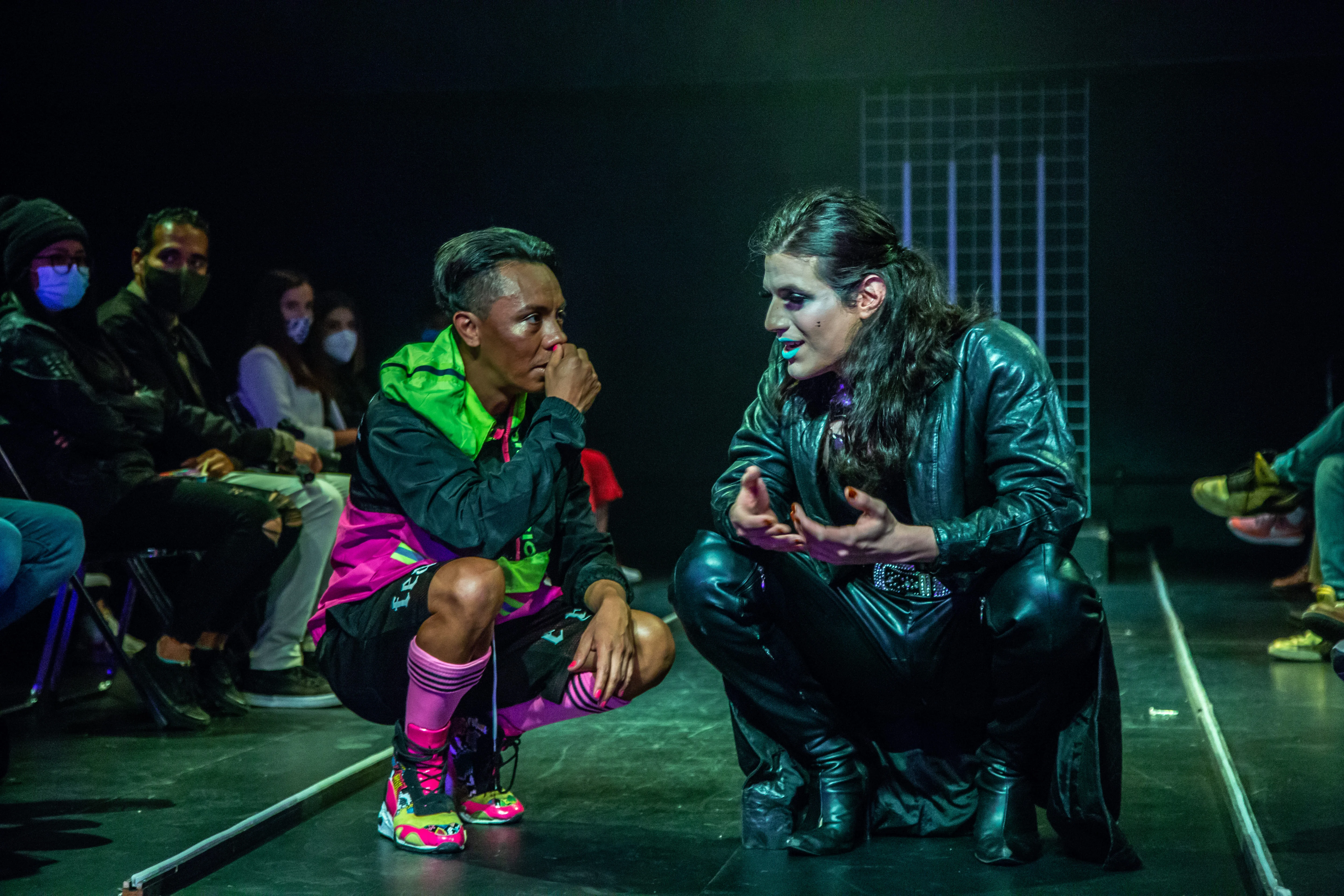
That permission has carried through an entire career. Their work has lived predominantly in queer and dissident spaces, in productions where their non-binary and feminine essence was not something to be managed but something to speak from directly. It is a practice built on freedom, on a technical approach rooted in circumstances and objectives that bends differently for every character, every project, every new universe to be inhabited.
Now, a decade into their professional life, Emilio is a member of the Compañía Nacional de Teatro in Mexico, preparing to open Sophocles’ Electra, playing Orestes, one of the most iconic figures in Greek tragedy. It is the most complex role of their career, and one that asks them to inhabit masculinities they have long been in conflict with.
Emilio Bastré steps into that conflict with everything they have, in this edition of PROFILES.
Cuando estudiaba en la escuela preparatoria pertenecía al grupo de teatro como actividad extraescolar, fue ahí donde conocí el teatro y mi maestra me hizo enamorarme de él. Tengo una historia de inseguridades y poca confianza en lo que me hace feliz, entonces encontrar un espacio donde puedo jugar, ser libre y hacer lo que me place y eso “está bien” me permitió conectar con la libertad en la expresión. Con el paso de los años esto simplemente se ha reforzado al ir creciendo en mi carrera, es muy bonito poder pararme en los escenarios y siempre conectar con la gente desde distintas expresiones de la actuación.
When I was in high school I belonged to the theatre group as an extracurricular activity. That is where I discovered theatre, and my teacher made me fall in love with it. I have a history of insecurities and little confidence in the things that make me happy, so finding a space where I could play, be free, do what brings me joy, and have that be considered acceptable allowed me to connect with freedom in expression. Over the years that connection has only deepened as I have grown in my career. It is a beautiful thing to be able to stand on stages and consistently connect with people through different forms of acting.
Probablemente una de las obras más importantes de mi carrera fue con la que me gradué de la Licenciatura en Actuación de la escuela de teatro, Como te guste de Shakespeare dirigida por Mauricio García Lozano, tuve un grupo con el que muy comprometidamente nos dedicamos a actuar, jugar y permitirnos dar el paso al mundo profesional de una manera muy sana, gozosa y disfrutable. Hoy más de diez años después he tenido una carrera muy fructífera siempre partiendo de esa experiencia de libertad, juego y compromiso.
Además significa mucho en mi corazón el proceso pues Jacques era mi personaje favorito de la comedia, un melancólico que además tomaba un rol muy importante en la obra, y en una historia escolar en la que no me solía ir muy bien, poder actuar a un personaje que tanto anhelaba y además tener mi primer resultado realmente favorable en términos actorales fue muy satisfactorio.
Probably the most important production of my career was the one with which I graduated from my acting degree: As You Like by Shakespeare, directed by Mauricio García Lozano. I had a group of collaborators who were deeply committed, and together we dedicated ourselves to acting, playing, and allowing ourselves to step into the professional world in a way that felt healthy, joyful, and genuinely enjoyable. More than ten years later I have had a very fruitful career, and it has always stemmed from that original experience of freedom, play, and commitment.
It also holds a special place in my heart because Jacques was my favorite character in the play: a melancholic figure who also carries a very important role in the story. In a school experience where things rarely went well for me, being cast as a character I had longed to play and receiving my first truly positive result as an actor was deeply satisfying.
Tengo un trabajo técnico actoral muy particular, me baso en una técnica de estudio que tiene que ver con los términos básicos de “circunstancias” y “objetivos”, partiendo de ahí me dedico a hacer una investigación sensorial y de creación de imágenes que puedan nutrir el universo de las circunstancias y marco contextual de la obra y su dirección.
Lo que me gusta mucho de mi trabajo es que cada personaje y cada proyecto tienen naturalezas distintas que permiten que la técnica no funcione siempre igual y sea maleable el proceso. Me gusta mucho descubrir en cada personaje y proyecto sus propios referentes, leer, ver, conocer, estudiar y aprender cosas nuevas que me permitan crear y habitar distintos universos para compartirlos con el público.
I have a very particular technical approach to acting. My process is based on a study technique organized around the core concepts of circumstances and objectives. From that foundation I dedicate myself to sensory research and image-building that can nourish the universe of the circumstances and contextual framework of the production and its direction.
What I love most about my work is that every character and every project has its own distinct nature, which means the technique does not function the same way twice. The process stays malleable. I enjoy discovering the specific references each character and project calls for: reading, watching, meeting, studying, and learning new things that allow me to create and inhabit different universes to share with an audience.
Actualmente pertenezco a la Compañía Nacional de Teatro (en México), un logro en mi carrera que significa muchísimo pues además marca diez años de haber terminado mi carrera y haberme lanzado al mundo profesional. En esta compañía estoy trabajando un proceso muy fuerte pues me dieron probablemente el papel más complejo que me ha tocado actuar en toda mi carrera.
Usualmente en mis años profesionales antes de estar aquí mi trabajo se enfocó en la vida queer y el mundo disidente, trabajando en espectáculos donde mi esencia no binaria y femenina estaban muy a flote y siempre me gustó hablar desde ese lugar, pero ahora el 9 de abril estrenaremos “Electra” de Sófocles bajo la dirección de Esther André, y navegar en un mundo trágico en el que me toca encarnar un universo de traiciones, asesinatos, venganza, abandono, designios de los dioses y maldiciones heredadas ha sido particularmente retador, pues también significa encarnar masculinidades con las que he estado en conflicto gran parte de mi vida.
Sin embargo también como parte de mi experiencia actoral estoy muy entusiasmado y me siento muy privilegiado y honrado de poder interpretar en una plataforma tan grande uno de los personajes más emblemáticos de las tragedias griegas, Orestes, y espero de todo corazón que el entusiasmo y la emoción que siento puedan ser compartidas con el público que nos acompañe.
I currently belong to the Compañía Nacional de Teatro in Mexico, an achievement that means a great deal to me, especially because it marks ten years since I finished my degree and launched myself into the professional world. Within this company I am working through an incredibly demanding process, as I have been given what is probably the most complex role of my entire career.
In my professional years before joining this company, my work was focused primarily on queer life and dissident spaces, in productions where my non-binary and feminine essence was very present and always something I was happy to speak from. But on April 9th we open Electra by Sophocles, directed by Esther André, and navigating a tragic world in which I must embody a universe of betrayal, murder, vengeance, abandonment, divine decree, and inherited curses has been particularly challenging. It also means inhabiting masculinities I have been in conflict with for much of my life.
And yet, as part of my acting experience, I am deeply excited and feel genuinely privileged and honored to portray one of the most iconic figures in Greek tragedy, Orestes, on such a significant platform. I hope with all my heart that the enthusiasm and emotion I feel can be shared with every audience member who joins us.
Tengo muchas inspiraciones, artistas, escritores, actrices y actores, bailarines y tomo inspiración de las experiencias de belleza y artísticas que me rodean día a día. Probablemente alguien a quien mencionaría aquí sería a una idol japonesa (cantante de un grupo pop de jovencitas) que se llama Masaki Sato, todo lo que hacía con Morning Musume, a pesar de ser un género muy específico para mí ese grupo y ella en particular (mi favorita) emanan profesionalismo y determinación, son un grupo que pisa fuerte y contagia la alegría de sus canciones de manera muy asertiva, las quiero mucho y me gusta pensar que yo también puedo contagiar así mi pasión con mis actuaciones.
I draw inspiration from many sources: artists, writers, actors and actresses, dancers, and the beautiful and artistic experiences that surround me every day. One person I would mention here is a Japanese idol, a singer from a pop group called Morning Musume, named Masaki Sato. Despite being a very specific genre, that group and she in particular, my favorite, radiate professionalism and determination. They perform with a strong presence and share the joy of their music in a remarkably direct and infectious way. I love them deeply, and I like to think that I too can share my passion through my performances with that same kind of contagious energy.
Estar ensayando el proyecto de las tragedias griegas de la Compañía Nacional de Teatro y vivir junto a mi perro Chimichurri. Chimichurri es quien le da sentido y alegría a mi vida desde el día que lo adopté.
Rehearsing the Greek tragedy project with the Compañía Nacional de Teatro, and living alongside my dog Chimichurri. Chimichurri is the one who has given meaning and joy to my life since the day I adopted him.
Nunca dejar de creer, nunca dejar de crear, nunca dejar de hacer lo que a uno le apasiona a pesar de que el mundo parezca estar en contra. Yo he sido muy afortunado con las posibilidades que me ha presentado la vida, pero también tengo que reconocer que me ha tocado navegar durísimo cuando la marea parece estar en contra y uno tiene que nadar y ser fuerte para asumir que lo que te hace feliz es algo con lo que puedes ir muy lejos.
Never stop believing. Never stop creating. Never stop doing what you are passionate about, even when the world seems to be against you. I have been very fortunate with the opportunities life has offered me, but I also have to acknowledge that there have been times when I had to swim hard against the current, when the tide seemed to be against me and you have to keep going and be strong enough to trust that what makes you happy is something you can take very far.
Me gusta pensar que la humanidad, vulnerabilidad y fragilidad que puedo encontrar en los personajes y en los proyectos en los que trabajo también puedo ser capaz de contagiarla para que el público se fragilice y conecte con su propia humanidad. Me gusta pensar que el teatro es ese espacio de lo efímero donde las experiencias pueden ser tan apasionantes y profundas que la vida ya no sea la misma después de la experiencia teatral.
I like to think that the humanity, vulnerability, and fragility I find in the characters and projects I work on are qualities I can pass on to audiences, so that they too become a little more fragile and connect with their own humanity. I like to think that theatre is that ephemeral space where experiences can be so passionate and so profound that life is simply no longer the same after the theatrical encounter.
Support artists—share this
Off-Book is the Skene newsletter for artists and makers. Profiles, opportunities, and editorials, free. New subscribers also receive the 2026 Performing Arts Survival Guide.
We use cookies to optimize our website and our service functionalities.