
5 AAPI Artists Who Changed the Performing Arts (and my Work) Forever.
Discover 5 AAPI artists who shaped the performing arts—and left an unforgettable mark on my own creative journey. Celebrate their legacy!

Discover 5 AAPI artists who shaped the performing arts—and left an unforgettable mark on my own creative journey. Celebrate their legacy!

Six foundational plays by Black playwrights that belong on every stage: from Hansberry to Parks, these are essential works of American drama.

Navigate life after theatre graduation with practical guidance on auditions, survival jobs, financial planning, and sustainable momentum.

Nia Safarr Banks is a costume designer whose work translates character and inner life into clothing that tells honest, human stories.

Scenic and production designer Alex Peña on world building, immersive environments, and crafting story driven spaces for stage and film.
This May, as AAPI Heritage Month begins, I find myself reflecting on what monumental inspiration Asian American and Pacific Islander (AAPI) artists have made to my career, and to the performing arts at large. The world of theater, opera, and dance would be far less rich without the vision, creativity, and perseverance of AAPI artists, whose impact continues to shape the stages we love.
Today, I want to take a closer look at five remarkable individuals whose artistry has made a mark on my own work, and continue to move the performing arts forward.
Costume designer Willa Kim (born Wullah Mei Ok Kim)(1917-2016) brought extraordinary depth and vibrancy to American theater. A two-time Tony Award winner, Kim’s credits include classics like Gypsy, The Music Man, and Bells Are Ringing. But beyond the accolades, her work was revolutionary: Willa Kim approached costumes as emotional storytelling tools, painting with fabric and light to deepen a character’s presence on stage. At a time when few Asian American artists were recognized in mainstream theater, her success broke barriers and opened doors for countless others. I first encountered Willa Kim’s work in undergrad, where our Costume Design professor excitedly talked about the dramatic expressivity of Willa Kim’s sketches.
Tony Award-winning set designer Mimi Lien is known for transforming entire theatrical environments. Her design for Natasha, Pierre & The Great Comet of 1812 blurred the line between audience and performer, creating an immersive, visceral experience. With a background in architecture, Mimi reimagines space as a living, breathing element of performance—her work invites audiences not just to watch, but to inhabit the world of the story. Mimi’s bold creativity redefines scenic design for a new generation of artists. Of the artists on this list I came across Mimi Lien’s work last, but the way (what I perceive as) an almost snarky humor is imbued into her work has made an indeleble mark in my own practice.
Ming Cho Lee (1930-2020) is often called the Dean of American Set Designers, and for good reason. His conceptual, abstract sets for productions like The Glass Menagerie and countless others revolutionized scenic design in the U.S. Instead of literal, realistic backdrops, Ming introduced minimalist, sculptural environments that allowed imagination to fill in the details. His postmodern approach opened new creative possibilities, influencing not just theater designers but the aesthetics of dance, opera, and film. Ming also served as a mentor to generations of artists, leaving an indelible mark on the field. Not only has his work influenced mine, in many ways it’s sparked it. I remember seeing that model for MacBeth, stark white with its blood red tree slightly off centered. No matter how many times I see it, it still takes my breath away the way a space so economical can elicit so many emotions. His work, along with Alejandro Luna‘s were by far the greatest influences that pushed me to pursuit scenic design.
Lighting designer Dawn Chiang has spent her career using light not just to illuminate the stage, but to shape the emotional landscape of every performance she touches. With a portfolio that spans Broadway, regional theatre, and opera, Dawn has mastered the art of guiding audiences’ attention, mood, and imagination through her craft. Her work on productions like Zoot Suit and The Glass Menagerie demonstrates how lighting can tell its own story—revealing internal worlds, emphasizing turning points, and deepening the resonance of a piece. Through her artistry and mentorship, Dawn has paved the way for greater diversity behind the scenes too. Of all the artists on this list, she’s the one I’m by far the closest to. Dawn has been a personal -yet unofficial- mentor and a friend for me since I finished grad school. She is a wealth of knowledge, an incredibly generous but stern collaborator, and the most amazing dinning partner (she knows every good place in NYC)!
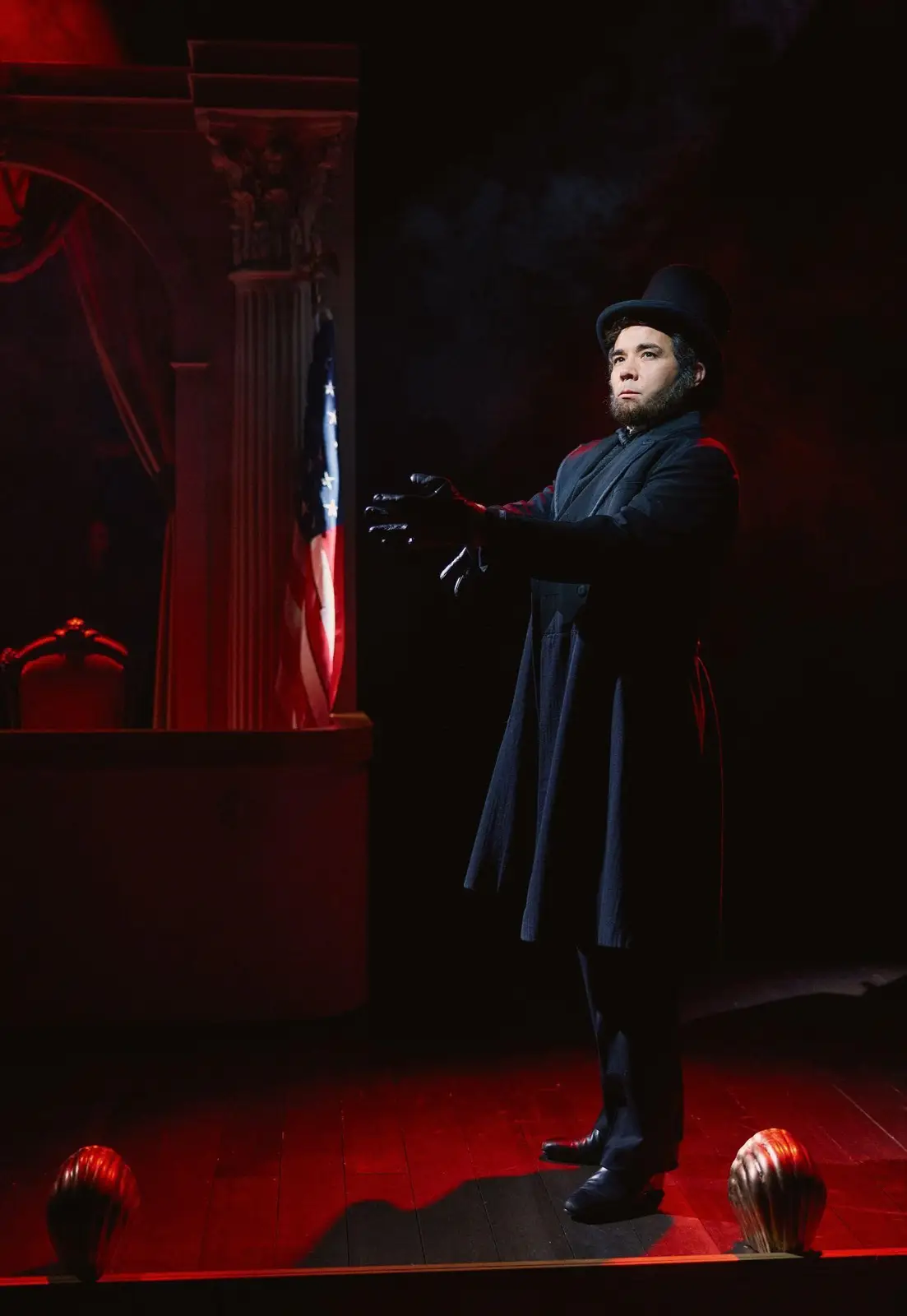
Stage and screen actor Conrad Ricamora brings authenticity, vulnerability, and charm to every role he takes on. In Here Lies Love, he portrayed Benigno “Ninoy” Aquino, helping to bring a deeply political and emotionally resonant story to life through musical theater. Conrad’s work in Soft Power and beyond challenges limited stereotypes about Asian American characters, offering more nuanced, fully human portrayals. His presence in major productions underscores the importance of casting that reflects the full richness of the American experience. Soft brag, Conrad and I attended the same Grad program in Tennessee. I’ve been following his journey ever since and it fills me with inspiration. Hopefully he’ll read this and grant us an interview soon! 😉
The work of AAPI artists enriches the performing arts by introducing perspectives, aesthetics, and narratives that challenge and expand our understanding of storytelling. These artists—and many others—have dismantled stereotypes, introduced new artistic forms, and shown that representation is about more than visibility; it’s about the depth, complexity, and universality of human experience.
Their influence is growing stronger each year, transforming not only what stories are told but how they are told. As audiences and collaborators, we are compelled to keep exploring, celebrating, and championing the vision and talent of AAPI creators—whose work continues to shape the performing arts landscape in the U.S. and around the world.
Support artists—share this
Get our free Survival Guide for Actors, Directors, and Designers.
We use cookies to optimize our website and our service functionalities.