Latest posts.

Jack Golden: When a Moment Sings.

Scenic designer Jack Golden reflects on collaboration, instinct, and making strange and meaningful theatre through design and teaching.

Get Featured or Publish with Skene!

Jack Golden: When a Moment Sings.

source: Merry Characters Photography.

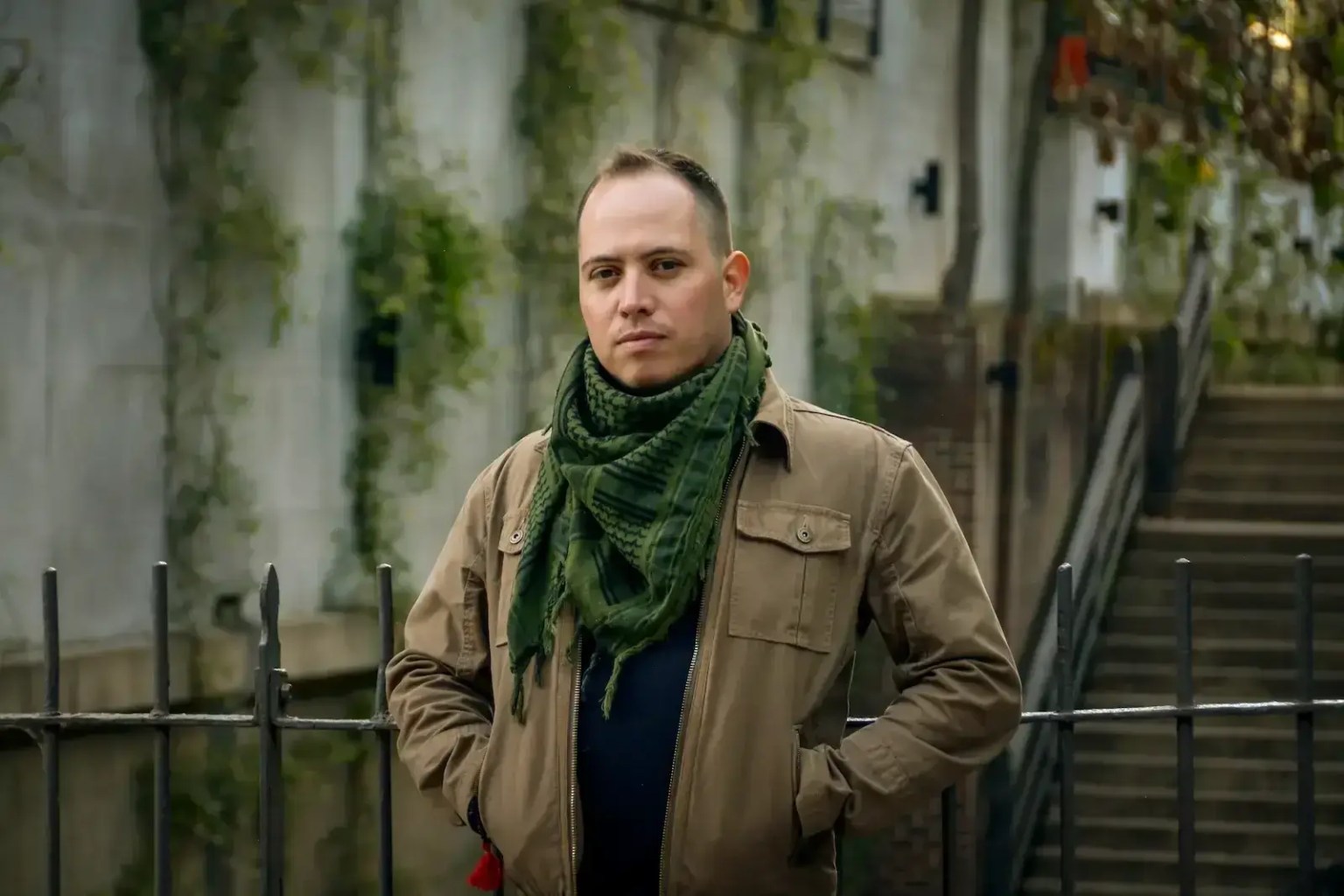
Jack Golden’s path to theatre design did not begin with certainty or early ambition. It began with curiosity, chance, and the unexpected pull of a backstage door left open. A self described bad student from North Dakota, Jack entered higher education with an interest in economics and public policy, only to find himself rerouted by an accidental acting class, an unclaimed scholarship, and a first day working as an electrician in a college theatre. That moment, equal parts embarrassment and discovery, sparked a lifelong devotion to building spaces where stories can unfold.

Since then, Jack’s journey has taken him through small theatre companies across the country, graduate study at the University of Maryland, and years of work in Washington, DC and New York. He now lives in Vermont, where he balances an active design practice with teaching at Berkshire Community College. Being close enough to the city to stay connected while guiding new generations of artists feels, to him, like a full circle moment.

Jack’s work is driven by research, collaboration, and a love for environments that feel both rigorously constructed and emotionally unstable. He is drawn to moments when collective choices align in ways no single person could plan. In this edition of PROFILES, Jack reflects on learning to trust his instincts, the joy of shared discovery, and the privilege of making strange, meaningful, and occasionally rude work with people he trusts.

advertising
partner content

Jack Golden

he/him
Scenic Designer
United States
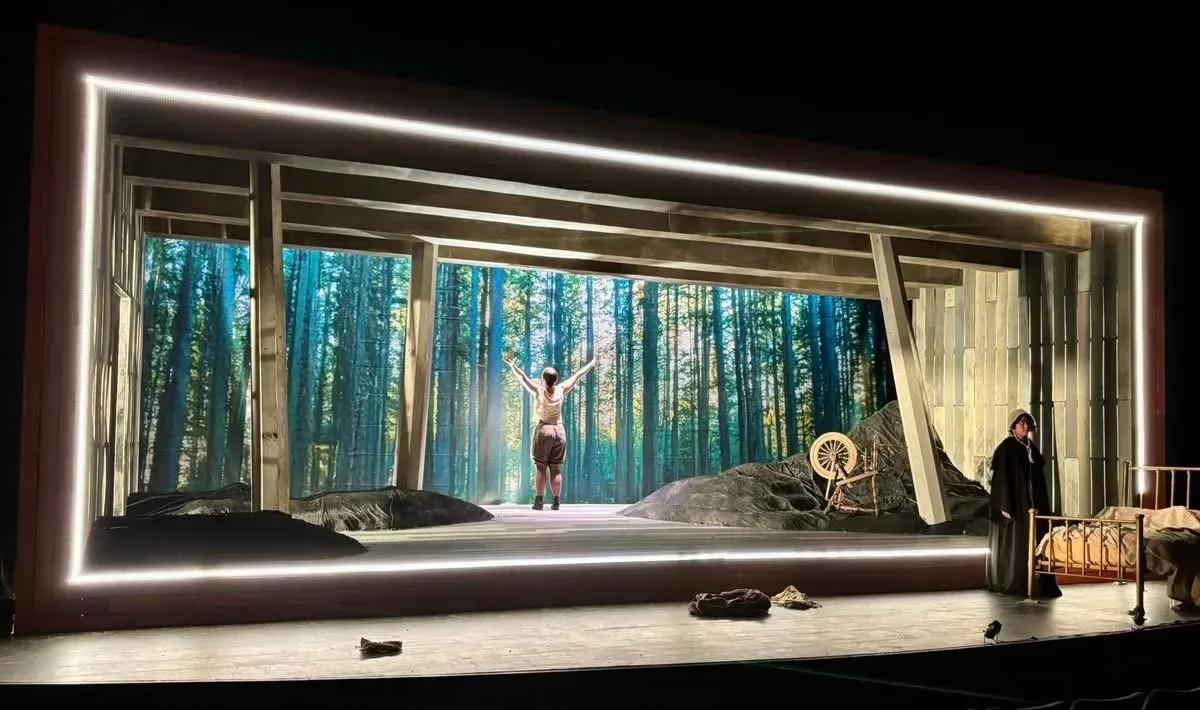
The Good John Proctor, source: Jack Golden.

1. What sparked your interest as an artist and how has that spark evolved over time?

I was a really bad student in high school. I really had no idea what I wanted to do or who I was. I was really interested in politics and public policy, so when I started community college, I began studying economics. In my second year, I accidentally took an acting class. During the first class, the professor mentioned that they had a theatre scholarship that nobody had applied for. The first person to fill out the paperwork would get the scholarship. I thought that sounded like free money.

When I got the scholarship, I discovered that one of the only stipulations was that I had to audition for every production and accept the role if I was cast. Nobody in their right mind would cast me in anything, so I thought I was pretty safe. After a very embarrassing audition and dance call, I was “cast” as an electrician so that they could get their money’s worth out of me. After my first day of work in the theatre, I was hooked. I remember dancing for joy, and I don’t really dance that often.

After college, I traveled around the country, basically looking for any place that would let me put something on stage. Working in tiny little theatre companies across the country was, in hindsight, really a way to find myself and find my voice — I loved every single minute of it. I eventually ended up in DC, where I worked for a few years and later went to grad school at the University of Maryland, College Park. From there, I went to New York for several years. Now I live in Vermont and teach at Berkshire Community College. I’m within a couple of hours’ drive to the city and can easily get there for design presentations or shop visits, but I also get to teach the next generation of students. In some ways, that feels like a full-circle moment.

As a kid from North Dakota, where there is very little opportunity to see professional theatre, I am constantly pinching myself when I am in the room with a group of artists that I admire. I don’t think that kind of imposter syndrome ever goes away, but I have learned to find joy in finding myself in places where I never dreamed I could be. As a designer, the thing I am most addicted to is when a moment unexpectedly sings, when a group of artists make choices that align in ways no single person could have planned. That moment of collective discovery is why I keep doing this. It is a privilege to make strange, meaningful, beautiful, and rude work with people I trust, and I hope I never stop being aware of that.

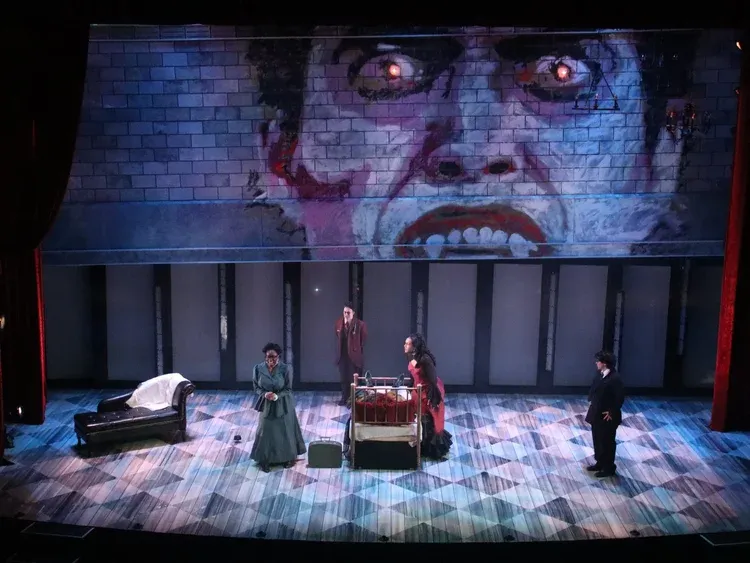
Dracula, A Comedy of Terrors, source: Mason Murphy.

2. Can you share the story behind one of your favorite works and what it means to you?

I recently designed a production of Talene Monahan’s The Good John Proctor. I was already a Monahan fangirl, but this script stuck with me. It is a modern take on The Crucible that centers the perspective of the adolescent girls at the heart of the witch-hunt. I typically read a play three or four times while designing it, but in this case I could not put it down. We live in a time when the term “witch hunt” has been masterfully co-opted by powerful men. The juxtaposition of young women in Puritan dresses speaking lewdly about the perversity of their very prim and proper society felt strangely familiar to where we find ourselves now.

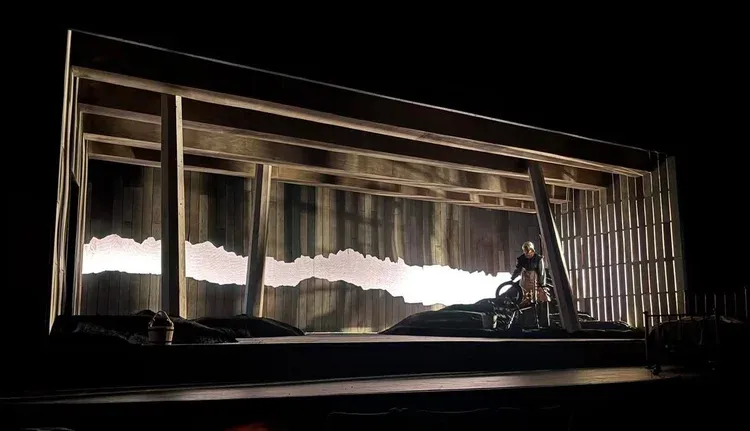
The production was mounted at Ramapo College of New Jersey, which has an interesting and well equipped proscenium space and a remarkable group of students. As we began the work, the director, Terra Vandegraw, and I focused on creating a deliberately restrictive world for the play to live in. We drew inspiration from pre-American architecture, like surviving homes in Salem, MA, and translated that vocabulary into a modern form. The result was a sort of “postmodern” box with a beamed roof and a torn wood plank backdrop. The whole thing was perforated by stylized trees and large dirt mounds. The upstage wall could fly out to reveal a photorealistic printed drop of a lush forest. In The Good John Proctor, as in many scripts, the woods are where shit gets real.

I was thrilled that one of my favorite lighting designers, Cameron Filepas, was lighting the show. Cam has always been willing to be a co-conspirator when I obstruct nearly every usable overhead lighting position. Through close collaboration and testing, he lit the production primarily with sidelight pushed through tiny gaps in the wood planking of the box. The Master Electrician and Berrie Center Technical Director, Allie Polan-Clarke, worked tirelessly to create new front-of-house lighting positions, as everything had to be substantially lowered to meet the actors’ bodies. Austin Blake Conlee’s meticulously crafted, period-accurate Puritan costumes were made from wool-based fabrics aged so beautifully they felt like poetry in themselves. I should also mention that Daniel Archibald, the department’s Technical Director, did remarkable foam carving work and stretched the budget farther than I could have imagined.

The result was a vividly lyrical and rudely poetic piece. The design created a world that was visually rigid yet emotionally unstable: allowing moments of humor and danger to surface without warning. Watching the students inhabit that space, pushing against its constraints and discovering its possibilities, was deeply gratifying.

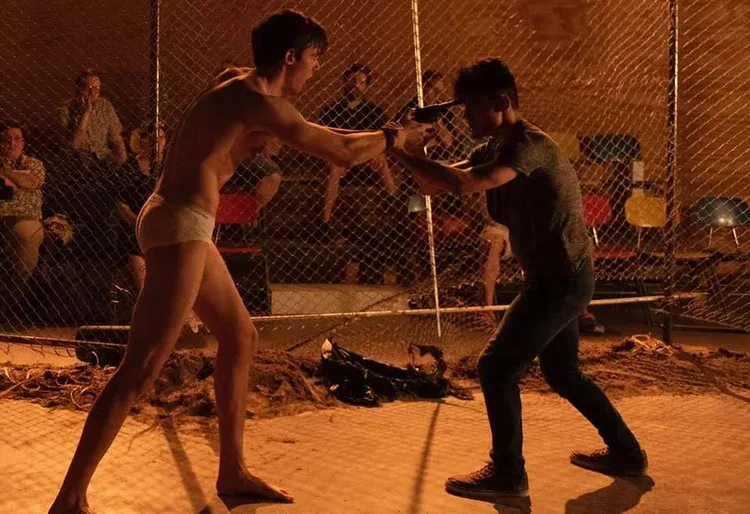
The War Boys, source: Rachel Philipson.

3. What is your creative process—do you follow a routine or does inspiration come spontaneously?

I’m really envious of artists who have a deeply ingrained routine they follow. At the same time, the blank page is thrilling. I pace around the room, take breaks, and struggle. I think my work is best when it is hard-won, but that sounds dreadful, and it isn’t. The work is playing in the model box, drawing weird things, and spending time going down rabbit holes. It’s buying strange reference books that are long out of print on eBay. The work can result in strange addictions. As my wife will tell you, I am far too obsessed with blue and white English china.

I am trying to change myself into someone who works regular hours, but so often, when you need to be in the flow state of designing a show, you are instead doing busy work and taking calls from everyone. The best time, for me, is the stretch between about one and five in the morning, when no one dares to call you. You can get so much done during that time.

Flyin' West, rendering by Jack Golden.

4. What has been your biggest challenge as an artist and how did it influence your growth?

I think my biggest challenge as an artist has been learning to trust my instincts and to learn my own voice. Early in my career, I spent a lot of time second-guessing decisions, not because I didn’t have ideas, but because there were so many voices, references, and expectations in the room. It took years of practice, failure, and reflection to understand that clarity does not come from consensus or certainty, but from a commitment to your own voice and artistry. When I learned to do that, my work began to feel more coherent and more honest.

That shift fundamentally shaped my growth. I believe the greatest gift an emerging artist can give themselves is permission: permission to be unapologetically themselves, to make the work they want to make, and to collaborate with the people who challenge and excite them. When I started designing from a place of personal conviction, the process became clearer, bolder, and much more joyful.

I was incredibly fortunate to receive fabulous mentorship at the University of Maryland. My advisor, Dan Conway, consistently pushed me to take the next step. What was the boldest version of myself? How could I distill my instincts into something more potent? I don’t think that struggle is unique, and now mentoring my own students continues to push me further down that same path. Teaching has become another way of refining my own artistic voice.

A Doll's House, source: Mort Shuman.

5. Who or what inspires you the most, and how is that reflected in your work?

Inspiration is sort of a quest you go on every time you start a new project. It is also a very good excuse to buy books. Research is not a separate phase of my process – it is the process. Digging, collecting, following strange threads, and letting ideas collide is how I stay inspired and how a design begins to take life. It’s all quite messy.

My work is also buoyed by the fact that I have been incredibly lucky to learn from so many generous designers. I have managed to maintain a fairly steady stream of assistant work, and that has been a real gift. Scenic designers do not often get to experience other scenic designers’ process up close, but assisting offers a rare window into how different artists think and problem solve. I have learned an unfathomable amount from working with designers like Luciana Stecconi, Dan Conway, and Clifton Chadick, and those experiences continue to influence how I approach my own work.

I am also deeply inspired by literature, film, and installation art. Theatre is a strange and arcane art-form, but storytelling is not our exclusive property.

Ride the Cyclone, source: Cam Filepas.

6. What do you think is the most exciting thing happening in your field right now?

Is this my space to compose a love letter to regional theatre? Growing up as an artist in DC, I was surrounded by so many great theatre companies. Seeing work at Arena Stage, Studio Theatre, Woolly Mammoth, Roundhouse, Baltimore Center Stage, and Wilma Theatre deeply shaped who I am. There are a lot of people who are down on American theatre. I am not one of them. I see so many emerging directors, designers, actors, and artisans making work that matters to them and to their local audiences. What could be more powerful than that? At the same time, regional theatre is under real pressure. Tightening economics, shrinking patron numbers, and an increasingly aggressive political climate have had a massive impact on our industry. We have real work to do.

Another thing that feels genuinely exciting is how parts of the theatre industry are working to become more accessible to people who have historically been excluded. I am in awe of initiatives like the 1/52 Project and Brighter Boston. Closer to home, I am grateful to teach in Massachusetts, where MassReconnect and MassEducate effectively guarantee free community college for state residents. I get to teach students every day who would never have been able to come to theatre school otherwise. It is a profound privilege.

School Girls, rendering by Jack Golden.

7. What advice would you give to artists or creatives who are just starting out?

Get really good at being yourself, that’s more than enough.

The Good John Proctor, source: Jack Golden.

8. How do you hope your work will connect with people or leave an impact?

I hope to surprise people and to change their minds, to delight them, and to piss them off. I hope they go to the bar after the show and have a long discussion. I hope they laugh, cry, and snort. I hope they’re really loud and annoy their seat-mates. I hope they roll their eyes. I hope they notice the throw-blanket on the couch that I spent an afternoon meticulously picking out. I hope they find comfort when they lose a loved one. I hope that in a brutal political landscape where people live in fear everyday — that they find joy and solace in my story-telling. I hope they hold hands and kiss their date. I hope they have an experience and it changes their lives. I hope they tip their waitstaff extra. I have a lot of hope.

source: MerryCharacters Photography.

Support artists—share this

More like this, twice a month.

Off-Book is the Skene newsletter for artists and makers. Profiles, opportunities, and editorials, free. New subscribers also receive the 2026 Performing Arts Survival Guide.

About the Author

Leave a Reply

Your email address will not be published. Required fields are marked *

Abingdon Theatre Company - Season 34

Related Posts

FREE FOR ARTISTS

Get the 2026 Performing Arts Survival Guide.

Practical career guidance for performing arts artists and makers. Take it with you.