LATEST POSTS.

Get featured
on Skene!

Alexandre Corazzola: Kinetic Scenography.

source: Alexandre Corazzola.

Alexandre Corazzola traces his discovery of art to a family friend named Jean, a Parisian who had been forbidden as a young man to pursue his dream of becoming an opera singer. Jean built himself a model theatre instead, crafted tiny sets of famous operas, and played his favorite arias beside it. As a child, Alexandre got to see that miniature opera house. Occasionally Jean would give him a piece of model furniture, or let him roll up the curtain.

That image has never left him. On the days when the work is exhausting, he returns to Jean, and to what a life in the arts can mean when it is built from genuine passion rather than ambition.

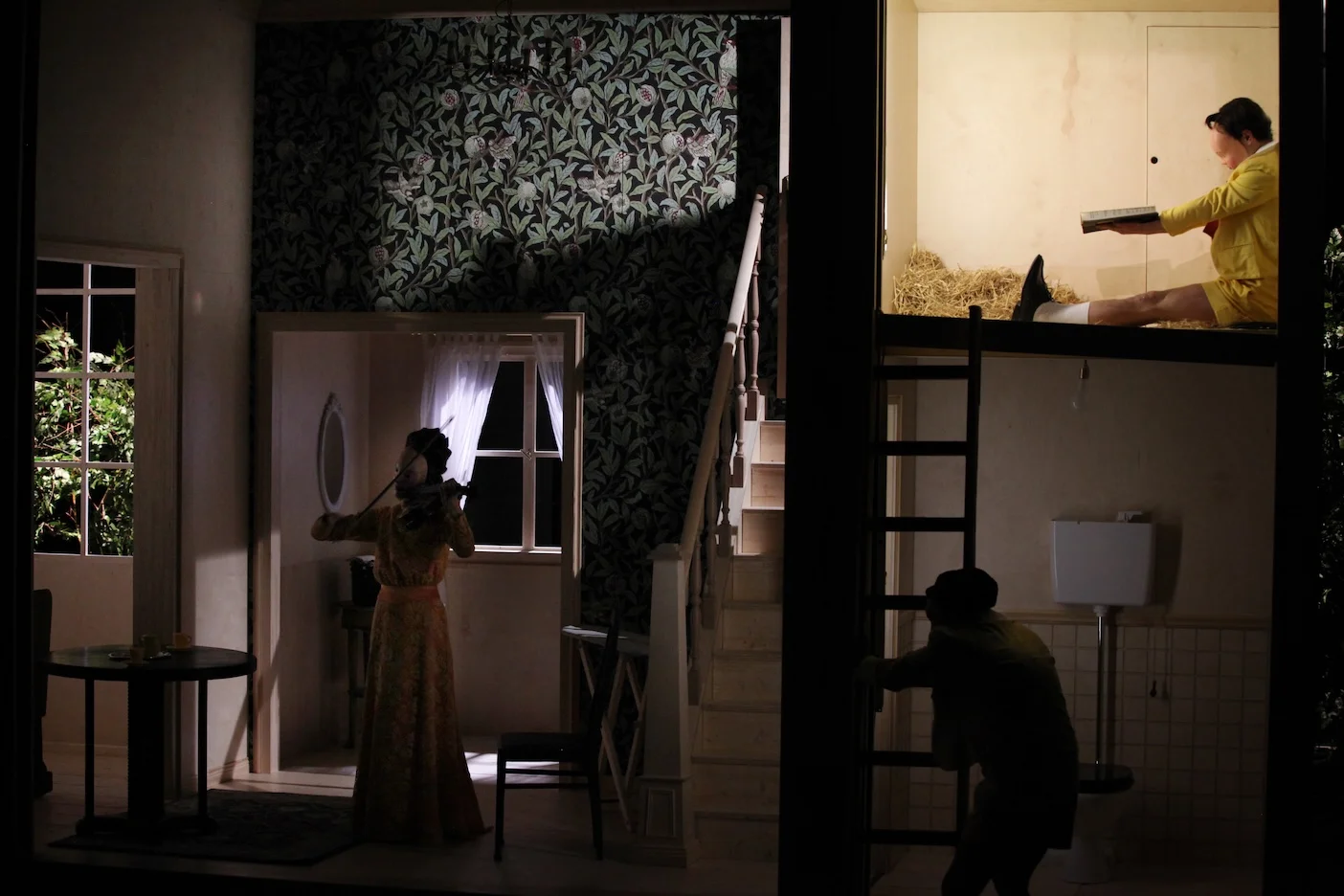
His practice is built on a concept he calls kinetic scenography: sets that move with the action and emotion of a scene, creating a symbiotic relationship between architecture and performance. For Ghost of Canterville, three revolving platforms layered on top of each other continually recomposed the space, making passage between them possible or impossible, disorienting the audience in precisely the way the characters were disoriented.

A set does not frame the story. For Alexandre, the set is its motor in this edition of PROFILES.

advertising
partner content

Alexandre Corazzola

he/his
Scenic Designer
Germany
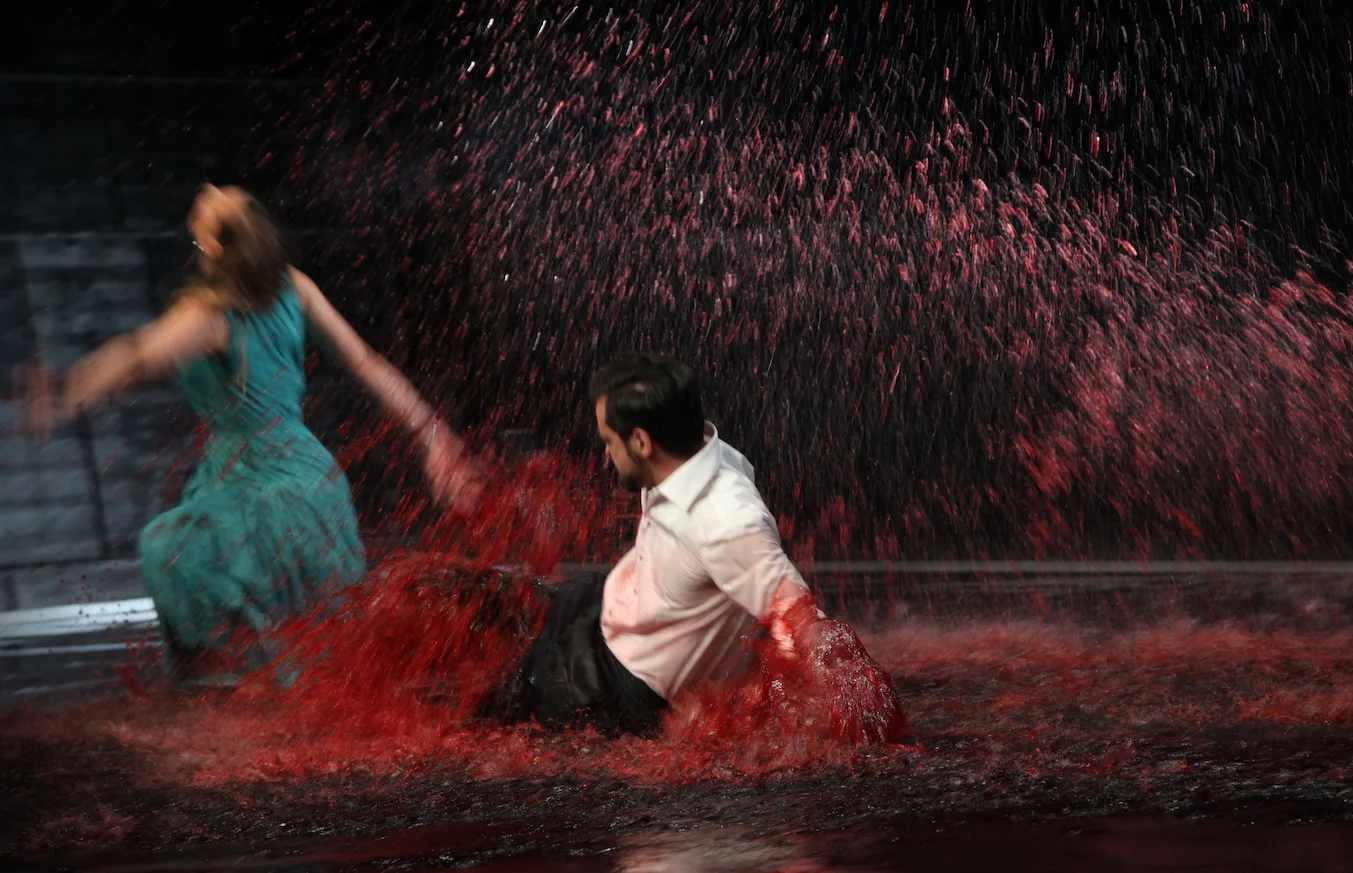
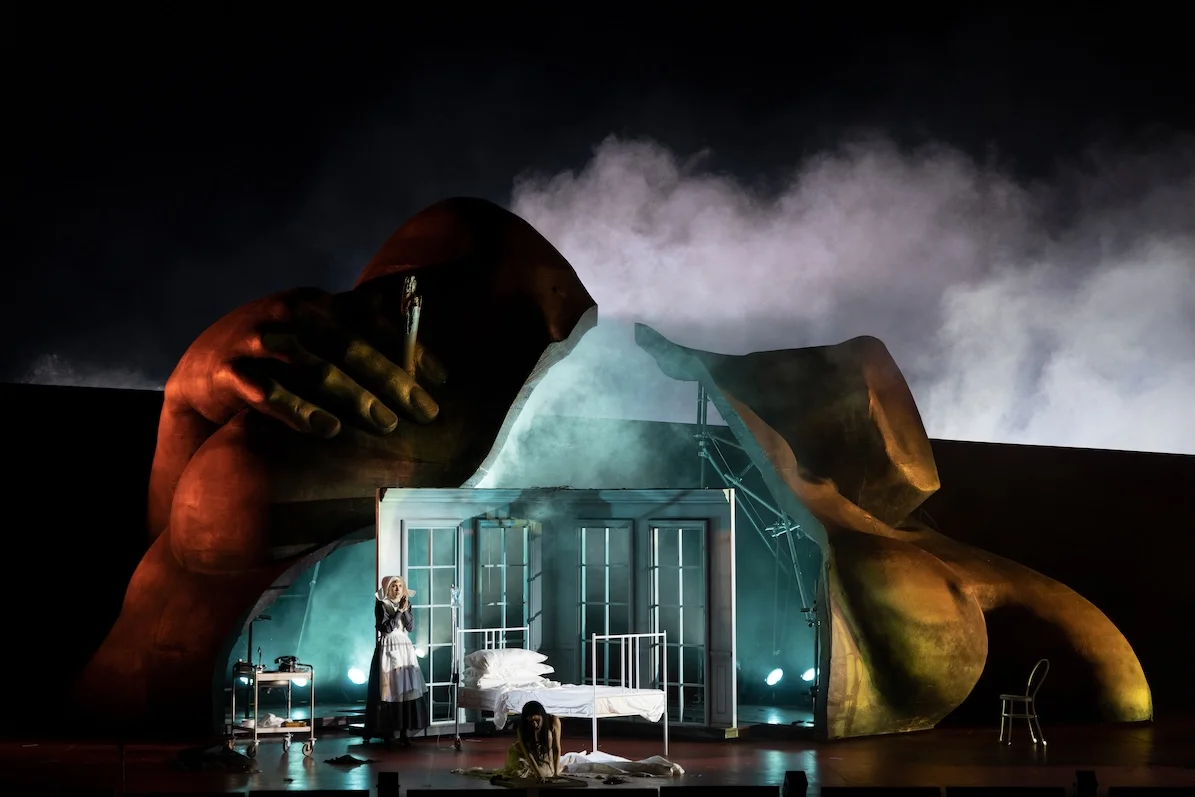
Penthesilea, source: Alexandre Corazzola.

1. What sparked your interest as an artist and how has that spark evolved over time?

Although he was not an artist, I can trace my discovery of art back to my father, who passed away a few years ago. Born in Italy during WWII, he went to France as a teenager in search of work and was taken in by a married couple in Paris. The husband of this couple had had a dream of becoming an opera singer in his youth, but was forbidden to do so by his parents. As an adult this second father to my father built himself a model theatre, built small model sets of famous operas and played his favourite arias on the record player next to this beautiful model. Many years later I got to see that tiny opera house, and every now and then its architect, Jean, would give me a piece of model furniture he had made as a present or let me roll up the curtain.

The spark that this initial encounter had lit in me as a child has never left me. Whenever I feel exhausted by the work, I think of Jean and make myself aware again of the deep passion, the community and the enlightenment a life in the arts has brought me.

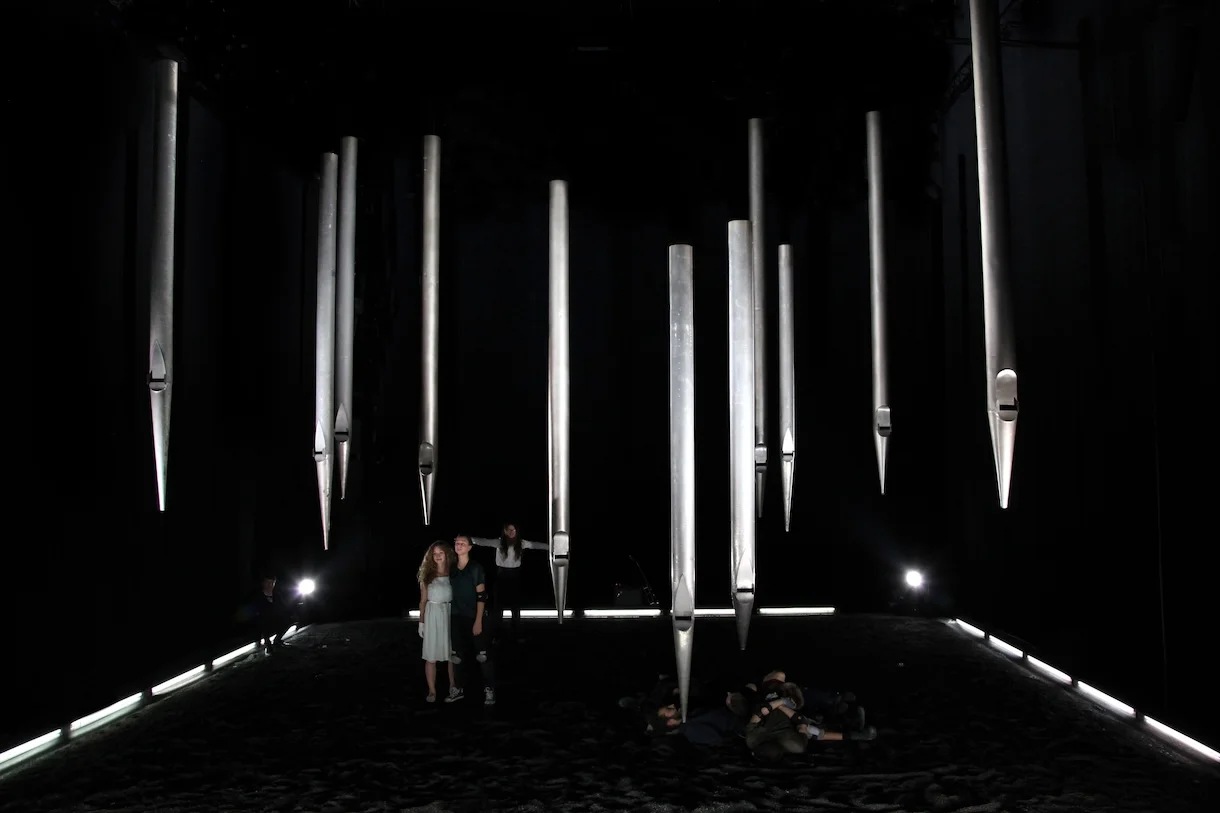
Merlin, source: Alexandre Corazzola.

2. Can you share the story behind one of your favorite works and what it means to you?

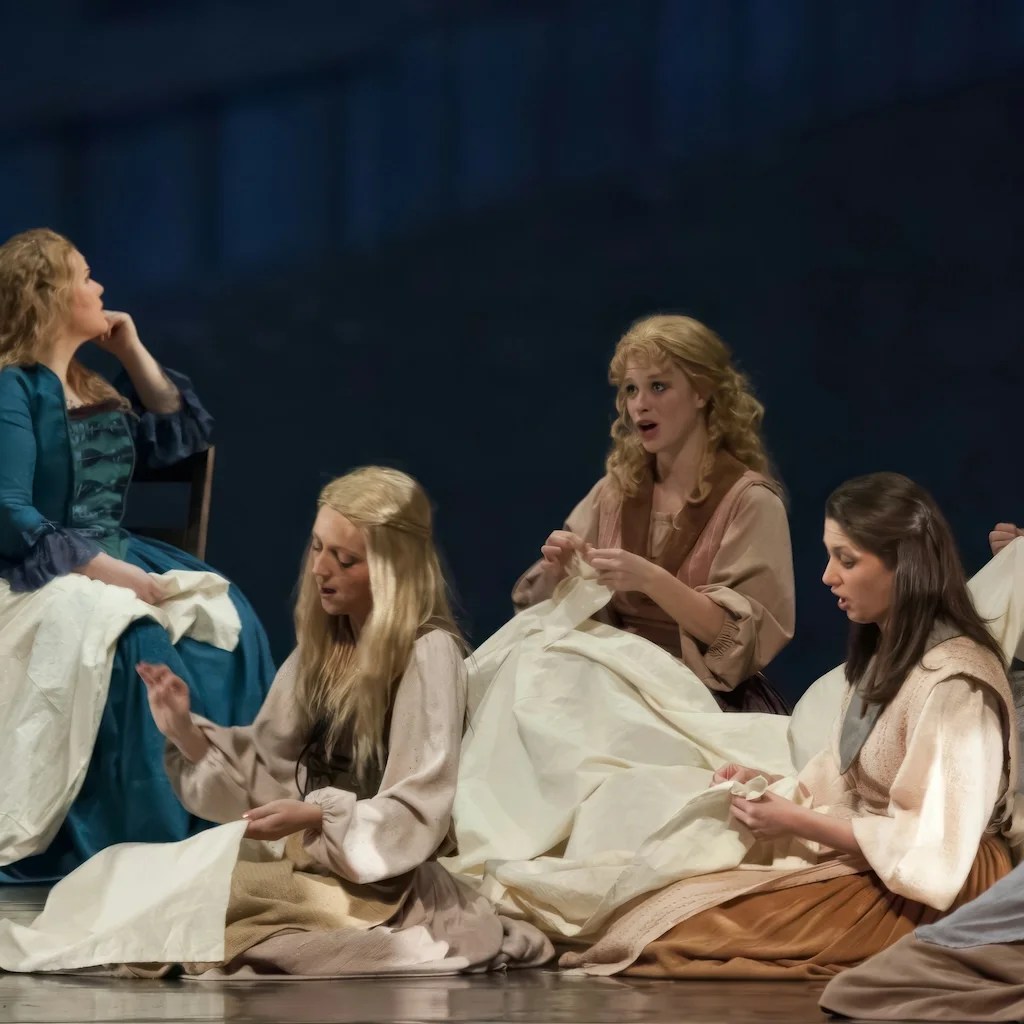
What I believe in most strongly in my discipline is that everything I put on a stage needs to be dramaturgically motivated. There needs to be a reason for it, and that reason needs to come from the text or the music of the source material. One of the ways to marry set and dramaturgy is through what I call „kinetic scenography“ – that is to say that the set moves with the action or the emotion of a scene, and as it moves, it influences the way the performers behave in that space. It’s a symbiotic, reciprocal effect. In „Ghost of Canterville“ for example, we created three revolving platforms, layered on top of one another, that would either turn in the same or in opposite directions, causing the architecture on them to continually re-compose and make the passage between them either possible or impossible. It was very disorienting for the audience, which was exactly the feeling our protagonists were portraying on-stage. And on a very practical level, the set’s movement created absolutely smooth and seamless transitions between scenes – dramaturgically speaking, this meant that we never had to interrupt the flow of the production for clunky set changes.

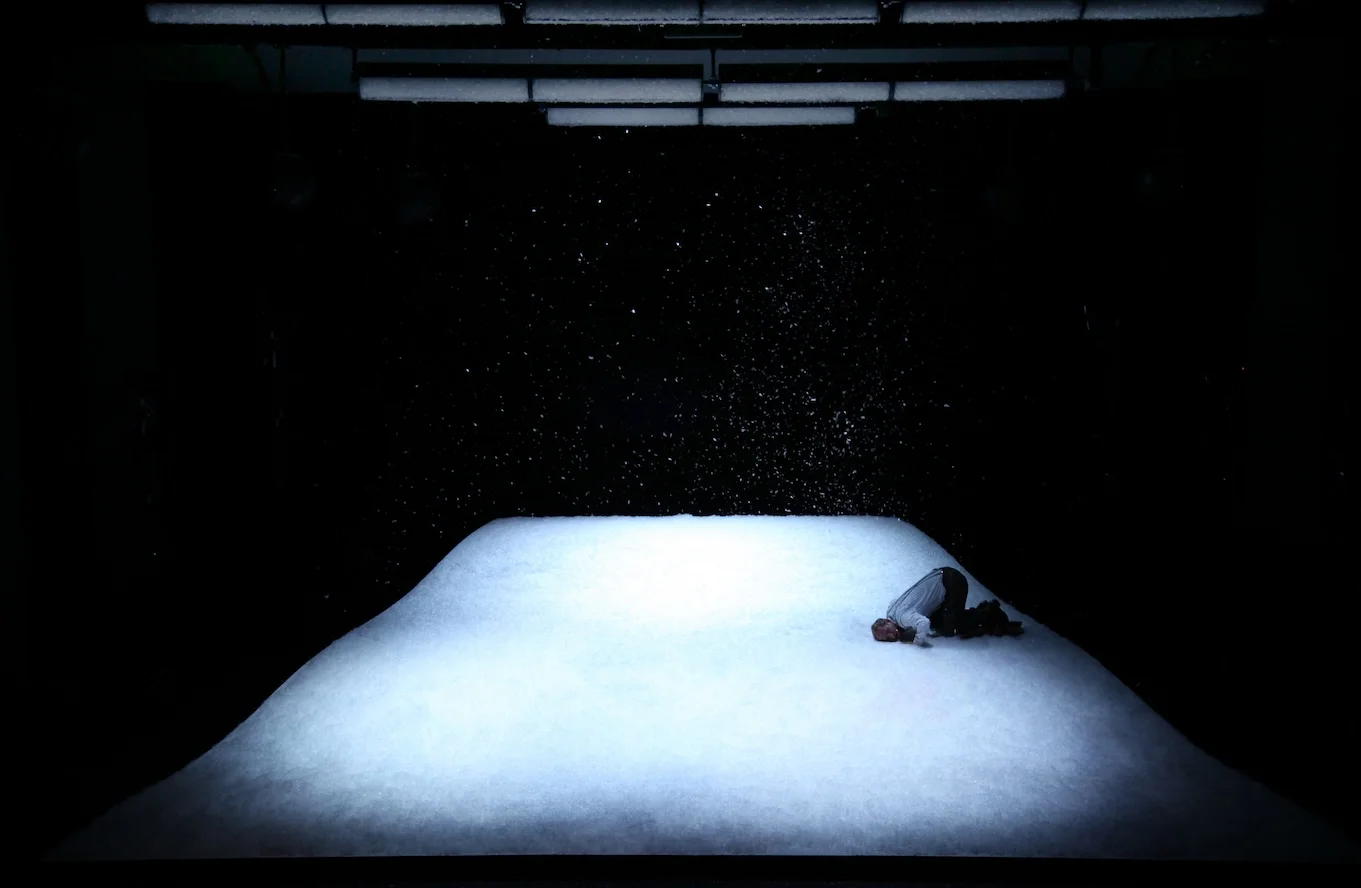
The Cherry Orchard, source: Alexandre Corazzola.

3. What is your creative process—do you follow a routine or does inspiration come spontaneously?

I have bought and kept a notebook for every production I have ever done from my very first show onward. That’s my starting point. As I am listening to the music or reading the script for a new piece I jot down every unfiltered and non-intellectualized idea that comes to me. I also start to sketch whatever I see in my mind’s eye.

The next step then is image research, so that I can communicate to my collaborators what it is that I instinctively see. There is nothing better than browsing through books in a bookstore and finding truly surprising and unexpected things. I gather all of these images and create a giant collage with them. Something very special happens, when I can see all of the pictures I have gathered all at once. My eyes start to make connections between them in ways I wouldn’t have been able to if I was simply clicking through them.

At this stage I go back and forth between making some very loose sketches on paper and creating a physical, very rough sketch model. When I was starting out, I would often hide this developmental phase of the design from the director because I was strangely embarrassed by how unformed my ideas still were at this point. It may take some maturity to open yourself up to this form of creative vulnerability, but in the best of cases this is exactly the part where great collaborations are forged.

The Ghost of Canterville, source: Alexandre Corazzola.

4. What has been your biggest challenge as an artist and how did it influence your growth?

At the beginning of my career, I felt I had a very clear idea of the type of work I wanted to create. I was convinced I exactly knew my own aesthetics and because of that I was very protective of the designs I would propose to my directors and heart-broken, when they were rejected. As time went on, I realized two things:

a) my ideas are not a finite resource, so why be precious about them?
b) and more importantly: if I open myself up to a true collaboration, there’s a big possibility that the result will be something much better and much more creative than I could have ever conceived of on my own.

In time I found my „tribe“ – brilliant artists who in the best of ways made me reconsider everything I thought I knew – about art, but really about everything in life too.
I understood that if I let go of this fixed idea of what I „should be“ creating, I would actually get closer to creating it. I was still bringing myself to the table, but through working with creative partners a great synergy would elevate the work.

The Pledge, source: Alexandre Corazzola.

5. Who or what inspires you the most, and how is that reflected in your work?

Simply mentioning here that artists like Ivo van Hove or Pina Bausch, both of whom I assisted, are incredible artists and have had a profound impact on my work, seems too obvious and narrow of an answer here. I have always been an avid reader on all subjects, a traveler, film watcher and museum goer. My inspirations thus reach from ancient Greek theatre to Florentina Holzinger, from Borromini to Bjarke Ingels, from Maupassant to Nelio Biedermann. I will forever consider myself a student and with each project I develop new obsessions.

In that way, I find myself drawn to artists who maintained a certain rigour and discipline throughout their artistic practice in the sense that they kept their playfulness, their curiosity and their desire to get into the studio everyday and create. That kind of self-generated, artistic longevity is the most inspiring to me.

Of Mice and Men, source: Alexandre Corazzola.

6. What do you think is the most exciting thing happening in your field right now?

Of course there are always new developments in technology, and that can be very interesting, but I am much more fascinated by the changes in aesthetics over time. In Germany we are once again in a moment of changing tides.
When I first got started as a freelancer, a very focused and concentrated form of minimalism was de rigeur, which after a while felt a bit dry and uninspired. From that, the trend moved through a decade-long period of almost clownish exuberance, but that is peetering out now. So what’s next? In opera it seems to be a certain cinematic realism, which works well for that medium, because it grounds it in recognizable, relatable reality.

The acting world oddly seems a few steps behind in this development this time around. (The reverse is usually the case.) A modern version of magical realism might have a sobering, palate-cleansing effect, and I feel it’s coming.

Spring Awakening, source: Alexandre Corazzola.

7. What advice would you give to artists or creatives who are just starting out?

It’s important for any artist, not just beginners, to clarify for themselves what they want their life to look like holistically. Not just their work or their career, but their entire life. It’s a marathon, not a sprint and there are many elements to juggle.

You’ve accomplished a meteoric rise to the top of your profession in five years? That’s wonderful! But what about your family? What about your health? What about that non-commercial, very avant-garde and experimental type of work you had originally set out to do? Your goals can and will change over time, which is why it’s important to check in with yourself regularly and re-calibrate.

When I started out, I would easily feel overwhelmed trying to balance all the moving parts of my life. But then at some point I realized I’m not at the service of an illusory perfect balance. All the elements are there so that I can build the life I want to live.

La Traviata, source: Alexandre Corazzola.

8. How do you hope your work will connect with people or leave an impact?

There are two parts to that question. It is my hope with every project I work on that it offers the audience a kind of respite. I’m not talking about escapism or some form of ivory-tower entertainment only accessible to the elites. What I mean is theatre as a community-building place to come together and connect with one another in real life. Also a place where we can take pause and reflect, a place for introspection and enlightenment. Robert Wilson once only half-ironically said that he loves when critics describe his work as soporific, as it is exactly in this state between being awake and asleep that an audience is the most receptive. We let down our guard and let what we see sink in more deeply. It’s a meditative state that the theatre gives us permission to experience – a restorative and energizing experience.

The way I’d like to leave a lasting impact is that every month I am putting away a very small amount of money, which hopefully by the end of my life is not such a small amount of money anymore. With it, I will create a grant that will later be given to talented students of scenography who could otherwise not afford to attend university. Someone once did that for me and I would like to pass on that gift to the next generation.

Support artists—share this

More like this, twice a month.

Off-Book is the Skene newsletter for artists and makers. Profiles, opportunities, and editorials, free. New subscribers also receive the 2026 Performing Arts Survival Guide.

About the Author

Leave a Reply

Your email address will not be published. Required fields are marked *

Abingdon Theatre Company - Season 34

RELATED POSTS.

FREE FOR ARTISTS

Get the 2026 Performing Arts Survival Guide.

Practical career guidance for performing arts artists and makers. Take it with you.