Alex Vásquez Dheming: Choreographing Light.
Salvadoran lighting designer whose expressionist practice turns light into narrative, emotion, and

Salvadoran lighting designer whose expressionist practice turns light into narrative, emotion, and

Japanese costume designer and cultural advocate whose research-driven practice interrogates representation, identity,

German scenic designer whose kinetic scenography builds sets that move with the

Mexican cultural worker, director, and playwright whose practice is rooted in collective

Classic plays for community theatre: Shakespeare, Greek tragedies, Chekhov—masterpieces with zero royalties.
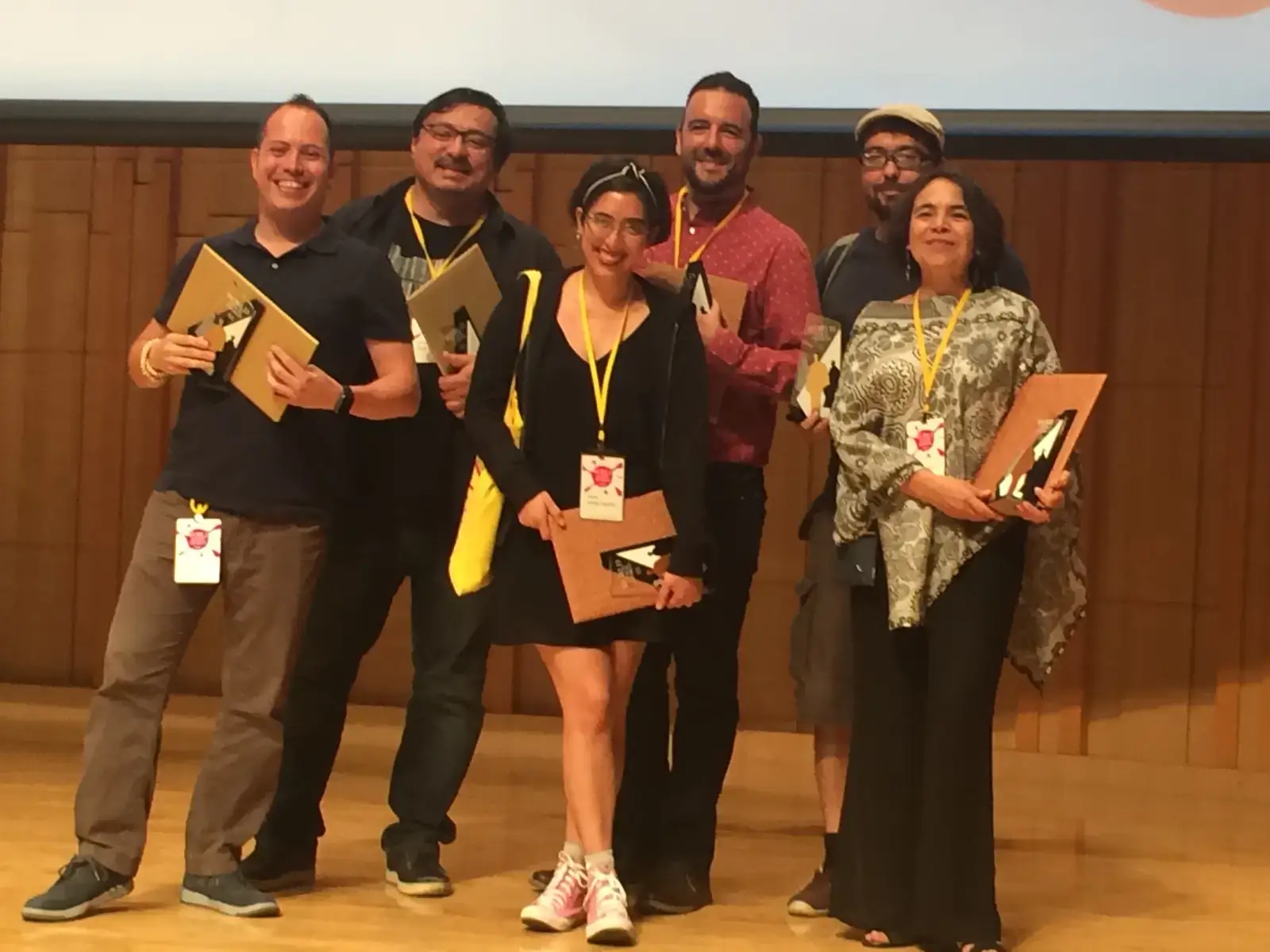
Josafath Reynoso is a seasoned scenic designer and educator whose multifaceted career has spanned from Mexico to the United States. His path into theatre started much later than most, but fueled by a passion for the art. He switched from nearly completing his degree in computer engineering and courageously plunged into scenic design, which brought him to Mexico City, where he studied sonography. The early experiences of Josafath included his first international travel to Venezuela and also winning a contest to design Mexico’s national pavilion for the Prague Quadrennial, which set his desire to work as an international scenographer.
After more than ten years of professional work in Mexico, Josafath immigrated to the U.S. to pursue an MFA in Scenic Design, where he continued to grow as both a designer and educator. Since then, he has worked for various theatres and institutions, building a new career in a foreign country and language. He works in constant iteration, believing in collaboration and emotional impact over perfection. Throughout his career, Josafath has remained committed to using his work to connect with people, embracing the challenges and rewards that come with designing for the stage.
In this edition of PROFILES, we explore the artistic journey of Josafath Reynoso, delving into his unique approach to creativity, the obstacles he’s overcome, and his thoughts on the dynamic nature of the art world.
I first discovered theatre in high school, much later than most. At first, I was drawn in by the typical motivations—chasing after girls. The department had a lot of passionate people, despite limited resources, and they instilled in me a deep love for theatre and scenic design. Before that, I struggled to find my purpose, but once theatre clicked, everything became clear. I started computer engineering and almost completed my degree, but in my final year, I decided to leave it behind and pursue theatre. I bought my first scenic design book, an Alejandro Luna book, after saving for almost six months (it was a veryexpensive book), and it changed my life.
I moved to Mexico City to study sonography, a huge sacrifice for me and my family, but I was completely in love with what I was doing. During my undergrad, I took my first international trip to Venezuela for a theatre festival, and that’s when I decided I wanted to work as an international scenographer. In my final year, I won a contest to design Mexico’s national pavilion for the Prague Quadrennial, a life-changing experience that left me in awe of the highly skilled Czech, Russian and German scenographers.After ten years of working professionally in Mexico, I moved to the States, older than your typical grad student. I completed my MFA at the University of Tennessee, where I was fortunate again to work alongside passionate individuals. After graduating, I started teaching—both as a mean to stay in the country and because it felt like the right path (I had been teaching in Mexico for a number of years). Teaching in the U.S. was a different experience, with a new pedagogy and practices. Since then I’ve changed Universities, I’ve worked theatre to theatre, building my career in a new country and language. It’s been a challenge, but things are going well.
When I first arrived in the States, I was in pretty rough shape—almost no money, figuring things out, and unsure how I was going to support myself through grad school. In one of the first months, I saw a USITT contest for an award that no longer exists, and I decided to apply. I was determined to win it because I knew it would provide some financial relief. I tried something similar during undergrad, living off grants and awards, so it felt like the right thing to do.
I chose to design Henry V, one of the shows listed as a possible option. I put all my full effort into it, but I only found out about the contest a couple of days before the deadline. This meant I had to design the entire show in just a couple of days. It was a challenge, but it was either that or starve.
I remember sitting in front of my computer, thinking that if I wanted to win, I had to put my full effort into it. I had worked with drafting software before, but never in 3D. So, I taught myself SketchUp overnight. As I was learning the software, I designed the show, built the 3D model, drafted it, and so on. By the morning of the second day, around seven o’clock, I had created the dossier, the model, and the drafting, and I submitted it.
I didn’t win, but I was proud of the show. I really liked how it looked, and I appreciated how high the stakes were for me at the time. Later on, I revisited the show for another award, where I created a large model that took me a week to finish. And I still didn’t win. That experience taught me a lot—about theatre in the US, about my own resilience, and the importance of giving it everything you have.

My creative process is very much about iteration. I trust my first impulse and like to go with the emotional impact of the show, reading it fresh and starting to sketch right away, like the Europeans do. But at the same time, I’m highly distrustful of my first solution. When I reach my first idea, I always push myself to go in a different direction on purpose. I iterate, iterate, iterate—constantly trying new things.
Often, I end up circling back to the original impulse, but by then, it’s much clearer, and I understand the nuances of why that initial idea felt right. Sometimes, the idea does change, but the process gives me multiple options and possibilities. This is invaluable when I’m conversing with a director, negotiating with a team, or working with a production. By the time one solution doesn’t work or is rejected, I already have five other iterations ready, all still aligned with the same concept.
My biggest challenge, by far, was coming to the States after spending ten years building a reputation, networking, and establishing contacts. Leaving all that behind was difficult—not because I missed it, but because it meant starting over. I had to compete with people who had been doing theatre since high school, who already had networks in place and were trusted by theatres.
I remember my first professional show in the States, about two years into grad school. I had to offer my work for free just to get the chance. I went to a theatre booth at SETC, offered to design for free, and asked for an opportunity. I told them, “You don’t know me, and I understand you can’t trust me, but give me a chance, and if it doesn’t work, it doesn’t work. But if it does, you’ll hire me again.”
This was at Lexington Children’s Theatre. They agreed to cover my lodging and meals, and I stayed in a basement with one of the carpenters. The show was a success, we clicked right away, and I ended up working with them for many years on several shows.
I think, above all, I’m inspired by the transformative power of theatre. I’m inspired by how inherently incomplete my work is. I know it’s incomplete, and I want it to be. I want other artists and the team to live inside of it. To do that, I have to leave enough space for them to do their part, to perform, and to explore in their own right.
I’m always amazed at how, in theatre, the end product is always greater than the sum of its parts. There’s nothing I could design that would compare to the full experience of hearing the first notes of an orchestra as the curtain rises and the audience sees the set for the first time. That moment is unparalleled. And, yes, it really does take a village. It’s a cliché, but it’s true—it’s a collaborative effort.
I’m always moved by how powerful, emotionally impactful, and touching the experience of creating theatre, going to theatre, and sharing theatre with an audience can be. Every time I’m designing, that’s what drives me.
I know a lot of people are critical of AI, and I understand why. Beyond the challenges it poses, like replacing jobs and the homogeneity of AI-generated visuals, I think it’s creating a paradox. As AI evolves, the human experience becomes more precious. The more capable AI becomes at creating sets or visuals, the more I believe my work gains value. A machine can create something beautiful, but only a human can make it truly impactful—emotionally engaging. That’s the essence of the human experience: it’s only shared through humans.
Because of this, I’m excited to see how we can use these tools, not fear them, but transform them into something that enhances the way we design. I see AI almost like a hammer. A hammer can be destructive, but it can also be used to build. If we embrace AI and find ways to use it to enhance the human experience, I’m very excited to see what comes from that.
This is an obvious one, because I’m a teacher. What I tell my students: instead of sitting around thinking about how great or perfect something has to be from the very beginning, let go of that expectation and just try. Just dive in—do theatre. Build sets, act, sing, get up on stage, and experiment. It’s not going to be perfect, and you’ll probably feel like a fool a few times, but you’ll learn a lot. By the third, fourth, or fifth time, it’ll get better—incrementally. You’ll start finding your rhythm, feel more comfortable, and eventually, you’ll look at the work you’ve created and be proud of it. It’s not about getting it right, it’s about going deeper every time.
Connecting with people is always at the center of my work, so I hope people experience it more than they understand it. My students often ask me, “How do you get your message across? After all the time spent conceptualizing, researching, and finding the right metaphor to imbue into the space, how do you ensure the audience understands it?” But I don’t think the audience needs to understand it. It’s not our role to explain the show to them. I just hope that when they see my work, they feelsomething.
It’s incredibly rewarding when the curtain rises, when the audience walks in for the first time, when the show starts, or when a powerful moment unfolds—and they gasp. That reaction, that visceral response to a space you’ve spent months creating with a team—fine-tuning the light, the music, the gesture of the actor—just to evoke that one moment. When you hear the audience breathe in rhythm, when they collectively hold their breath or break into sobs—that connection is priceless. That’s what I’m always after.
Support artists—share this
Off-Book is the Skene newsletter for artists and makers. Profiles, opportunities, and editorials, free. New subscribers also receive the 2026 Performing Arts Survival Guide.
We use cookies to optimize our website and our service functionalities.
Practical career guidance for performing arts artists and makers. Take it with you.