Latest posts.

Get Featured or Publish with Skene!

Kendall Bas: Reflections of Shared Humanity.

source: Anne Baloy.

Kendall Bas does not design stages. He builds the conditions under which stories become real. Rooted in a practice that began with sculpture, painting, and drawing, the Filipino scenographer has spent more than thirteen years constructing visual worlds for some of the most ambitious live productions in the world, learning along the way that every element of a stage, its light, its surfaces, its motion, its silence, is part of a single living system that serves the story and the people inside it.

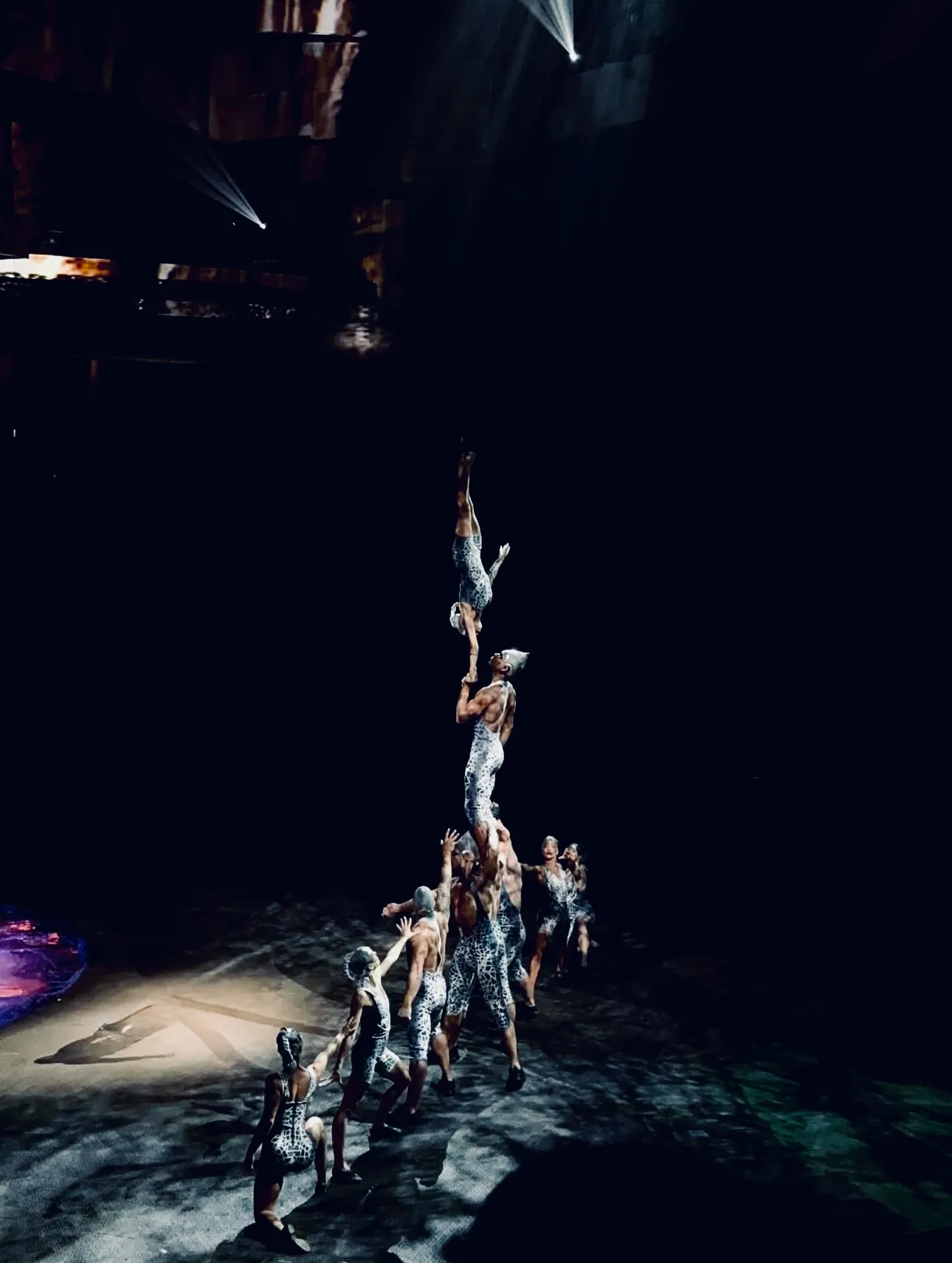
His work on La Perle by Dragone, where he served as Resident Designer, stands as the clearest expression of that philosophy. Hundreds of shows per year, hundreds of bodies moving through a space that had to be both visually commanding and physically safe. The experience confirmed what Kendall had long suspected: that scenography is not a fixed picture but a structure that grows and shifts every night as human action moves through it.

Now pursuing an MFA in Scenography at the Royal Central School of Speech and Drama, he is taking everything he has built and asking harder questions of it, expanding his practice beyond the theatre and into the public spaces where identity, movement, and culture play out every day.

His research, his craft, and his belief that design is a spatial language unfold in this edition of PROFILES.

partner content

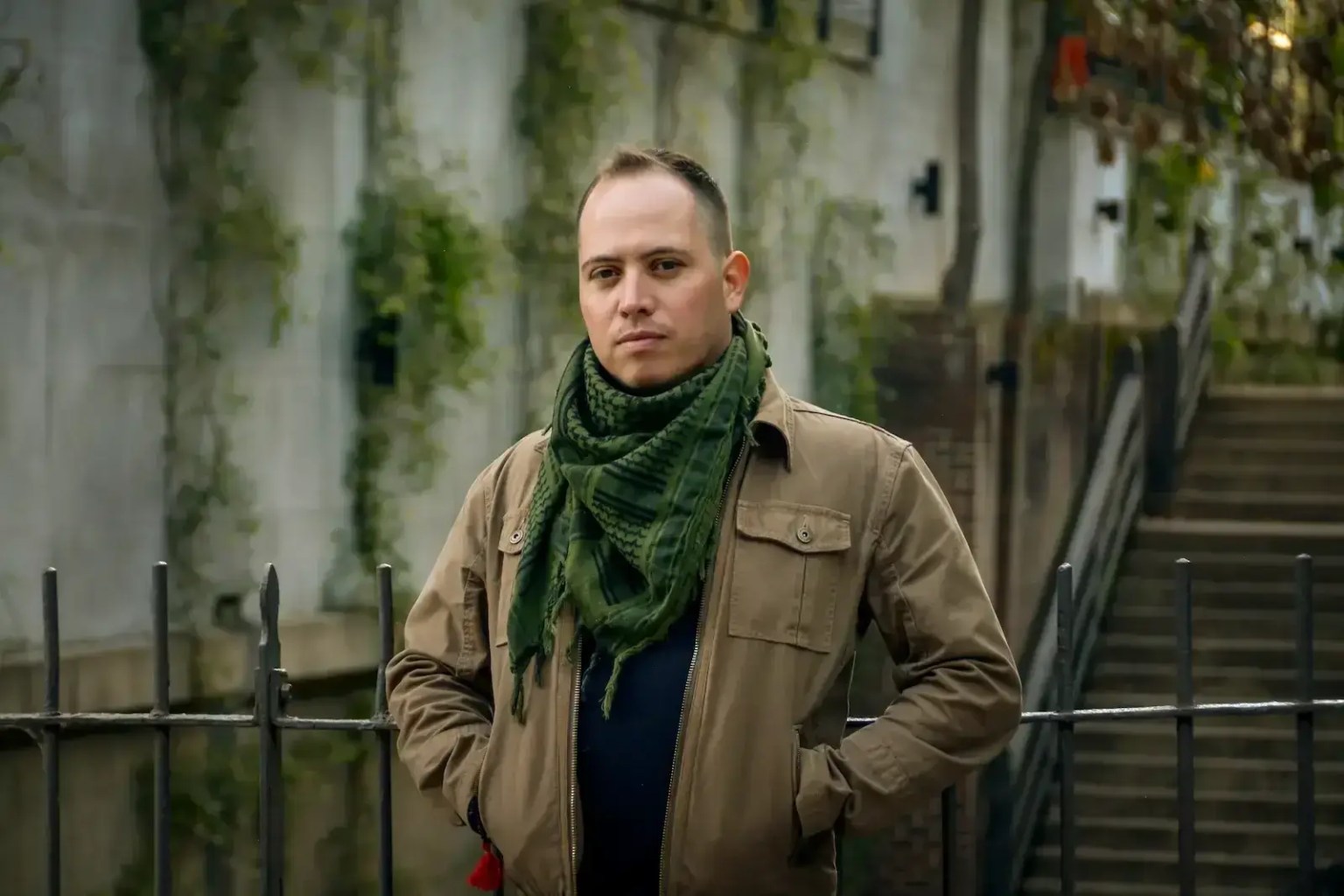
Kendall Bas Sison

He/Him
Scenographer
Philippines
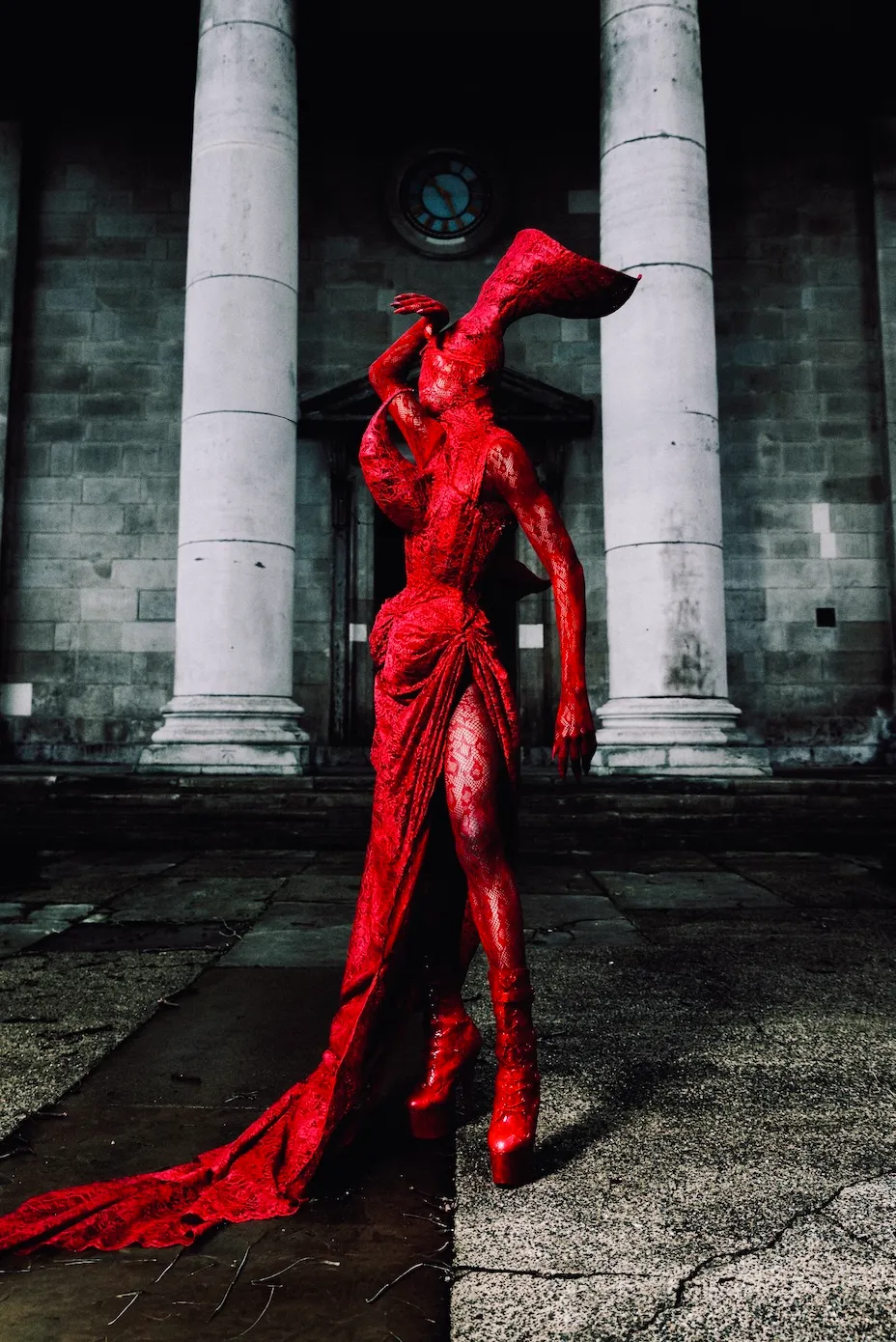
Black Peppa on Red Structured Lace, source: Harry Elleston Photography.

1. What sparked your interest as an artist and how has that spark evolved over time?

I first encountered art through early contact with materials, developed my craftsmanship at a young age through sculpture, painting, and drawing, and discovered performance and design; this experience culminated in a lasting vocation in stage design and costume. After many years of work on large live shows, I grew absorbed by the way visual but also spatial items – fashion, structures, light, surface, and motion – combine to guide how viewers read a show. Stage design taught me that decor does not merely adorn; it drives the story, builds mood, supports dramaturgy, and sets the viewer’s emotional frame.

Years of paid work, including posts as a resident designer and head of costumes and scenery on global shows, kept me busy building visual worlds. This labour taught me craft, teamwork, and the link among artists, performers, and the environment. Work at this scale also showed me that design works as a system – each visual part feeds the tale.

As I master the discipline, this hands-on labour shifted toward a more questioning study of spatial practice. My current research asks how stage design thought can leave the theatre to enter the daily space. I study how public spaces, plazas, streets, and city systems function as stages on which identity, movement, and cultural encounters play out.

Costume design for La Perle, source: Joanna Legaspi.

2. Can you share the story behind one of your favorite works and what it means to you?

I value my creative and artistic leadership period as Resident Designer for La Perle by Dragone above any other commission. During thirteen years of practice, the newest assignment always carries the greatest weight, because it contains every lesson absorbed since the day I first called myself a scenographer. Each show feeds into the next, except La Perle marks the point where technique, visual intent, and team guidance merge.

La Perle is an immersive spectacle in which the scenery, costumes, lighting, and automated systems form a single, shifting space. My daily task was to steer the costume department so that every garment served the plot plus also survived the acrobatic stunts. The schedule demands hundreds of shows per year, so the materials had to look striking while resisting sweat, water, and repeated washing.

The project matters because it rested on constant exchange – directors, acrobats, costume builders, programmers, and metal workers sat at the same table. Each rehearsal altered a hem, a cable route, or a cue. Through this, I confirmed that scenography is a living structure – it grows every night as bodies move through it. The stage picture is only the first step – the goal is to give the story a place where human action gains clarity.

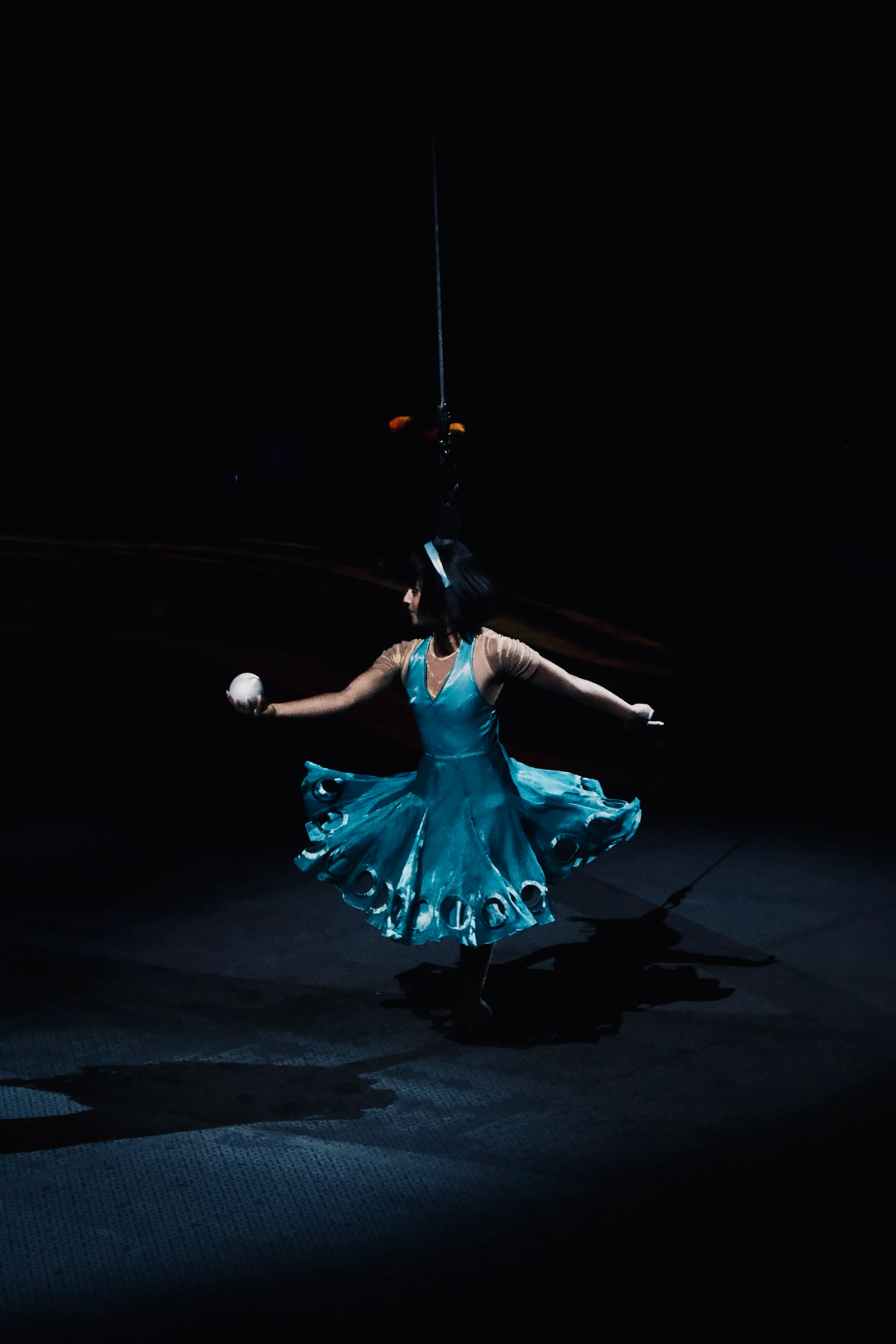
La Perle, source: Louis Sidebottom.

3. What is your creative process—do you follow a routine or does inspiration come spontaneously?

My work begins with the rules and skills that belong to the long tradition of classical design. I draw first stimulus from motion, books, scores, canvases, plus any strong picture that holds my attention. Those sources act as raw material – I sort them until a clear concept appears, then I turn that concept into rooms, shapes, and light. I do not wait for sudden flashes of ideas – instead, I follow a process path that leaves space for thought between each stage.

Because I design stages, my routine is systematic – I read, watch, but also listen – I collect facts, objects, and images that come from theatre, dance, painting, as well as from the habits of the culture where the piece will play. Scale models and draft plans follow – each test answers a question posed by the story, the actors, or the real site that will hold the action. Scenography is a joint art – I speak daily with directors, performers, and the crews who build, light, and move every element.

Years of production have taught me that shared work demands a pliable mind and, at the same time, an even view of the goal. I adjust details when the team needs change, but I protect the core idea. Practical limits shape the result as much as taste does – a platform must bear weight, a fabric must resist fire, a colour must stay true under harsh lamps. My final plan keeps the poetry of the story and the safety of the people who step inside it.

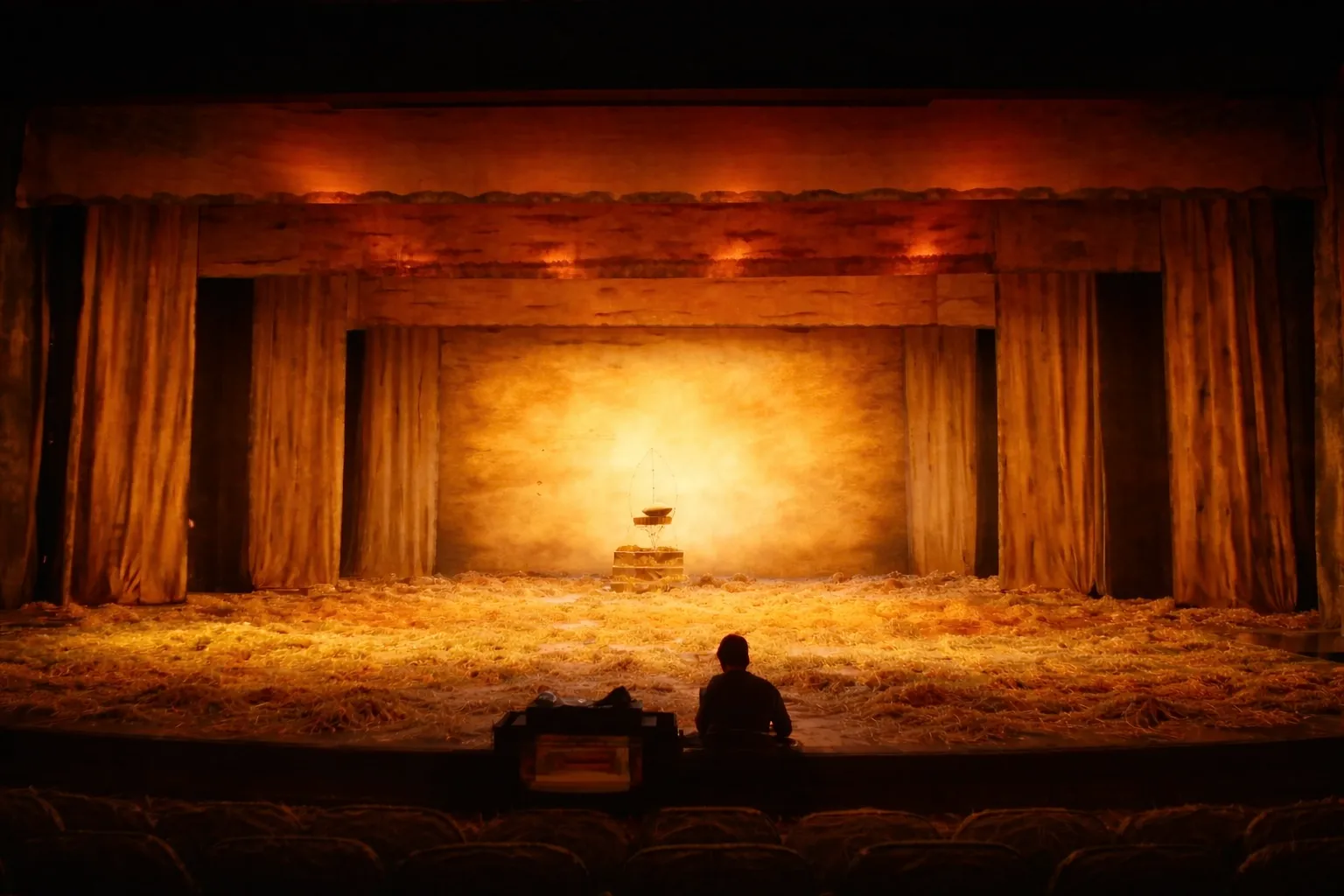
Makulimlim Na, source: Carl Chavez.

4. What has been your biggest challenge as an artist and how did it influence your growth?

I have spent more than thirteen years as a professional – during this time, I have had to keep improving. Every project demanded a higher technical skill and a clearer idea. Process by process, I built a personal way to design spaces.

La Perle marked a clear turning point. The show was large plus intricate. I had to create a striking visual world that also let the performers move safely, and that survived hundreds of shows.

Those years showed me that scenography is not only about how the stage looks. It is the building of orderly structures that serve the action, the team, but also the story.

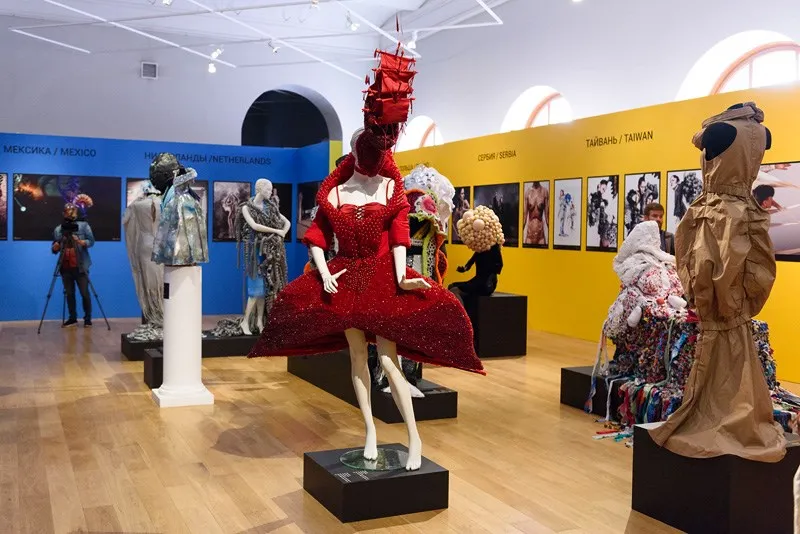
WSD Moscow, source: SHM.

5. Who or what inspires you the most, and how is that reflected in your work?

I draw inspiration from a wide range of artistic fields – my background in classical design leads me to look at movement, literature, music, painting, and visual images for ideas. Those sources shape my view of scenography as a form of spatial language that conveys mood plus story.

After thirteen years of professional work, I also find inspiration in large-scale productions. Close work with performers, directors, and technical crews has shown me the value of collaboration.

This inspiration shows in my projects through a clear link between artistic intent and practical use. I design spaces that allow movement, support the story, and keep performers safe. In those spaces, scenography joins physical setting, action and narrative.

La Perle, source: Kendall Bas Sison.

6. What do you think is the most exciting thing happening in your field right now?

Scenography now reaches far past the familiar frame of the stage. My own practice began and grew within ballet, opera, straight theatre, plus musicals, but the discipline now treats every room, corridor, or public site as a place where story, performer, and spectator meet.

The Royal Central School of Speech and Drama hosts my MFA in Scenography. The course gives me time but also tools to question old habits. I test methods that do not rely on the standard box set, the flat, or the wing, or I record the results.

Thirteen years of built work stand behind me – the present study year sets those years beside trial and error, as well as asking me to rewrite my own vocabulary. I no longer file scenography under ‘production design’ alone – I treat it as an expanding code that scripts both space and what happens within it.

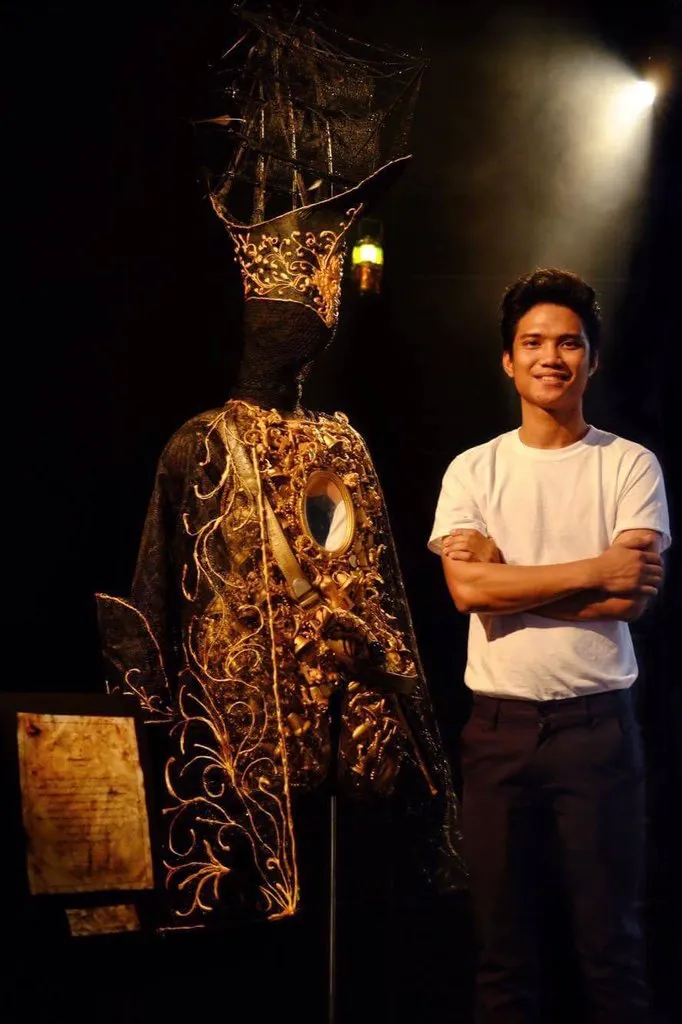
Costume design for Maurader, source: Ricardo Yan.

7. What advice would you give to artists or creatives who are just starting out?

If you want to become an artist, keep the wide curiosity that drove Renaissance scholars. Do not stay inside one subject. Read novels and poems, learn history, watch how people move, hear many kinds of music, and study paintings plus buildings. Each area adds words to your personal creative language and widens the angle from which you see your own work.

But imagination alone is not enough – it needs order – a bright idea helps only if you practice every day, push your technical skill forward, but also stay loyal to better workmanship. Thirteen years of paid work taught me that steady effort, not short bursts of excitement, produces real advance.

Respect joint work – when you invite other minds into the process, they test your notions and toughen the final piece. Shared knowledge as well as pooled experience let the idea change and grow beyond what one person could reach alone.

Kigginawan, source: Gene Rosales.

8. How do you hope your work will connect with people or leave an impact?

Technology now forms a core strand of my scenographic and performance practice. I test speculative materials plus technological components within live spatial settings, not to celebrate gadgets but to widen perception of space, narrative, and communal presence.

My aim is that those tools serve joint construction but also imagination instead of covert control or manipulation. The wider purpose is to restore direct links between individuals and their communities. After long periods of bare survival, art offers rooms where reflection, connection, and plain shared humanity regain room to breathe.

Support artists—share this

Master Your 2026 Career.

Get our free Survival Guide for Actors, Directors, and Designers.

About the Author

Leave a Reply

Your email address will not be published. Required fields are marked *

partner content

Related Posts

Agata Uchman: Iskroma.

BACKSTAGE PASS

Master Your 2026 Career.

Get our free Survival Guide for Actors, Directors, and Designers.