



What does a props master do? How theatre props are found, built and managed, from

Explore Buenos Aires’ independent theatre gems like Teatro Timbre 4, Teatro del Pueblo, and El

What is a skene? The stage building behind the orchestra in Greek theatre, how it

Scenic designer whose work is built on a single principle: never make an arbitrary choice.
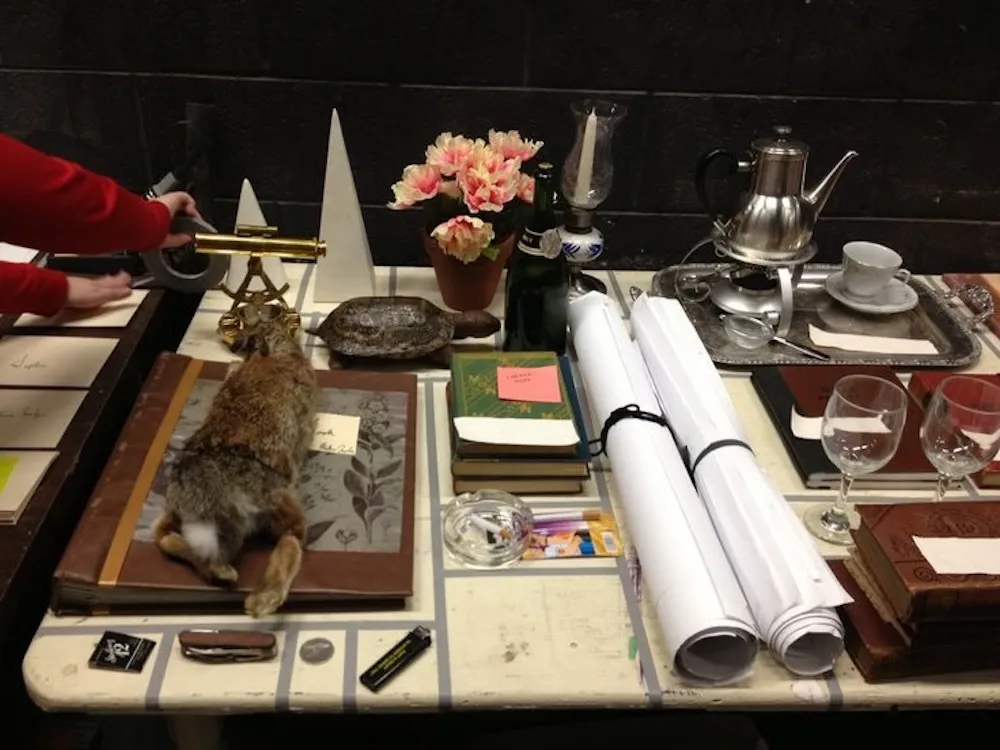
A props master leads the department responsible for every object an actor handles on stage. They read the script for every item the play requires, then research, find, buy, borrow, build or alter each one, and keep it all working from first rehearsal to closing night. The title varies by company: props director, properties manager, props supervisor. The job is largely the same.
Props sit where design, craft and logistics meet. A teacup has to suit the period, survive eight shows a week, and be on the right table at the right moment. The props master makes sure all three happen.
In the theatre, a prop (short for property) is any movable object that isn’t part of the set or a costume. Most companies divide them into a few categories:
Where props end and costumes or scenery begin depends on the company. A walking cane might be a prop at one theatre and a costume piece at another. Settling those lines early is part of the job.
The work starts with the script. The props master builds a props list of every object the play mentions or implies, then updates it as the director and designers add, cut and change items in rehearsal. Skene’s guide to the perfect props list walks through how that document is built.
From the list, each item gets a plan. As one college theatre handbook puts it, props are pulled, bought, built or rented, with pulled meaning taken from a theatre’s existing stock. The National Federation of State High School Associations lists the broader duties as managing prop budgets and expenses, maintaining accurate records of props used in each production, alongside supervising construction and maintenance. (whitman, nfhs)
Research runs through all of it. A props master needs to know what a 1950s rotary phone actually looked like, or what a Victorian letter was written on, before deciding whether to buy one, rent one or build a convincing copy.
At larger theatres, the props master runs a shop. The Educational Theatre Association describes a typical props department as a department head (known variously as the master or mistress, manager, director, or designer) and any number of props artisans with diverse skills, with the size of the team depending on the theatre’s budget and season. (schooltheatre)
The range of skills is unusually wide. Props artisans carve, sew, upholster, cast, weld, paint and wire objects to light up, often several on the same show. One properties manager quoted by the association said the job means being “a master of every trade”. (schooltheatre)
Many props are built to behave in ways real objects don’t. Breakaway plates shatter safely on cue. Food is made to be eaten night after night without upsetting a performer’s voice. A book may be hollowed out to hide a light, or weighted so it lands the same way every time.
Get Off-Book, Skene’s free newsletter for artists and makers—plus the 2026 Performing Arts Survival Guide.
Props are a design element, so the closest partner is usually the scenic designer, who sets the visual world the props must belong to. At many theatres the scenic designer approves the look of each piece, while the props master decides how to get it made within the budget.
The director shapes what each prop needs to do. The stage manager tracks every new request in the daily rehearsal reports, which are often the props master’s first notice that an item has been added. The props master also works with the costume designer on anything worn or carried, and with the technical director on pieces that connect to the set. Weapons bring in the fight director, since anything used in stage combat has to meet that safety process.
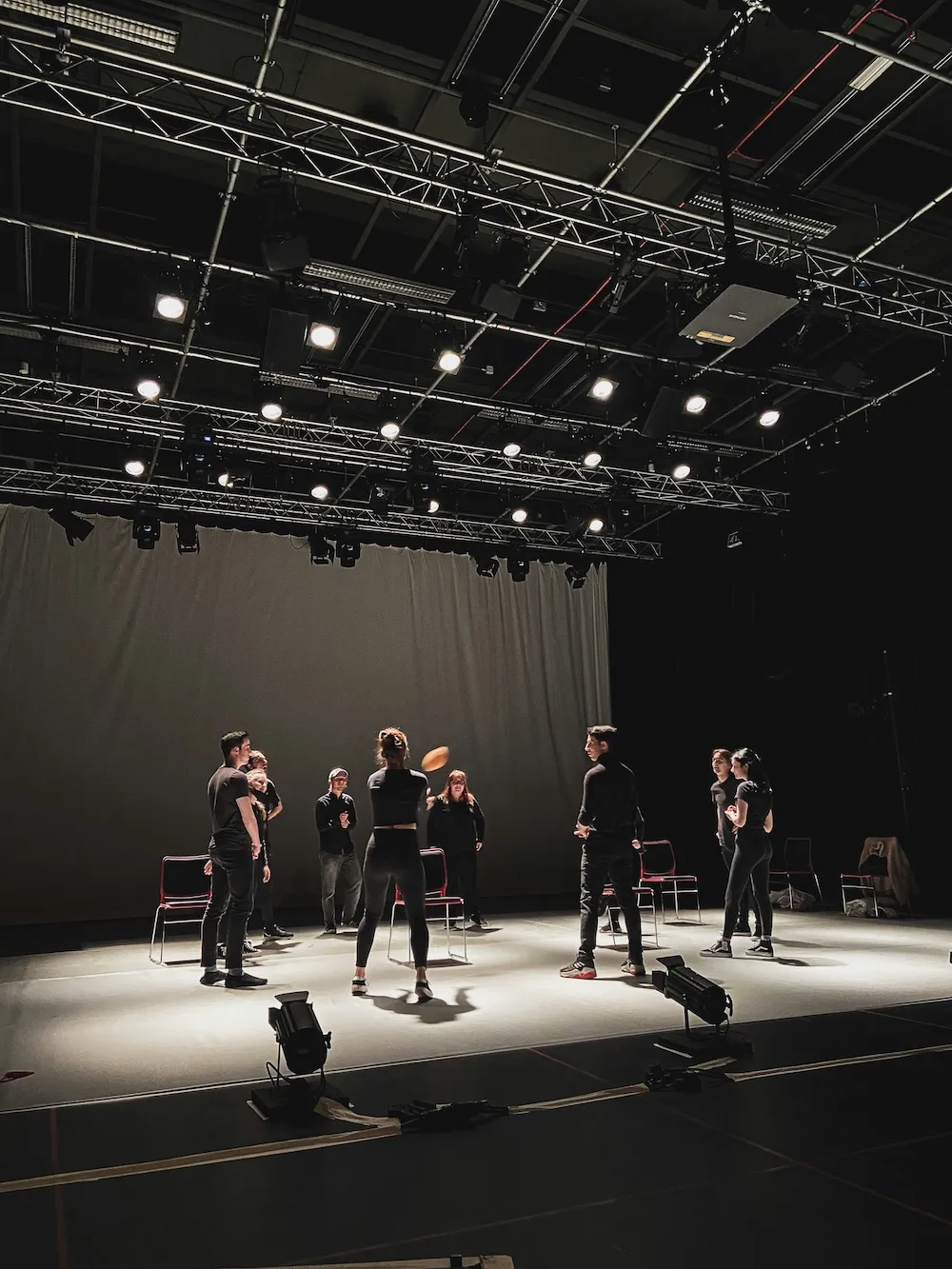
Actors rarely rehearse with the finished props. Early rehearsals use stand-ins, called rehearsal props, which are swapped for the real pieces as they’re finished, usually before or during tech. Each swap gets tested in the actors’ hands, because a cup that looks right may still be too heavy, too loud or too slippery.
Once the show opens, the props run crew takes over the nightly work: setting the props table offstage, placing presets on the set, resetting between scenes and restocking consumables. The props master stays responsible for repairs, replacements and the inevitable notes. A prop that breaks on Tuesday has to be back by Wednesday’s show.
A props master makes the objects of a play: the ones an audience reads in an instant, and the ones an actor needs to trust without thinking. The craft is easy to miss when it works.
That’s the measure of the job. An audience should believe the teacup, and never wonder who made it.
What’s the difference between a props master and a props designer?
At many theatres they’re the same person. On larger productions, the props designer decides what the objects should look like and the props master manages how they’re acquired, built and maintained. Titles vary widely between companies, so the job description matters more than the name.
Is a theatre props master the same as one in film?
The core work is similar, but the structure differs. In film, the props master typically leads a team of prop makers and reports to the production designer, and the job is organized around shooting days rather than a run of performances.
How do people become props masters?
Many start as props artisans or crew, often in university or regional theatre shops, and move up through assistant roles. Training in scenic design, carpentry, painting or crafts all transfer directly. Formal degrees help, but hands-on shop experience is what most employers look for.
Skene Staff. “What Does a Props Master Do?” Skene, 19 Nov. 2026, https://skene.pub/what-does-a-props-master-do/.
Share this story
We use cookies to ensure our website functions properly, improve your browsing experience, analyze site traffic, and support personalized content. For more information, see our Cookie Policy.
Practical career guidance for performing arts artists and makers. Take it with you.