LATEST POSTS.

Get featured
on Skene!

What Does a Stage Manager Do?

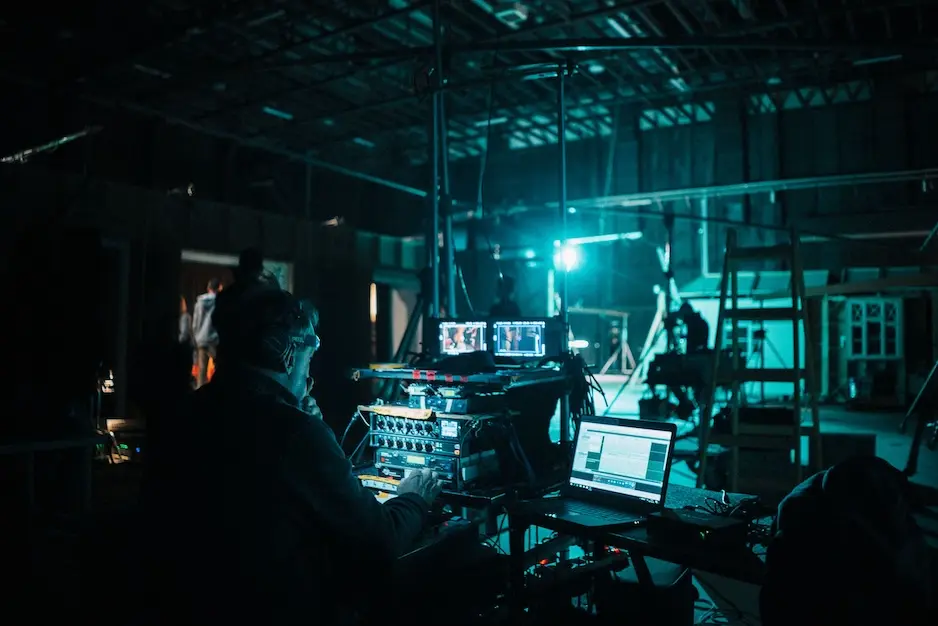
A stage manager looks at the stage under with backlight.
source: Caleb Oquendo/ Pexels.

A stage manager organizes and runs a theatre production, coordinating rehearsals, recording every staging and technical decision, communicating between departments, and calling the cues during performance so the show happens the same way each night.

That definition covers the job, but it hides how much the work changes along the way. During rehearsals, a stage manager supports a creative process led by someone else. Once the show opens, the same person takes operational responsibility for the entire production. Understanding that shift is the fastest way to understand the role.

Abingdon Theatre Company - Season 34
advertising
skene algorithm
advertising

What a Stage Manager Is Responsible For

Stage management is the practice of organizing and coordinating a production so that everyone involved has the information they need at the moment they need it. The American Association of Community Theatre describes stage managers as providing practical and organizational support to the director, actors, designers, and crew throughout the process, then acting as the director’s representative once performances begin.

In practice, that responsibility covers a consistent set of duties across almost every production:

  • Scheduling and running rehearsals
  • Recording blocking, the actors’ movement and positioning onstage
  • Tracking props, costume changes, and scene shifts
  • Writing and distributing daily rehearsal and performance reports
  • Coordinating communication between the director, designers, and crew
  • Calling cues during technical rehearsals and performances
  • Maintaining the production after opening night

Actors’ Equity Association, the union representing professional stage managers in the United States, publishes a formal list of these duties in its document library. As the Educational Theatre Association notes, that list also rules out work stage managers are frequently asked to do in non-union settings, including shifting scenery, running lights, and ordering food for the company. The boundary matters, because it distinguishes stage management from general backstage labor.

What a Stage Manager Does During Rehearsals

The rehearsal room is where a stage manager builds the document the whole production will eventually depend on. That document is the prompt book, a master copy of the script that holds the blocking along with every light, sound, and scenery cue.

Everything a director decides gets written down. If an actor crosses left on a particular line in week two, it is in the prompt book by the end of that rehearsal. If a designer changes a scene transition, the prompt book changes with it. This frees the director to concentrate on directing rather than on remembering.

The stage manager is also the room’s communication hub. Each day generates a rehearsal report that tells the costume shop about a torn seam, the scenic department about a door that sticks, and the production manager about a scheduling conflict. Most departments are not in the room, so what the stage manager writes down is what they know.

A stage manager looks at a lighting board and monitor.
source: Caleb Oquendo/ Pexels.

What a Stage Manager Does During Performances

Once the show opens, the director leaves. The stage manager stays and becomes the person responsible for the production as it exists in front of an audience.

The central task is calling the show. From a headset position, usually backstage or in a booth, the stage manager calls each cue in sequence: lights, sound, projections, automated scenery, and the crew’s manual changes. Cues are called by number and timed to the action onstage. A show with several hundred cues is ordinary. A large musical can carry well over a thousand.

Beyond calling, the stage manager runs the performance as a whole. That includes calling the actors to places, tracking who is present, managing understudy replacements, handling injuries or technical failures, and preserving the director’s staging over a run that might last months. Long-running productions change slowly if nobody is watching. Watching is the job.

Who a Stage Manager Works With

Almost everyone. The stage manager sits at the intersection of the artistic team and the technical team, which is precisely why the role exists.

On larger productions, stage management is a team rather than a single person. A production stage manager leads and holds overall responsibility, supported by one or more assistant stage managers who typically work backstage during performances while the production stage manager calls the show.

One distinction newcomers often miss: a stage manager is not a production manager. Production managers handle budgets, hiring, and long-range planning across a season or an organization. Stage managers handle a specific production, day to day and cue to cue.

Skills and Training

The skills that matter most are unglamorous and learnable. Clear writing, accurate note-taking, calm judgment under time pressure, and the diplomatic sense to know which of six competing problems to raise first.

Common pathways include:

  • A bachelor’s degree in theatre, often with a stage management or production emphasis
  • An MFA in stage management, more common for those aiming at large institutions
  • Assistant stage management positions in regional, educational, or community theatre
  • Internships and apprenticeships at professional companies

Formal training helps, but the field is still largely entered by doing the work. Many working stage managers began by assisting on productions and building a reputation for reliability, which travels faster in this profession than in most.

Two organizations are worth knowing. Actors’ Equity Association, founded in 1913, represents more than 51,000 professional actors and stage managers in the United States and negotiates their minimum salaries and working conditions. The Stage Managers’ Association, founded in 1982, is the country’s professional organization for working stage managers and supports members across theatre, dance, opera, and other live events.

an older stage manager wearing. a headset stares into stage.
source: Caleb Oquendo/ Pexels.

Conclusion

A stage manager makes a production repeatable. They gather every decision made in the rehearsal room, translate it into a form the whole company can act on, and then execute it night after night with the audience none the wiser.

That last part explains why the role is easy to overlook. When a stage manager is doing the job well, nothing appears to be happening at all. The clearest way to understand the work is to hear it described by someone who does it.

FAQs

Do you need a degree to become a stage manager?

No. Many stage managers hold degrees in theatre or an MFA in stage management, and those programs offer structured training and useful connections. But hiring in this field rests heavily on demonstrated experience and references, and assistant stage management positions in regional, educational, and community theatre remain a common entry point without a specialized degree.

What is the difference between a stage manager and a production manager?

A stage manager is responsible for one production, from the first rehearsal through closing night, and calls the show in performance. A production manager works above the level of any single show, handling budgets, hiring, scheduling, and resources across a season or an entire organization. The two roles communicate constantly but are not interchangeable.

Is stage management a union job?

It can be. In US professional theatre, stage managers are represented by Actors’ Equity Association, the same union that represents actors, which surprises many newcomers. Equity contracts set minimum salaries and working conditions. A great deal of stage management work in educational, community, and smaller professional settings is not covered by a union contract.

CITE THIS ARTICLE

Skene Staff. “What Does a Stage Manager Do?” Skene, 29 Aug. 2026, https://skene.pub/what-does-a-stage-manager-do/.

Share this post

partner content
FREE FOR ARTISTS

Get the 2026 Performing Arts Survival Guide.

Practical career guidance for performing arts artists and makers. Take it with you.