
Alejandro Piedras: Art as a Way of Connecting with Life
In this conversation, Alejandro reflects on the challenges of an acting career, the construction of

In this conversation, Alejandro reflects on the challenges of an acting career, the construction of
What does a props master do? How theatre props are found, built and managed, from

Explore Buenos Aires’ independent theatre gems like Teatro Timbre 4, Teatro del Pueblo, and El

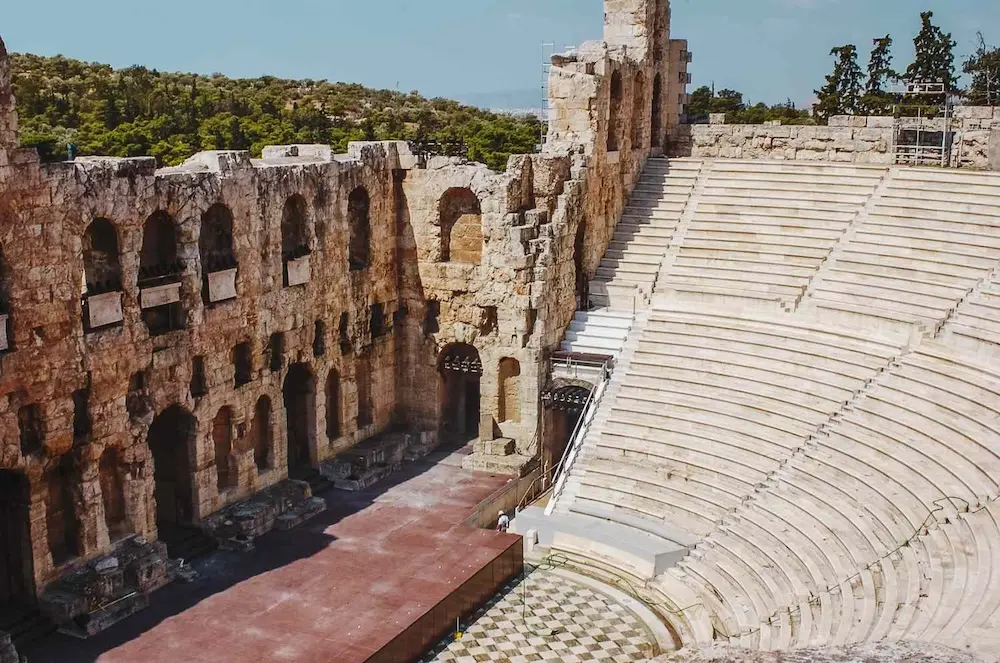
What is a skene? The stage building behind the orchestra in Greek theatre, how it

Scenic designer whose work is built on a single principle: never make an arbitrary choice.
A scenic designer creates the physical world of a production, developing the set through research, sketches, drafted plans, and scale models, then working with the director, the rest of the design team, and the scene shop to turn those designs into a built environment for performance.
The most common misunderstanding about the job is worth clearing up immediately. A scenic designer decides what the environment is and communicates it precisely enough for other people to build. They do not build it themselves.
Scenic design is the practice of translating a script and a director’s interpretation of it into a physical space that supports the performance. That includes the walls, floors, furniture, and architecture the audience sees, along with everything the actors need to move through the story.
The work produces a specific set of deliverables on almost any production:
In United States professional theatre, scenic designers are represented by United Scenic Artists, Local USA 829, IATSE, whose members work across theatre, opera, ballet, film, and television. Its Design Agreement covers scenic, costume, lighting, sound, and projection designers together, which reflects how the field is organized: designers are grouped with other designers rather than with the crafts that execute the work.
The process begins with reading. A designer reads the script repeatedly, tracking every practical demand it makes: how many locations, how fast the transitions, which doors have to work, whether anyone needs to appear from above.
Research comes next. A production set in a specific place and period requires knowing what that place actually looked like, down to the height of a doorframe and the pattern of a floor tile. Even an abstract design usually rests on a foundation of real visual reference.
Then the design develops through iterations, usually in this order:
Each stage is a conversation with the director. Designs change, sometimes substantially, and a designer who cannot let go of a first idea will struggle in this job more than one who cannot draw well.
Once the design is approved, it has to become buildable. This is where the work shifts from visual to technical.
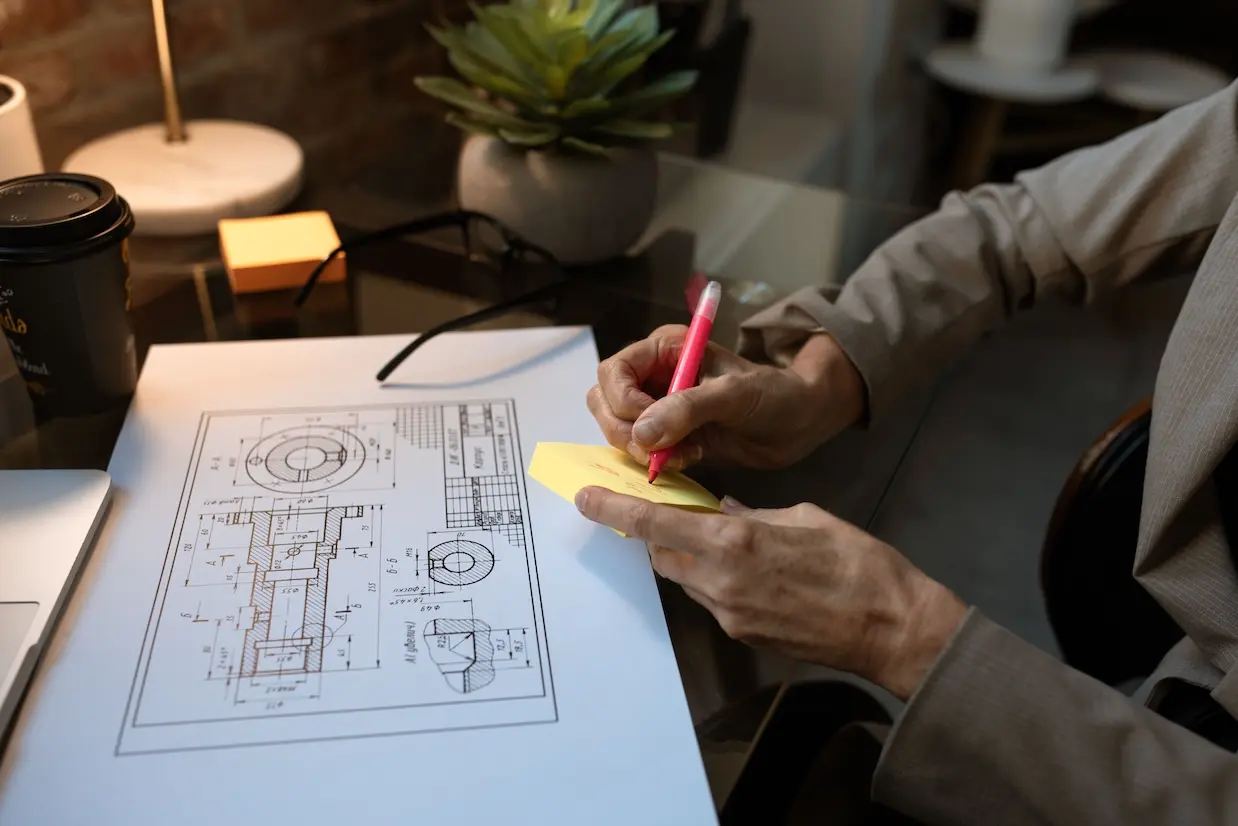
The drafted package goes to the technical director and the scene shop. It has to be dimensionally accurate and legible to people who were not in the room for any of the design conversations. The United States Institute for Theatre Technology publishes graphic standards for scenic and technical production drawings, covering line weights and dimensioning practices, so that a drawing produced in one theatre can be read correctly in another.
Paint elevations go to the scenic charge artist, who leads the painting of the set. Furniture and dressing decisions go to props. Anything that moves gets discussed with automation and the crew.
A worthwhile distinction for newcomers: renderings and models persuade, drawings instruct. Both matter, but they are aimed at different people and judged by different standards. A gorgeous rendering that hides an unbuildable dimension has failed.
Get Off-Book, Skene’s free newsletter for artists and makers—plus the 2026 Performing Arts Survival Guide.
The director first and most continuously. The relationship usually starts months before rehearsals and shapes everything downstream.
After that, the other designers. Lighting depends on the surfaces and sightlines scenery creates. Costumes have to read against the set’s color palette rather than disappear into it. Projection needs surfaces that can hold an image. These conversations happen early, because a decision made alone in one department tends to become a problem in another.
On the production side, the technical director determines whether the design can be built within the available budget, time, and shop capacity. The scenic charge artist realizes the painted finish. The props supervisor handles objects that are not built into the set.
The skill set is broader than most newcomers expect and only partly artistic:
Most working designers in the United States hold a BFA or an MFA in scenic or theatrical design. Graduate training is common for those aiming at large institutions, largely because it provides three years of building a portfolio under supervision, which is the actual hiring instrument in this field.
Assisting an established designer is the other common entry route, and many designers do both.
A scenic designer builds the world the story happens in, then documents that world thoroughly enough for a shop, a paint crew, and a stage full of collaborators to make it real.
The clearest sign the work has succeeded is that an audience reads the place immediately and never thinks about the design at all. Understanding what the other designers contribute to that effect is the natural next step.
Does a scenic designer build the set?
No. The scenic designer produces the design and the technical drawings that describe it. The set is built by the scene shop under the technical director, and painted by the scenic charge artist and paint crew. In small companies, educational theatre, and community productions, one person often does both jobs, but they remain distinct roles with distinct skills.
What is the difference between a scenic designer and a production designer?
Scenic designer is the theatre title. Production designer is the film and television equivalent, with a wider remit that typically includes locations, vehicles, and the overall visual scheme of a shoot. Many designers work in both fields and switch titles depending on the medium.
Do scenic designers need to know how to draft by hand?
Most professional drafting is now done in CAD, and a designer who only drafts by hand will be at a disadvantage. That said, hand drafting is still taught in many programs because it builds spatial understanding that transfers to digital work, and quick hand sketching remains the fastest way to think through an idea in a design meeting.
Skene Staff. “What Does a Scenic Designer Do?” Skene, 29 Aug. 2026, https://skene.pub/what-does-a-scenic-designer-do/.
Share this story
We use cookies to ensure our website functions properly, improve your browsing experience, analyze site traffic, and support personalized content. For more information, see our Cookie Policy.
Practical career guidance for performing arts artists and makers. Take it with you.