LATEST POSTS.

Get featured
on Skene!

What Does a Costume Designer Do?

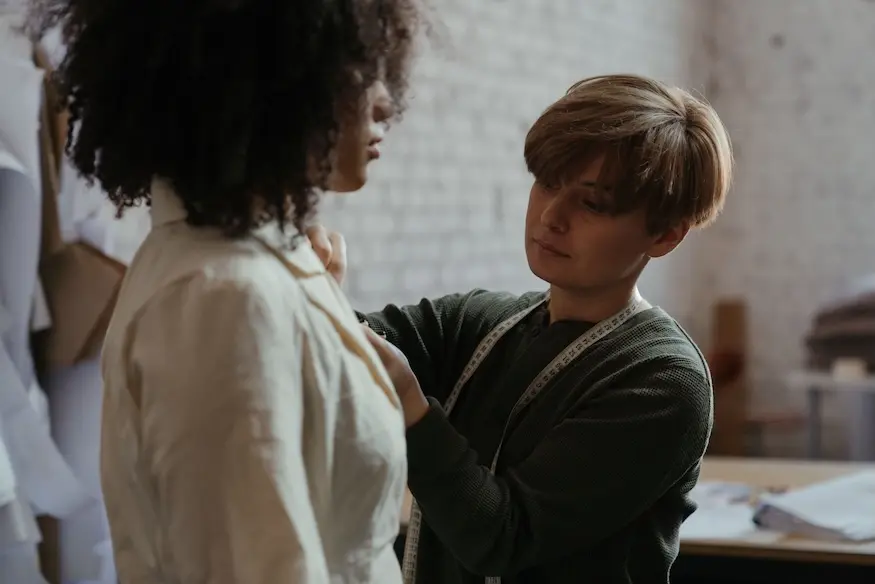
a costume designer mmakes notes in a costume shop.
source: Silverkblack

A costume designer determines what every performer wears in a production, researching period and character, producing sketches and renderings, then working with the director, the performers, and the costume shop to build, source, or rent each costume and fit it to the body wearing it.

Two things get misunderstood about this job immediately. Costume design is character work, not clothing selection. And the designer specifies the costume rather than sewing it, in most professional settings.

Abingdon Theatre Company - Season 34
advertising
skene algorithm
advertising

What a Costume Designer Is Responsible For

The remit covers every performer onstage, not only the leads. A production with an ensemble of thirty requires thirty solved problems, and the chorus member in the back has to belong to the same world as the star.

The work produces a recognizable set of deliverables:

  • Research on period, place, class, occupation, and character
  • Sketches and rendered drawings for each costume
  • A costume plot, the chart tracking who wears what in every scene
  • Fabric selection and swatching
  • Decisions on accessories, footwear, and often hair and makeup
  • A budget allocated across the whole production

In United States professional theatre, costume designers are represented by United Scenic Artists, Local USA 829, IATSE, whose Design Agreement covers costume designers alongside scenic, lighting, sound, and projection designers.

How a Costume Design Gets Made

It starts with the script and a character breakdown. The designer catalogs every person in the play, every scene they appear in, every change the text demands, and every practical requirement hiding in the stage directions. A character who gets drenched in act two needs a costume that can survive being drenched eight times a week.

Research follows. Period productions require knowing what people actually wore, which varies enormously by class, region, occupation, and year. Contemporary productions require the same rigor applied to the present, since clothing signals just as precisely now as it did in 1890.

The design then develops through drawing. Renderings show the director what the character will look like, but they also do a quieter job: they let the designer test whether the whole cast reads as a coherent world before any money is spent.

The costume plot runs alongside all of this. It is a working document, not a summary, and it becomes essential the moment quick changes enter the picture.

source: Cottonbro/ Pexels.

Building, Buying, Renting, and Pulling

A single production usually acquires costumes four different ways, and knowing which to use for which character is a core professional skill.

  • Built. Constructed from scratch by the costume shop, following the designer’s drawings. Expensive and slow, reserved for what cannot be found.
  • Bought. Purchased retail, then usually altered. Common for contemporary work.
  • Rented. Sourced from a costume rental house, frequently for period productions or large ensembles.
  • Pulled. Taken from the theatre’s own stock and adapted. The cheapest route, and the reason companies maintain storage.

The decision is rarely purely artistic. It runs on budget, shop capacity, calendar, and how much alteration a garment can tolerate. A designer who cannot make these calls will overspend on things nobody notices and underspend on the costume that carries the play.

Fittings and the Performer

Costume design is the only design discipline practiced directly on a person, and the fitting room is where it happens.

A fitting is partly technical, checking length, ease, and movement, and partly something else. An actor learns things about their character from wearing the clothes, and a good designer listens for that. An actor who cannot move the way the role requires has a real problem, not a preference.

Fittings also involve a person changing clothes in front of colleagues, which is why the field treats the space seriously. The Costume Designers Guild frames the fitting room as a place whose privacy and security must be protected, a standard now formalized in much of the industry.

This is the part of the job newcomers never anticipate. Working designers routinely name it as the part they would not give up.

Who a Costume Designer Works With

The director first, on interpretation, and then the other designers, so that costumes read against the set and hold up under the lighting rather than vanishing into either.

Inside the costume department, the shop manager oversees the build. Drapers create patterns and construct garments. Stitchers execute. The wardrobe supervisor and crew take over once the show opens, maintaining costumes and running quick changes nightly. Hair and makeup coordinate closely, since a silhouette rarely works without the head that completes it.

Skills and Training

The skill set spans the artistic and the practical:

  • Drawing and rendering the human figure
  • Historical and cultural research
  • Textile knowledge, including how fabric behaves under stage light and in motion
  • Pattern and construction literacy, enough to specify what a shop can execute
  • Budgeting across a full production
  • Working with performers about their bodies with tact

Most working designers in the United States hold a BFA or an MFA in costume design. Beyond formal training, the field is served by the Costume Society of America, which supports scholarship on dress and appearance and has published the journal Dress since 1975, a resource many designers use for research.

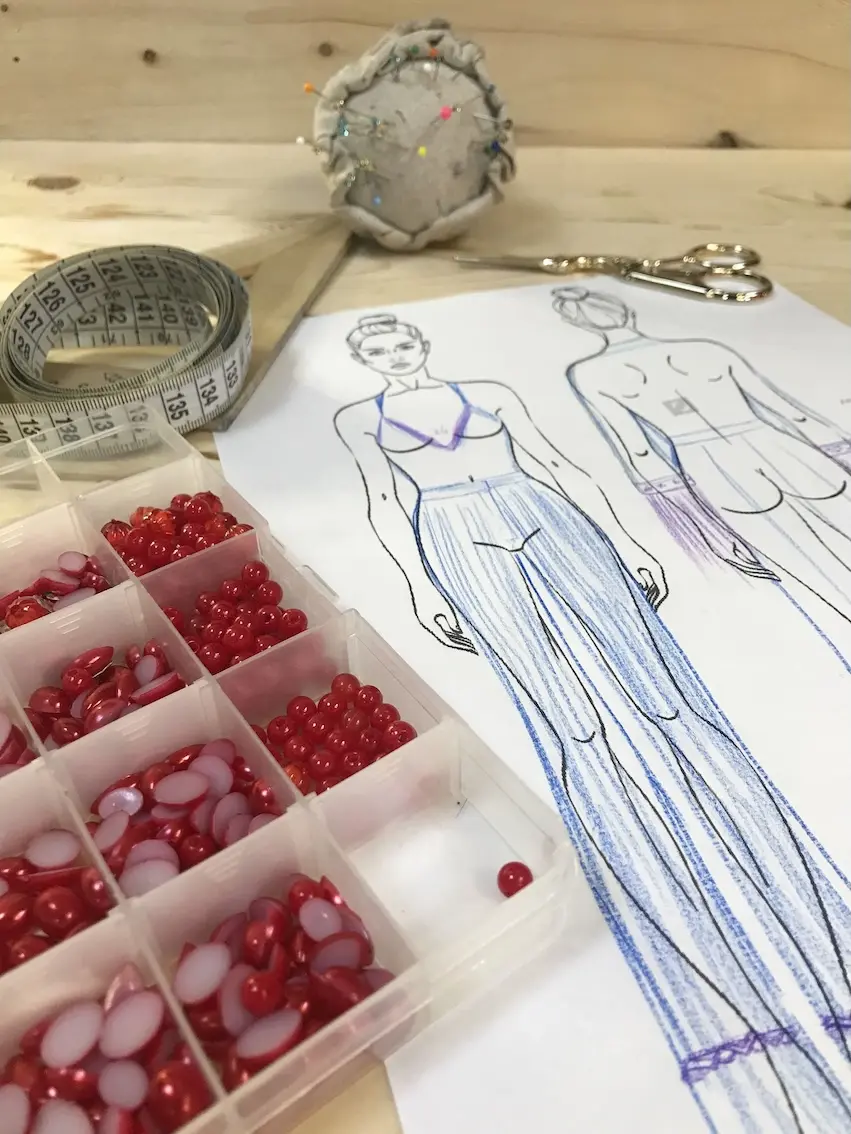
a costume sketch laying ona. table next to beads and fabric samples.
source: Jane Blaze/ Pexels.

Conclusion

A costume designer builds people. The clothing is the instrument, but the object is a character an audience recognizes before anyone speaks.

The clearest measure of success is that the audience sees a person rather than an outfit. Understanding how the other design disciplines contribute to that impression is the natural next step.

FAQs

Does a costume designer sew the costumes?

Usually not. The designer produces the drawings and specifications, and the costume shop builds from them, with drapers creating patterns and stitchers constructing the garments. In educational, community, and small professional theatre, the designer often does construct as well, but designing and building remain distinct skills, and the professional field separates them.

What is the difference between a costume designer and a stylist?

A stylist selects existing clothing to present a real person attractively or appropriately, for a photo shoot, an event, or a public appearance. A costume designer constructs a fictional character through clothing, working from a script and a director’s interpretation, and often has garments built that do not otherwise exist. The skills overlap. The purpose does not.

Do costume designers work on film and television too?

Yes, and many move between mediums. The union differs: theatre costume designers in the United States are represented by United Scenic Artists Local USA 829, while the Costume Designers Guild, Local 892 represents costume designers, assistant costume designers, and illustrators working in film, television, and commercials.

CITE THIS ARTICLE

Skene Staff. “What Does a Costume Designer Do?” Skene, 29 Aug. 2026, https://skene.pub/what-does-a-costume-designer-do/.

Share this post

partner content

RELATED POSTS.

FREE FOR ARTISTS

Get the 2026 Performing Arts Survival Guide.

Practical career guidance for performing arts artists and makers. Take it with you.