
LATEST POSTS.

Get featured
on Skene!

Rodrigo Sosa Bernal: The Divine Spark.

source: Rodrigo Sosa Bernal.
advertising
partner content

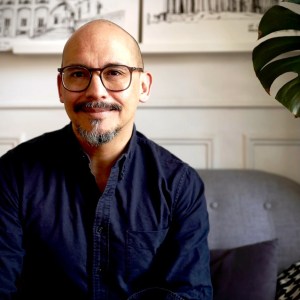
Rodrigo Sosa Bernal

he/him
Costume Designer
Mexico
Bathory contra la 613, source: Alfredo Millan.

1. What sparked your interest as an artist and how has that spark evolved over time?

I consider myself to have always been a highly sensitive person. Since childhood, I remember accompanying my grandmother to La Parisina and enjoying touching and feeling every single fabric; a vice that I still retain today. Fortunately, I always received support from my parents through drawing classes and various activities that eventually fueled my profession. Furthermore, a genuine taste for art run in the family, especially through my grandmother, who would take us to the theater and the ballet.
Later on, when the time came to decide what to do with my life, the theater called to me. Its magic and stories captivated me; I learned to see it, to feel it, but above all, to create it. In costume design, I found that spark: an unwritten language of shapes, colors, and textures that made me fall in love by allowing me to tell stories and evoke emotions.
It has been a journey of highs and lows, of immense learning and shifts in direction. Along the way, I discovered cinema, the perfect lover: a different yet complementary language played at another rhythm. Although today I mostly work in film and advertising, I am dying to return to my roots and dedicate more time to theater.

Sonata de Otoño, source: Erick Dezib.

2. Can you share the story behind one of your favorite works and what it means to you?

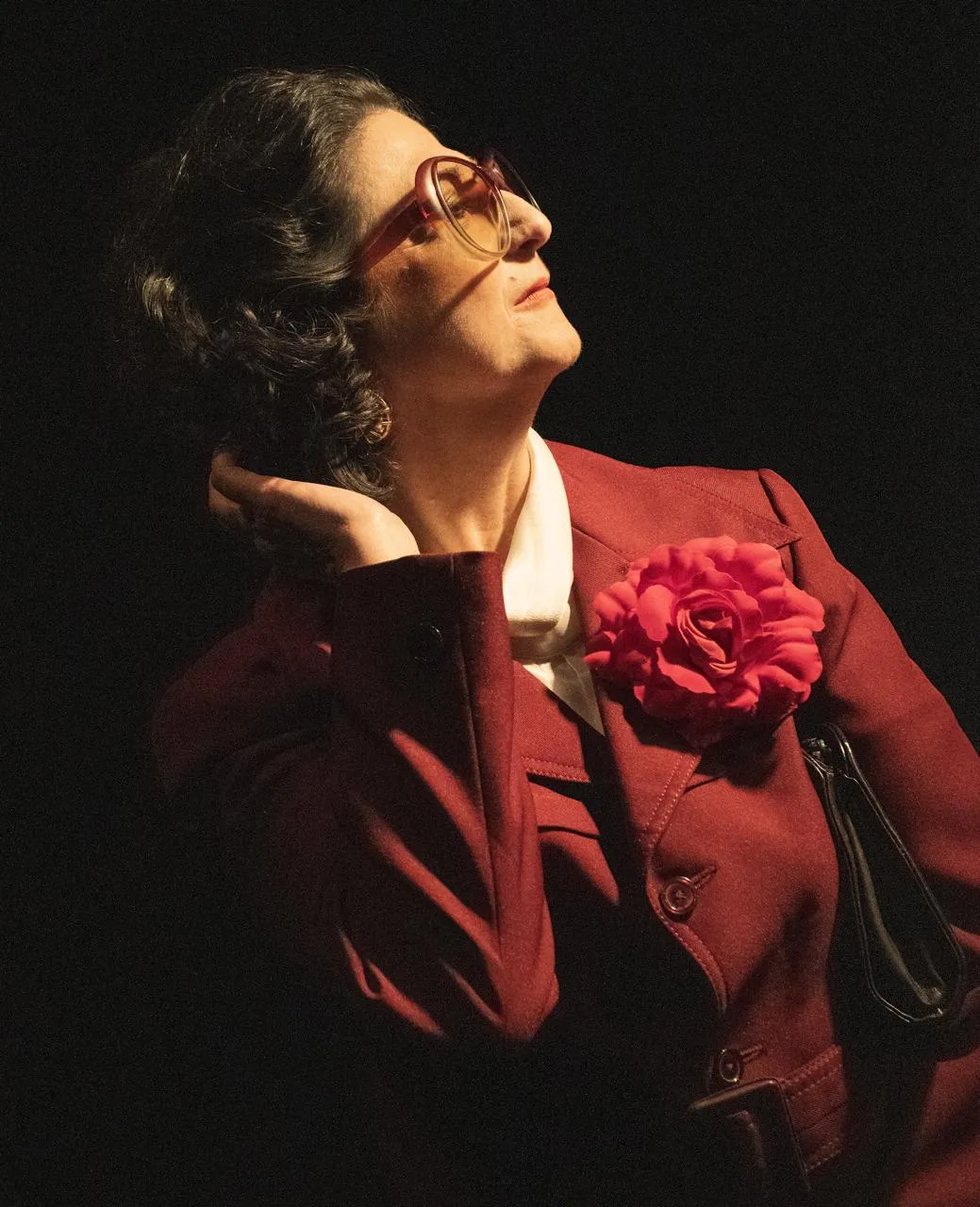
In 2020, shortly before the pandemic locked us down, I was fortunate enough to design for the play Bathory contra la 613, written by Juanma Romero and directed by Daniela Parra. Coming off a wave of film projects, the timing aligned perfectly for me to join the production. There were only three actresses on stage, but we agreed with the director that Bathory’s character would begin like a wax statue, gradually shedding her complex 16th-century attire down to her underwear as a metaphor for her own story. Researching and pattern-making as faithfully as possible to the period was an immense learning experience; furthermore, the work of actress Ana Isabel Esqueira in imbuing the wardrobe with meaning in every movement was sublime.
This project marked a turning point in my career. Returning to the theater after so much time brought immense relief, especially since we premiered just days before the pandemic turned into a terrifying reality. Fortunately, we managed to complete that brief run, although at that moment, I carried a latent fear that it might be the very last time I would ever step onto a stage.

Travesuras de la Niña Mala 2, cinematic still, source: David F. Mayo.

3. What is your creative process—do you follow a routine or does inspiration come spontaneously?

For me, the first and most important thing is to understand the dramatic arc of each character and the daily situations in which they will find themselves involved scene after scene. After that, I conduct deep research into the specific era and historical contexts, and then I develop moodboards for each character that encompass distinct silhouettes, textures, colors, fabric swatches, and sensations. Subsequently, I begin the actual design of the garments. I do not always follow this specific order as a routine, since many factors intervene for the muses to arrive, but it is an undeniable fact that I always transit through each of these creative stages.
What I can absolutely assure you is that, at the very beginning, before ever picking up a pencil, I always enter into a state of absolute denial. I believe it is the precise instant in which the conscious mind and reason dialogue with the unconscious until finally discovering that divine spark of creation; the exact moment when ideas truly begin to sprout. Evidently, this only happens when you constantly feed yourself with images, music, memories, and stories, because I simply do not consider inspiration to be a matter of spontaneous generation.

4. What has been your biggest challenge as an artist and how did it influence your growth?

I believe the greatest challenge is with myself as an artist, in the sense that one must be in constant learning. As a costume designer, you have to learn about sewing, distressing, fashion, history, technology, and communication; but also about negotiation, spirituality, crisis management, administration, and finance. There is a daily demand to be a little better at what you do and to not let imposter syndrome win, all in order to remain creative and relevant. Ultimately, growth is constant in every single aspect, because being an artist is not just a trade, but a way of moving through life.

Bathory contra la 613, source: Alfredo Millan.

5. Who or what inspires you the most, and how is that reflected in your work?

There are many things—including characters, designers, and painters—that inspire me. Something very curious happens to me: with every project I undertake, I acquire a particular obsession, whether it is a designer, a pictorial style, architecture, or even a landscape, in order to approach it. However, if there is something that personally inspires me deeply and constantly, it is period clothing: its construction, its craftsmanship, the textiles, the silhouettes, the cuts, and those kinds of details. That is one of my permanent obsessions. The thing is, in my work, I always build the designs largely from there; even if it is something highly fantastical, the references will always come from garments of some historical period.
Another of my great sources of inspiration is observing the work of my colleagues. Being able to see how each of them understands clothing and how they utilize it is like reading a language in a costume designer’s code; it is something that I have always found fascinating.

7 Pecados, cinematic still, source: Carlos Hidalgo.

6. What do you think is the most exciting thing happening in your field right now?

think it has to do with the use of technology in creative processes. If I talk about artificial intelligence, it seems to me a very useful tool, though not very docile; it is not easy to control, it possesses an unruly imagination, and it sometimes enters very murky territories regarding design and authorship. However, if one learns to use it and remains ethical, it is a great resource that streamlines sketching processes and the visualization of garments on actors, which, at any given moment, can save money. Even as a brainstorming generator, I think it is brilliant. Fortunately, theater possesses a living language, which distances us a bit from the double-edged sword of this tool.

7. What advice would you give to artists or creatives who are just starting out?

Be yourself and discover quickly who you are. Learn to communicate your ideas, never stop learning, and reinvent yourself whenever necessary. Think of your future “old self”: time is just an instant. In the end, choose your battles wisely.

Travesuras de la Niña Mala, source: Germán Hernández.

8. How do you hope your work will connect with people or leave an impact?

Before, I used to think that to generate an impact or transcend, you had to be on the marquee all the time. Today, I believe what truly matters is that the play—not the text, not the acting, not the costumes, not the set design, not the lighting—but the combination of all areas manages to generate emotions, reflections, and the desire to return to the theater seats. That is the true impact. Sadly, it is not something measurable, and we will only see its effects in the long term, when society becomes more human. I only hope to be able to do this for a long time, giving my absolute best in every single one of my costumes.

Support artists—share this

More like this, twice a month.

Off-Book is the Skene newsletter for artists and makers. Profiles, opportunities, and editorials, free. New subscribers also receive the 2026 Performing Arts Survival Guide.

About the Author

Leave a Reply

Your email address will not be published. Required fields are marked *

Abingdon Theatre Company - Season 34
advertising
Abingdon Theatre Company - Season 34

RELATED POSTS.

FREE FOR ARTISTS

Get the 2026 Performing Arts Survival Guide.

Practical career guidance for performing arts artists and makers. Take it with you.