Shuyang Zhou: I Moved a Mountain.
Chinese scenic designer and USITT YDMT award recipient whose work builds worlds


Chinese scenic designer and USITT YDMT award recipient whose work builds worlds

Roberto Mosqueda cuenta cómo escribió La Leyenda del Ermitaño a los 40,

A props master’s field-tested rules for collaboration in the theatre, from doing

Emerging lighting designer whose work on Broadway and beyond is guided by

Six contemporary plays for student drama clubs and theatre groups. Minimal sets,
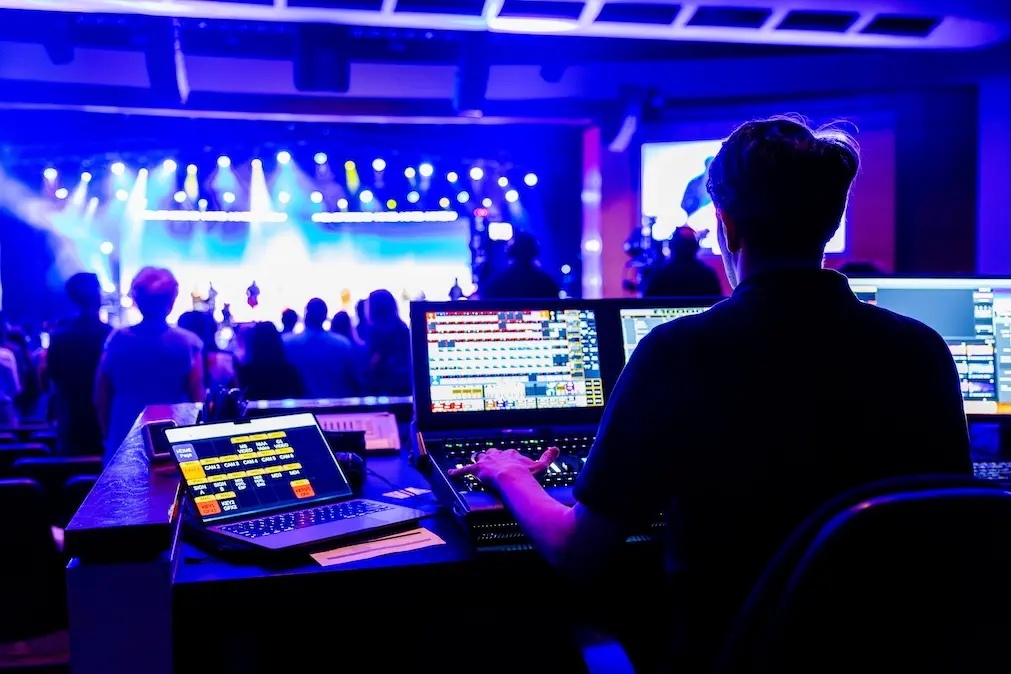
A lighting designer shapes how a production is seen, using light to control visibility, focus, color, atmosphere, and movement, then developing that design in collaboration with the director, design team, programmers, electricians, and stage management.
The most common misunderstanding about the job is worth clearing up immediately. A lighting designer decides how light supports the story and communicates that vision clearly enough for other members of the production team to install, program, and reproduce it. They do not simply operate the lighting console during performances.
Lighting design is the practice of using light as a storytelling tool. It guides the audience’s attention, establishes mood, defines time of day, reveals or conceals information, and helps shape the visual rhythm of a performance.
A lighting designer typically develops:
In professional theatre throughout the United States, lighting designers are represented alongside scenic, costume, sound, and projection designers by United Scenic Artists, Local USA 829. The profession is recognized as one of the major theatrical design disciplines because its work shapes the audience’s experience as fundamentally as scenery, costumes, or sound.
Every lighting design begins with understanding the production itself. The designer studies the script, score, choreography, or devised performance, then meets with the director and the rest of the design team to develop a shared visual language.
Research follows. A realistic drama may require understanding how sunlight enters a nineteenth century drawing room, while a contemporary dance work may explore abstraction through color, shadow, and movement. Every decision begins with storytelling rather than equipment.
As the production develops, the designer typically works through several stages:
Unlike scenery, lighting cannot be fully evaluated until performers, costumes, scenery, and light exist together in the same space. Some of the most important creative decisions happen during technical rehearsals, when the designer can finally respond to the production as a complete visual composition.
Once the design is approved, it must become repeatable.
The designer prepares technical documentation that allows electricians and programmers to install the system accurately and reproduce every cue consistently throughout the production.
A typical package may include:
These documents serve the same purpose that construction drawings serve in architecture. Artistic ideas become precise technical instructions.
A useful distinction for newcomers: the lighting concept inspires the production, but the paperwork makes it possible. Beautiful ideas only become successful lighting designs when another team can install, program, and maintain them exactly as intended.
The lighting designer collaborates with nearly every department in a production.
The relationship with the director begins early and continues throughout rehearsals and technical rehearsals. Together they decide where the audience should look, how scenes should feel, and how visual transitions support the storytelling.
The lighting designer also works closely with the scenic designer. Set materials, colors, and architecture influence how light behaves onstage, while lighting changes the way scenery is perceived. Readers interested in that collaboration can also explore What Does a Scenic Designer Do?
Costume designers select fabrics and colors that respond differently under stage lighting. Projection or media designers coordinate brightness and surfaces. Sound designers help shape the rhythm and emotional pacing of scenes.
On the production side, the lighting designer collaborates with the master electrician, lighting crew, programmers, and stage management. During performances, stage management typically calls the lighting cues while the lighting operator executes them, allowing the designer’s work to be reproduced consistently from one performance to the next.
Lighting design combines artistic judgment with technical knowledge.
Successful designers usually develop skills in:
Many professional lighting designers study theatre or entertainment design at the university level, although there is no single required educational path. Others begin by working as electricians, assistants, programmers, or production technicians before moving into design.
One of the most valuable lessons newcomers can learn is that lighting design is not about making the stage brighter. It is about deciding what deserves to be seen, when it should be seen, and why. Technical skill matters, but storytelling remains the designer’s primary responsibility.
A lighting designer creates the visual language of light that supports every performance, then documents that language carefully enough for an entire production team to reproduce it night after night.
The audience may never consciously notice an individual lighting cue, but they almost always feel its effect. When lighting quietly guides attention, shapes emotion, and strengthens the story, the design has done its job.
Does a lighting designer operate the lights during a performance?
Usually not. The lighting designer creates and refines the cues during rehearsals. Once the production opens, stage management typically calls the cues while a lighting operator runs the control console.
What is the difference between a lighting designer and a lighting technician?
A lighting designer creates the artistic concept. Lighting technicians, electricians, programmers, and crew members install, focus, maintain, and operate the equipment needed to realize that design. In smaller productions, one person may perform several of these roles.
Do lighting designers need a degree?
Not necessarily. Many professionals earn theatre or design degrees, while others build careers through assisting designers, working on productions, apprenticeships, and developing a strong portfolio of professional work.
Skene Staff. “What Does a Lighting Designer Do?” Skene, 29 Aug. 2026, https://skene.pub/what-does-a-lighting-designer-do/.
Share this post
We use cookies to optimize our website and our service functionalities.
Practical career guidance for performing arts artists and makers. Take it with you.