Shuyang Zhou: I Moved a Mountain.
Chinese scenic designer and USITT YDMT award recipient whose work builds worlds


Chinese scenic designer and USITT YDMT award recipient whose work builds worlds
Roberto Mosqueda cuenta cómo escribió La Leyenda del Ermitaño a los 40,

A props master’s field-tested rules for collaboration in the theatre, from doing

Emerging lighting designer whose work on Broadway and beyond is guided by

Six contemporary plays for student drama clubs and theatre groups. Minimal sets,
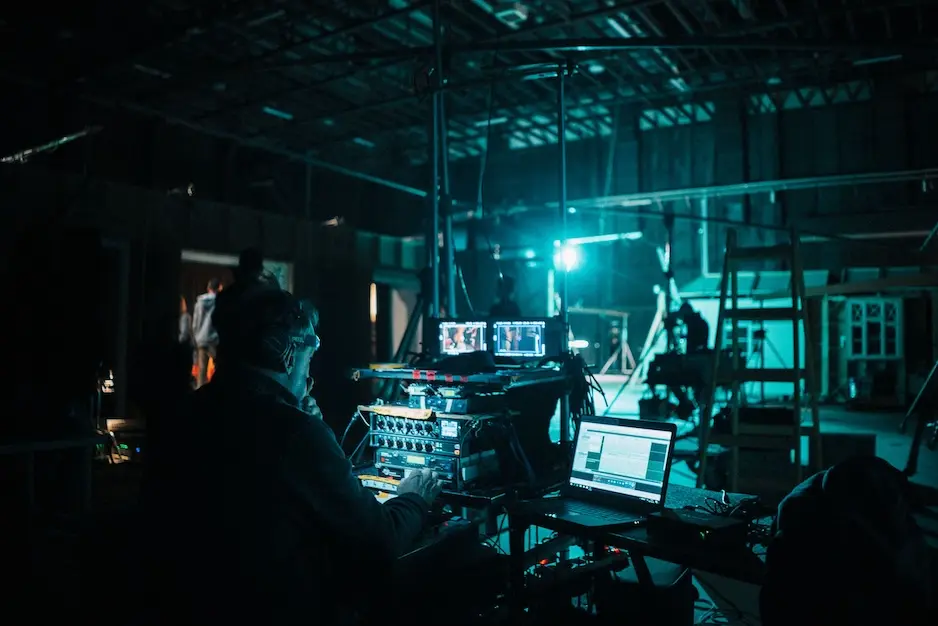
Technical theatre is the collection of artistic, technical, and production disciplines that design, build, operate, and maintain the physical and technical elements of a live performance, making it possible for a production to move from an idea to the stage.
The most common misunderstanding about technical theatre is worth clearing up immediately. Technical theatre is not a single job, nor is it simply “working backstage.” It is an umbrella term that includes dozens of specialized professions, each contributing a different piece of the production while working toward the same artistic goal.
Every live performance depends on specialists whose work happens before the audience arrives, during the performance, and after the final curtain.
Technical theatre includes many different disciplines, including:
Each department has its own expertise, but no department works in isolation. Technical theatre succeeds because every specialty contributes to a shared production.
echnical theatre begins long before opening night.
As a production develops, designers collaborate with the director to establish the visual and technical direction of the show. Once designs are approved, shops begin constructing scenery, building props, sewing costumes, programming lighting, and preparing sound systems.
The process generally follows this sequence:
One useful observation for newcomers is that audiences rarely notice technical theatre when everything works well. A seamless scene change, an invisible microphone, or perfectly timed lighting cue often represents hundreds of hours of planning and collaboration.
Technical theatre offers careers for people with many different interests and skills.
Some professionals focus primarily on artistic design, while others specialize in construction, engineering, organization, or live performance operations.
Depending on the production, a technical theatre team may include scenic designers, costume designers, lighting designers, sound designers, technical directors, stage managers, scenic artists, carpenters, electricians, props artisans, wardrobe technicians, riggers, automation operators, and stage crews.
Technical theatre also works closely with the artistic leadership of the production. The Theatre Director shapes the creative vision, while designers and technicians determine how to realize that vision safely and effectively. Readers interested in specific careers can also explore What Does a Scenic Designer Do?, What Does a Costume Designer Do?, What Does a Lighting Designer Do?, What Does a Sound Designer Do?, What Does a Stage Manager Do?, What Does a Theatre Director Do?, and What Does a Theatre Producer Do?
Technical theatre combines creativity with practical problem solving.
Professionals throughout the field commonly develop skills in:
Different careers emphasize different abilities. A scenic artist relies heavily on painting and color, while an electrician focuses on lighting systems, and a stage manager specializes in communication and organization. What they share is the ability to work collaboratively under deadlines while supporting the needs of a live production.
One of the profession’s defining characteristics is that artistic decisions must also be practical. Technical theatre constantly balances creativity with safety, budgets, schedules, and the realities of live performance.
Many people discover their place in theatre without ever stepping onstage.
If you enjoy designing, building, organizing, solving technical problems, managing projects, or working with technology, technical theatre offers a wide variety of career paths. Some professionals spend their careers designing productions, while others build scenery, operate lighting consoles, manage rehearsals, paint scenery, sew costumes, or supervise complex productions around the world.
The field welcomes people with artistic, technical, mechanical, organizational, and creative strengths. Every production depends on those diverse talents working together.
Technical theatre is the collaborative work that transforms a script into a live performance, combining design, craftsmanship, technology, and production management to support every moment audiences experience onstage.
Although much of this work happens behind the scenes, it is essential to every successful production. From the first design meeting to the final strike, technical theatre provides the foundation that allows stories to come to life.
Is technical theatre the same as backstage crew?
No. Backstage crew is one part of technical theatre. The field also includes designers, stage managers, technical directors, scenic artists, props artisans, electricians, costume professionals, and many other specialists.
Do you have to be good at math or engineering to work in technical theatre?
Not necessarily. Some careers rely heavily on technical knowledge, while others emphasize artistic design, painting, sewing, communication, organization, or project management. Technical theatre includes many different skill sets.
Can you work in technical theatre without acting?
Yes. Many professionals spend their entire careers behind the scenes without performing. Technical theatre offers opportunities for artists, craftspeople, managers, technicians, programmers, and designers alike.
Skene Staff. “What Is Technical Theatre?” Skene, 29 Aug. 2026, https://skene.pub/what-is-technical-theatre/.
Share this post
We use cookies to optimize our website and our service functionalities.
Practical career guidance for performing arts artists and makers. Take it with you.