Shuyang Zhou: I Moved a Mountain.
Chinese scenic designer and USITT YDMT award recipient whose work builds worlds


Chinese scenic designer and USITT YDMT award recipient whose work builds worlds
Roberto Mosqueda cuenta cómo escribió La Leyenda del Ermitaño a los 40,

A props master’s field-tested rules for collaboration in the theatre, from doing

Emerging lighting designer whose work on Broadway and beyond is guided by

Six contemporary plays for student drama clubs and theatre groups. Minimal sets,
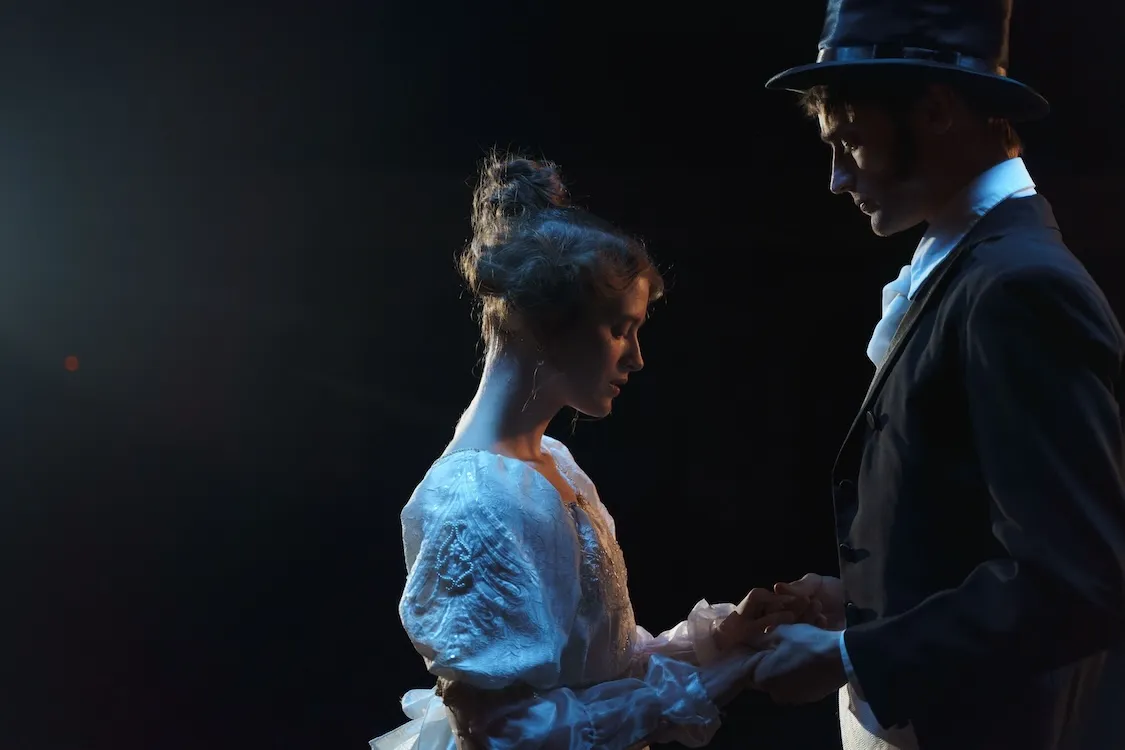
Method Acting is an approach to performance that encourages actors to draw on personal experience, emotional truth, and psychological understanding to create believable characters, although it is only one of many acting techniques used in theatre today.
The most common misunderstanding about Method Acting is worth clearing up immediately. It does not simply mean staying in character all day, refusing to speak to fellow actors by their real names, or blurring the line between performance and everyday life. Those stories have become part of popular culture, but they represent only a small and often exaggerated part of what Method Acting actually teaches.
Method Acting traces its roots to the work of Russian theatre practitioner Konstantin Stanislavski, whose system encouraged actors to pursue truthful, psychologically believable performances. His ideas profoundly influenced twentieth century theatre and inspired several distinct schools of actor training.
In the United States, members of the Group Theatre adapted Stanislavski’s work in different directions. Among the most influential teachers was Lee Strasberg, whose approach became widely known as Method Acting. Other important figures, including Stella Adler and Sanford Meisner, also developed influential techniques inspired by Stanislavski, although each emphasized different aspects of the actor’s craft.
According to the Encyclopaedia Britannica, Method Acting became one of the defining approaches to realistic performance in American theatre and later influenced generations of film actors as well.
Method Acting encourages performers to approach a role from the inside out, building a believable inner life that supports every action onstage.
Although different teachers use different exercises, Method Acting often explores ideas such as:
Rather than asking performers to imitate emotions, the Method encourages actors to understand why a character behaves the way they do. The goal is not simply to appear convincing but to create performances that feel psychologically authentic.
One important distinction for newcomers is that Method Acting is not a collection of tricks. It is a structured approach to understanding character and dramatic action through disciplined rehearsal and careful preparation.
Method Acting is only one of many approaches to actor training.
While Strasberg emphasized emotional memory and psychological exploration, Stella Adler encouraged actors to develop characters through imagination, research, and the circumstances of the script rather than relying primarily on personal memories. Sanford Meisner focused on truthful interaction between performers, developing spontaneity through carefully structured repetition exercises.
Classical acting traditions often place greater emphasis on voice, movement, language, and textual analysis, particularly when performing Shakespeare or other heightened forms of dramatic literature.
A useful distinction for newcomers is that these approaches are not competing rules. Most professional actors borrow techniques from several traditions, choosing the tools that best serve each role.
Method Acting remains one of the most influential approaches taught in conservatories, universities, and professional acting studios around the world.
Actors often study the Method to develop:
Many of these skills are explored through scene study and monologue work. Readers interested in performance material can also explore What Is a Monologue?, while those preparing to perform for a casting panel can learn more in What Happens at a Theatre Audition?
Whether an actor ultimately adopts the Method or another approach, studying different techniques helps build a broader understanding of the craft.
No.
Many successful actors have never considered themselves Method actors, while others combine elements of the Method with completely different approaches throughout their careers.
Professional performers frequently adapt their techniques to the production, the director, and the character they are portraying. A rehearsal process for a contemporary drama may differ significantly from one for a Shakespearean comedy, a musical, or an experimental performance.
One of the most valuable lessons newcomers can learn is that there is no single “correct” way to act. The strongest technique is the one that helps an actor tell the story truthfully, consistently, and collaboratively.
Method Acting is one influential approach to creating believable performances, emphasizing emotional truth, psychological understanding, and careful character development.
Its influence on modern theatre and film is undeniable, but it represents only one path among many. The craft of acting continues to evolve, and most performers build their own practice by learning from multiple traditions throughout their careers.
Who invented Method Acting?
Method Acting developed from the work of Konstantin Stanislavski and was later expanded in the United States by Lee Strasberg. Other influential teachers, including Stella Adler and Sanford Meisner, developed different approaches based on many of the same foundational ideas.
Do Method actors stay in character all day?
Not necessarily. Some performers choose to remain immersed in a role between scenes or during filming, but this is a personal working style rather than a requirement of Method Acting itself.
Is Method Acting used in theatre or film?
Both. Method Acting has influenced generations of theatre and film performers, although many successful actors in both mediums use other techniques or combine several approaches.
Skene Staff. “What Is Method Acting?” Skene, 29 Aug. 2026, https://skene.pub/what-is-method-acting/.
Share this post
We use cookies to optimize our website and our service functionalities.
Practical career guidance for performing arts artists and makers. Take it with you.