Shuyang Zhou: I Moved a Mountain.
Chinese scenic designer and USITT YDMT award recipient whose work builds worlds

Chinese scenic designer and USITT YDMT award recipient whose work builds worlds

Roberto Mosqueda cuenta cómo escribió La Leyenda del Ermitaño a los 40,

A props master’s field-tested rules for collaboration in the theatre, from doing

Emerging lighting designer whose work on Broadway and beyond is guided by

Six contemporary plays for student drama clubs and theatre groups. Minimal sets,
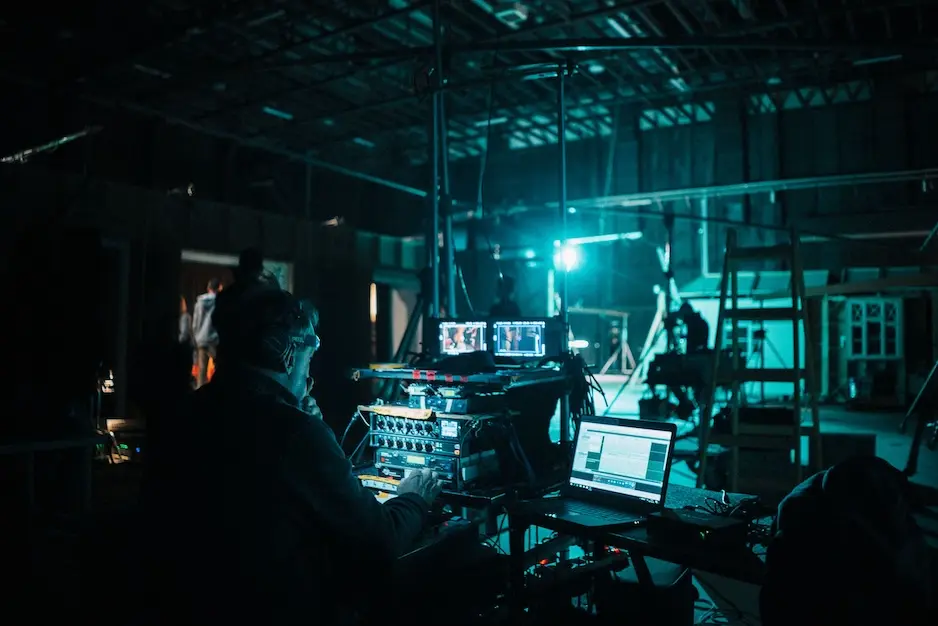
A production designer develops the overall visual concept for a film or television production, overseeing scenery, locations, props, color, and the visual style that audiences experience on screen.
The most common misunderstanding about the profession is worth clearing up immediately. A production designer is not simply a scenic designer working in film. Although the two professions share many skills, they solve different creative problems. A scenic designer creates environments for a live audience, while a production designer shapes the visual world seen through a camera.
Production design establishes the visual identity of a film or television project. Working closely with the director, the production designer develops a cohesive visual language that supports the story from the opening scene to the closing credits.
A production designer typically oversees:
Unlike theatre, where the audience views the stage from a fixed perspective, film presents the story through constantly changing camera angles. Every object visible within the frame becomes part of the production designer’s responsibility.
According to the Art Directors Guild (IATSE Local 800), production designers lead the art department and oversee the visual realization of motion pictures, television, and other filmed media.
Production design begins long before cameras start rolling.
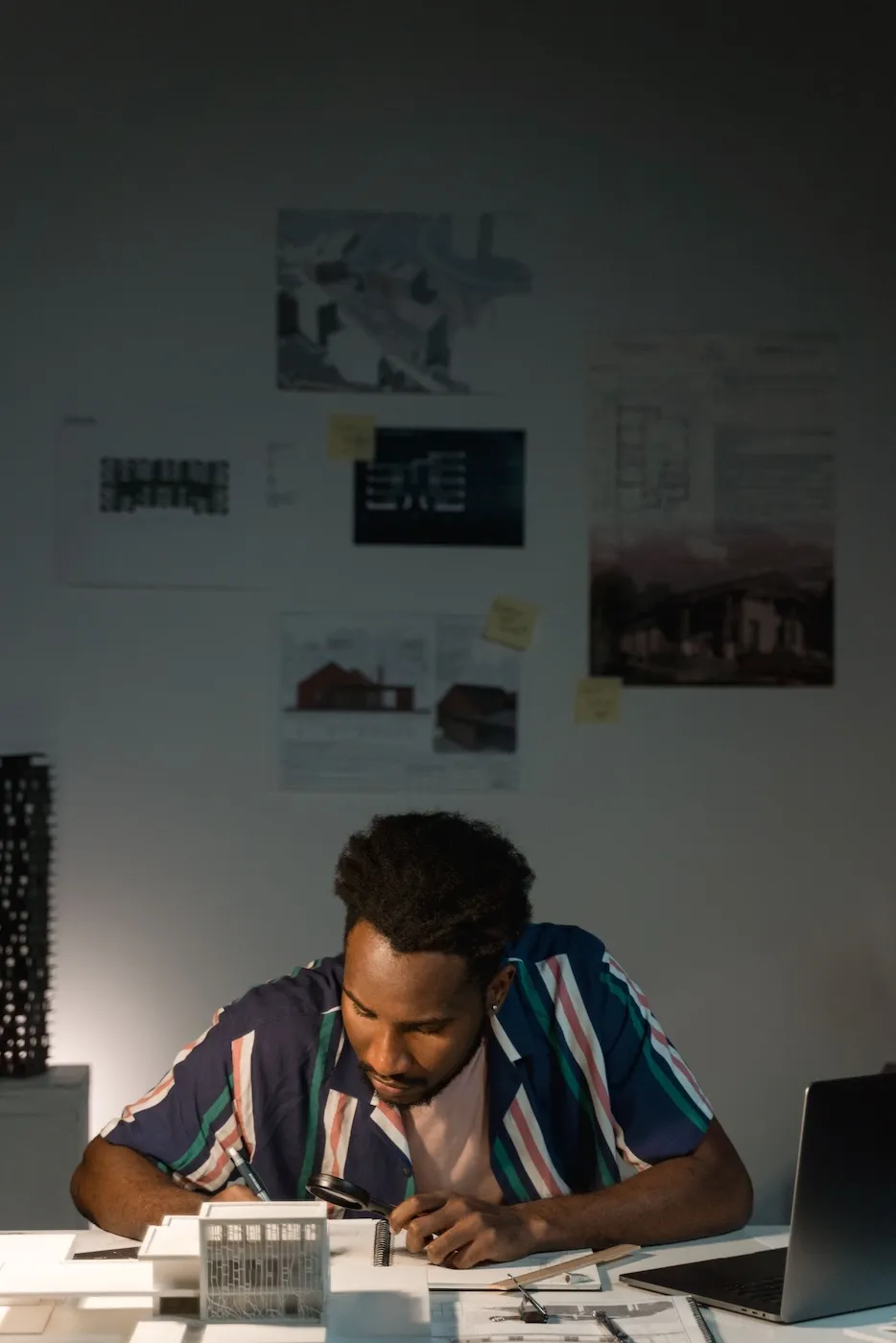
After reading the script, the production designer researches the story’s world and develops visual concepts in collaboration with the director. Sketches, mood boards, digital models, reference images, and location research gradually evolve into a complete visual plan for the production.
The process typically includes:
Unlike a theatrical production, where one stage may represent many locations, films often move between numerous real or constructed environments. Production designers must ensure those locations feel visually connected and support the story as a whole.
Production designers and scenic designers share many artistic skills, including drawing, research, composition, architecture, and storytelling. The difference lies in the medium they serve.
A Production Designer creates environments for film and television. Their work is viewed through a camera, allowing sets, locations, lighting, lenses, and visual effects to work together in shaping the audience’s experience.
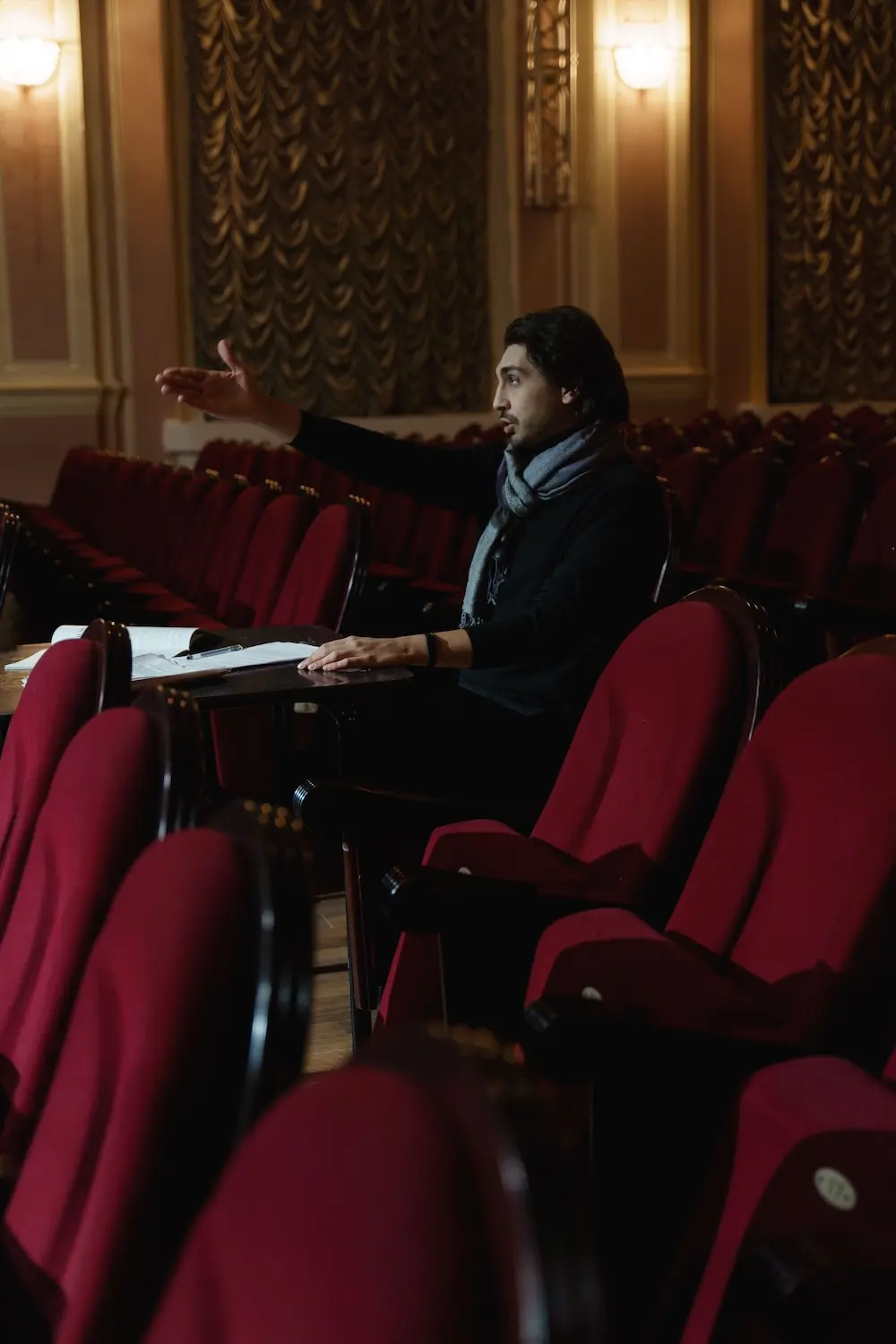
A Scenic Designer creates environments for live performance. Rather than designing for individual camera shots, scenic designers create spaces that support actors and remain effective from every seat in the theatre.
Because of these differences, production designers oversee an entire art department that may include art directors, set decorators, graphic designers, illustrators, buyers, construction coordinators, and many other specialists. Scenic designers, by contrast, collaborate more closely with technical directors, scene shops, and production departments responsible for building scenery for the stage.
Many designers work successfully in both industries, adapting their process to meet the unique demands of each medium. Readers interested in theatre design can also explore What Does a Scenic Designer Do?

Production designers collaborate with nearly every visual department throughout a project.
Their closest creative partnership is often with the Director, developing a visual language that supports the story’s tone and dramatic objectives. They also work extensively with the cinematographer, whose lighting, lenses, and camera placement determine how every design decision appears on screen.
Within the art department, production designers supervise art directors, set decorators, illustrators, prop masters, construction coordinators, graphic designers, and other specialists responsible for building and dressing the film’s environments.
Outside the art department, they coordinate closely with costume designers, hair and makeup artists, visual effects supervisors, and location managers to maintain a unified visual style throughout production.
Readers interested in related theatrical careers can also explore What Does a Costume Designer Do?, What Does a Theatre Director Do?, and What Is Technical Theatre?
Production design combines artistic vision with technical planning and leadership.
Successful production designers typically develop skills in:
Many production designers study theatre design, film production, architecture, interior design, or fine arts before entering the profession. Others begin as scenic designers, art directors, illustrators, or set designers before advancing into production design.
One of the profession’s defining characteristics is the ability to think simultaneously about artistic storytelling and practical filmmaking. Every location, texture, object, and color contributes to how audiences understand a story, even when those choices pass almost unnoticed.
A production designer creates the visual world of a film or television production, shaping the environments, colors, locations, and artistic details that support every scene.
Although audiences may never notice individual design decisions, those choices influence how stories feel from beginning to end. Through collaboration with directors, cinematographers, and the art department, production designers help transform a script into a believable world on screen.
What is the difference between a production designer and an art director?
A production designer establishes the overall visual vision of a film or television project. An art director manages many of the day-to-day responsibilities involved in executing that vision, including supervising construction, scheduling, and coordination within the art department.
Can a scenic designer become a production designer?
Yes. Many designers work in both theatre and film. While each medium has its own production process, skills such as visual storytelling, drafting, collaboration, and research transfer naturally between them.
Does every film have a production designer?
Most professional film and television productions do. On smaller independent projects, the responsibilities may be shared with an art director or another member of the art department.
Skene Staff. “What Does a Production Designer Do?” Skene, 29 Aug. 2026, https://skene.pub/what-does-a-production-designer-do/.
Share this post
We use cookies to optimize our website and our service functionalities.
Practical career guidance for performing arts artists and makers. Take it with you.