Shuyang Zhou: I Moved a Mountain.
Chinese scenic designer and USITT YDMT award recipient whose work builds worlds


Chinese scenic designer and USITT YDMT award recipient whose work builds worlds

Roberto Mosqueda cuenta cómo escribió La Leyenda del Ermitaño a los 40,

A props master’s field-tested rules for collaboration in the theatre, from doing

Emerging lighting designer whose work on Broadway and beyond is guided by

Six contemporary plays for student drama clubs and theatre groups. Minimal sets,

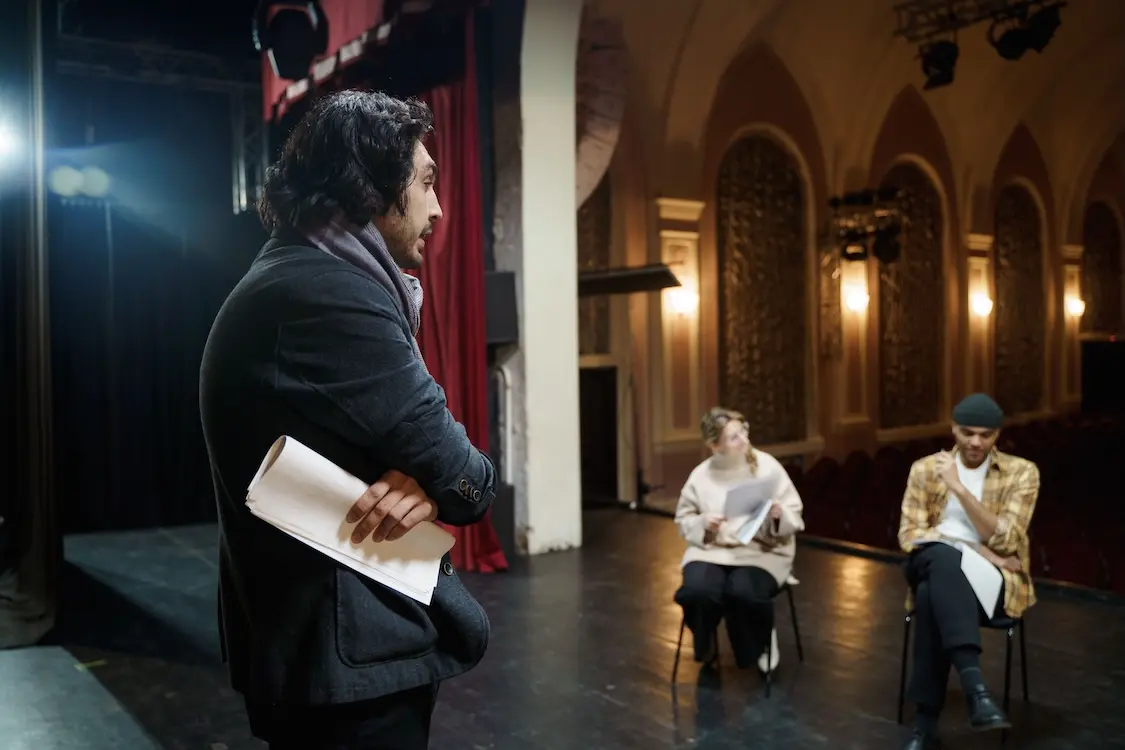
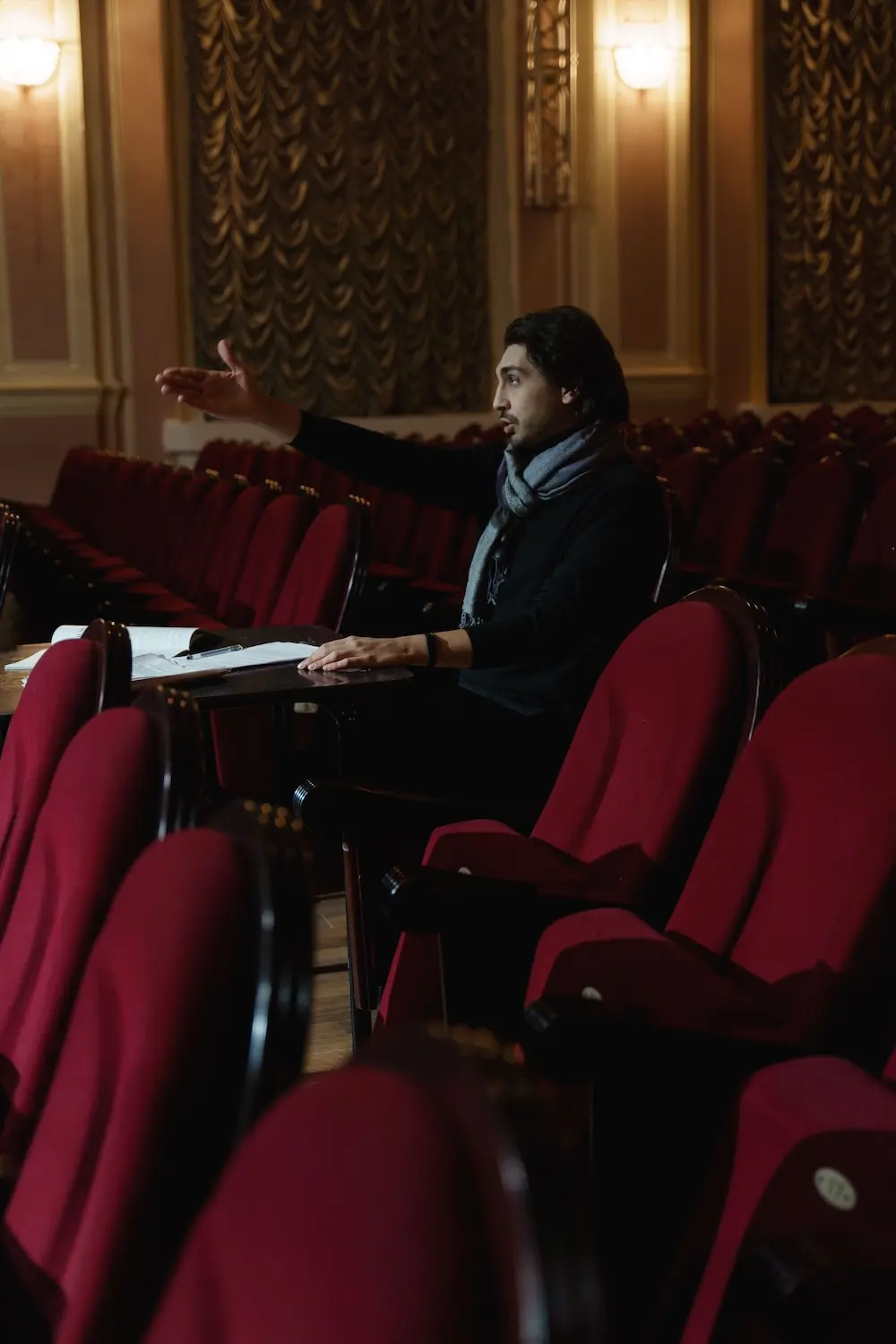
A theatre director leads the artistic interpretation of a production, guiding the performers, designers, and creative team to shape how a script is brought to life onstage from the first concept meeting through opening night.
The most common misunderstanding about the profession is worth clearing up immediately. A theatre director does not create every aspect of a production themselves. Instead, they bring together the work of actors, designers, stage managers, and technicians, helping each department contribute to a unified artistic vision.
Directing is the practice of interpreting a script and guiding the creative process that transforms it into a live performance. Every artistic decision, from the pacing of a scene to the relationship between performers and the visual world around them, ultimately supports that interpretation.
A theatre director typically oversees:
While the responsibilities remain broadly consistent, the role can vary depending on the production. A director working on a new play may collaborate closely with the playwright throughout development, while a director staging a classic text may spend more time developing a fresh interpretation of an established work.
The Stage Directors and Choreographers Society (SDC) recognizes directors as the artistic leaders responsible for interpreting dramatic works while collaborating with the many specialists who bring a production to life.
Every directing process begins with reading.
The director studies the script repeatedly, identifying its themes, structure, characters, conflicts, and dramatic questions. Early conversations with designers and other collaborators begin shaping a shared vision long before rehearsals start.
Once casting is complete, rehearsals become a process of exploration rather than simply giving instructions. Directors guide actors through blocking, character development, pacing, and relationships while remaining open to discoveries that emerge during rehearsal.
The process typically includes:
One important distinction for newcomers: successful directors rarely arrive with every answer already decided. The strongest productions develop through collaboration, experimentation, and thoughtful revision throughout the rehearsal process.
Unlike designers, directors produce relatively little technical documentation. Their primary work is the production itself.
Throughout rehearsals, the director develops:
These decisions become the framework that allows every department to work toward the same storytelling goals.
A useful distinction for newcomers: scenic, lighting, costume, and sound designers each create the work of their own discipline. The director helps those individual contributions function together as one cohesive production.
The theatre director collaborates with nearly every department from the earliest planning meetings through opening night.
Actors are the director’s closest artistic collaborators during rehearsals, but the work extends well beyond performance. The director develops the production alongside the Stage Manager, who organizes rehearsals and helps maintain the production once it opens.
The design process is equally collaborative. Scenic, costume, lighting, and sound designers each contribute specialized artistic expertise while developing work that supports the director’s interpretation of the script. Readers interested in those disciplines can also explore What Does a Scenic Designer Do? and What Does a Sound Designer Do?
Depending on the production, directors may also work closely with choreographers, dramaturgs, music directors, technical directors, and producers. Each brings a different perspective to the production, and one of the director’s most important responsibilities is helping those perspectives work together rather than compete.
Directing combines artistic vision with leadership and communication.
Successful directors typically develop skills in:
Many professional directors study theatre at the university or conservatory level, although there is no single educational pathway into the profession. Others begin as actors, stage managers, designers, playwrights, or assistant directors before moving into directing.
One of the most valuable lessons newcomers can learn is that directing is not about having the best idea in every rehearsal. The strongest directors recognize good ideas wherever they originate and help the entire company build on them.
A theatre director brings together performers, designers, technicians, and artistic collaborators to create a unified theatrical experience that serves the script and the audience.
Although the director provides the artistic leadership for a production, theatre remains one of the most collaborative art forms. A successful production reflects not one person’s vision alone, but the combined work of an entire creative team.
What is the difference between a theatre director and a producer?
A director is responsible for the artistic interpretation of the production. A producer oversees the financial, administrative, and organizational side of the project, helping make the production possible while supporting the artistic process.
Can actors become directors?
Yes. Many directors begin their careers as actors, while others come from stage management, design, playwriting, or assistant directing. There is no single path into the profession.
Does the director stay with the production after opening night?
Usually not. Once a production opens, responsibility for maintaining performances typically shifts to the stage manager and the company. Directors may return for notes, remounts, or special circumstances, but their primary work is generally completed before or shortly after opening.
Skene Staff. “What Does a Theatre Director Do?” Skene, 29 Aug. 2026, https://skene.pub/what-does-a-theatre-director-do/.
Share this post
We use cookies to optimize our website and our service functionalities.
Practical career guidance for performing arts artists and makers. Take it with you.