Plays for Young Performers: Engaging Contemporary Works.
Contemporary plays for student theatre: inspiring, ensemble-focused works that energize casts and

Contemporary plays for student theatre: inspiring, ensemble-focused works that energize casts and

Salvadoran lighting designer whose expressionist practice turns light into narrative, emotion, and

Japanese costume designer and cultural advocate whose research-driven practice interrogates representation, identity,

German scenic designer whose kinetic scenography builds sets that move with the

Mexican cultural worker, director, and playwright whose practice is rooted in collective
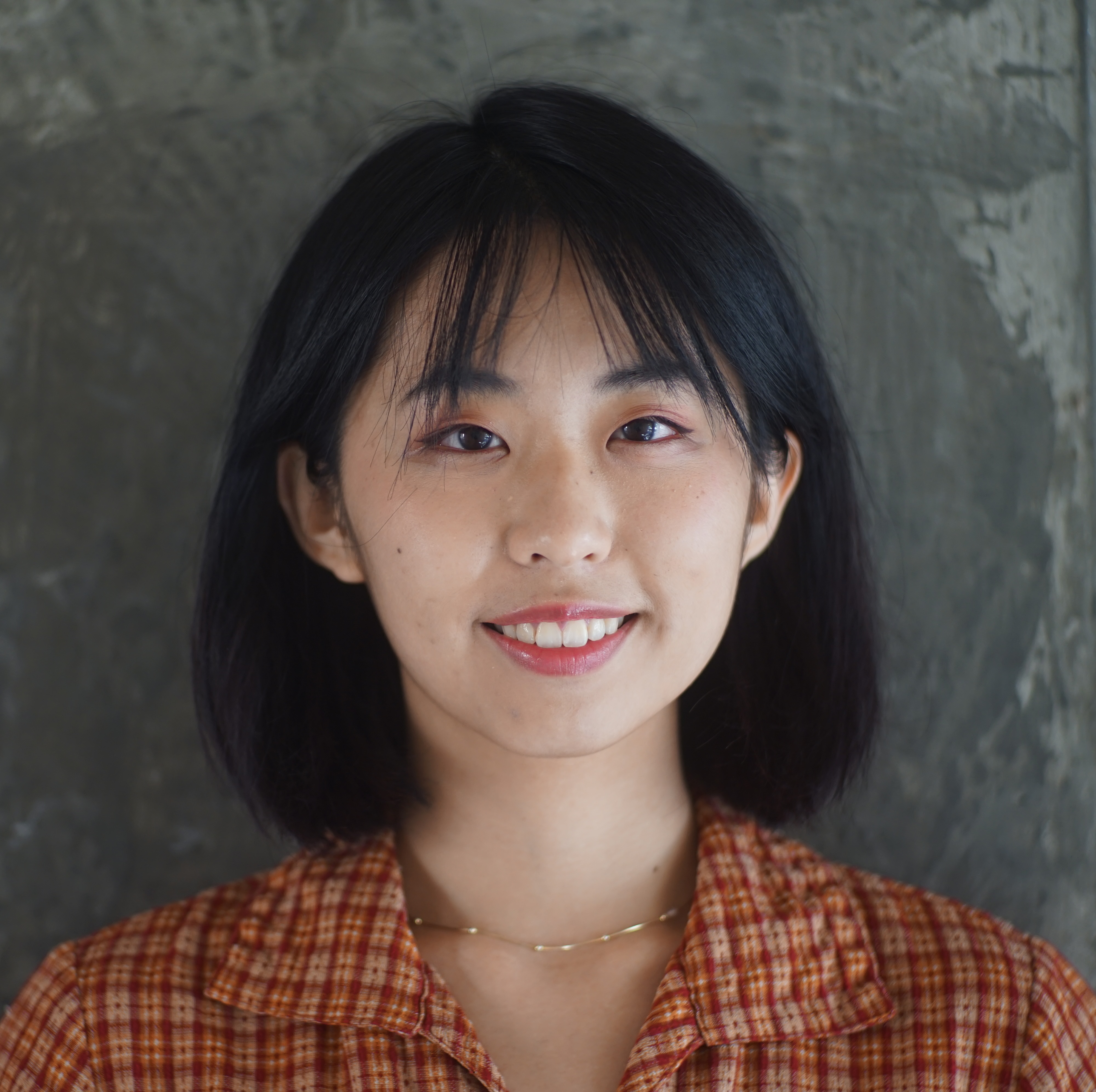
For Pan-Pan Gou, sound is more than vibration—it’s narrative. From the moment she first heard the sweeping drama of The Phantom of the Opera soundtrack, she knew that music and sound carried stories powerful enough to fill the imagination without a single image attached. Today, as a sound designer and composer, she continues to explore that expansive space, shaping sonic worlds that move fluidly between theater, games, film, installations, and new technologies.
With a background that bridges musicianship and storytelling, Pan-Pan treats every project as both experiment and conversation, asking how sound can resonate with our most personal and universal experiences.
In this edition of NEW TALENTS we meet an artist that is part of the vanguard exploring sonic interactivity—where the audience’s own voice may become the key to unlocking narrative. Always searching, always listening, she reminds us that sound is not background, but the heartbeat of story.
Growing up, I was always drawn to music and storytelling across different forms of media. It might sound cliché, but hearing the original Phantom of the Opera album was a turning point for me. The emotional intensity and dramatic tension expressed purely through music captivated me. I remember being completely content with the absence of visuals—it gave my imagination full freedom to roam. In hindsight, that might have been an early sign of my deep connection to sound. Later, as a musician exploring the world of sound design, I find musicality in all aspects of sonic experience.
Sound, to me, is dynamic and momentous; it has the power to stir deep emotions and shape stories in subtle yet profound ways. Over time, I’ve grown to appreciate the intangible but compelling role sound plays in storytelling—it’s not just an accompaniment, but a powerful narrative force on its own. I have played and manipulated sounds in a variety of arts and entertainment: theater, games, films, installation, music technology, etc, and the possibility of sonic experience simply keeps growing!
One of my favorite and most ambitious projects was the production of “Passage” at Carnegie Mellon University. From creating fantastical, liminal soundscapes, writing culturally ambiguous yet compelling music that drives the momentum of the play, to designing a dynamic system that utilizes live vocal processing and spatial audio to heighten the space, I had the time of my life exploring and pushing the boundaries of my artistry while collaborating with a fantastic team! My design also led to two honors — finalist in the Emerging Sound Designer category and one of the 100 global exhibitors— at World Stage Design 2025, with the results to be announced in October.
My creative process includes both structure and spontaneity. Sometimes, setting limitations actually fuels my creativity—I’ll confine myself to a specific chord progression, instrumentation, or a limited set of audio files, which pushes me to think more inventively within those boundaries. For example, creatively manipulating a small set of sounds can often lead to unexpected and unique results.
Other times, inspiration strikes suddenly—like a melody or sonic idea that appears in the shower or when I am crossing the street. When that happens, I jot it down or record it on my phone immediately. But I have a rule: if I can’t hum the idea the next day, I let it go. To me, that’s a sign the idea isn’t strong or memorable enough to resonate deeply. If it sticks, then I know it’s worth exploring further.
Currently, I am writing music for City Theater’s upcoming world premiere of Louisa May Alcott’s Little Women by Lauren Gunderson, and the principle of selectively exploring music ideas has been both a blessing and a curse. It’s a joy when I land on something that truly connects to the heart, and a bit of a torture when I am searching nonstop for something I can’t quite recognize yet in the music limbo!
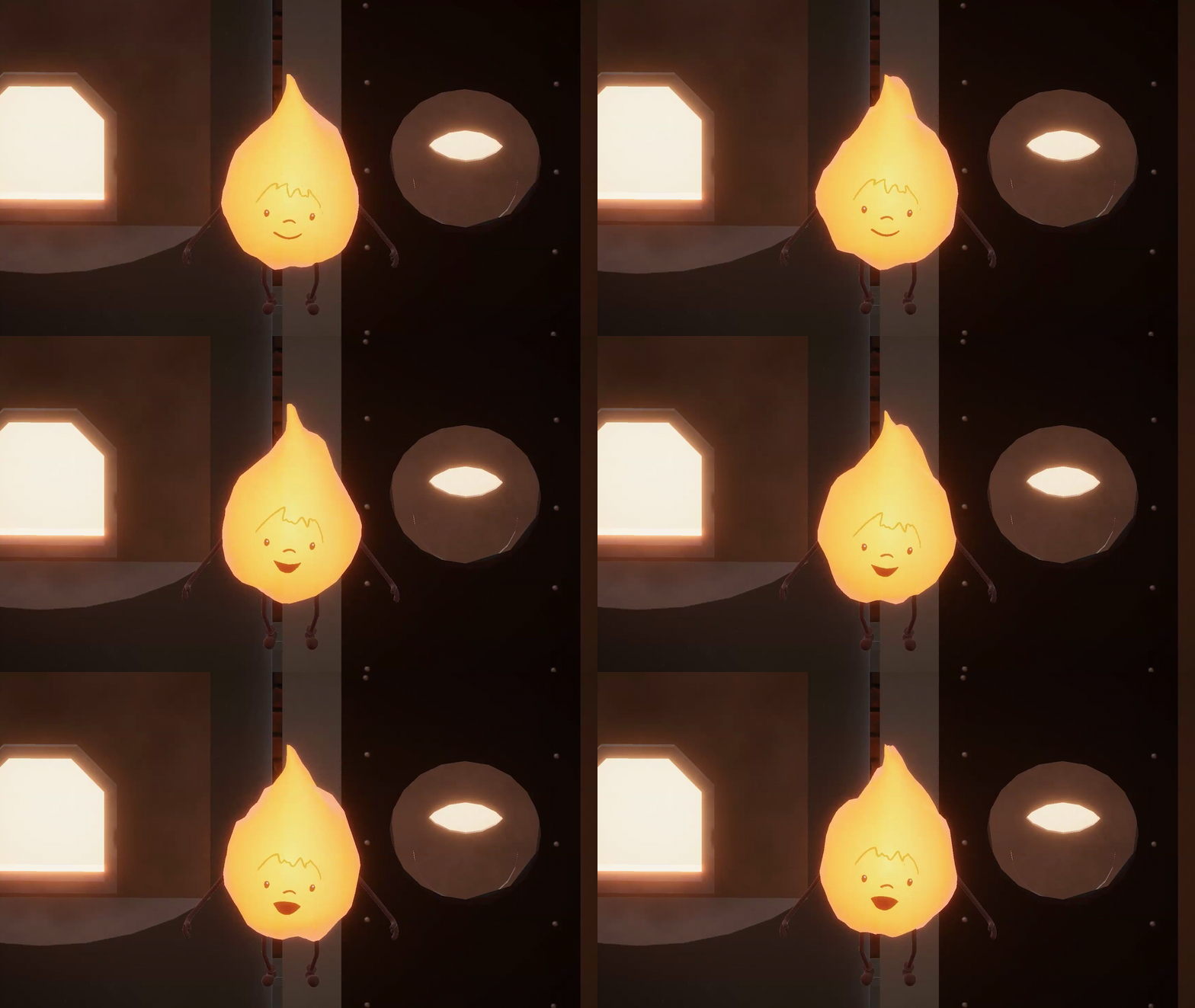
As the arts continuously grow more interdisciplinary, I am excited by the blurring and the merging of different worlds. One specific thing that comes to mind is sonic interactivity in storytelling. While I traditionally come from a theatrical sound design background, I have worked on some interesting projects in the field of video games, such as “Pittsburgh Glass Center: Virtual Glass Blowing,” which won Golden Place at the 2023 International Serious Play Award and was used at Pittsburgh Glass Center’s courses, and my master’s thesis, “Voce.” Through my experience in gaming development, I am deeply intrigued by the relationship between interactivity and immersion, and I can’t help but wonder what form of sonic interactivity we could bring to the world of theater if there’s an increasing demand for immersive theater or any live experience.
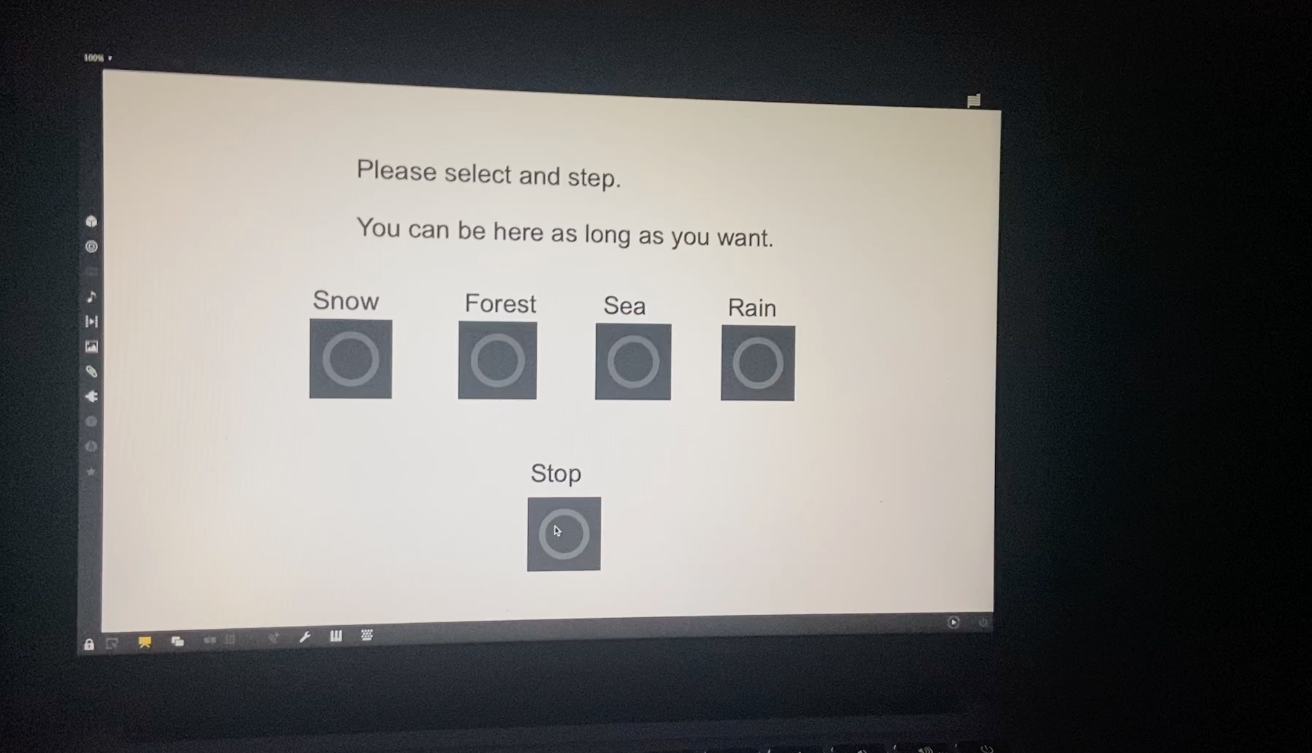
In my master’s thesis, I built a walk-through simulation in a game engine where the player has to constantly talk to navigate through the world. I was curious to explore if the player’s given sonic agency was effective in deepening their dramaturgical and emotional immersion in a narrative-driven experience. From that project, I believe some elements of carefully designed sonic interaction could be effective in deepening immersion in live storytelling, and I intend to keep exploring this topic further down my career.
I find entertainment of all forms, theater, games, movies, dance and etc, to be a space for a rich tapestry of human experiences. It invites people to re-live a sense of childlike wonder, to step into heightened realities, or to spark meaningful conversations within a community. In the midst of these journeys, I believe sound has the power to truly deepen and transcend emotional experience — not just supporting the story, but resonating with something internal, personal, and universal.
Since a lot of our work nowadays is done digitally, as the technology allows creating art to be convenient and accessible, my biggest advice for anyone (definitely myself) is to try not to be stuck behind a computer screen all day long. At core, I argue that to create arts is to build a portal for us to connect to everything around us with a bit more truth, to experience life a bit more deeply, and to open our hearts a bit wider. Yet, how can one create something that’s breathing when one is deprived of the opportunity to be present and truly experience being alive?
Over this summer, I had the pleasure of working at the beautiful Chautauqua, where I got to bathe in the vibrant colors of the lakeside scenery, which in some way reset my artistic mind and refueled my drive to create something that I can only hope to make people experience the sense of wonder and peacefulness I did this summer.

Support artists—share this
Off-Book is the Skene newsletter for artists and makers. Profiles, opportunities, and editorials, free. New subscribers also receive the 2026 Performing Arts Survival Guide.
We use cookies to optimize our website and our service functionalities.
Practical career guidance for performing arts artists and makers. Take it with you.