








by @josafathr
Disclaimer: This article is written in support of the Mexican delegation and the artists selected for World Stage Design 2025, with the goal of enhancing their visibility and amplifying their voices, therefore it is presented both in Spanish and English. It also aims to contribute to their ongoing crowdfunding efforts. Additional resources and ways to support the artists can be found at the end of the article.
ESP
En octubre de 2025, el mundo del diseño escénico convergerá en Sharjah, Emiratos Árabes Unidos, para celebrar una nueva edición de World Stage Design (WSD), un evento trienal organizado por la OISTAT (Organización Internacional de Escenógrafos, Técnicos y Arquitectos de Teatro) que desde 2005 se ha consolidado como una de las vitrinas más importantes para el diseño escénico contemporáneo a nivel mundial.
A diferencia de festivales tradicionales, WSD no se limita a la exhibición de producciones teatrales completas, sino que celebra el proceso, la investigación y la materialidad del diseño en sí: escenografía, vestuario, iluminación, multimedia y performance espacial. Cada edición, celebrada en una ciudad diferente del mundo, se convierte en un punto de encuentro entre diseñadores establecidos, artistas emergentes, académicos y técnicos provenientes de todos los continentes. Es un espacio donde la innovación estética y la reflexión política y ecológica sobre la escena conviven como partes integrales de la práctica escénica.
En su edición 2025, WSD recibió más de 600 postulaciones provenientes de una amplia diversidad de contextos culturales. De ellas, solo 100 fueron seleccionadas para exposición internacional. Entre estos proyectos destacados, México estará representado con seis obras oficiales, dos ponencias académicas y un taller internacional, consolidando su lugar como potencia creativa y reflexiva dentro del panorama escénico global.
Este logro no solo es significativo por su alcance numérico—casi el 7% del total mundial—sino por la riqueza conceptual, técnica y simbólica de las propuestas seleccionadas. La delegación mexicana está compuesta mayoritariamente por mujeres artistas, cuyas obras dialogan con temas como el cuerpo expandido, la justicia ecológica, la memoria colonial, la identidad, la infancia y el archivo como futuro.
A continuación, presentamos a quienes llevan la bandera escénica mexicana a Sharjah con propuestas que, cada una en su area, imaginan un futuro más inclusivo, poético y profundamente comprometido con el presente.
ENG
In October 2025, the world of scenic design will converge in Sharjah, United Arab Emirates, for a new edition of World Stage Design (WSD)—a triennial event organized by OISTAT (the International Organisation of Scenographers, Theatre Architects and Technicians), which since 2005 has become one of the most important platforms for contemporary stage design worldwide.
Unlike traditional festivals, WSD does not focus on the presentation of full productions. Instead, it celebrates the creative process, research, and materiality of design itself: scenography, costume, lighting, multimedia, and spatial performance. Each edition—held in a different host city—becomes a meeting point for established designers, emerging artists, scholars, and technicians from across the globe. It is a space where aesthetic innovation and political and ecological reflection are fully integrated into the practice of performance-making.
For its 2025 edition, WSD received more than 600 submissions from a wide range of cultural contexts. Of these, only 100 were selected for international exhibition. Among them, Mexico will be represented by six official projects, two academic presentations, and one international workshop, reaffirming its place as a creative and critical force on the global stage.
This achievement is not only significant in numbers—accounting for nearly 7% of all selected projects worldwide—but also for the conceptual, technical, and symbolic richness of the selected works. The Mexican delegation is composed primarily of women artists, whose work engages with themes such as the expanded body, ecological justice, colonial memory, identity, childhood, and archiving as a vision for the future.
Below, we introduce the artists who will carry the Mexican scenic banner to Sharjah—each proposing, in their own field, a future that is more inclusive, poetic, and deeply engaged with the present.
Sol Kellan
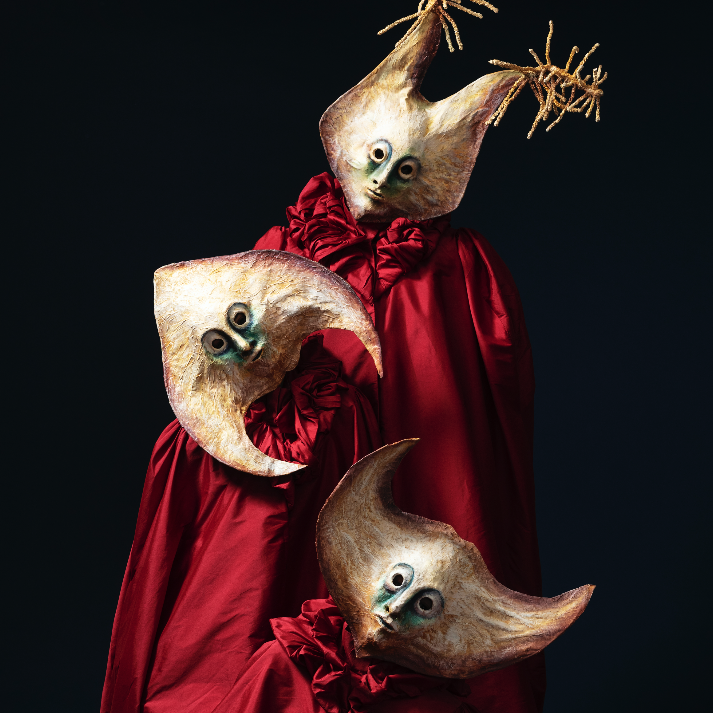
LEO, El Espacio Onírico
Category: Costume Design
Artista escénica y diseñadora con amplia trayectoria en circo, danza y teatro, Kellan Sol ha colaborado con figuras como Gilles Ste-Croix (Cirque du Soleil) y Natalia Lafourcade. Su proyecto LEO se inspira en el universo de Leonora Carrington y fue estrenado por la Compañía Nacional de Danza en el Palacio de Bellas Artes en 2023. El vestuario actúa como puente entre escultura y movimiento, traduciendo formas rígidas en texturas flexibles para habitar un mundo onírico.
A performance artist and designer with an extensive background in circus, dance, and theater, Sol Kellan has collaborated with figures such as Gilles Ste-Croix (Cirque du Soleil) and Natalia Lafourcade. Her project LEO is inspired by the world of Leonora Carrington and premiered with Mexico’s National Dance Company at the Palacio de Bellas Artes in 2023. The costume acts as a bridge between sculpture and movement, transforming rigid forms into flexible textures to inhabit a dreamlike world.

Eloise Kazan
El Último Sueño de Frida y Diego
Category: Costume Design
Con más de 25 años de trayectoria y colaboraciones con la Royal Shakespeare Company y la San Francisco Opera, Kazan es una de las grandes figuras del vestuario en México. Su propuesta es una ópera que reimagina a Frida Kahlo y Diego Rivera desde una mirada contemporánea, reafirmando la riqueza simbólica del arte mexicano a través del vestuario escénico.
With more than 25 years of experience and collaborations with the Royal Shakespeare Company and San Francisco Opera, Kazan is a leading figure in costume design in Mexico. Her project is an opera that reimagines Frida Kahlo and Diego Rivera through a contemporary lens, reaffirming the symbolic richness of Mexican art through stage costuming.

Laura Marnezti
El Cuerpo que se Re-Crea
Category: Costume Design
Miembro del SNCA y promotora del pensamiento escénico interdisciplinario, Marnezti presenta una serie de piezas que funcionan como prótesis afectivas. El vestuario se convierte en metáfora del cuidado, el autoabrigo y la fragilidad compartida, cuestionando los límites entre cuerpo individual y colectivo.
A member of Mexico’s National System of Art Creators (SNCA) and advocate for interdisciplinary scenic thinking, Marnezti presents a series of designs that function as affective prosthetics. The costumes become metaphors for care, self-wrapping, and shared fragility—questioning the limits between individual and collective bodies.

Emilio Zurita
cOsmO
Category: Performance Design
Proyecto internacional co-creado entre México y Canadá, cOsmO utiliza títeres, luz, objetos y poesía visual para crear una experiencia sensorial que invita a la contemplación del universo desde la infancia. Zurita, con experiencia internacional en diseño escénico, combina lo lúdico y lo filosófico en esta obra para todos los públicos.
Ver también: Cosmo: Theatre for the Tiny and the Infinite
An international project co-created between Mexico and Canada, cOsmO employs puppets, light, objects, and visual poetry to offer a sensory experience that invites contemplation of the universe from a child’s perspective. Zurita, whose scenographic work has international reach, balances the playful and the philosophical in this piece for all audiences.

Patricia Gutiérrez
MASCULINOS / La Ladrona Emulsionante Creativa
Category: Performance Design
Con una sólida trayectoria en arquitectura teatral y diseño escénico, Gutiérrez presenta una obra que dialoga con la masculinidad desde una mirada crítica y escenográfica. La pieza utiliza estructuras escénicas divididas por papel y sombras, revelando la fragilidad de los roles impuestos y las estructuras de poder.
With a strong background in theatrical architecture and scenic design, Gutiérrez presents a work that critically and scenographically examines masculinity. The piece uses structures of paper and shadow to divide the stage space, revealing the fragility of imposed gender roles and systems of power.

Karla Rodríguez Lira
Bucarofagia (Inventario)
Category: Space and Object Design
Miembro fundadora de Teatro Ojo, Rodríguez Lira plantea una instalación escénica que parte de la práctica colonial de ingerir búcaros para generar una experiencia sensorial sobre el cuerpo, el imperio y la memoria. El espectador recorre un espacio lleno de objetos y sonidos que invocan el pasado colonial y su resonancia contemporánea.
A founding member of Teatro Ojo, Rodríguez Lira offers a scenic installation based on the colonial-era practice of ingesting clay vessels (búcaros), generating a sensorial experience about the body, empire, and memory. The audience moves through a space filled with objects and sounds that evoke colonial histories and their contemporary echoes.

Mahatma Ordaz Domínguez
The value of archiving in the context of climate change. Case study El viaje a la Luna o Viaje a la X (De La Luna a la Tierra)
Category: Research Symposium
Ordaz reflexiona sobre el valor artístico y ecológico de los archivos escenográficos. Analizando el montaje El viaje a la Luna de Alejandro Luna, propone entender los procesos creativos como “archivos indiciales” que dan cuenta de las prácticas emergentes. Su investigación plantea preguntas sobre sostenibilidad, preservación digital y activación crítica del archivo como herramienta ética y creativa.
Ordaz explores the artistic and ecological value of scenographic archives. Using Alejandro Luna’s El viaje a la Luna as a case study, she proposes viewing creative processes as “indexical archives” that document emerging practices. Her research poses urgent questions about sustainability, digital preservation, and activating archives as ethical and creative tools.

Pamela-Eliecer Badallo Hernández
Proyecto Tejidos: ¿Cómo Hacer Frente a la Emergencia Socio-Ecológica como Creadora Escénica?
Category: Research Symposium
Badallo propone un enfoque radical sobre la creación escénica en tiempos de crisis. Basada en su experiencia en WSD 2022 Calgary, su ponencia rescata prácticas participativas, saberes locales y afectividad cotidiana como estrategias para enfrentar el abandono ecológico. Propone repensar el arte como resistencia frente a la exclusión social y los sistemas dominantes.
Badallo proposes a radical rethinking of scenic creation in times of crisis. Drawing on her experience at WSD 2022 in Calgary, her paper uplifts participatory practices, local knowledge, and everyday affectivity as strategies to face ecological abandonment. She calls for reframing art as resistance to social exclusion and dominant systems.

Carolina Jiménez & Laura Marnezti
Vestuario/Prótesis: Como Dispositivo de Movimiento Escultórico, Poético y Escénico
Category: Workshop
Este taller propone una exploración del vestuario como extensión del cuerpo, integrando elementos escultóricos, poéticos y anatómicos. A través del rediseño afectivo del cuerpo, el vestuario se convierte en herramienta de pensamiento, intervención y transformación física y simbólica.
This interdisciplinary workshop explores costume design as an extension of the body, integrating sculptural, poetic, and anatomical elements. Through affective redesign of the body, costume becomes a tool for reflection, intervention, and both physical and symbolic transformation.

Un logro colectivo
Aunque la participación de México en WSD 2025 es diversa, llama la atención que la mayoría de los proyectos están liderados por creadoras que no solo diseñan, sino que dirigen, escriben, enseñan y abren caminos. En diálogo con otras figuras como Tolita Figueroa y Alejandro Luna— estxs artistas extienden una genealogía viva del diseño escénico mexicano.
Cómo apoyar y mantenerse al tanto
La delegación mexicana ha lanzado una campaña de recaudación de fondos para cubrir parte de los costos logísticos y de montaje. Si deseas apoyar:
Dona al GoFundMe
También puedes seguir a las y los artistas en redes sociales y compartir esta nota para amplificar su visibilidad y apoyo.
A Collective Achievement
While Mexico’s participation in WSD 2025 is diverse, it is notable that the majority of selected projects are led by women who not only design—but also direct, write, teach, and forge new paths. In conversation with figures like Tolita Figueroa and Alejandro Luna, these artists extend a living lineage of Mexican scenic design.
How to Support and Stay Connected
The Mexican delegation has launched a fundraising campaign to help cover logistical and production costs. If you’d like to support:
Donate to the GoFundMe
You can also follow the artists on social media and share this article to amplify their visibility and support.
Additional Resources
To learn more about World Stage Design and the international context of these projects, we recommend exploring the following resources:
- Cosmo: Theatre for the Tiny and the Infinite A Skene DIARIES closer look at Emilio Zurita’s cOsmO and its poetic approach to storytelling and childhood imagination.
- El Legado Artístico de Tolita Figueroa A Skene OPINION in-depth study of one of Mexico’s foundational figures in costume design, honoring her legacy by Mahatma Ordaz Domínguez.
- Sol Kellan: The Savage Poetry of Flowers A Skene PROFILES feature on the talented Mexican Designer blending memory, myth, and fantasy in wearable art.
- Mahatma Ordaz: Where Theatre and Nature Meet A Skene PROFILES exploring the creative journey of Mahatma Ordaz, scenographer and theatre researcher, and her inspiring approach to design.
- World Stage Design – Official Website Get the latest information about the 2025 edition, participating countries, symposiums, exhibitions, and official programming.
- OISTAT – International Organisation of Scenographers, Theatre Architects and Technicians The parent organization behind WSD, promoting global exchange in performance design and theatre-making.