




In 2011, two female collaborators of Ai Weiwei, Wang Gongxin and Zhang Huan, faced imprisonment for their involvement in his politically charged work. Their artistic efforts, which directly critiqued the Chinese government, were considered dangerous acts of dissent. Ai Weiwei’s own arrest during the Chinese government’s crackdown on intellectuals and journalists highlights the risks these women faced as part of a larger movement to resist censorship and advocate for freedom of expression in the arts. Their stories underscore the challenges of being a female artist in a repressive regime. “They stared at me all the time, almost without ever blinking, emotionless. There was no window.” – Ai Weiwei recounts.

Why Would Art Threaten a Government?
It is a curious paradox: how can artists, whom we pejoratively describe as producers of superfluous objects with no utilitarian value, be considered a threat to the state? The answer lies in art’s ability to cut through rational defence mechanisms and speak to people’s hearts and minds directly.
The tradition of rebellion through art traces back to the 1920s with the emergence of Dadaism. Born as a response to WWI’s devastation, Dadaism questioned not just art itself but the very social constructs and government-imposed realities of the time. This revolutionary movement laid the groundwork for political critique through artistic expression.
Artists on the Front Lines
Political art isn’t merely commentary—it’s a bold, personal act where artists put themselves at risk:
- Yoko Ono, influenced by World War II’s aftermath, pioneered performance art with works like “Cut Piece” (1964), where audience members cut pieces of her clothing, creating a powerful critique of gender and power dynamics.
- Tania Bruguera directly confronts authoritarianism and Cuban history in her work, resulting in multiple arrests and imprisonments by Cuban authorities.
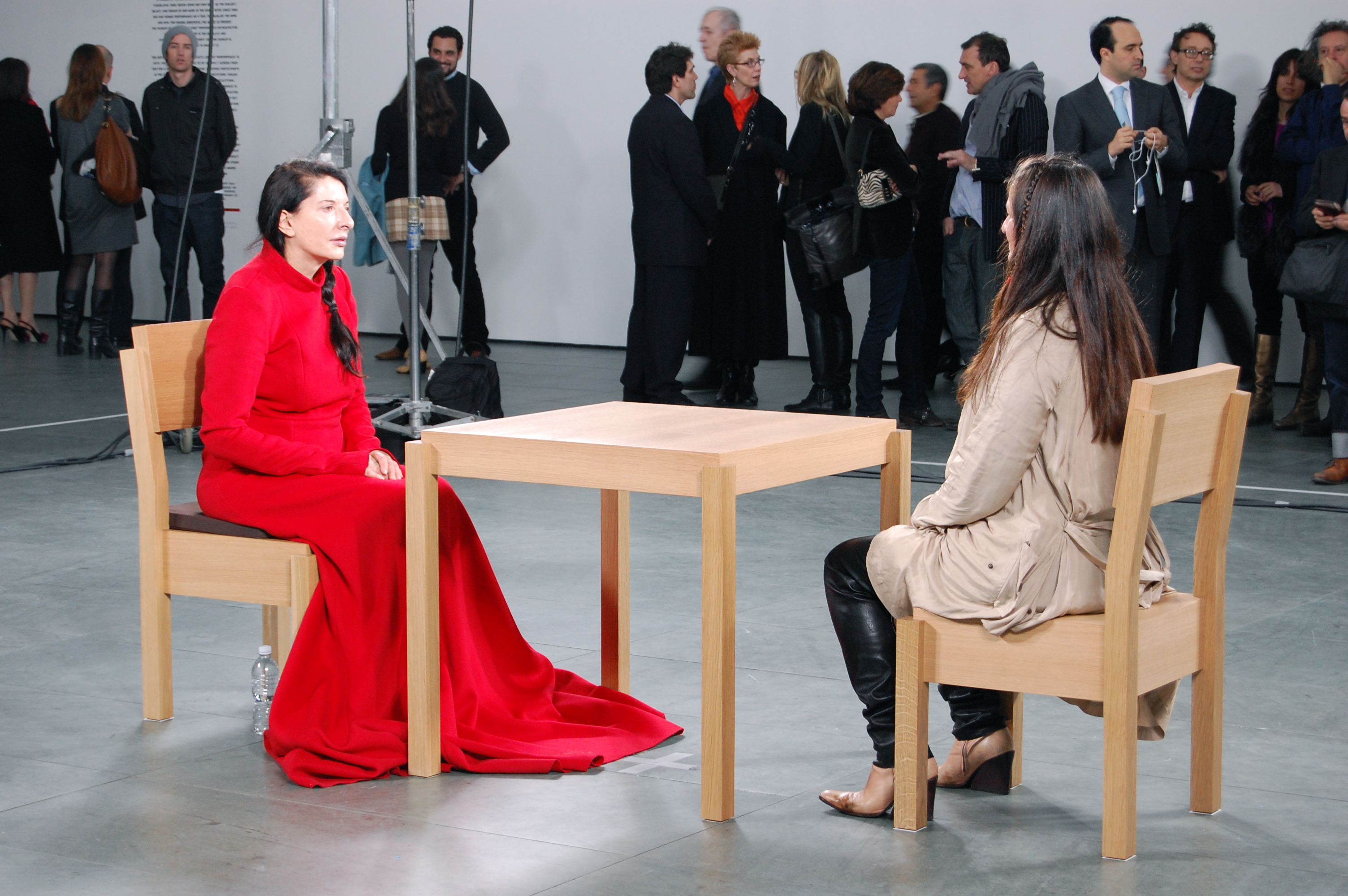
- Marina Abramović uses physical endurance in her performances to create discomfort and political statements, sometimes facing public backlash and misunderstanding.
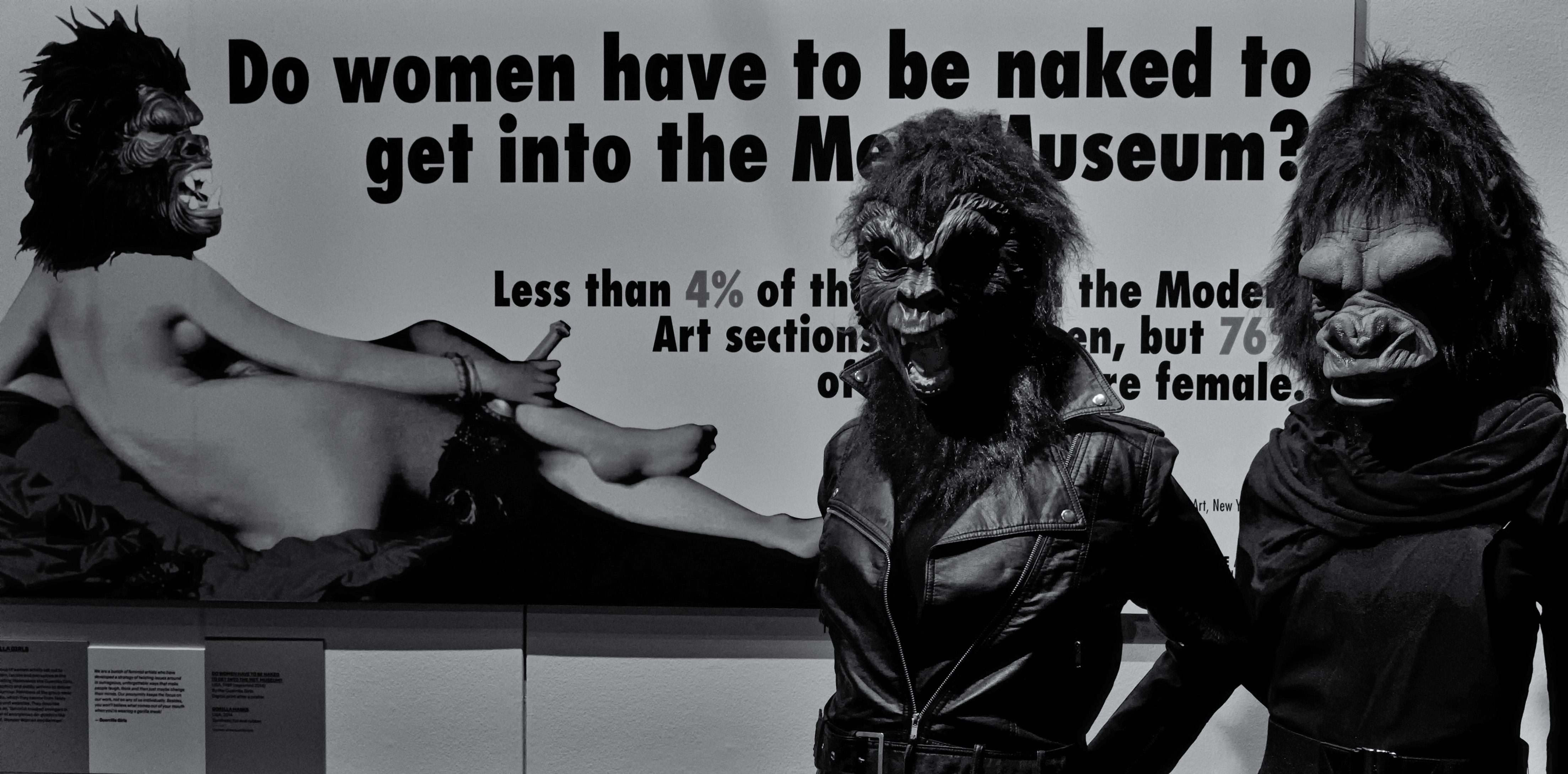
- Guerrilla Girls, an all-female and all-anonymous collective, fight for the rights of women and people of colour in the art world. They have never revealed their identities because they fear government retaliation and also because they wanted to be perceoived as a symbol, more than individuals: ”We can be anyone. We are everywhere.”
How Governments Fight Back
Governments often employ several strategies to suppress artistic dissent. Censorship and banning of content, especially in film and media, are common methods used to restrict freedom of expression. Legal repercussions, such as imprisoning artists on charges like national security threats or obscenity, further intimidate dissent. Additionally, many governments engage in surveillance and harassment, monitoring artists’ activities and subjecting them to threats, as seen with Ai Weiwei. Finally, state-sponsored narratives are promoted by funding artists and institutions that align with official messaging, limiting the impact of political art.
The Paradox of Power and Fear
The extensive resources governments dedicate to silencing artists reveals their fear of art’s potential impact. As Ai Weiwei poignantly noted regarding his detention: “The state is so powerful, but is scared of an individual like me, who only tries to free himself.”
This fear acknowledges the unique position artists hold: they can spark social and political awakening by connecting emotionally with the public in ways that logical arguments often cannot.
Art as Hope in Challenging Times
In our complex modern world, where many feel governments have failed to address global challenges, artists emerge as essential voices for change. They offer hope and perspective amid adversity, helping process collective trauma and imagine alternative futures.
Art challenges the status quo whether intentionally or not. As John Berger wrote in “Ways of Seeing,” “The way we see things is affected by what we know or what we believe in.” Political artists invite us to see differently—to question assumptions, recognize injustice, and envision new possibilities.
In this lies art’s true power and the reason for governments’ fear: not just representing reality, but transforming how we perceive it. When art succeeds in changing perception, social change inevitably follows. This is why, despite risks and limitations, political artists continue their essential work as catalysts for a more just and conscious society.