Harumi Hirata: Whose Stories do we Tell?
Japanese costume designer and cultural advocate whose research-driven practice interrogates representation, identity,


Japanese costume designer and cultural advocate whose research-driven practice interrogates representation, identity,

German scenic designer whose kinetic scenography builds sets that move with the

Mexican cultural worker, director, and playwright whose practice is rooted in collective

Classic plays for community theatre: Shakespeare, Greek tragedies, Chekhov—masterpieces with zero royalties.
The Canada PQ 2027 team on The Seventh Fire, matriarchal curation, and

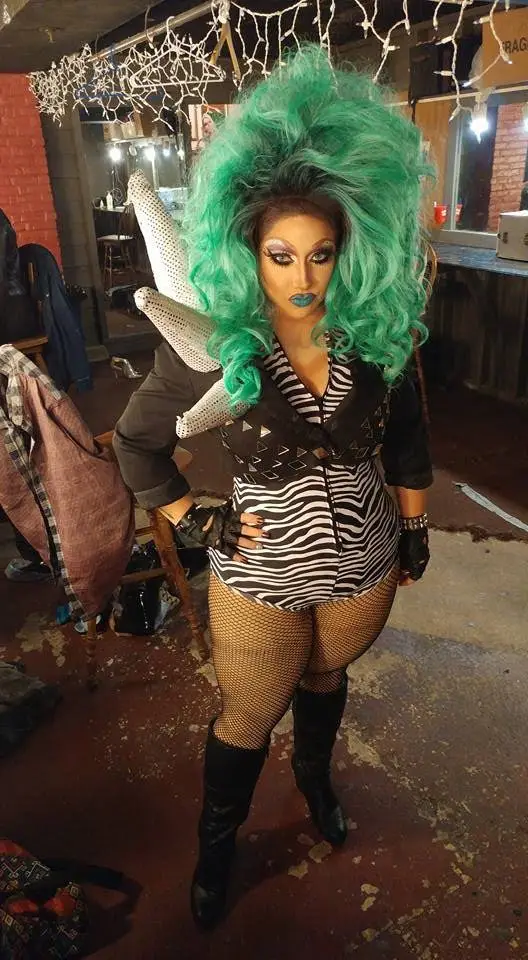
Jo Chalhoub’s artistic journey began in a high school choir room, but their path has been anything but linear. What started as a love for performance evolved into a deep-rooted passion for the collaborative and often unseen work of stage management. Today, Jo is a dynamic creative force, balancing administrative leadership with ongoing training in stage combat and intimacy direction. Their meticulous process—reading a script four times before even stepping into the room—speaks to the care and intentionality they bring to every project. A queer, non-binary, Arab American artist, Jo is committed to showing up fully and authentically, while advocating for greater inclusion and recognition of stage managers as integral members of the creative team.
In this edition of PROFILES, Jo shares how they build spaces rooted in trust, collaboration, and artistic integrity—spaces where every contributor, on and off stage, feels seen.
My music teacher in high school gave me the chance to take voice lessons from her during the summer after my sophomore year and that was it! I was instantly hooked. I evolved from a performer to a stage manager to bigger administrative roles. I’m now scaling back and pursuing more training in stage combat and intimacy direction while still stage managing!
I definitely thrive with more of a set routine when I’m starting a new production or working on a new project. As a stage manager, I usually read a script or listen to a score at least four times before starting pre-production: once to just experience the piece, again to create an initial props and sets list, again to mark potential quick changes, and a fourth time to visualize the show with all of the elements I know of via the rest of the design and production team. This process really helps me feel well versed in the piece enough to decently prepared by the first day of rehearsal
The biggest challenge I’ve had is realizing that stage managers are also artists, not just time keepers and paper pushers. We often have a lot of artistic and valuable input that goes overlooked because we aren’t considered a part of the “creative team”. Finding the balance between being treated as a true collaborator while not stepping on anyone’s else toes has been a unique challenge that I always strive to work on, especially when joining a team or company for the first time.
Artists who show up as their full, authentic selves in a space really inspire me! I think it’s very easy to fall victim to the stereotypes of whatever role you are fulfilling on a production and I really appreciate those who embrace all that they are bring that to the table. Those artists have really pushed me to bring all of who I am to the team: a queer, non-binary, Arab American artist with a broad range of interpersonal experiences and professional skills.
I think that a lot of the efforts being made towards visibility and accessibility are really exciting! Within the last few years, I’ve seen a lot of strides being made to see more diverse artists in the industry, both on and off stage. Many communities within the industry are also speaking out even louder than before to call out missteps and hold artists and companies more accountable. That’s how we grow and survive- by striving for more inclusion and organizational integrity.
Show up, be curious, and be someone that others enjoy working with. In my experience, that approach to your work will get you a lot farther and open a lot more opportunities for you than anything you have on your resume.
I hope that anyone who works with me on a production- whether as a stage manager, performer, or fight/intimacy director- walks away feeling a sense of trust, care, and accomplishment. I hope that.
Support artists—share this
Off-Book is the Skene newsletter for artists and makers. Profiles, opportunities, and editorials, free. New subscribers also receive the 2026 Performing Arts Survival Guide.
We use cookies to optimize our website and our service functionalities.
Practical career guidance for performing arts artists and makers. Take it with you.