
Latest posts.

Talk-O Tuesday Ep.2

What’s good right now?

Helen Garcia-Alton, Tina Torbey, and Nia Banks share what’s on stage right now that is transformative, interesting, or just plain fun.

Get Featured or Publish with Skene!

New Plays by Black Playwrights to Watch in 2026

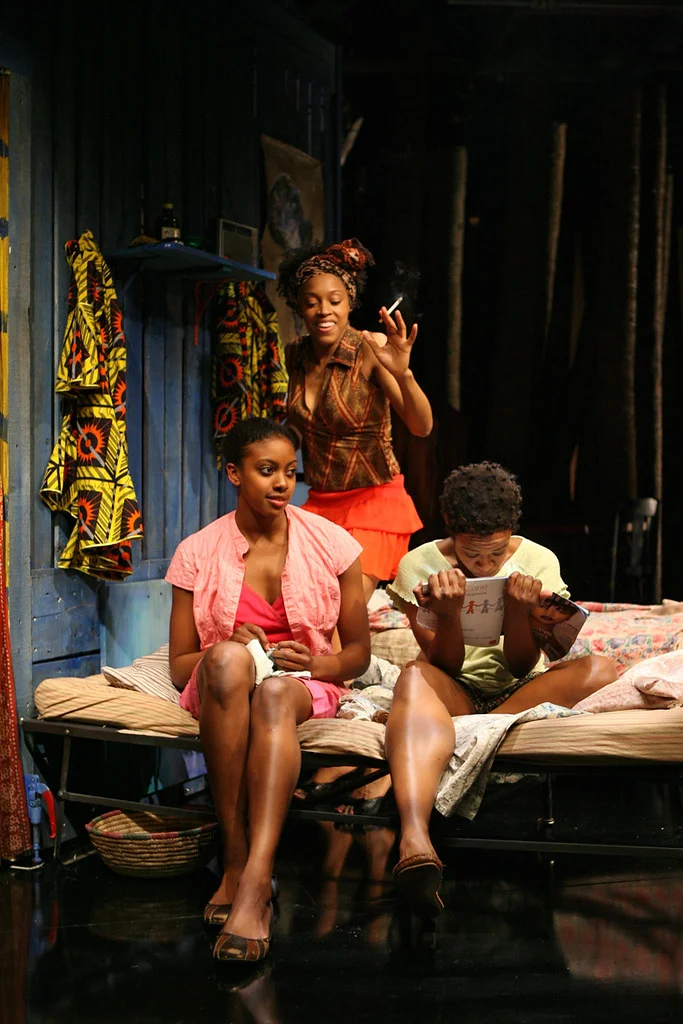
Lynn Nottage's Ruined, source: Caffe Vita/Flickr.

Disclosure: Some links in this article may be affiliate links. If you make a purchase through them, we may earn a small commission at no additional cost to you. These links help support the work behind Skene.

The American theatre is in the middle of a generational shift, and Black playwrights are leading it. The writers gathered here are not emerging in the sense of being untested. Several have already won major awards, received world premieres at prominent institutions, and built the kind of critical momentum that takes years to earn. What makes them new is the freshness of their formal ambitions and the urgency of the questions they are asking. They are not writing toward the canon. They are writing past it.

This is not a list of plays that deserve a chance. These are plays that have already proven themselves and are now waiting for theatres to catch up. Producing new work by Black playwrights is not a programmatic gesture. It is an artistic decision, and the companies making it right now are building seasons that will be remembered. The ones that are not are missing the most exciting window in contemporary American drama.

Read these plays. License them. Put them on your stages. The conversation they are starting is one your audiences are ready to have.

Daddy

Daddy by Jeremy O. Harris

Jeremy O. Harris announced himself as one of the most formally daring playwrights of his generation with Slave Play, but Daddy is the work that shows the full range of his ambition. A surrealist exploration of race, desire, power, and the father-son dynamic filtered through the lens of a young Black artist navigating the art world and the men who move through it, the play refuses easy categorization. It is at once a psychological thriller, a fever dream, and a rigorous examination of how power structures replicate themselves through intimacy. Harris writes with a theatrical intelligence that owes as much to film and performance art as it does to traditional drama, and the result is a play that demands directors and designers who are willing to work at the edges of the form. Audiences who come expecting a conventional evening will leave unsettled in exactly the way great theatre unsettles. That is the point.

Cast Requirements: Approximately 9–11 performers. Predominantly Black cast with roles of various genders. Surrealist staging; design-forward production recommended. Not suitable for minimal budgets. Mainstage or large black box.

How to Defend Yourself

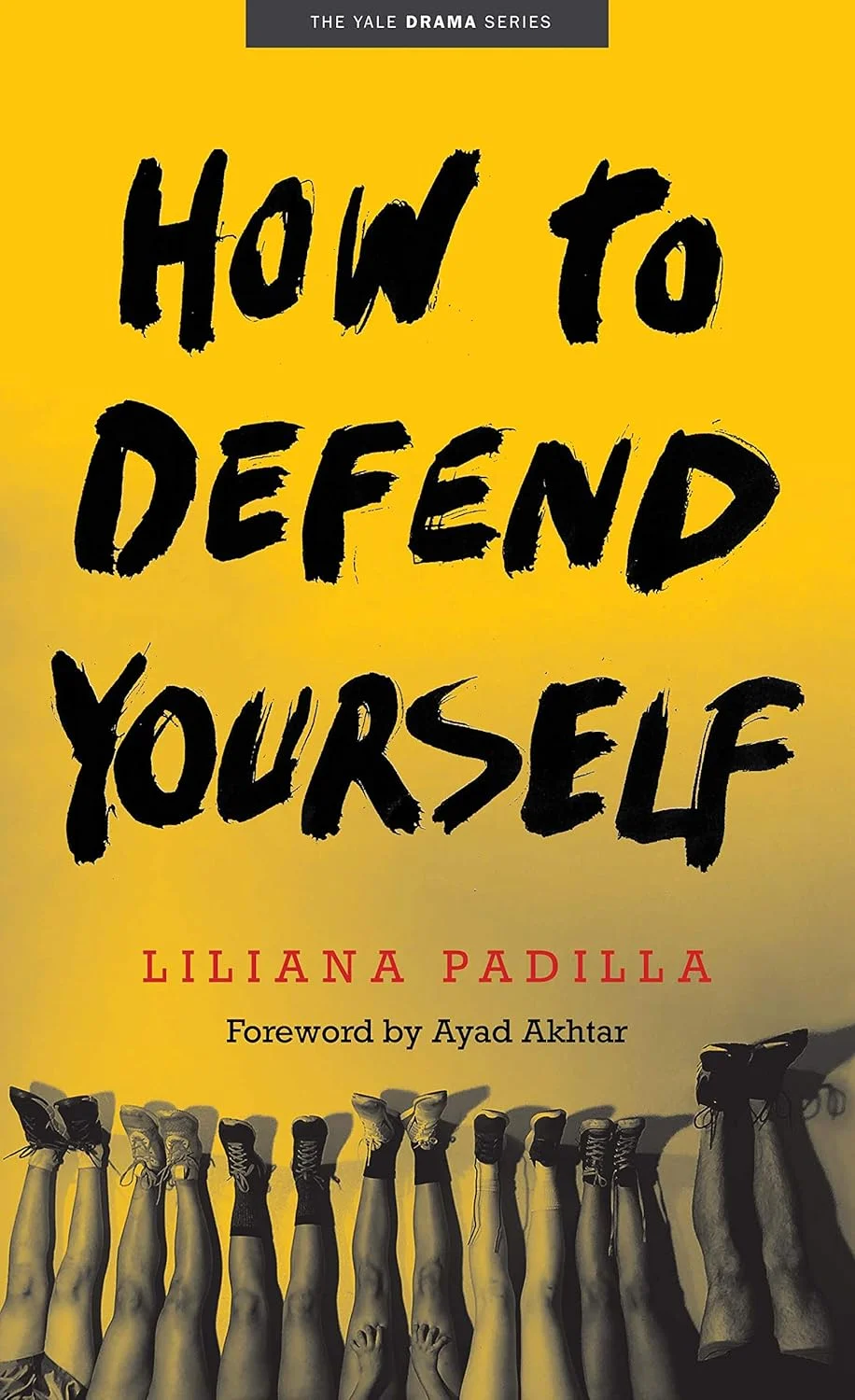
How to Defend Yourself by Liliana Padilla

Set in the aftermath of a campus sexual assault, How to Defend Yourself follows a group of college students who form a self-defense class in response to an attack on one of their friends. Padilla’s play is neither a trauma narrative nor a polemic. It is a carefully observed study of how young people, across different identities and degrees of complicity, try to build safety and community in a system that has already failed them. The play is funny, physically dynamic, and structurally inventive, moving between realism and heightened theatrical sequences that reflect the characters’ inner lives. It speaks directly to the experience of students today and makes an ideal production for university theatres and companies with young ensemble casts. Padilla writes with precision and compassion, and the play rewards productions that trust both qualities equally.

Cast Requirements: 7–8 performers. Racially diverse ensemble, mixed gender. Physical movement is integral; fight choreography and intimacy direction required. Suitable for black box and studio mainstage.

Detroit '67

Detroit '67 by Dominique Morisseau

Dominique Morisseau sets this play in the summer of 1967, weeks before the Detroit uprising that would reshape the city forever. Chelle and her brother Lank run an after-hours joint in the basement of their family home, a space where Black Detroiters gather to drink, dance, and dream about futures that feel just out of reach. The siblings are trying to hold onto their parents’ house while navigating their own desires for something more than survival. When Lank brings home a mysterious white woman he found beaten in the street, the fragile safety of their world begins to crack. Morisseau writes with specificity and care, capturing the rhythms of Motown-era Detroit without romanticizing the violence brewing beneath the surface.

Cast Requirements: 5 actors (3 Black men, 2 Black women, 1 white woman). Single primary location (basement) with period 1960s design. Requires Motown-era music rights and strong ensemble chemistry. Ideal for professional and university companies with commitment to period research and cultural context. Runs approximately 2 hours with intermission.

The Refuge Plays

The Refuge Plays by Nathan Alan Davis

Nathan Alan Davis writes plays that feel like they exist slightly outside of ordinary time, and The Refuge Plays use that quality to devastating effect. A trilogy of interconnected works exploring Black grief, memory, and the search for sanctuary across generations, the plays can be produced individually or together. Davis draws on magical realism, blues tradition, and a lyrical dramatic language that is entirely his own. His work has been compared to August Wilson in its attention to Black interior life and its refusal to make that interiority legible on anyone else’s terms. What sets Davis apart is the tenderness with which he holds even his most broken characters. These are plays about what it means to survive, and about what survives even when the people do not. They require actors and directors who can work at the intersection of the naturalistic and the poetic without collapsing either register.

Cast Requirements: Variable across the trilogy. Generally 4–7 performers per play. Predominantly Black cast. Poetic and physical staging; minimal set works well. Can be produced individually or as a full evening.

Confederates

Confederates by Dominique Morisseau

Confederates runs two parallel stories simultaneously: one set on a plantation during the Civil War, the other on a contemporary university campus. In both timelines, a Black woman is fighting for her survival and her dignity against systems designed to erase her. Morisseau draws the lines between these worlds with surgical precision, refusing to let the distance of history become a comfort to contemporary audiences. The play is structurally bold, thematically unsparing, and anchored by two roles that demand extraordinary range from the actresses who take them on. It is the kind of play that changes the conversation in a room and does not let the audience leave without carrying some of that weight with them. For theatres willing to meet it at its level, it is one of the most important American plays of the last decade.

Cast Requirements: 8–10 performers. Predominantly Black female cast, with supporting roles of mixed race and gender. Dual timeline staging requires a flexible scenic approach. Mainstage and regional production.

New work does not stay new for long. The plays listed here are already building their production histories, collecting reviews, and finding their audiences. The window to be among the first companies to bring them to your community is open, but it will not stay open indefinitely.

What connects these writers is not a shared aesthetic but a shared seriousness of purpose. They are making theatre that takes its audiences seriously, that asks hard questions without providing easy answers, and that trusts the form to do what only live performance can do. That is not a trend. It is a standard.

The most future-facing seasons being built right now include at least one of these plays. The most important investment a theatre can make in its own relevance is in the writers who are defining the next chapter of American drama. These writers are doing exactly that.

Support artists—share this

More like this, twice a month.

Off-Book is the Skene newsletter for artists and makers. Profiles, opportunities, and editorials, free. New subscribers also receive the 2026 Performing Arts Survival Guide.

About the Author

Leave a Reply

Your email address will not be published. Required fields are marked *

partner content

Related Posts

Agata Uchman: Iskroma.

FREE FOR ARTISTS

The 2026 Performing Arts Survival Guide.

Practical career guidance for performing arts artists and makers. Take it with you.