






by @ginnaalvarez
This is a Staff translation. The original column in Spanish can be found here.
They have stolen the darkness from us. The night has been colonized. The contemporary world lives under the regime of a suspicious blue light. Not from fire, nor from the sun, but from the smartphone. Since the invention of electric light, we have learned to tame the darkness, corner it, and numb its wild nature, but we hadn’t dared to betray it completely. The twilight was still preserved in movie theaters, bedrooms, and theater halls. But today, not even that. Darkness is no longer that territory of imagination, premonition, or internal murmur. It is a Wi-Fi failure, a turned-off screen.
I believe we’ve been deceived. Light was supposed to dispel the monsters. Instead, the anti-night of the cities—this perpetual, artificial, anxious glow—has opened the door to them. That light is not innocent: It is ideology, surveillance, production rhythm. It is control.
Artificial light chases us everywhere, cutting shadows like a luminous scalpel. On supermarket signs, streetlamps, store windows, and in notifications. Because looking these days can no longer be romantic contemplation. No, it has become an act of consumption, and the algorithm knows it. It seems to me that the loss of darkness in large cities is not only a technical issue but a symbolic tragedy. A erasure of the collective unconscious.

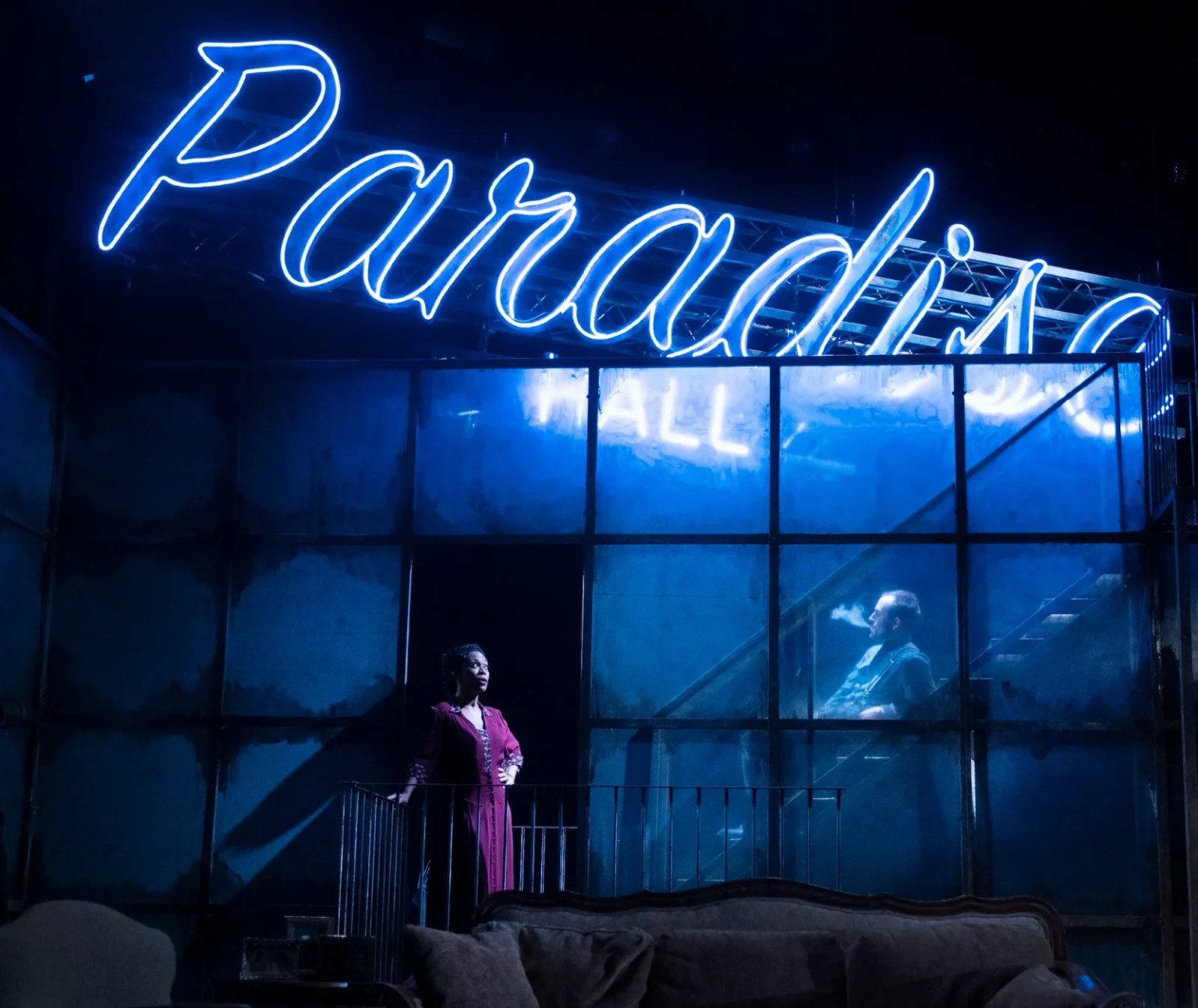
In this context, theatre appears as an anomaly where darkness becomes subversive: a space deliberately cast in shadow, where the audience willingly surrenders their vision in exchange for another kind of clarity. While cities try to erase every shadow with 24-hour artificial lighting, theatre reminds us that it is in the twilight where we best see that which has no form. Where looking is not an act of consumption, but of risk. A porous gaze, open to uncertainty, to what resists being named.
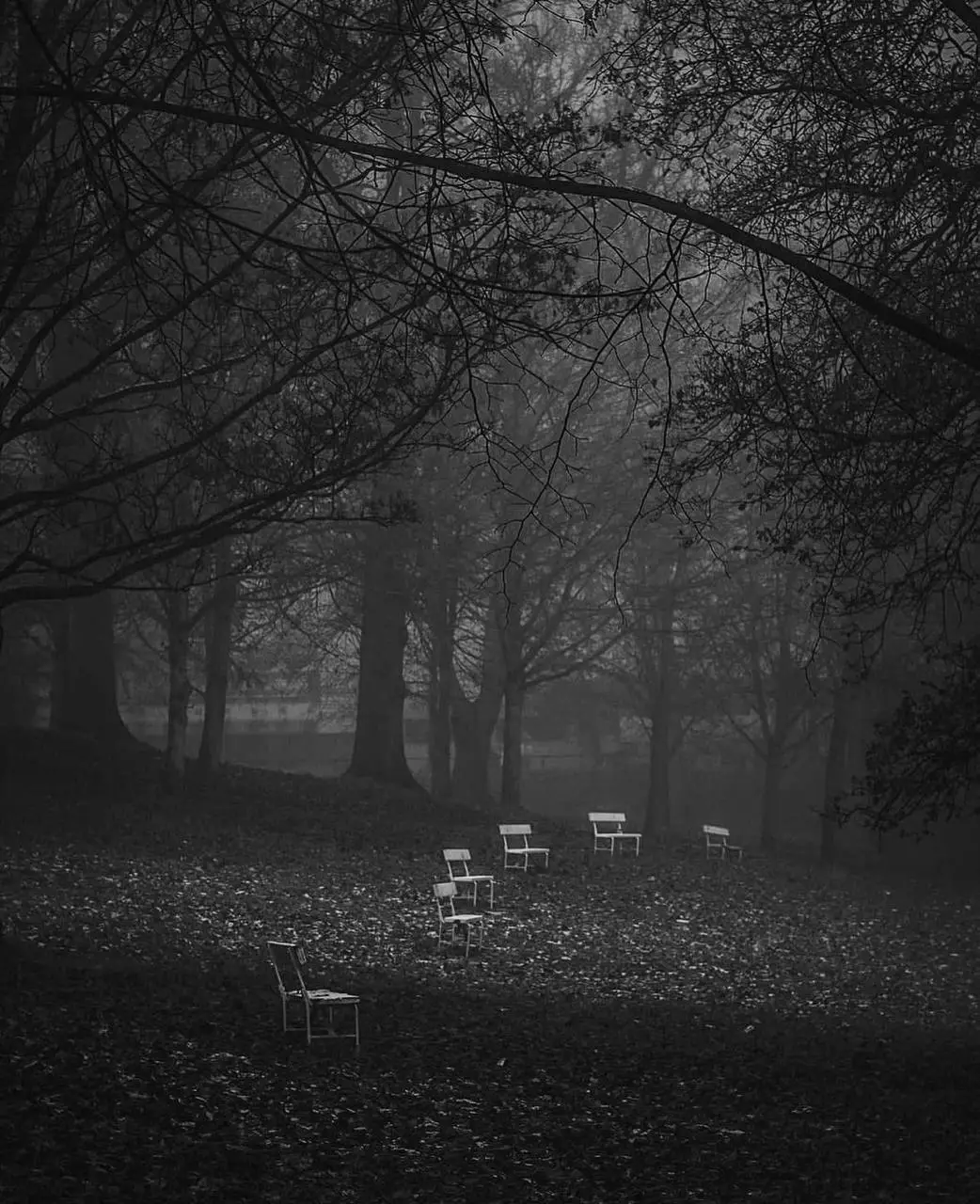
When I visit rural Mexico, I feel that porous gaze awaken. There, darkness can still recover some of its lost wildness. Night is still night, and at times one must guide their steps by sound: the crunching grass, the crickets, the howling dogs, the bells. Rural darkness cannot be switched off; it doesn’t answer to our electrical whims. It’s there—and we must inhabit it. There, one reconnects with the abyss, but also with a kind of lost humility. Because rural night doesn’t look at you. It expects nothing from you. It surrounds you, swallows you a little… and if you’re lucky, it gives you back. Within it, one can aspire to a less performative existence, less bound to codes of etiquette. It’s so black, you start to see things that aren’t there, and the village begins to stir with all sorts of legends and apparitions. A kind of collective imagination that communes with the primal forces that birthed theatre.
Against the neurotic glow of urban life, theatre protects a ritual darkness—closer to that of the countryside—where night still holds its power of interruption and mystery. That theatrical darkness is resistance: a poetic and political gesture that restores the right to not see everything, to not understand everything, to simply be.

Quoting Sontag: “the erotic veils as much as it reveals, while the pornographic is pure unveiling“. It may be that screens have trained us to look the way we look at the pornographic: with dominance, with a craving for totality, without shame. Theatre —and the darkness that shelters it— returns to us a way of looking that doesn’t seek to possess, but to inhabit. It demands patience, desire, a vulnerable kind of attention. It makes us look with hunger, not with gluttony. Theatre —like eroticism— needs the twilight to breathe. Drama is founded on what is unspoken, what is not shown. The stage doesn’t seek a consumer, but a counterpart.
I believe that condition makes theatre—today more than ever, in the midst of endless streaming options—a revolutionary space of resistance, where darkness becomes a threshold that suspends the world’s offers and creates a space of intimacy between the spectator and what is represented. Where images of the unconscious can emerge, allowing the spectator’s imagination to complete what is not explicitly shown.
That’s why, when a screen lights up in the theatre, the present fractures. What was communion becomes a kind of spiritual channel-surfing. The cellphone is an open escape door into the trivial, the multiple, the impossible-to-fully-inhabit.
Of course, there is theatre under the sun. But even in those daytime works, theatre resists the obvious. It finds ways to suggest an abyss, to install silence, to bend the light and re-signify it.
Gastón Bachelard, without knowing what was coming, had already written more than six decades ago that dark corners are places that invite reverie, daydreaming. In his book The Flame of a Candle, he speaks of how a candle doesn’t just illuminate, but enters into a dialogue with darkness — it creates intimacy, silence, and reflection in contrast with electric light, which imposes clarity and destroys the poetic. The theatrical seed also thrives in these chiaroscuros.
Before theatre existed, people gathered around fire to tell stories. Like Bachelard’s candle, the light of a campfire is not a conquering light, but a flickering one; it doesn’t demand surveillance or produce absolute visibility, but invites shared imagination.
In the face of the dictatorship of light, many have expressed concern that theatre is a dead language, an outdated ritual. Just like deep sleep, I don’t believe it ever can be. In the theatrical twilight, our most atavistic traits awaken — deep, irrational, instinctive impulses from a distant past, prior to language, that still live within us.
Theatre is resistance because it reminds us that we were once shadow.
If theatre dies, it won’t be from old age — it will be because we turned the lights on too soon.

Ginna Álvarez is a director, playwright, actress, musician, and photographer with over twenty years of experience in the performing arts. Her work explores migration, storytelling, and the power of collective human experiences.
You can read more about her journey and artistic vision in her PROFILE feature on SKENE.pub