Alex Vásquez Dheming: Choreographing Light.
Salvadoran lighting designer whose expressionist practice turns light into narrative, emotion, and


Salvadoran lighting designer whose expressionist practice turns light into narrative, emotion, and

Japanese costume designer and cultural advocate whose research-driven practice interrogates representation, identity,

German scenic designer whose kinetic scenography builds sets that move with the

Mexican cultural worker, director, and playwright whose practice is rooted in collective

Classic plays for community theatre: Shakespeare, Greek tragedies, Chekhov—masterpieces with zero royalties.
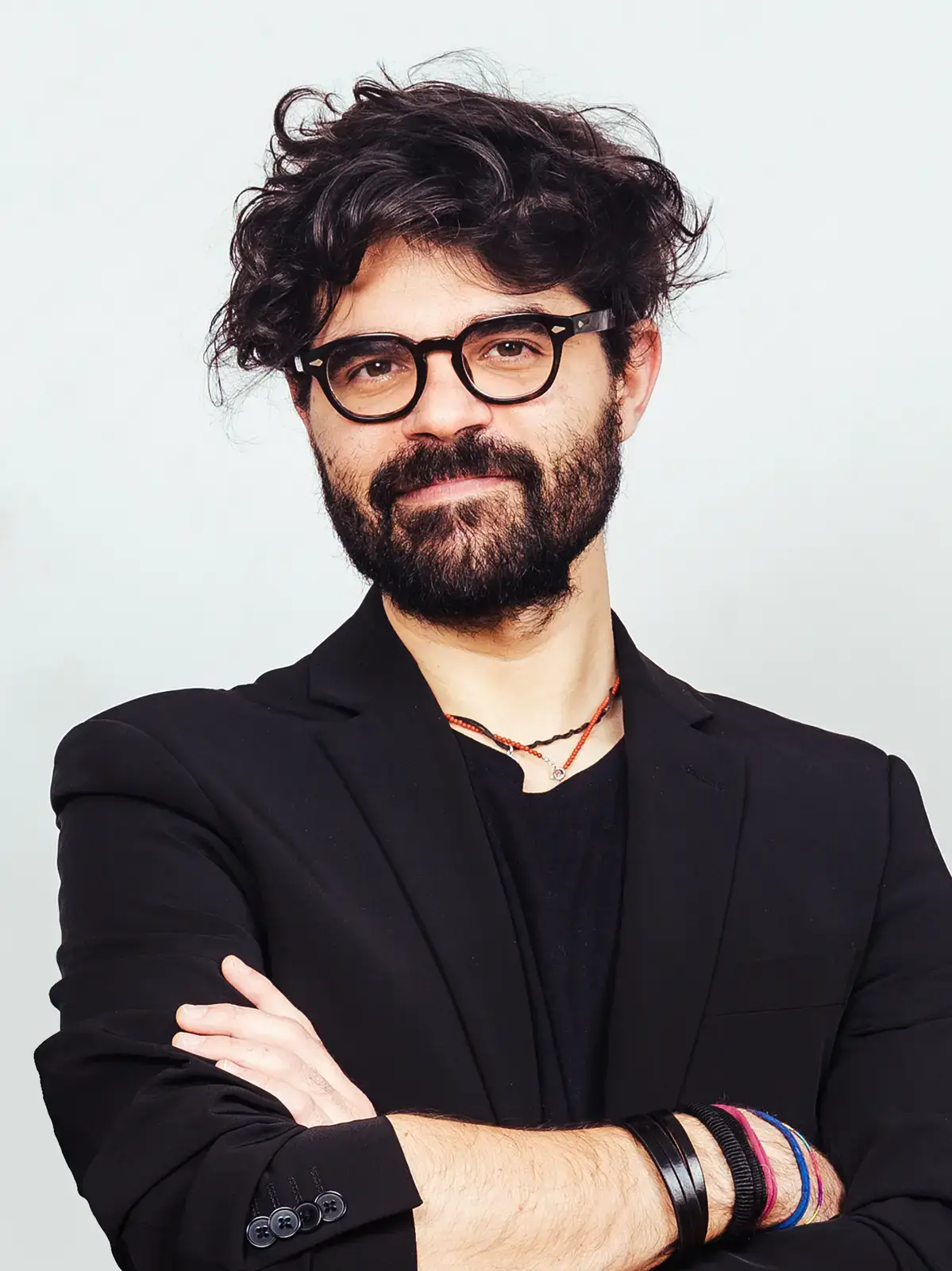
Stepping into the world of theatre design is like entering a space where architecture, storytelling, and emotion collide to create something truly transformative. But what does it take to craft these immersive environments? How does an artist shape the boundaries of reality, challenge perception, and breathe life into a story through design?
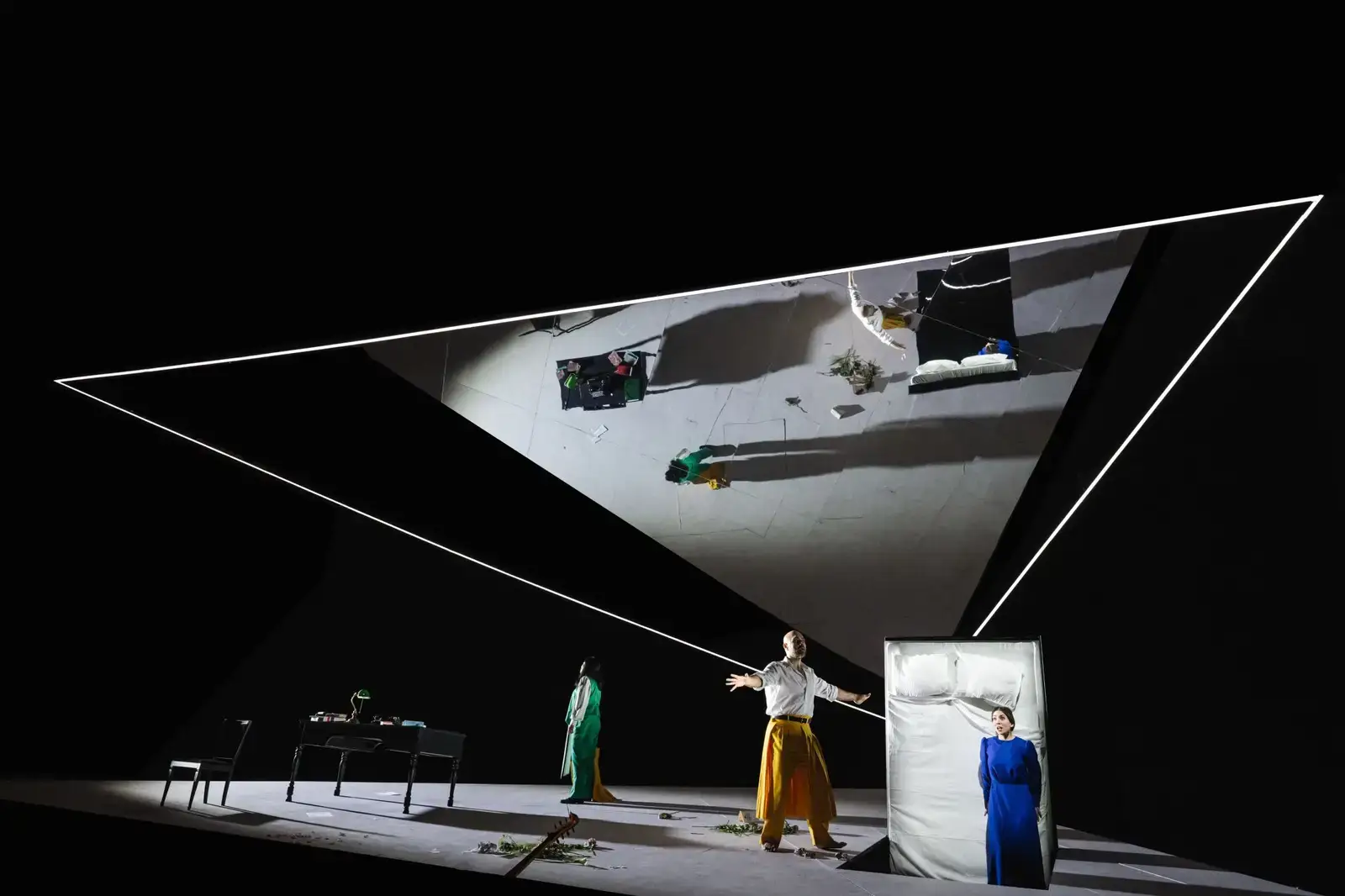
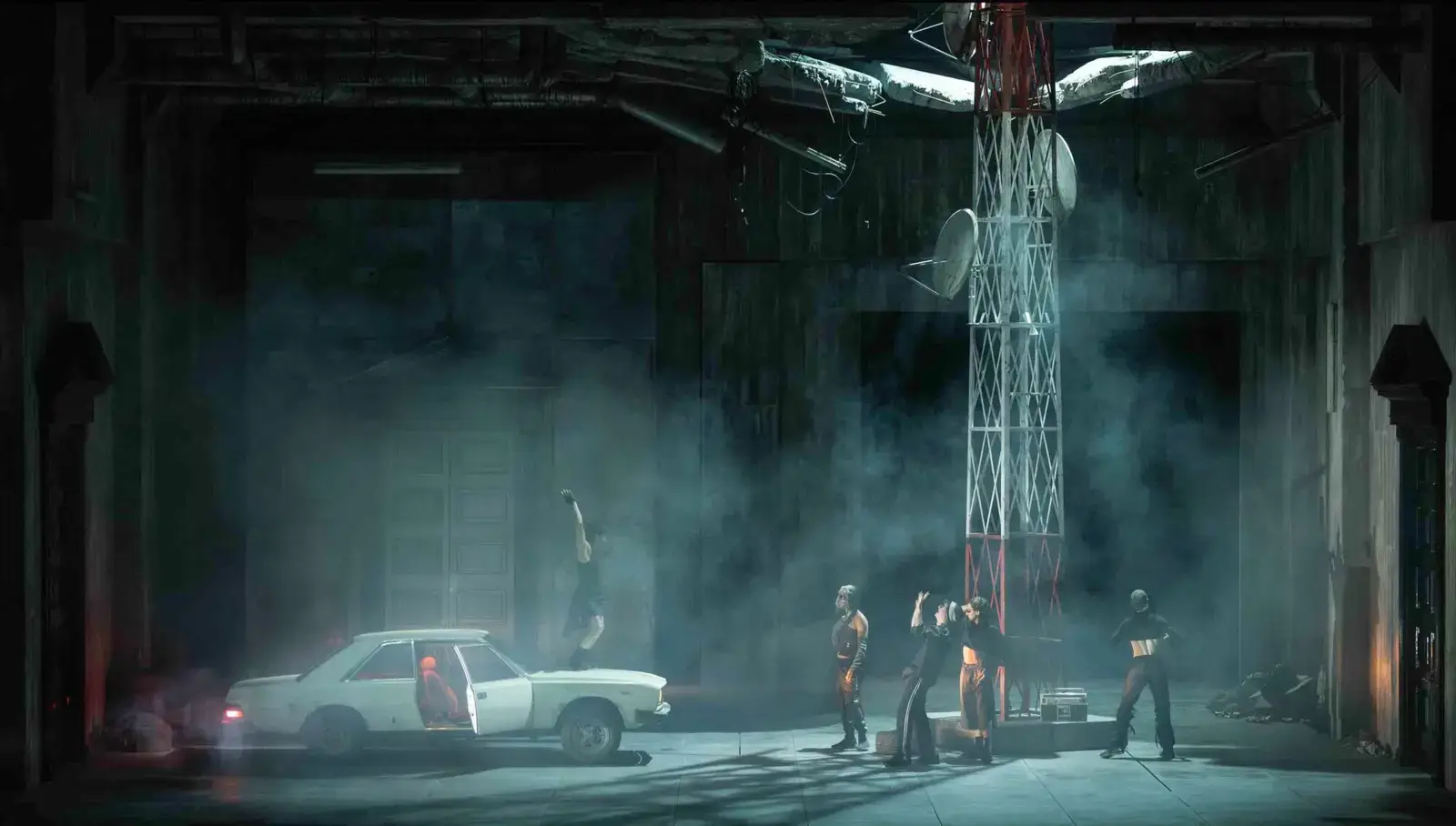
In this interview, we dive into the creative world of Emanuele Sinisi, the Italian architect and scenographer whose work has redefined the way we experience theatre. With a background in architecture, Sinisi seamlessly blends the precision of structural design with the boundless possibilities of theatrical space. His approach isn’t just about constructing a stage—it’s about transforming it, challenging its limits, and engaging audiences in a dialogue between the real and the imagined.
From the complexity of designing Falstaff to his reflections on the evolving nature of contemporary theatre, Sinisi shares insights into the process that drives his work. Whether you’re a theatre enthusiast, an aspiring designer, or simply intrigued by the creative process, in this edition of PROFILES, Emanuele Sinisi’s journey offers an inspiring look at how architecture and theatre can merge to shape unforgettable experiences.
Sono cresciuto circondato da musica e pittura. Ad un certo punto ho manifestato buone capacità espressive attraverso il disegno e il colore, così ho deciso di frequentare una scuola d’arte per diventare pittore. Grazie a un docente illuminato, ho scoperto di potermi esprimere anche oltre una superficie e dei colori e poi con le prime frequentazioni dei teatri è scattato qualcosa.
Nella scenografia (nello specifico in quella teatrale) ho scorto illimitate possibilità ma soprattutto quella opportunità di “sfidare” la realtà ri- definendola, ri-articolandola, moltiplicandone livelli di interpretazione e trasformazione.
I grew up surrounded by music and painting. At a certain point, I showed strong expressive abilities through drawing and color, so I decided to attend an art school to become a painter. Thanks to an insightful teacher, I discovered that I could express myself beyond just a surface and colors, and then, with my first experiences in theaters, something clicked.
In scenography (specifically in theatre design), I saw limitless possibilities—but above all, the opportunity to “challenge” reality by redefining it, rearticulating it, and multiplying its levels of interpretation and transformation.
Ogni esperienza lavorativa ha la densità di una piccola vita vissuta in termini di energie spese e nuovi incontri. Quindi potrei raccontare una infinità di cose. Ma del primo ingaggio di Falstaff posso raccontare che fu, a un tempo, una gioia immensa e una sofferenza quasi insostenibile.
Non credo di avere un titolo preferito ma Falstaff musicato da Giuseppe Verdi l’ho sempre desiderato. E una volta arrivato si è rivelato in tutta la sua disarmante, fascinosa difficoltà e inafferrabilità. Credo di aver prodotto una cinquantina di bozzetti per quel Falstaff, tutti scartati perchè mai efficaci. Pensai finanche di essere inadeguato e non adatto per un titolo da sempre desiderato fino a quando mi accorsi che era il personaggio di Shakespeare che ancora una volta si prendeva gioco di chi cercava di ingabbiarlo.
Every work experience carries the depth of a small life lived, in terms of energy spent and new encounters. So, I could tell an endless number of stories. But about my first engagement with Falstaff, I can say that it was, at once, an immense joy and an almost unbearable struggle.
I don’t think I have a favorite title, but Falstaff, set to music by Giuseppe Verdi, was something I had always longed for. And once it arrived, it revealed itself in all its disarming, captivating difficulty and elusiveness. I believe I created around fifty sketches for that Falstaff, all discarded because they were never truly effective. I even thought I was inadequate, unfit for a title I had always desired—until I realized that it was Shakespeare’s character himself, once again, making a mockery of anyone who tried to confine him.
Non credo molto nell’ispirazione, quantomeno nella sua accezione romantica. Credo molto nell’affiorare delle idee perchè prima ci sono state dedizione, ore di ricerca, tempo dedicato ad una sorta di sollecitazione sensoriale emotiva e cognitiva. Dunque un metodo di lavoro ricorrente diventa una sorta di autodisciplina per non cadere nella pigrizia o, peggio, nell’autocitazione.
I don’t believe much in inspiration, at least not in its romantic sense. I strongly believe that ideas emerge because they have been preceded by dedication, hours of research, and time spent on a kind of sensory, emotional, and cognitive stimulation. Therefore, a recurring work method becomes a form of self-discipline—to avoid falling into laziness or, worse, self-repetition.
Seppur da sempre innamorato del teatro, non ho scelto un percorso di studi specifico sulla scenografia. Mi sono infatti formato come architetto. La sfida (ma anche la cosa più stimolante che mi ha permesso di avere una certa identità di designer oggi) è stata imparare da solo a fare scenografia, cercando un personale unicum tra architettura e spazio teatrale.
Although I have always been in love with theatre, I did not choose a specific course of study in scenography. Instead, I trained as an architect. The challenge—but also the most stimulating aspect that has shaped my identity as a designer today—was learning scenography on my own, seeking a unique personal intersection between architecture and theatrical space.
Ci sono persone (vive e morte, celebri e non) che mi sostengono quotidianamente e sono di ispirazione costante. Figure che affettivamente rivestono un ruolo fondamentale e che condividono gioie e stress di un mestiere non facile, un mio professore di scuola, un mio professore di università, Luciano Damiani, Grotowsky, tantissimi altri. Ciò che mi ispira di più nel lavoro sono le arti figurative, la letteratura, il cinema. Credo che in quasi tutti i miei lavori ci siano richiami ad architetture famose, film, quadri celebri.
There are people—both living and deceased, famous and unknown—who support me daily and serve as a constant source of inspiration. Some play a fundamental emotional role, sharing in the joys and stresses of a profession that is far from easy: a high school teacher, a university professor, Luciano Damiani, Grotowski, and many others. What inspires me most in my work are the visual arts, literature, and cinema. I believe that almost all of my designs contain references to famous architectures, films, and renowned paintings.
Ho la sensazione che un pò di “mode” stiano sparendo, che un certo modo di fare teatro spesso autoreferenziale stia crollando. Sento che lo sguardo alle origini (che non va confuso con “tradizione”) è ancora attento, vivido e più che mai valido.
Questo dimostra quanto il teatro sia un fatto ontologicamente umano e quanto l’uomo, per circolarità, torna sempre ad identificarsi col suo sé primordiale, crudo, assoluto, spirituale.
I have the feeling that certain “trends” are fading away, that a certain often self-referential way of making theatre is collapsing. I sense that looking back to the origins (which should not be confused with “tradition”) remains sharp, vivid, and more relevant than ever.
This proves how theatre is inherently human and how, in a cyclical way, mankind always returns to identifying with its primordial, raw, absolute, and spiritual self.
Di mettere in discussione e sfidare la contemporaneità. Se le cose vanno veloce, provare a rallentarle, per osservarle, interrogarle e solo allora decidere se accoglierle o respingerle.
Questo credo aiuti a conoscersi meglio e a non subire gli eventi.
To question and challenge contemporaneity. If things move fast, try to slow them down—to observe them, question them, and only then decide whether to embrace or reject them.
I believe this helps us understand ourselves better and prevents us from simply being swept away by events.
Spero semplicemente che il mio lavoro di designer resti a servizio della narrazione o dei messaggi che si vogliono veicolare con l’evento teatrale. La gratificazione più grande che sento di manifestare è quando giovani creativi e studenti da diverse parti del mondo mi scrivono per dirmi che ritengono il mio lavoro fonte di ispirazione per il loro percorso.
I simply hope that my work as a designer continues to serve the narrative and the messages that the theatrical event seeks to convey. The greatest gratification I experience is when young creatives and students from different parts of the world reach out to tell me that they find my work a source of inspiration for their own journey.
Support artists—share this
Off-Book is the Skene newsletter for artists and makers. Profiles, opportunities, and editorials, free. New subscribers also receive the 2026 Performing Arts Survival Guide.
We use cookies to optimize our website and our service functionalities.
Practical career guidance for performing arts artists and makers. Take it with you.