
Latest posts.

Victor Zapatero: Light Holds Memory.

Meet Mexican lighting designer Victor Zapatero, whose work blends observation, emotion, and creative intention. Discover his artistic philosophy.

Get Featured or Publish with Skene!

Hayley E. Wallenfeldt: A Mirror of Self and Space.

source: Hayley E Wallenfeldt

For Hayley E. Wallenfeldt, scenic design is more than craft—it’s a portal into lived experience, identity, and memory. Raised in Chicago by artist parents and surrounded by storefront theatre, Hayley’s creative roots run deep. What began with childhood painting classes grew into a rich, interdisciplinary path through scenic design, history, and archaeology. That layered lens is visible in works like be mean to me, where set becomes metaphor—holding memory, trauma, and transformation in the very soil beneath the stage.

Hayley designs with intention, seeing space not just as backdrop but as a living, breathing extension of character and story. Collaboration fuels their process, and so does a constant reimagining of how space defines us.

In this edition of NEW TALENTS, we meet an artist who builds worlds that invite audiences to feel, question, and remember—and whose work reminds us that no detail is too small to carry meaning.

partner content

Hayley E. Wallenfeldt

any pronouns
Scenic Designer
United States
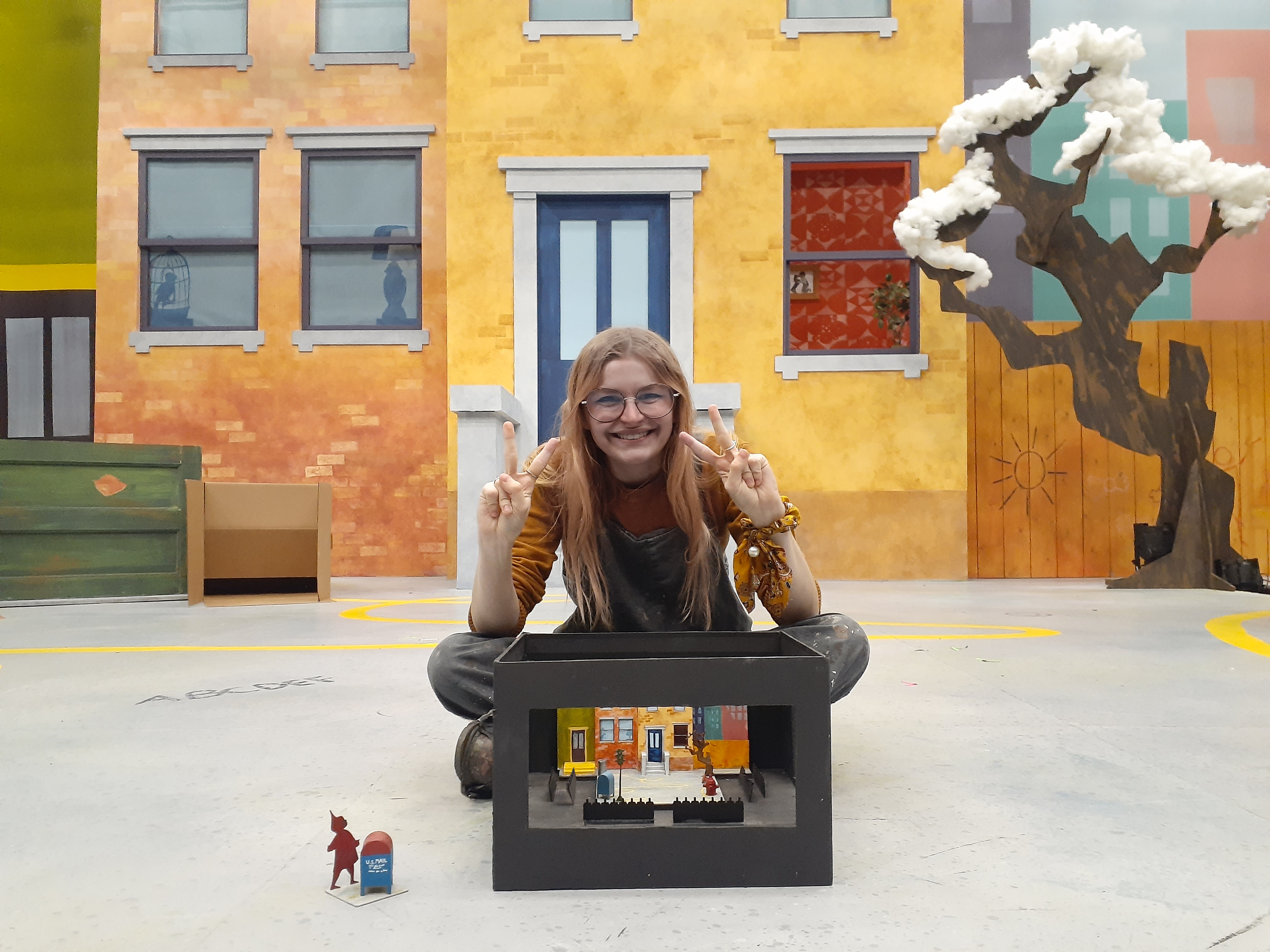
The Snowy Day, source: Hayley E Wallenfeldt

1. What sparked your interest as an artist and how has that spark evolved over time?

I started out as a painter. I was very fortunate that my father had a good friend that grew up to be a successful photographer who started taking classes to hone his talent young. So when I expressed interest in art, my family started having me take summer art courses at a young age. My parents also were actors and writers when they first moved to Chicago before picking different career paths around when I was born. So I grew up going to see local “storefront” theater my entire life. Eventually in high school as a painter I got roped into painting scenery and fell in love with set design (as much as one can call repainting and re-arranging a handful of 4×8 flats as a set, public school what can you do!).

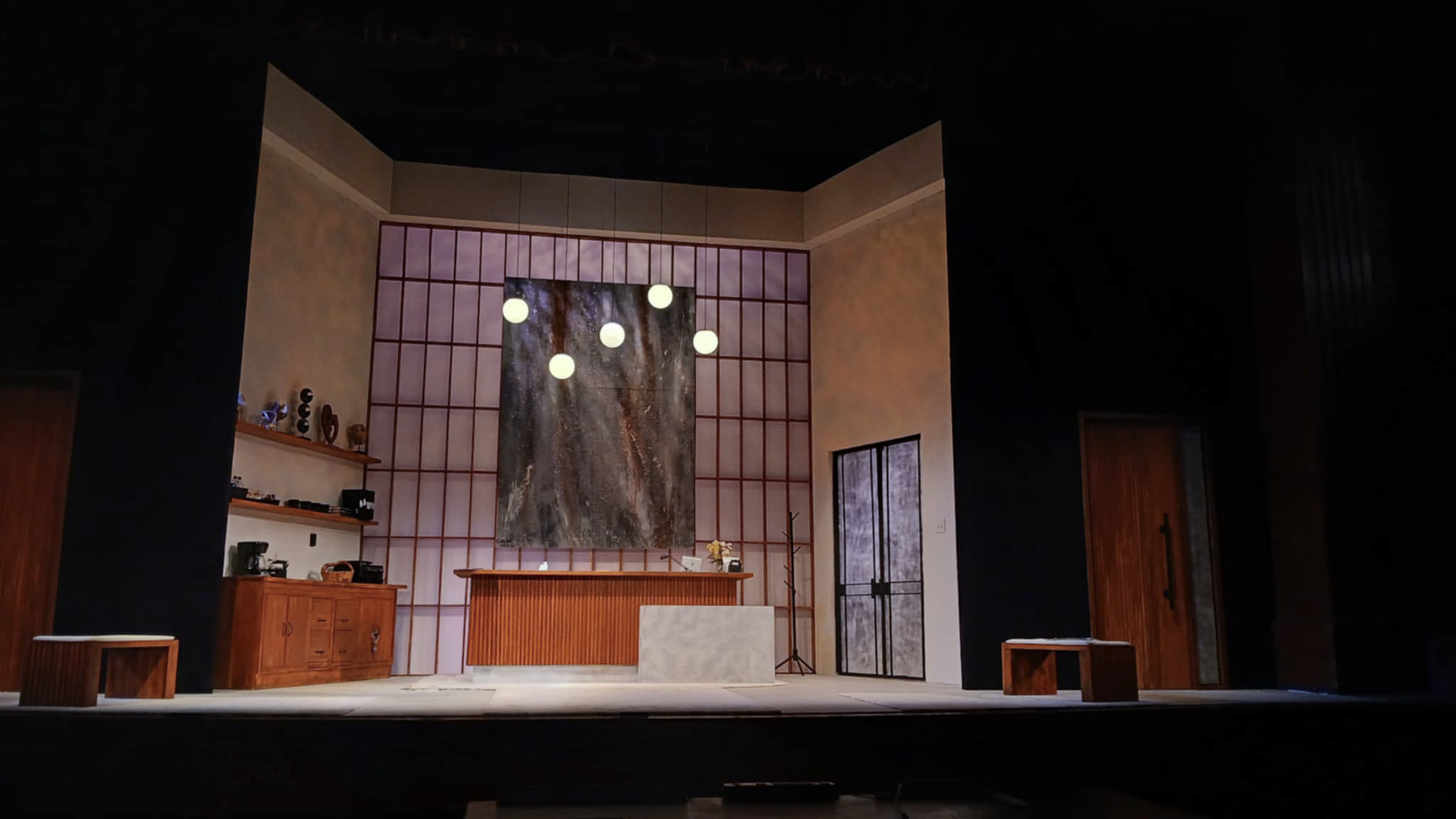
Receptionist, source: Hayley E Wallenfeldt

2. Can you share the story behind one of your favorite works and what it means to you?

Be mean to me was a process that came to embody all I love about theatre, from the potency at which the script spoke to me to the heightened collaboration I was able to have with the other designers. It’s a new play by Sofya Levitsky-Weitz that is both angry, and melancholy, and real. It is a memory play of two young women going back and forth between the ages of 17 and 27. It looks at their friendship in regards to how older men they admired took advantage of their sexuality and how they came to deal with that trauma. We had the privilege to have a majority team of women at different stages of womanhood, from a stage manager who was just 17 to a director in her early 40s.

I got to create a space that felt very close to our real world so my collaborators in projection, sound, and lighting could make the space horrific as needed. With that trust of their transformation of the space I was able to add figurative details. At the crumbling edges of that world where the set fades off was the detritus of our lead’s life. In archeology, one of the principles of stratigraphy is the deeper you go the older the material… a beautiful metaphor for trauma. At the edge of the stage we built a trench of dirt that in it collected the discarded memories of girlhood to woman hood, from dolls to Walkman’s, to glitter pens, to tampons, to craft supplies to pregnancy tests. The good, the bad, the beautiful and the ugly could live there.

be mean to me, source: Hayley E Wallenfeldt

3. How do your personal experiences and cultural background influence the stories you want to tell on stage?

Being raised in one of the major metropolitan cities in the US is one of the best gifts I could have been given. Chicago is an amazing city for theatre and a hub for culture. As someone fascinated by how identity defines the use of space I grew up getting to experience multitudes of neighborhoods built by different communities that call Chicago home. The differences of Andersonville to Pilsen to Logan Square are subtle but reflect the history and culture of those neighborhoods and helped drive my interest in the relationship between self and space.

I’m also incredibly fortunate that I was able to go to school for history and archaeology at the same time as for design. That education re-emphasized for me how much culture on both a conscious and unconscious level define space and object and our relationship to them. Things that we don’t think about because they just are have social, economic, political, and cultural roots that run so incredibly deep. That kind of history and culture is something I want to bring to each stage I get the privilege to work on. There are so many implicit details that define spaces and to an extension define us.

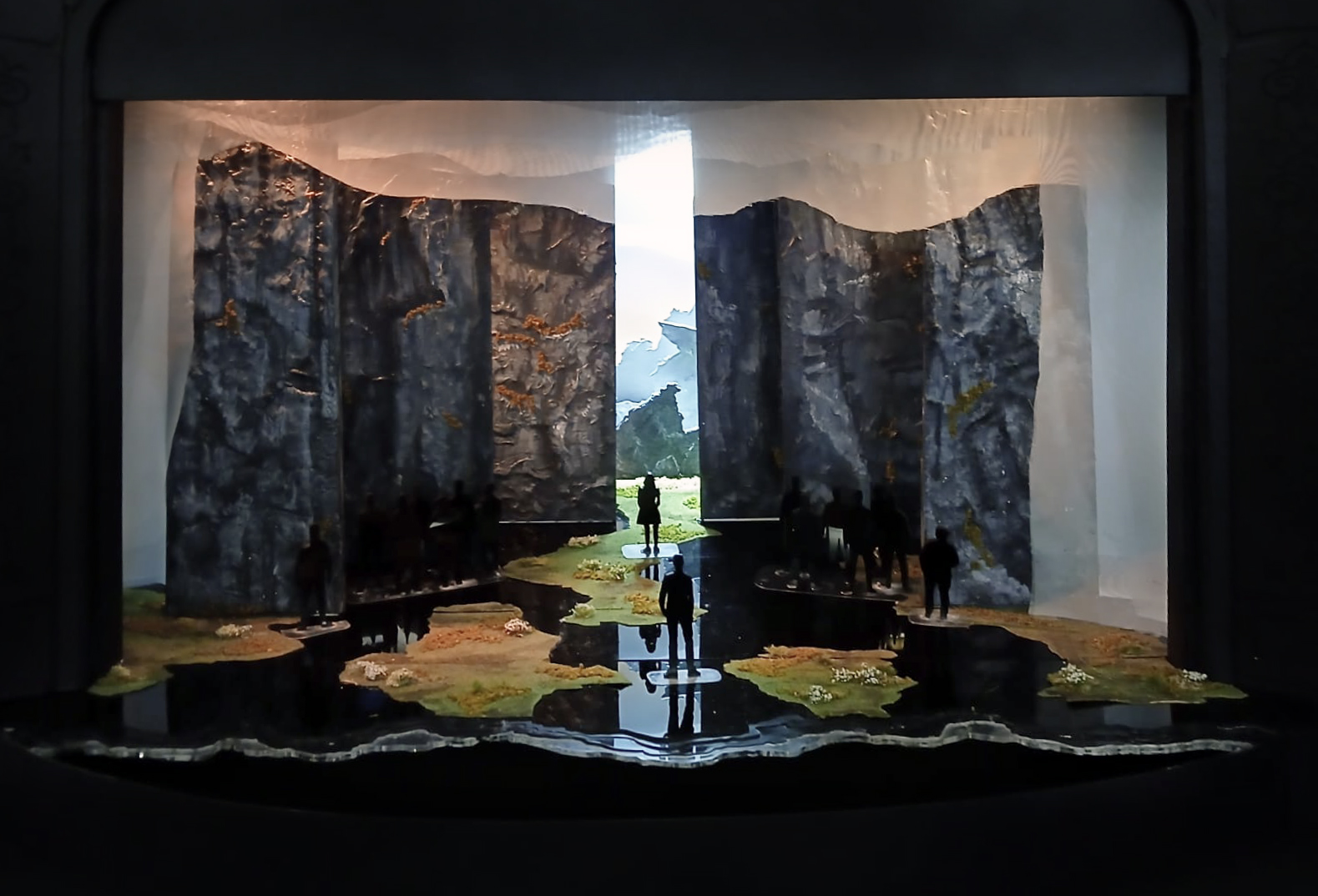
Breaking the Waves - Opera America: Robert L.B. Tobin Director-Designer Prize recipient, source: Hayley E Wallenfeldt

4. What's the biggest challenge you have faced as an artist, and what keeps you motivated to push forward?

I think one of the biggest hurtles for me is feeling like my art has value. The question of if there is someone more worthy or interesting to be doing the work I am. The way that I push through this is reminding myself that everyone brings their own perspective and that theatre is a collaborative art form. Each day I am reminded that I bring value to the work I do by listening to and supporting the ideas of the collaborators I have. Even if I question the value of my contribution I know that I help in the creation of art work that is greater than the sum of its parts.

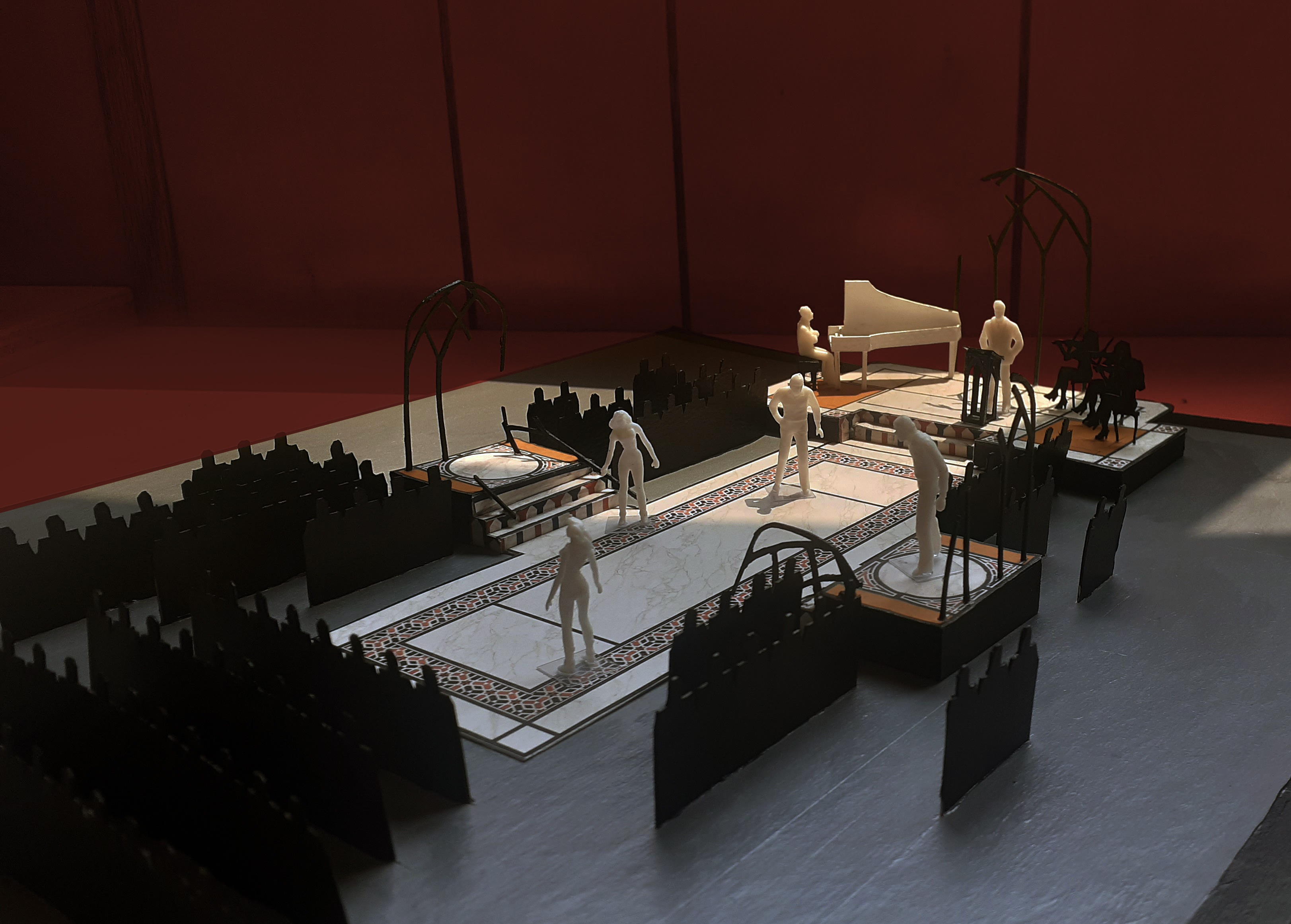
Love and War, source: Hayley E Wallenfeldt

5. How do you hope your work will connect with people or leave an impact?

My goal with any set is to create a portal to another world. Either one that might be a mirror of our own or one wholly different. I want to create spaces that feel like a real place or an idea of a real place. Places that an audience from the moment they look at the stage feel like “this is a space where people exist and lives happen”. If I can ground an audience in a space then I hope they can more fully take in the story that is being told and the overall message of the performance can resonate deeper into their bones than it would had the set not help ground them into the lives they took a 90 minute to 3 hour glimpse into.

source: Hayley E Wallenfeldt

Support artists—share this

More like this, twice a month.

Off-Book is the Skene newsletter for artists and makers. Profiles, opportunities, and editorials, free. New subscribers also receive the 2026 Performing Arts Survival Guide.

About the Author

Leave a Reply

Your email address will not be published. Required fields are marked *

Abingdon Theatre Company - Season 34

Related Posts

FREE FOR ARTISTS

The 2026 Performing Arts Survival Guide.

Practical career guidance for performing arts artists and makers. Take it with you.