Harumi Hirata: Whose Stories do we Tell?
Japanese costume designer and cultural advocate whose research-driven practice interrogates representation, identity,

Japanese costume designer and cultural advocate whose research-driven practice interrogates representation, identity,

German scenic designer whose kinetic scenography builds sets that move with the

Mexican cultural worker, director, and playwright whose practice is rooted in collective

Classic plays for community theatre: Shakespeare, Greek tragedies, Chekhov—masterpieces with zero royalties.

The Canada PQ 2027 team on The Seventh Fire, matriarchal curation, and
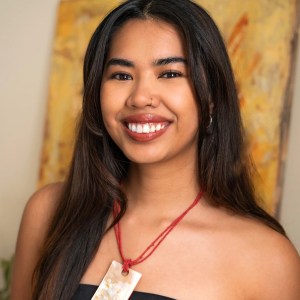
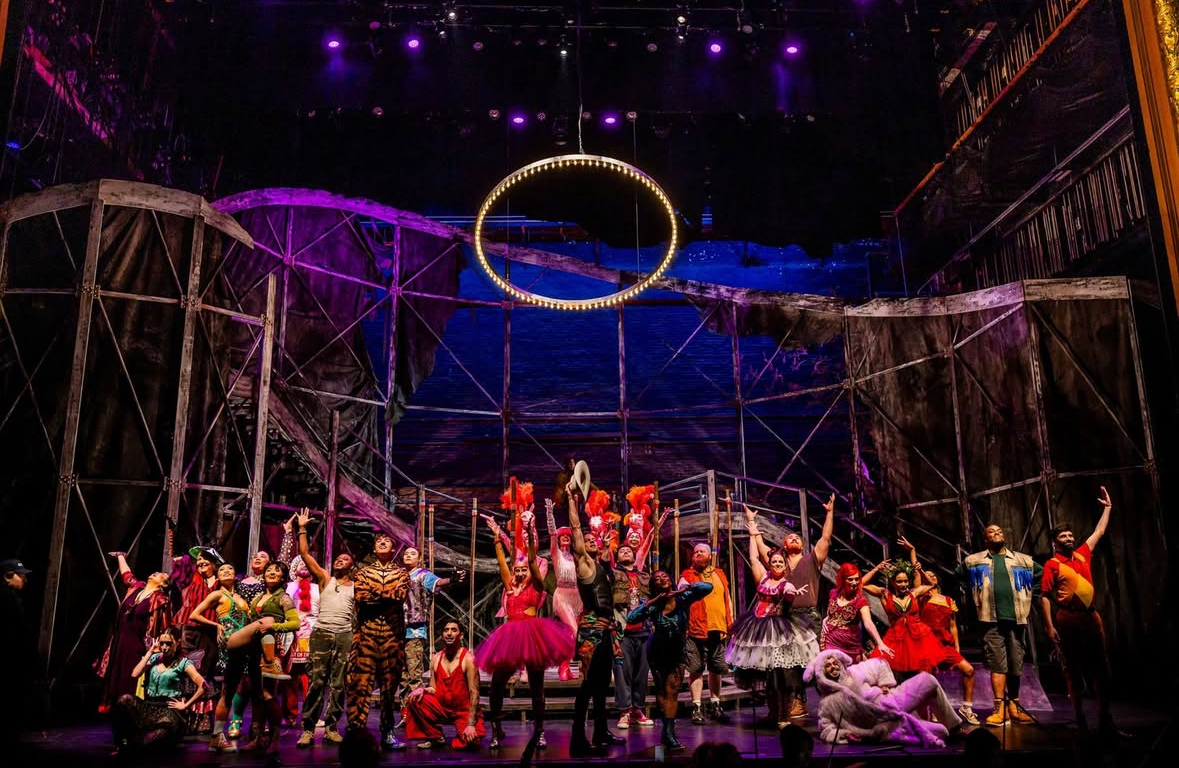
Before she ever set foot in a theater, Haydee Zelideth was crafting stories with dolls and fan art, instinctively drawn to character, costume, and world-building. Today, she’s a sought-after costume designer whose work pulses with intention, emotion, and scale—whether it’s dressing 49 unique characters in Carousel or reshaping how we tell stories onstage and beyond.
But Haydee’s creative voice doesn’t end in the fitting room. As co-host of the podcast Just Words Nobody Cares, she brings that same curiosity, humor, and critical eye to the conversations shaping a broad range of industries – from music, to theater, to comic books, to on site drug prevention—from labor and identity to art-making in uncertain times. She’s asking bigger questions: What does a sustainable creative life actually look like? How do we honor our time, value our work, and build systems of care in a field that often resists them?
If you’ve ever questioned your path as an artist, wrestled with doubt, or felt the pull to build something new, Haydee’s story will resonate. Her insights are honest, grounded, and full of the clarity that comes from doing the work.
In this edition of PROFILES, we enter the orbit of an artist who’s designing more than costumes—she’s designing the future.

Reading and playing with my Barbies and creating my own stories with them. Many days in my childhood were spent shaping character and narrative through these dolls, their clothes, and accessories. That impulse has evolved over time through different mediums: young adult fantasy fan art, acting in costume, and storytelling through costume design in stage and film. The root remains the same regardless of the medium—people and stories. Now, I’m interested in shifting to a broader view of narrative art through writing and producing. I don’t know exactly what that looks like for me yet, but I keep gravitating toward it.
I recently worked on a new staging of “Carousel” with Anne Bogart at the Boston Lyric Opera, an incredibly special experience. The story, rooted in post-WWII America, reflects a time when men returned from war without the emotional tools to process or communicate their trauma. While often seen as an outdated tale of an abusive relationship, its themes remain unsettlingly relevant. Our production reimagined “Carousel” as a performance within a performance: a troupe of modern-day, performers from around the world, gathering in an abandoned theme park to present the musical to audiences at the Colonial Theater.
This framing gave me the freedom to express my visual language at scale. With 49 cast members, each performer had a unique, intricately detailed look—each one an extension of my imagination. One of my favorite moments came in the opening number, when the “carousel” begins to turn. The showgirls—designed to evoke pink carousel horses—leapt onstage just as the orchestra swelled. The convergence of Anne’s direction, Shura Baryshnikov’s choreography, Sara Brown’s set, and Brian H Scott’s lighting created a breathtaking, magical moment that took the audience by surprise. That shared gasp in the theater is what I live for.
Both are inherent to my process. The structure of a routine—with the appropriate space and time—allows me to move around the goalposts freely and invites inspiration to strike. The routine, more or less: read the script, talk about the script, think about the script, plot the script, think about it some more, look at lots of images, think some more, talk some more, look at more images, sketch some thoughts out, look at more images, talk again, sketch something clearer, think more, look at more images, talk again, color sketches, look at more images… you get the picture. It’s a process that doesn’t end until the show opens. What’s important for me is to keep thinking about it and talking about it—and that can take a variety of shapes.
Challenges, in my experience, will always be present, and I welcome them, as they signal growth. Insecurity as an artist, both in terms of self-confidence and financial instability, has been the most difficult aspect of this career for me. I’m always working to become a more confident artist, and I feel more grounded now than I did, say, five years ago. I know when to say no to opportunities that won’t support me in the ways I need, both artistically and financially, and that discernment has put me in a better position to take on projects that align with my design career goals. It allows me to show up fully, be present, and represent myself and my work in the best way I can.
As for the larger industry challenge of financial instability, it is often outside my control. But it does go hand in hand with learning when to say no and understanding how to appropriately value my time. So far, that practice has opened up space for more meaningful and better-paying work. It has also given me time to focus on projects outside of designing, with the goal of creating additional sources of income.
The love of my life, Ron Kain. He inspires me to be my best self everyday and to dream big. It touches every aspect of my life and my life is better for it. The support we have for each other makes the impossible possible. I know, this all sounds so cliche, but I would have deleted this if it weren’t true.
I have a sharp, double edged sword of an answer, particular to the U.S. The seismic shift in the industry, from COVID recovery to budget cuts in both federal and private sectors, alongside rising costs, has deeply affected how we work in theater. It is a scary time with growing scarcity, but it also offers a chance to build new systems rooted in what we called for during the pandemic: inclusion, fair labor practices, and equitable pay.
I find the challenge of funding these ventures both exciting and difficult. I am interested in creating my own means of production to implement the systems I want to work and live within. What that looks like, I am still figuring out.
I am also hopeful about the future of live performance. As AI saturates our digital world, filling search engines and social feeds with generated imagery, people are already growing tired of it. If artificial content becomes the norm online, then live, in person experiences will only grow more valuable. Theater, in its raw and human form, offers something AI cannot replicate. We just need to be ready to meet that moment.
Half of the work is showing up and being present. There’s a time to say yes to all opportunities that come knocking and that experience is invaluable and exciting. With that experience, you’ll know when to say yes to what serves you and to say no what won’t serve you in that moment. And there’s the cliche, “the devil is in the details”, and I believe it’s true for a reason. The details are important across all aspects of my life and of my work and I love the results that brings. I find that people notice them and really appreciate them.
I love the preview process because it allows me to see how a show takes shape during this crucial window, and how the director, the writer (if present), and the artistic directing or producing team respond to the audience. I enjoy sitting in the back row to sense whether the audience is fully engaged, or sitting among them to overhear their comments about the play. I always work to support ways of inviting the audience in, because without them, there is no show. I want people to walk away feeling transported into another world, time, place, or life. It’s something I loved as a child when reading books and watching movies and I want to recreate that experience for others and my present self.
Support artists—share this
Off-Book is the Skene newsletter for artists and makers. Profiles, opportunities, and editorials, free. New subscribers also receive the 2026 Performing Arts Survival Guide.
We use cookies to optimize our website and our service functionalities.
Practical career guidance for performing arts artists and makers. Take it with you.