Emilio Bastré: Fragile Enough for a Strong Connection.
Emilio Bastré is a Mexican actor and member of the Compañía Nacional de Teatro whose work lives at the intersection of freedom and craft.

Emilio Bastré is a Mexican actor and member of the Compañía Nacional de Teatro whose work lives at the intersection of freedom and craft.

Six essential plays by Black British playwrights that American theatres should be producing — from Natasha Gordon to debbie tucker green.

Meet Mexican lighting designer Victor Zapatero, whose work blends observation, emotion, and creative intention. Discover his artistic philosophy.

Actor and playwright whose work moves between personal honesty and theatrical confrontation, building stories that leave no edges sanded down.

Scenic designer and Skene founder on community, mentorship, and building a creative career, in conversation with Mitzi Avila of Creative Blueprints.
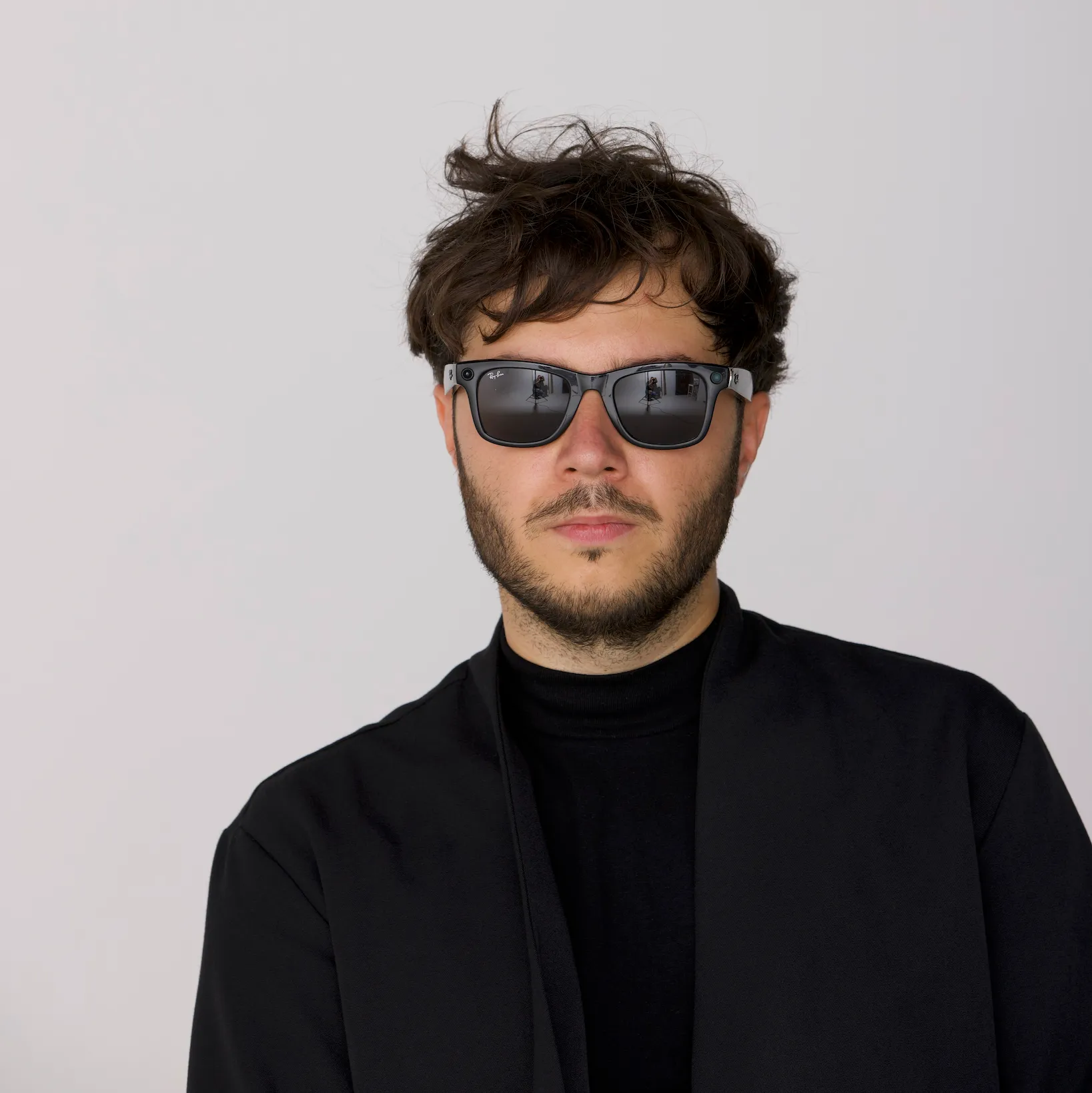
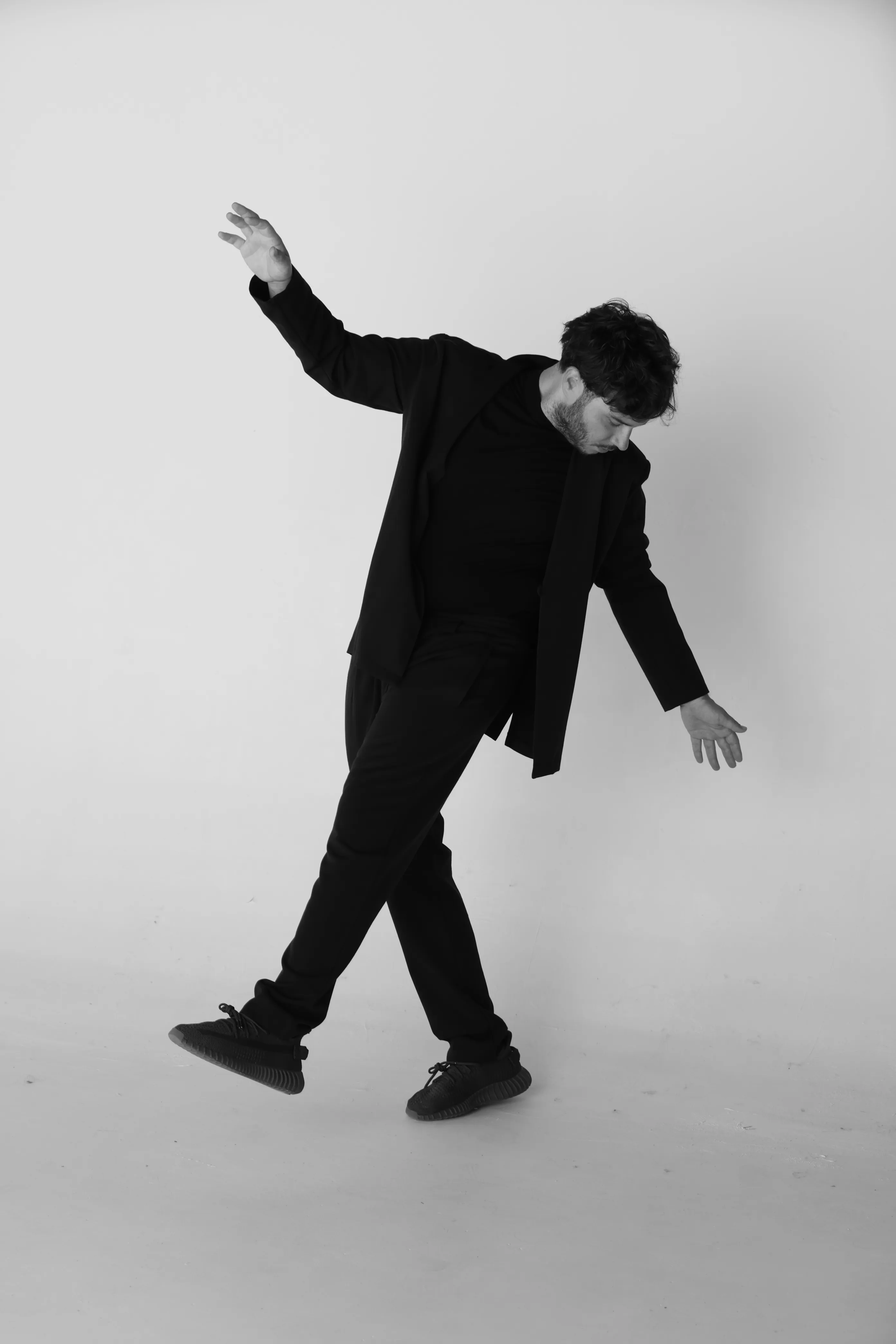
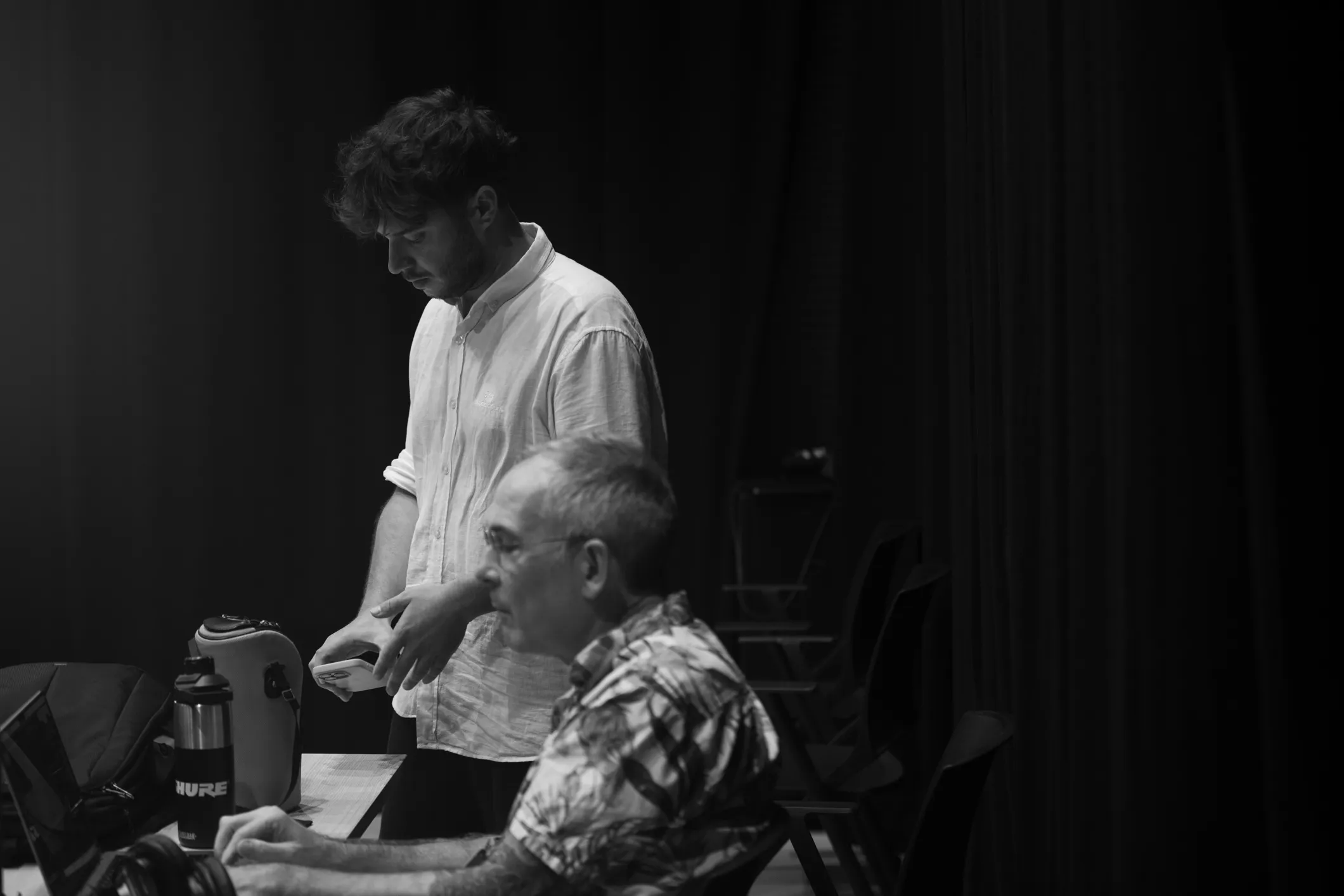
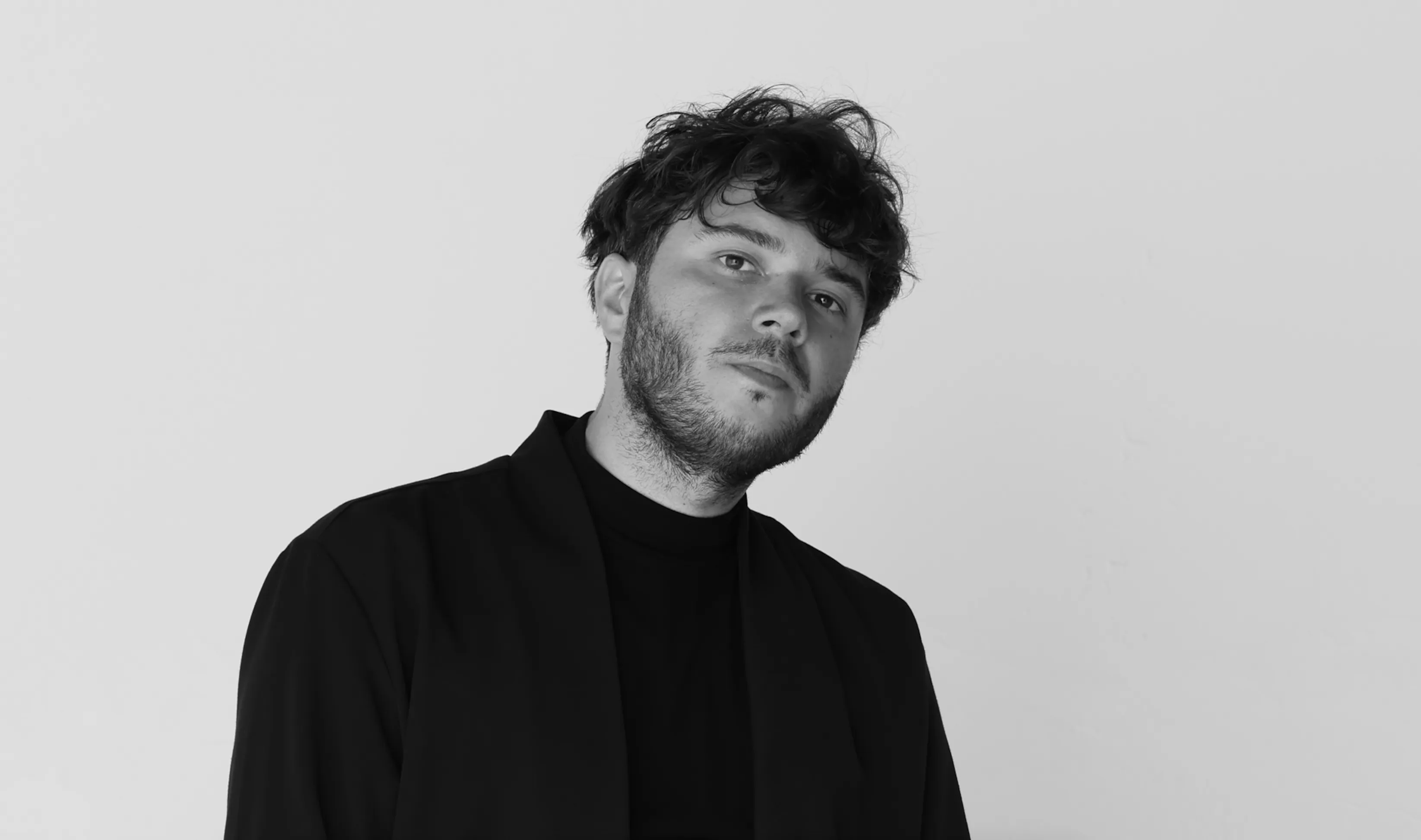
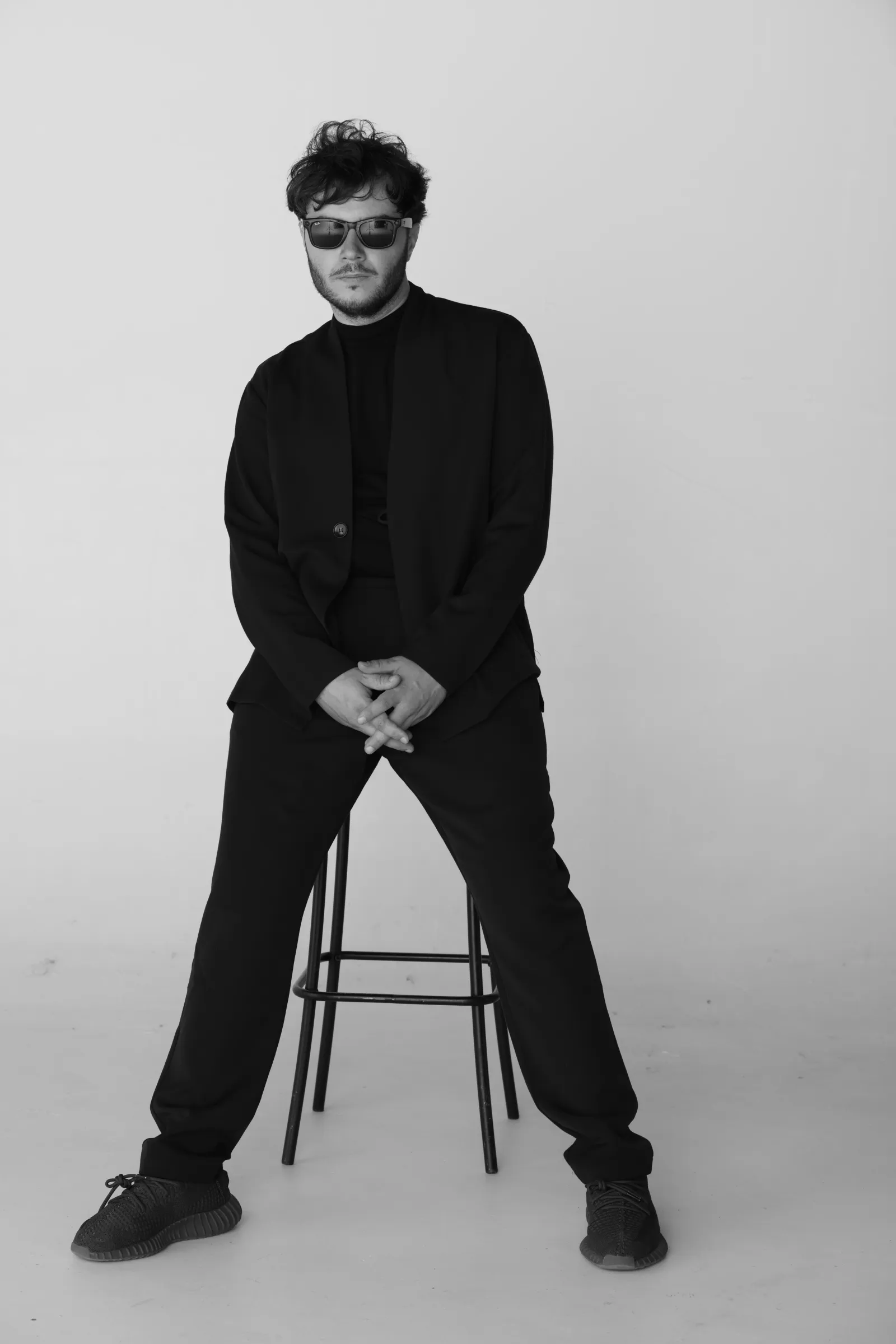
Sound has always been more than accompaniment for Calin Topa. It is architecture, memory, and force. Raised inside Romanian theaters founded and led by his father, Calin learned early to listen beyond melody, tuning his ear to the emotional structures hidden within space, silence, and resonance. By his teens, sound had already become a language of authorship rather than support, a way to shape experience from the foreground instead of the margins.
Today, Calin’s work moves fluidly across theater, film, installations, and large scale immersive environments. His practice centers on sound that leads and transforms, constructing worlds where audio is felt as presence rather than background. From binaural compositions to spatial sound systems activated in archaeological sites and deserts, his projects explore how sound carries memory across time, culture, and landscape. Collaboration plays a central role in his process, allowing voices, histories, and environments to imprint themselves directly onto the work.
Driven by curiosity and a willingness to step into the unknown, Calin approaches creation as both exploration and affirmation of identity. His soundscapes invite audiences to listen differently, to feel space as something alive and charged with meaning. In this edition of PROFILES, we step into Calin Topa’s sonic universe, where sound becomes a bridge between past and present, technology and emotion, and individual experience and shared human presence.

My artistic journey began in childhood, growing up inside the world of theater. My father, who founded and led two theaters in Romania, exposed me early to the creative intensity of rehearsals, stories, and the stage. That environment shaped the way I listen,not just to music, but to the emotional architecture hidden inside every sound.
As I studied music and started working in theater from the age of 15, I realized that sound is not decoration; it is a decisive force. I’ve always been drawn to creating strong artistic directions, building my own sonic universe, and bringing a contemporary language to the forefront. I am interested in sound that leads, transforms, and imposes a presence, sound that defines the experience rather than supporting it from the background.
My work expanded from theater to film, installations, and international exhibitions, where I began exploring immersive sound, binaural techniques, and large-scale acoustic structures. Through these projects, the initial spark became a mission: to innovate, to influence the artistic landscape, and to push forward a distinct contemporary vision in Romanian sound design.
Today, I see my artistic path as a continuous affirmation of identity a search for sound that moves people, reshapes space, and opens new ways of experiencing reality.
One of my favorite works is Transcendent Renaissance, a project sparked by an urgent need to return to human connection, to create side by side with others instead of composing in isolation. In 2021–2022, I felt the urge to return to collective creation, to build something alive, something shared.
The performance explores the idea of transcendence through time and the human memory that lingers inside ancient spaces. It reflects a transition from the modern era into the digital age, inviting the audience to question their own place within this transformation.
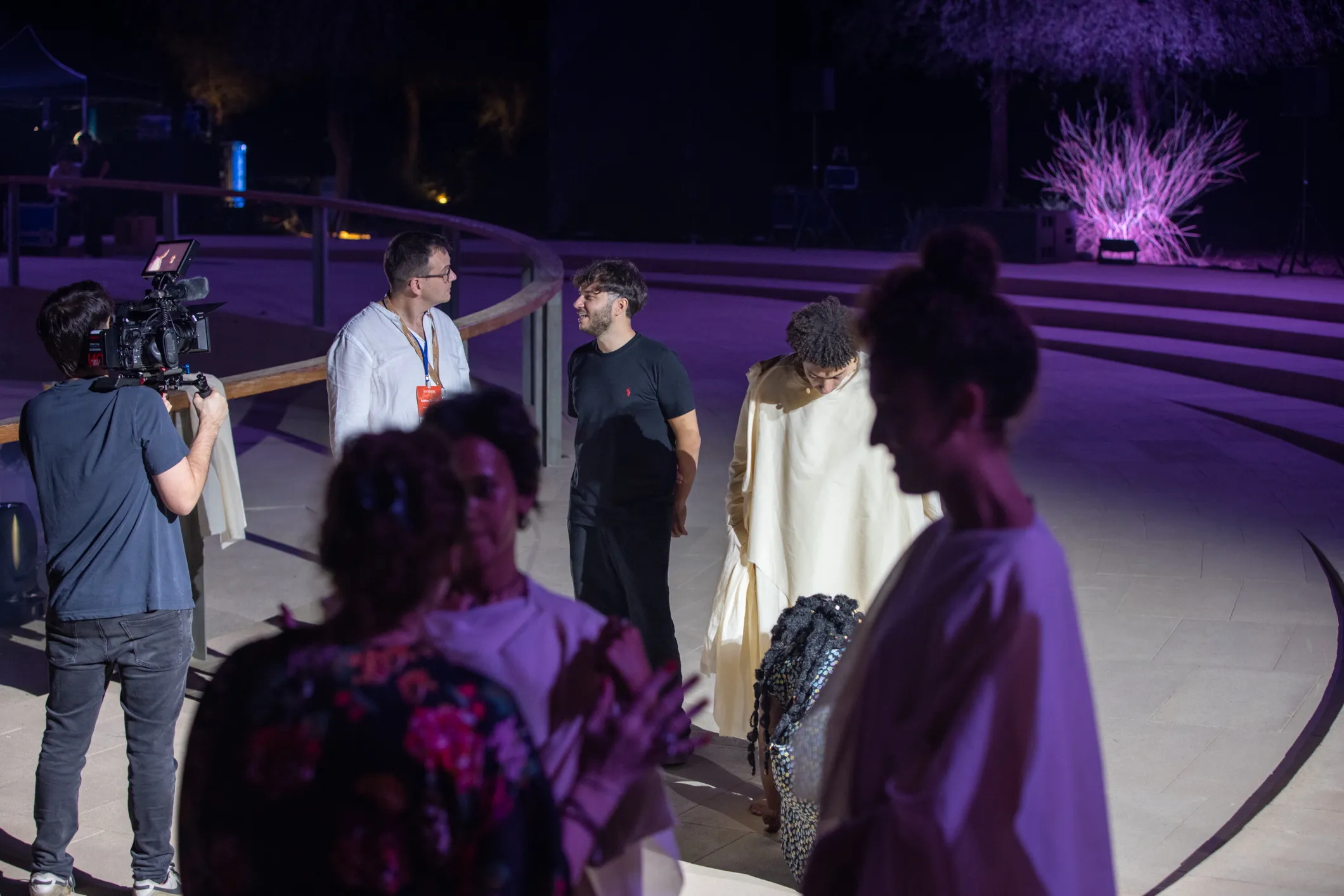
The work evolved into a live event in the UAE during World Stage Design, where I integrated my existing sonic sculpture into an immersive L-Acoustics L-ISA 40.8.5 system. This allowed sound to move as an object in space, layered, sculpted, and choreographed.
The piece was performed at the Mleiha Archaeological Centre, a site inhabited for roughly 120,000 years. That setting transformed the project: sound became a bridge between past and present.
I collaborated with students from Sharjah Academy of Arts and performers from diverse cultures and languages. Their voices and personal reflections shaped the live structure, proving that beyond cultural or linguistic barriers, emotion remains universal, and music becomes our shared language.
My creative process is a dialogue between curiosity, discipline, and spontaneous inspiration. I don’t follow a rigid routine — art cannot be confined to a schedule — but there is structure beneath the intuition. I usually begin with a fascination, a question that pulls me in and refuses to let go. In Transcendent Renaissance, it was the idea of how sound could carry memory and presence across time and space, and that curiosity became the engine of the work.
Research and observation are essential starting points. I immerse myself in the environment, the history, or the cultural context I am engaging with reading, listening, sketching, and imagining how sound can inhabit and transform a space. From there, I experiment with textures, layers, and spatialization, allowing intuition to guide decisions in real time.
Technical discipline, composing, recording, mixing, and designing spatial audio, is always present, but it serves the creative impulse rather than constraining it. Collaboration and interaction with performers, spaces, and communities often ignite the most powerful ideas.
For me, creation is a constant negotiation between intention and discovery. Inspiration does not arrive on command; it emerges through engagement with people, with space, and with history and the process itself becomes a lived exploration of sound and presence.
One of the greatest challenges I have faced as an artist has been confronting the limits of my own understanding and experience. Early in my career, I realized that to grow, I could not remain in familiar spaces or repeat familiar patterns. I had to enter places I had never been physically, culturally, and creatively and push myself beyond the boundaries I had unconsciously set.
This meant working across cultures, collaborating with artists from different backgrounds, and immersing myself in contexts that initially felt foreign or intimidating. It required not only technical skill, but humility, openness, and courage to trust intuition in unknown territories.
These challenges became a form of internal exploration. Each new space, each collaboration, and each unfamiliar environment demanded that I confront my own creative assumptions, fears, and limits. In that process, I discovered new ways for sound and music to communicate, connect, and transform.
For me, the challenge is ongoing: growth as an artist comes from continuously seeking the unknown, embracing discomfort, and daring to exceed my own expectations. Every new boundary crossed becomes both a personal and artistic milestone, shaping my vision and deepening the impact of my work.
What inspires me most is everything I haven’t fully experienced yet concerts, artists, unusual encounters, travels, and the unexpected moments in life when I find myself fully present. Inspiration is not something I wait for; it comes from being in the momentum of life, from the collisions of ideas, people, and sounds.
Those moments show up in my work as fragments of myself. Every note, every layer of sound, every spatial choice carries a piece of the world I’ve lived, the conversations I’ve overheard, the streets I’ve walked, or the people I’ve met. It’s like collecting sparks from life and letting them ignite inside my compositions.
Creativity, for me, is playful and restless a constant remix of curiosity and joy. I try not to take myself too seriously, even when the work is intense. Humor, surprise, and spontaneity are just as important as precision and craft; they keep the work alive.
In the end, my inspiration is both internal and external, personal and universal. It’s life happening around me and inside me at the same time and every project becomes a small, sonic diary of those moments.
One of the most exciting things in my field right now is immersive audio in unconventional spaces. Using L-Acoustics L-ISA 40.8.5 in the middle of the desert completely transforms how people experience sound. Audio is no longer just heard it is felt, navigated, and lived. The environment becomes part of the composition, where wind, sand, and audience movement interact with the soundscape.
This approach opens new possibilities for storytelling, connecting technology, space, and emotion. For me, the thrill is creating performances where sound shapes reality itself, and the desert, with its scale and silence, becomes a collaborator in the artistic experience.
The advice I would give to aspiring artists is simple but essential: constantly seek the unknown. Growth comes from stepping into spaces, cultures, and experiences you have never encountered before. Don’t settle for comfort push beyond what you already know, challenge your assumptions, and embrace uncertainty. That is where your most original ideas will emerge.
Be curious, and let curiosity guide your work. Listen, observe, and engage deeply with people, places, and histories. Every encounter, even the unexpected or difficult ones, can become a source of inspiration. And remember, creativity is not only about what you produce but also about how you live, perceive, and respond to the world.
At the same time, cultivate discipline and craft. Inspiration alone is fleeting you need the technical skills, patience, and persistence to shape your vision into something tangible. Collaborate openly, but also trust your instincts. Your voice matters, and the way you interpret the world through your art will be unique.
Ultimately, my advice is to embrace life fully, explore without fear, and let the experiences, the surprises, and even the failures feed your creativity. Art grows in the spaces where curiosity meets courage.
I hope my work connects with people by creating spaces where sound and music become a living presence. I want audiences to feel fully in the moment, to sense the invisible layers of emotion and memory in a space. My aim is to awaken curiosity, reflection, and wonder to show that, beyond words, sound is a universal language. If my work leaves people noticing the world differently, feeling more deeply, or carrying a moment of presence with them, then it has truly achieved its purpose.
Support artists—share this
Off-Book is the Skene newsletter for artists and makers. Profiles, opportunities, and editorials, free. New subscribers also receive the 2026 Performing Arts Survival Guide.
We use cookies to optimize our website and our service functionalities.