LATEST POSTS.

Get featured
on Skene!

Arnel Sancianco: Blueprint for the Emotional Landscape.

source: Arnel Sancianco

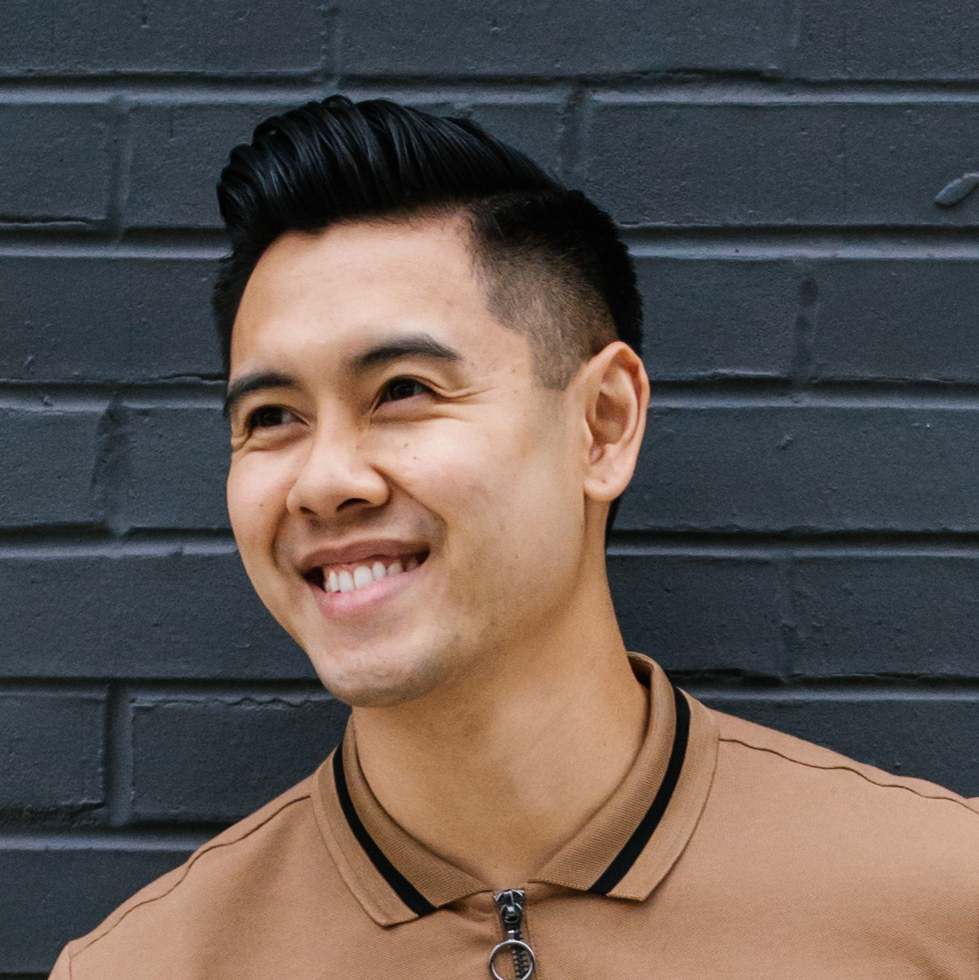
Some artists come to their craft through study or serendipity. For Arnel Sancianco, it began in a childhood bedroom stacked with Legos and K’Nex—tiny tools for big imagination. From those early experiments in worldbuilding, he has grown into a designer of rich, emotionally charged environments that don’t just serve a story, but embody it. His work is grounded in the belief that space can carry memory, tension, and transformation—an idea that came to life most recently in Appropriate at The Old Globe, where personal roots and professional rigor collided in haunting harmony.

Driven by a relentless curiosity and shaped by the complex intersections of identity, Arnel’s process centers emotional truth before anything else. He draws inspiration from airports, overheard conversations, unexpected art—and always, from the people who inhabit the worlds he creates. Whether designing with stark restraint or maximalist flourish, he’s not chasing approval—he’s chasing honesty.

In this edition of PROFILES, Arnel shares his evolution from insecure perfectionist to grounded storyteller, reflects on the thrill of cinematic theatre, and offers generous advice to young artists still finding their spark. Through it all, one thing remains clear: Arnel Sancianco isn’t just designing sets. He’s building meaning.

advertising
partner content

Arnel Sancianco

he/him
Scenic Designer
United States
Fat Ham, source: Arnel Sancianco

1. What sparked your interest as an artist and how has that spark evolved over time?

I think I’ve always been a creator. As a kid, I spent countless hours in my tiny bedroom surrounded by bins of Legos and K’Nex, building elaborate worlds and telling epic stories with the characters I made. It wasn’t just about snapping pieces together—it was about inventing something from nothing, giving form to imagination. Over time, that creative spark evolved. I moved from toys to scale models, from stories to stages, but the core stayed the same: I’m driven by the need to make something, to communicate an idea or a feeling through form, color, structure, or narrative. Now, my tools have changed—software, sketchbooks, cameras—but I still chase that same excitement I had as a kid when a new idea takes shape in my head.

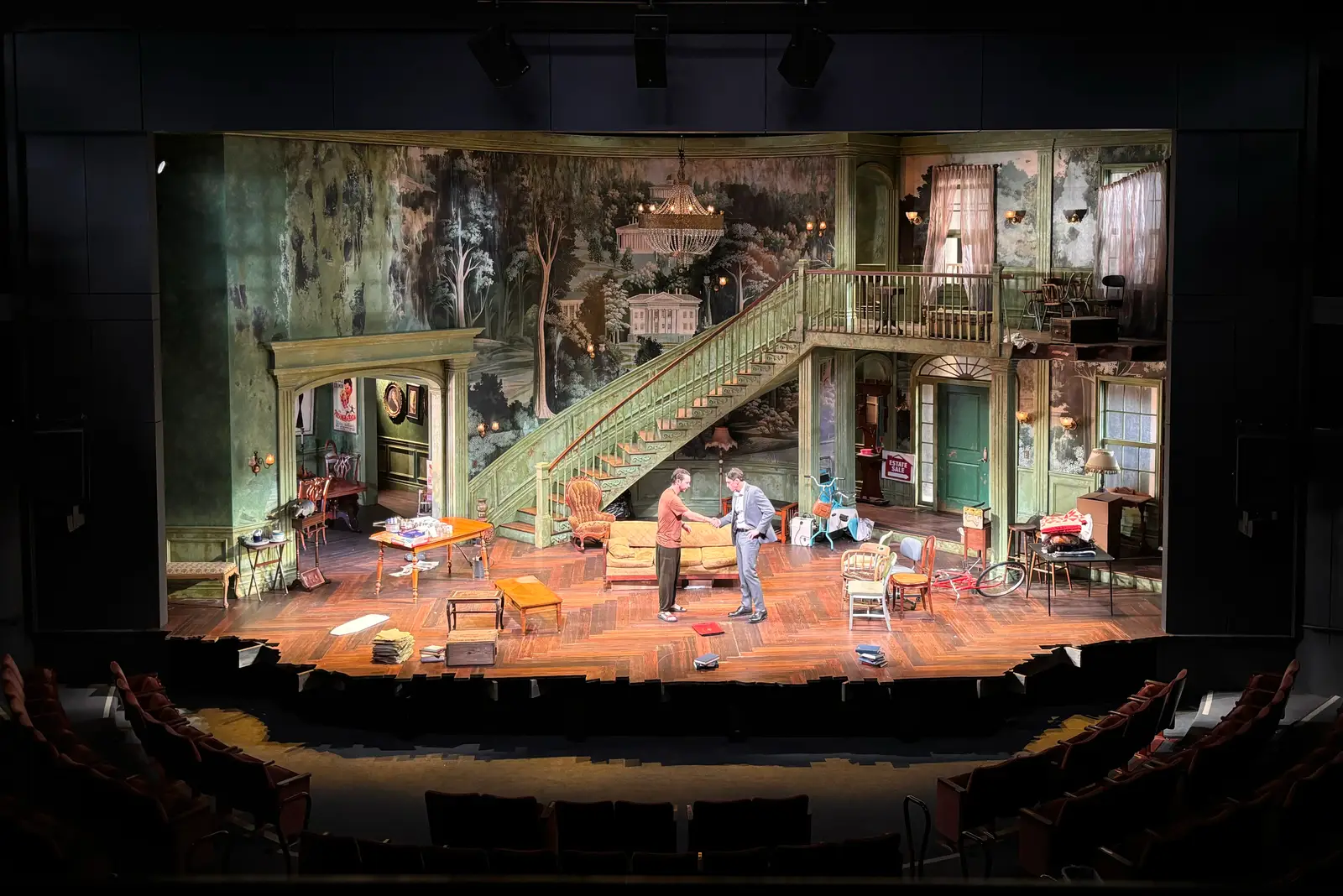
Appropriate, source: Jim Cox

2. Can you share the story behind one of your favorite works and what it means to you?

One of my favorite recent works was Appropriate by Branden Jacobs-Jenkins, directed by Steve Broadnax III at The Old Globe Theatre. This production was especially meaningful because San Diego is my hometown, and working at The Old Globe for the first time felt like a true homecoming. The show itself demands a lot from the design—it’s emotionally intense, layered, and deeply atmospheric. The house where the story takes place was a character in its own right. Designing that space was an opportunity to create something both haunting and breathtaking. Every detail—from aging wood textures to the giant mural along the curved staircase—had to support the emotional weight of the story. And of course the impossible ending that Branden Jacob Jenkins wrote. (No spoilers here) It was one of those rare projects that pushed me artistically while grounding me personally. I left that experience proud, inspired, and more connected to my roots than ever.

3. What is your creative process—do you follow a routine or does inspiration come spontaneously?

My creative process begins with building an emotional landscape—one that doesn’t just encapsulate the play, but resonates deeply with the audience. I aim to capture the emotional truth of the story before anything else. To do that, I immerse myself in art, photography, film, and music that echo the tone I’m trying to strike. That inspiration becomes both a roadmap and a litmus test. If the work I’m creating doesn’t feel aligned with that emotional core, I know I need to recalibrate. It’s less about routine and more about staying tuned in to what the story really needs. Next I build a model and walk through the play with it, ensuring the space supports the director’s vision. If something blocks the storytelling, I rip it out. Each iteration reveals what the design isn’t, guiding me closer to what it could be—refining function and form through the lens of possibility.

Nacirema Society, source: Liz Lauren

4. What has been your biggest challenge as an artist and how did it influence your growth?

One of my biggest challenges as an artist has been battling insecurity—particularly the kind rooted in my identity as a first generation Asian American working in predominantly white creative spaces. For a long time, I found myself trying to design what I thought others wanted to see, shaping my work to fit into expectations that weren’t mine. I was chasing approval instead of authenticity. That disconnect created a constant sense of doubt—was I good enough, was my voice valid, did I even belong in the room. It took time, reflection, and support from mentors and peers, but eventually I realized that the most powerful work I could make had to come from me—not a version of myself filtered through someone else’s lens. When I stopped designing to please others and instead created work that reflected my values, my perspective, and my lived experience, I found confidence. My identity stopped feeling like a barrier and started becoming a source of strength and clarity. That shift not only shaped my voice as an artist but continues to fuel the kind of work I want to put into the world—work that is honest, personal, and unapologetically mine.

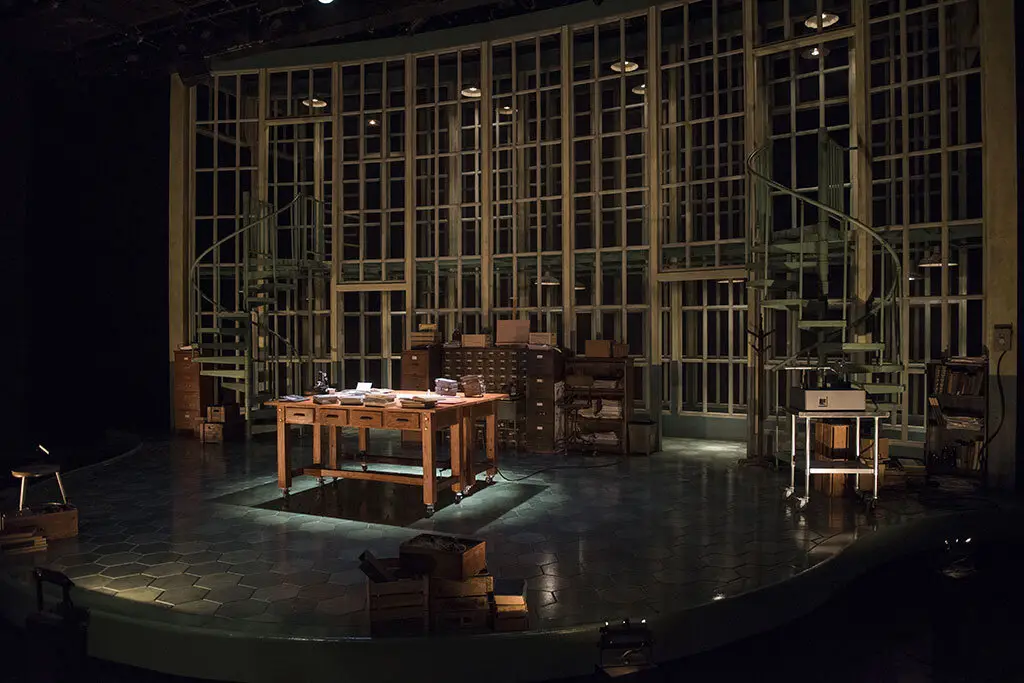
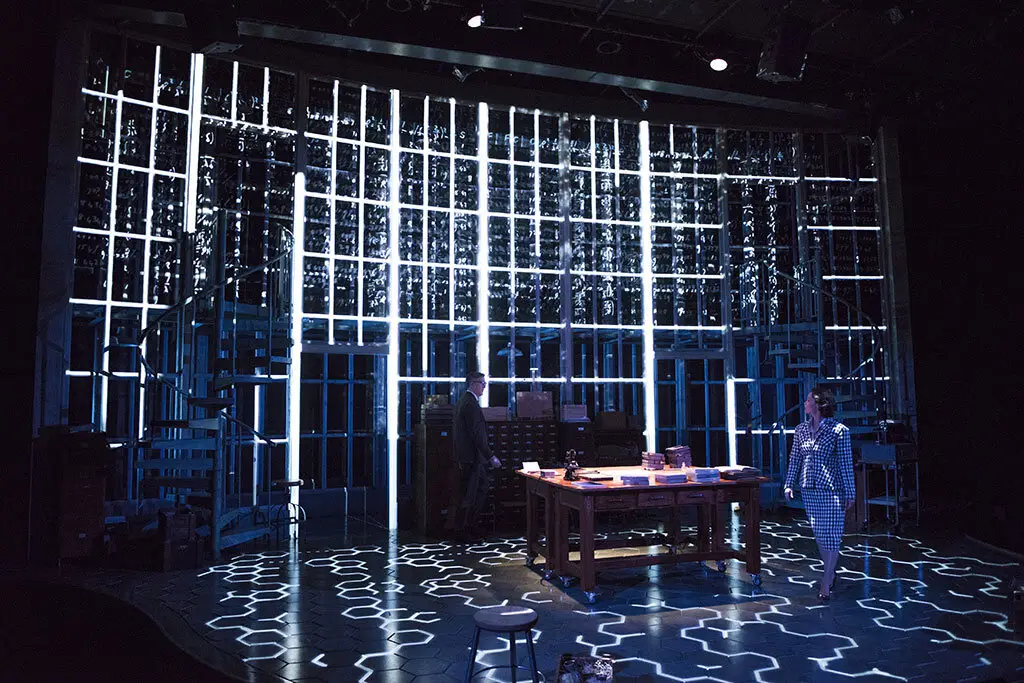
Photograph 51, source: Michael Brosilow

5. Who or what inspires you the most, and how is that reflected in your work?

I’m constantly rotating artists and architects as sources of inspiration, always looking for new ways to see the world. I remember once traveling through SFO and realizing the terminal perfectly captured the vibe of a show I was working on. There was something melancholic about people moving toward their destinations, isolated in their own bubbles, unaware of their impact on the world around them. I’m a big people watcher—I love observing how spaces are charged with expectation, and how people either conform to or push against those unspoken rules. These moments fuel my process. I take what I see and feel in the world and weave it into my work. How does a space uplift a character—or oppress them? How do environments reveal emotional undercurrents? Those questions keep me grounded and push my design toward something more meaningful and human.

6. What do you think is the most exciting thing happening in your field right now?

One of the most exciting things happening in theatre right now is its growing intersection with cinema. What Jamie Lloyd is doing with Sunset Boulevard—using cinematography and live feeds in real time—isn’t entirely new, but his ability to bring that aesthetic to a broad commercial audience is definitely going to make waves. I remember seeing similar techniques at Asolo Rep in Sarasota with Murder on the Orient Express, where prerecorded footage blended with live performance. But Lloyd’s work proves this fusion can thrive on a large scale. It opens the door for more experimentation in mainstream theatre. I’m also fascinated by how designers are gravitating toward the polar ends of the spectrum—either embracing stark minimalism or diving headfirst into immersive maximalism. That tension between restraint and excess is creating really exciting, varied storytelling environments, and I think we’re just starting to see how far that can go.

Photograph 51, source: Michael Brosilow

7. What advice would you give to artists or creatives who are just starting out?

Go for it. That’s the biggest piece of advice I’d give to any aspiring artist or creative. Don’t play it safe—dive deep into your curiosity, your ideas, your perspective. The world doesn’t need more of the same; it needs your voice. And yes, sometimes you’ll fail. That’s not just okay—it’s necessary. Failure is often where the real growth happens. If you can learn from those moments, you’ll come out stronger, more grounded, and more clear about what you want to say through your work. Art is about risk and vulnerability, and you have to be willing to lean into that. Innovate. Iterate. And most importantly, celebrate—your process, your weird ideas, your small wins. Surround yourself with people who push you but also remind you why you love this in the first place. You don’t have to be perfect. You just have to be honest, persistent, and open to discovery. The rest comes with time and heart.

8. How do you hope your work will connect with people or leave an impact?

I hope my work leaves audiences feeling something—anything. Whether it’s joy, discomfort, anger, or reflection, I want them to walk out of the theatre stirred in some way. The worst reaction, to me, is indifference. I’d rather someone leave angry, questioning what they just experienced, than feel nothing at all. Theatre should challenge, move, and spark conversation. I aim to create spaces that resonate emotionally and amplify the story’s impact. If someone carries a moment or a feeling from the show with them after the lights go down, then I know I’ve done something meaningful.

Appropriate, source: Audrey Casteris

Support artists—share this

More like this, twice a month.

Off-Book is the Skene newsletter for artists and makers. Profiles, opportunities, and editorials, free. New subscribers also receive the 2026 Performing Arts Survival Guide.

About the Author

Leave a Reply

Your email address will not be published. Required fields are marked *

Abingdon Theatre Company - Season 34

RELATED POSTS.

FREE FOR ARTISTS

Get the 2026 Performing Arts Survival Guide.

Practical career guidance for performing arts artists and makers. Take it with you.