






I was scrolling through the news the other day when I saw the headlines about the new Minecraft movie hitting theaters. Suddenly, I wasn’t thinking about the movie, nor the game—Strangely enough, I was thinking about the pandemic.
But before I go any further—I have a confession to make. I am a nerd.
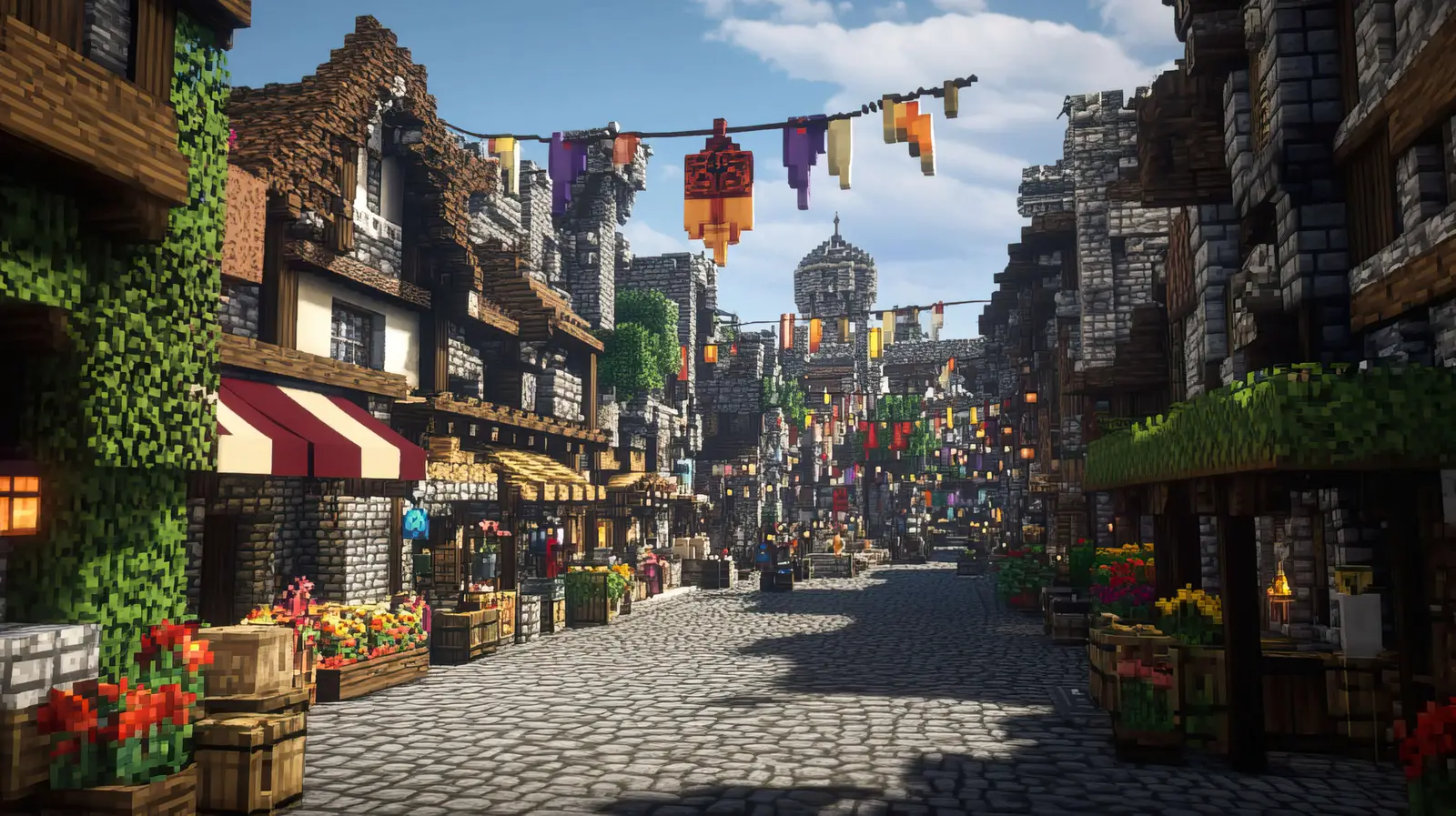
Like, a deep-cut nerd. I’ve been an on-again, off-again Minecraft fan for years, yet I consider myself an enthusiast (at best), compared with the stuff that’s out there. Last year, I spent a questionable amount of my free time building ridiculously complex structures in creative mode, one brick at a time. Everything from bridges and secret underground dungeons, to functioning redstone elevators and logical gates.
You know, totally normal adult behavior.


Some of my own builds
Back in the lockdown days—when pants were optional and Zoom fatigue was real—we educators were doing our best coming up with out-of-the box ideas to teach theatre and scenic design without, you know… theaters or design studios. It was like trying to teach someone to swim over the phone.
I myself, started a YouTube channel for my Controversial Art seminar lectures. I never used Minecraft in my classes, but during those weird remote-learning days, when attention spans were tanking and stress levels were sky-high, a couple of my colleagues turned to it as a tool for teaching scenic design. I have to admit—I was intrigued. While I was loosing my mind over basic video editing, they were guiding students through virtual worlds that housed entire theaters and sets.
At a time when keeping students focused, giving them a creative challenge, and still maintaining a low-stakes environment felt nearly impossible, Minecraft turned out to be an unlikely hero.
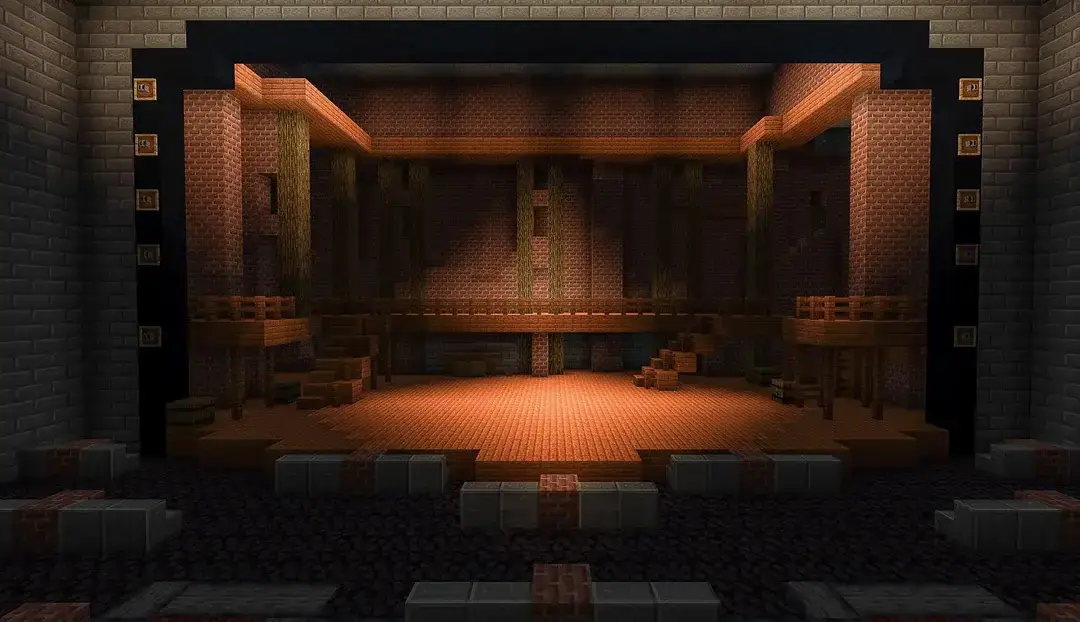
Minecraft is Low Stakes Scenic Design
From what I heard, the game offered exactly what educators were struggling to find then: a space where students could engage deeply with design concepts, make creative decisions, and build something they could actually walk through—without the pressure of getting it “right” the first time. It was low-risk, high-reward, and a lot more fun than another zoom lecture. The more I learned about how my colleagues were using it, the more it made sense.
Minecraft offers a blank canvas in 3D, not all that dissimilar-in principle-to the drafting and modeling software we use. It is an environment that explores space and proportion, experiments with color, texture, and lighting—and the more you play it the more it encourages attention to detail. It is scenic design with instant feedback and endless do-overs. In Minecraft you can build, tweak, test, and repeat—all while collaborating in real time with other users in the game.
What struck me most was how much this approach aligned with what we were all trying to do during that time: create learning environments that felt meaningful but not overwhelming. Minecraft gave students just enough challenge to stay interested, but enough freedom to be playful. It’s theatre education disguised as a game—and in the middle of a crisis, it kept students learning and designing.

Creativity Finds a Way
No, Minecraft wasn’t designed for theatrical design. But then again, neither was Zoom, or YouTube, or half the tools we haphazardly turned into teaching platforms during the pandemic. What matters is that it worked. It engaged students. It sparked ideas. After all, there is Minecraft photography, spelunking, interior design, programming…
I wonder how many design student I have gotten, and will get for a number of years whose initial, and disguised approach to spatial design was Minecraft. How long until I come across my first Minecraft-inspired Waiting for Godot regional production.


Some of my own builds
Now that we’re back on stage, there doesn’t seem to be the need for a class pretending to be a gaming session, and we are all thankful for it. But back then, we realized just how much we had taken for granted: full houses, rehearsals without masks. Maybe there will come a time when we think of games like Minecraft again as viable teaching tool, and on that day a soft digital breeze will whisper…
Chicken Jockey….