






This is an author translated version.
The original column in Spanish can be found here.
by @antoniosaucedoazpe
Since 2023, I have been fortunate to be part of the International Mentorship Program for emerging set designers, an initiative launched by Scenography Today, Opera for Peace, and UNITA for Future, aimed at supporting emerging talents from various regions around the world.
The goal of the program is to promote professional development by facilitating a connection with an internationally recognized opera scenographer, establishing an individual mentoring relationship developed through remote sessions and an in-person experience during the staging process of a professional opera production.
I was selected as one of the three participants in this program, alongside Nthabiseng Malaka from Johannesburg and my fellow Mexican Alita Escobedo from Tijuana. In my case, I had the privilege of being mentored by Italian designer Paolo Fantin.

During virtual sessions, I had the opportunity to share some of my projects and creative processes with Paolo, receiving valuable feedback and recommendations from him. On his part, he allowed me to gain insight into his approach to scenography, the interests and motivations that guide his work, and his vision of artistic practice. Each meeting was a generous space for dialogue that encouraged me to continue growing as a designer and creator.
In addition to the mentorship, the program included masterclasses on topics such as Arts Marketing and Managementwith François Colbert, and Communication and Branding for Artists with Jenna Wolf, which provided practical tools for the professional development of performing artists.
The last stage of the program was a three-week residency in Vienna, during the staging of Prokofiev’s Betrothal in a Monastery directed by Damiano Michieletto at the Theater an der Wien.


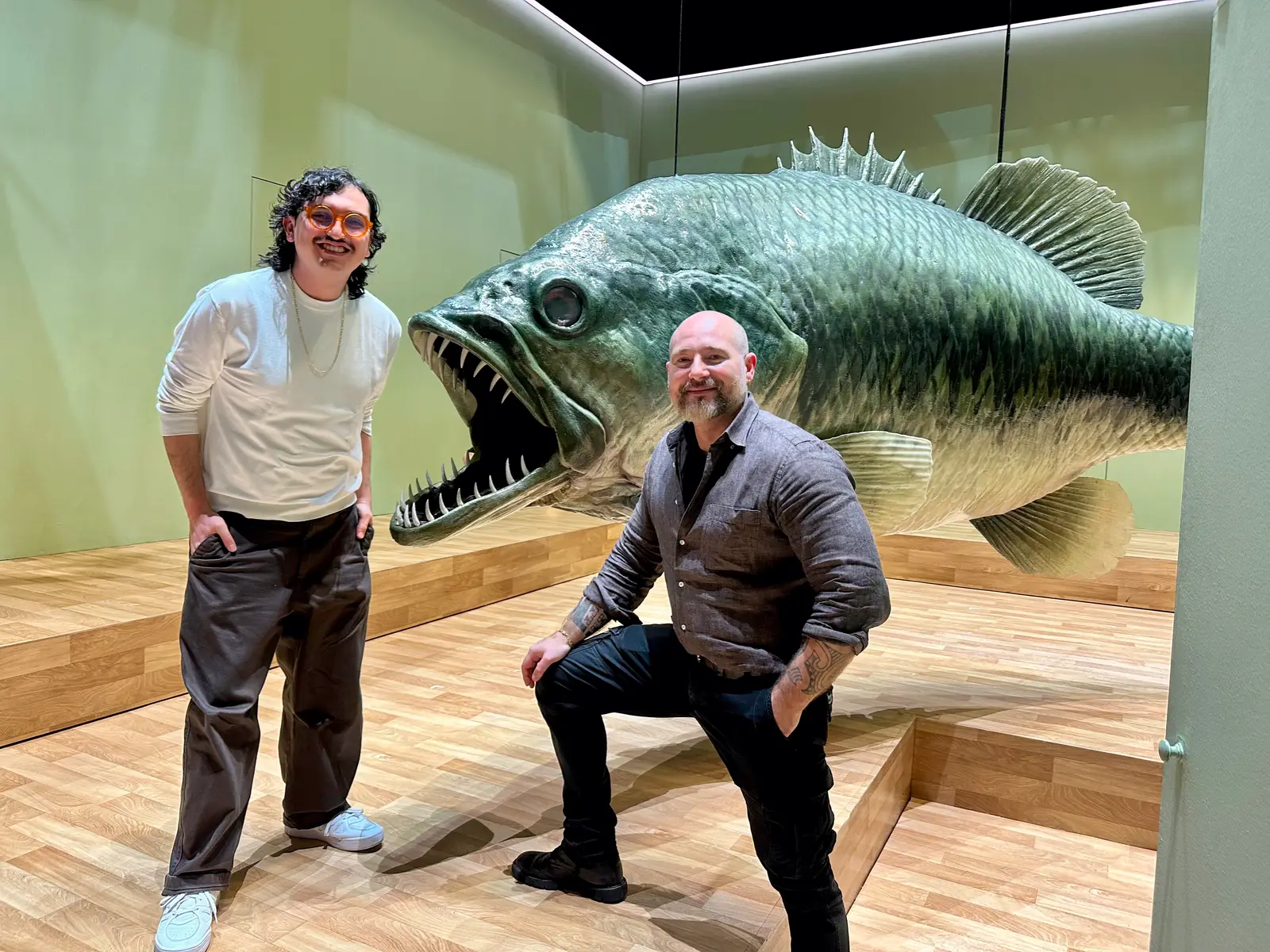
Paolo’s design was based on a minimalist space articulated by a series of walls that created rooms of different sizes. The movement of these structures allowed the space to transform alongside the narrative, expanding and contracting like a camera shutter. At the same time, certain scenic elements highlighted the opera’s comedic tone in an almost surreal way: fish, a recurring motif in the story, became a visual metaphor, giving the production an imaginative and provocative dimension.
From the very first day, I was struck by the technical complexity of a production of this scale and the infrastructure that supports it. I was particularly fascinated to learn that the theater has an entire office dedicated to planning, construction, and detailed digital drafting—ranging from prefabricated metal structures to rigging and steel cables. This level of precision and foresight revealed as an infrastructure designed to anticipate the challenges of production and ensure that complex staging processes run smoothly and efficiently. This professionalism is matched by a rigorous safety culture aimed at preventing accidents and protecting the entire crew.
Despite the differences in context, I was surprised to realize that many of the challenges are the same as those we face in Mexico: unexpected issues, delays, and technical setbacks. I believe it’s universal that effective communication and teamwork remain essential tools in overcoming these difficulties.


Paolo was a generous and close guide both at the Theater an der Wien and throughout the entire program. We shared meaningful conversations about creative processes, collaboration dynamics, and the European opera culture in contrast with the Mexican scene.
We talked about how, in Europe, even small cities often have their own opera house and a regular audience, reflecting a deeply rooted tradition. In Mexico, by contrast, opera remains a less promoted and valued art form, which adds an extra challenge to theater-making: projects are scarce and often come with limited budgets and tight timelines. Paolo shared with me his optimistic outlook, noting how more and more young people are becoming interested in opera, and how this art form could gain renewed relevance as a unique live experience—especially in the face of emerging technologies like artificial intelligence.
Official trailer, source: Theater an der Wien
During the production period, Paolo not only shared insights about the process of Betrothal in a Monastery, but also showed me designs for other projects he was developing in parallel, telling me the stories behind them, his sources of inspiration, and how, for him, every design must emerge from a place of personal truth in order for the art to be meaningful and authentic. I found deep inspiration in his ongoing creative process—not only in how he keeps a coherent artistic voice, but also in how he leads multiple projects at once without losing clarity or depth. I witnessed in him a form of leadership grounded in sensitivity, while keeping a clear artistic vision and a commitment to excellence.
This experience leaves me filled with gratitude, new learnings, and a renewed inspiration to keep building my path as a scenic designer and artist.

Additional resources
You can find more information about the International Mentorship Program in the following links:
- International Mentorship Program for emerging set designers
- Scenography Today: International Mentorship Program Announces Emerging Set Designers Selection.
- UNITA: Mentorship program for performance designers from the Global South.
Antonio Saucedo Azpe is a SKENE.pub’s contributor. He has participated in over 30 projects across theater, musicals, opera, dance, music, and film. His theater design credits include La chica del bikini azul, Priscilla, Queen of the Desert, Los Monstruos, Mamá se fue a la luna, and Business Suite. His experience also includes tours and live shows such as Danna L¡ve and Bluey en Vivo
You can read more about his journey and artistic vision in his PROFILE feature on SKENE.pub