LATEST POSTS.

Get featured
on Skene!

Dahlia Al-Habieli: Collaboration as a First Language

(

Scenic designer, director, and educator Dahlia Al-Habieli traces her journey in theatre back to a moment of unexpected clarity. Originally from the United Arab Emirates, she arrived in the U.S. for college and attended a student production of Henry IV, Part 1—her first fully staged play. That experience, equal parts unfamiliar and electrifying, lit a creative spark she couldn’t yet explain. Years later, it would become the foundation of a multifaceted practice grounded in translation: from word to space, emotion to architecture.

Al-Habieli’s approach is shaped by deep collaboration, cultural curiosity, and a commitment to process over ego. Whether adapting Romeo and Juliet into a global, community-driven video storybook during the pandemic, or designing flexible, sustainable sets across genres and time periods, her work resists signature aesthetics in favor of responsiveness and connection. She describes each production as an opportunity to learn her collaborators’ “first language” and meet the story on its own terms.

As part of our PROFILES series, we spoke with Dahlia Al-Habieli about finding purpose in theatre-making, why teaching made her a better designer, and how she hopes each space she creates might bring audiences into a brief moment of synchronicity—with the work, and with one another.

Partner Content

Dahlia Al-Habieli

she/her
Scenic Designer
United Arab Emirates / United States
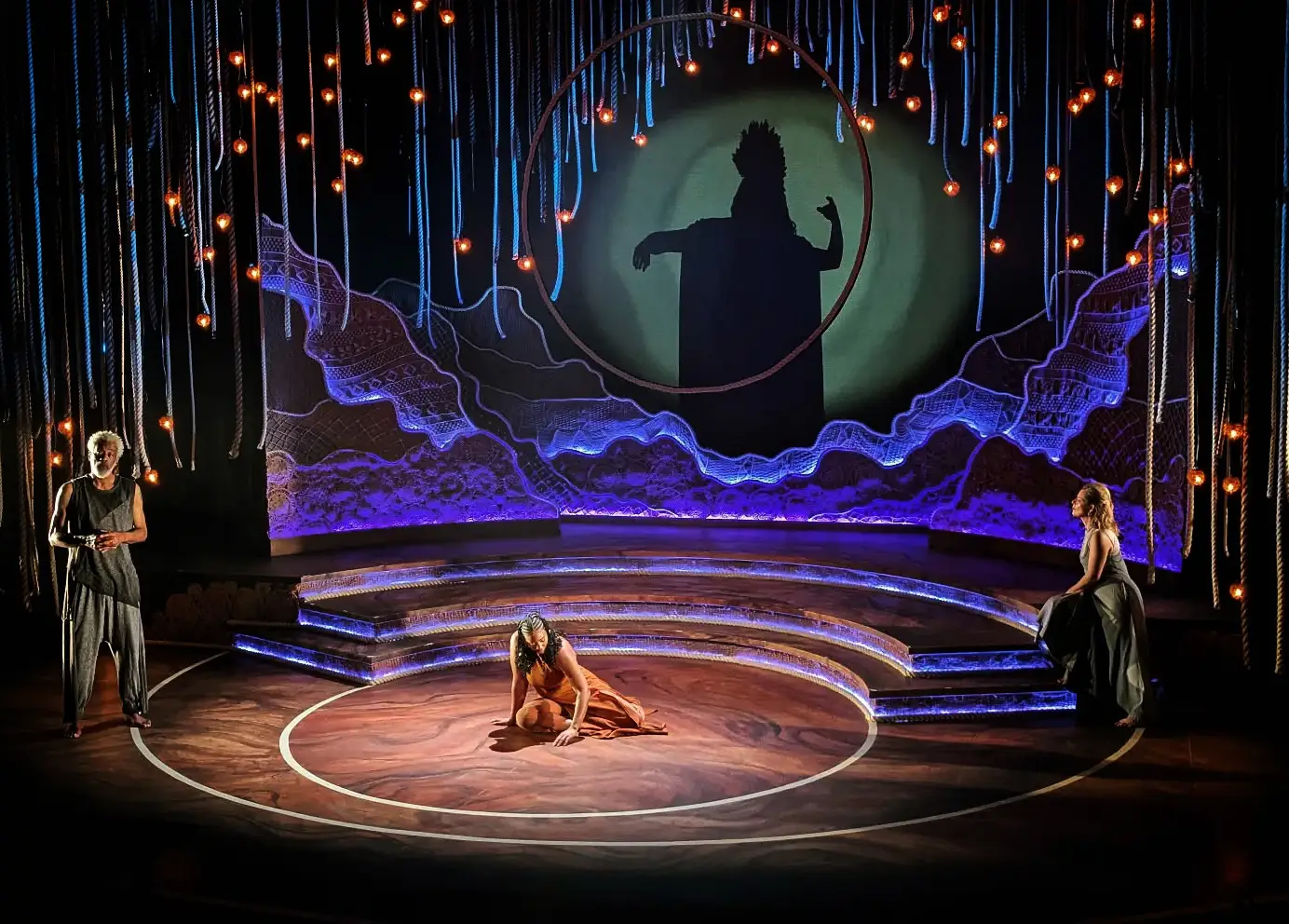
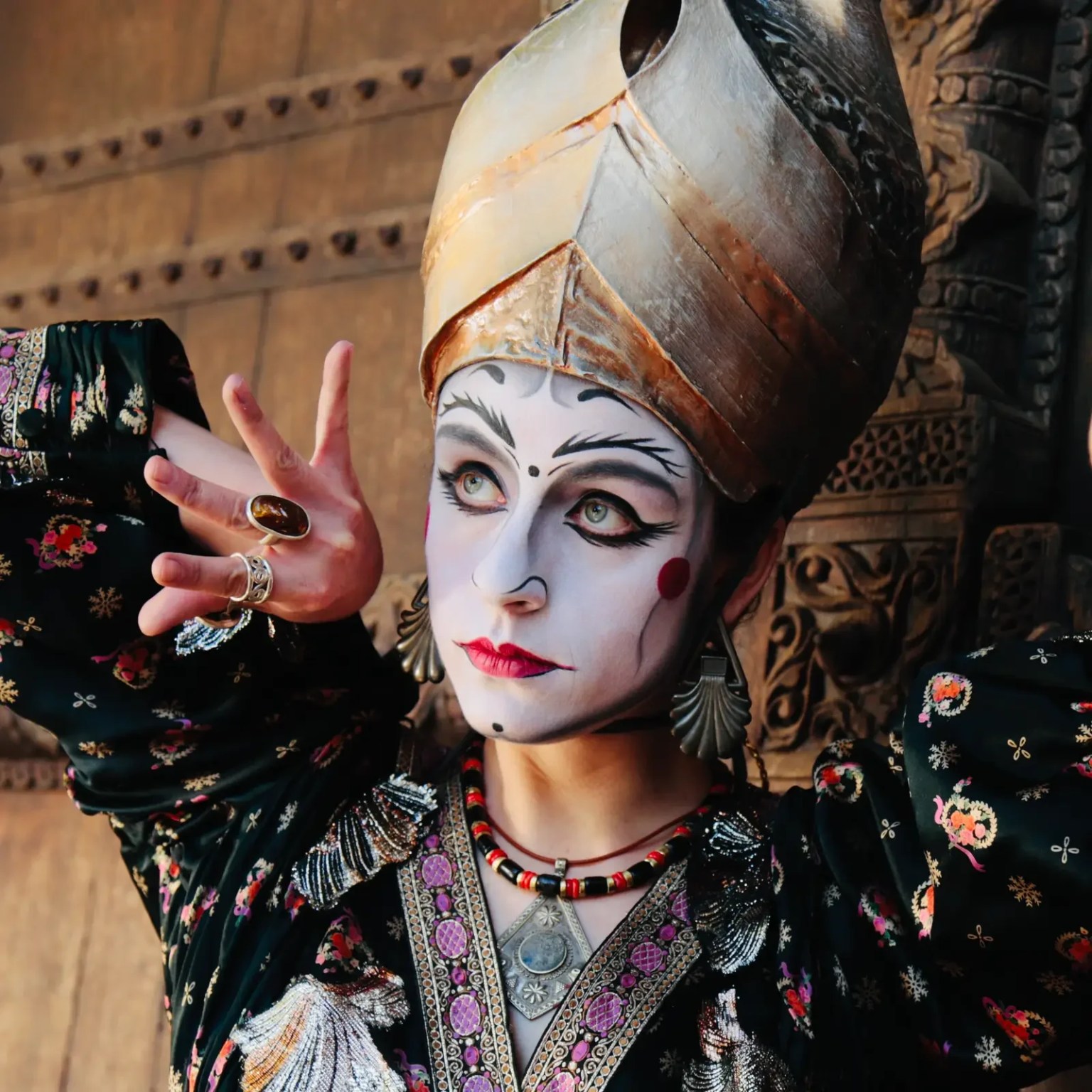
The half God of Rainfall, source: Dahlia Al-Habieli

1. What sparked your interest as an artist and how has that spark evolved over time?

My journey as a theatre artist began when I was 18, and had just arrived in the United States. I attended a production of Shakespeare’s Henry IV, Part 1 at the Wellesley College Shakespeare Society. I’d encountered dramatic literature before arriving at Wellesley, but that was the first time I had ever attended a fully produced play. I have a vivid memory of pulling out my phone card and flip phone directly afterwards, calling my poor mom to inform her that I’d had an epiphany, even though I couldn’t quite articulate what that epiphany was.

I joined the troupe the following year, and explored performing, production managing, producing, and every other opportunity to make theatre that I could. It took me a few years to realise that I am especially hardwired for what I think of as the translation of the verbal to the visceral as a scenic designer. The skills I employ in my design work have been an asset in my teaching and directing work.

House of Joy, source: Eric Woosley

2. Can you share the story behind one of your favorite works and what it means to you?

The project I am most proud of is not a scenic design at all, but the adaptation of Romeo & Juliet I directed and produced at Albright College over the pandemic.

Student performers rehearsed remotely and recorded a four-episode audio performance. Meanwhile, I worked with other students to build a roster of artist volunteers from around the world, ranging in age from 8 to 80. Each artist was assigned an audio clip of a moment in the play, a stick figure storyboard, and a description of the action. The result was a four-episode “video storybook” adaptation of the play- a communal piece of storytelling with many different perspectives and interpretations.

The final product was moving, but what I am most proud of was how the process of making this work was a direct counterpoint to the division and intolerance that is the great tragedy of Romeo and Juliet.

3. What is your creative process—do you follow a routine or does inspiration come spontaneously?

If I waited for inspiration to strike spontaneously, very little would ever get done! I have a very specific process I follow as a theatre designer, as far as text-based work is concerned. I spend a lot of time interrogating the play, both alone and in collaboration with the team, before I even begin to consider the space it will inhabit.

Play texts might remain unchanged over time, but the context of production is constantly changing. This is why no two productions will ever be the same, nor should they be. My primary responsibility is not only to listen to the play, but also to understand the moment. Why this play, now? Who is the audience? What are the perspectives and strengths of my creative, technical, and administrative collaborators? I try my best to let our shared understanding of and relationship to the story lead my creative process.

More like this, twice a month.

Get Off-Book, Skene’s free newsletter for artists and makers—plus the 2026 Performing Arts Survival Guide.

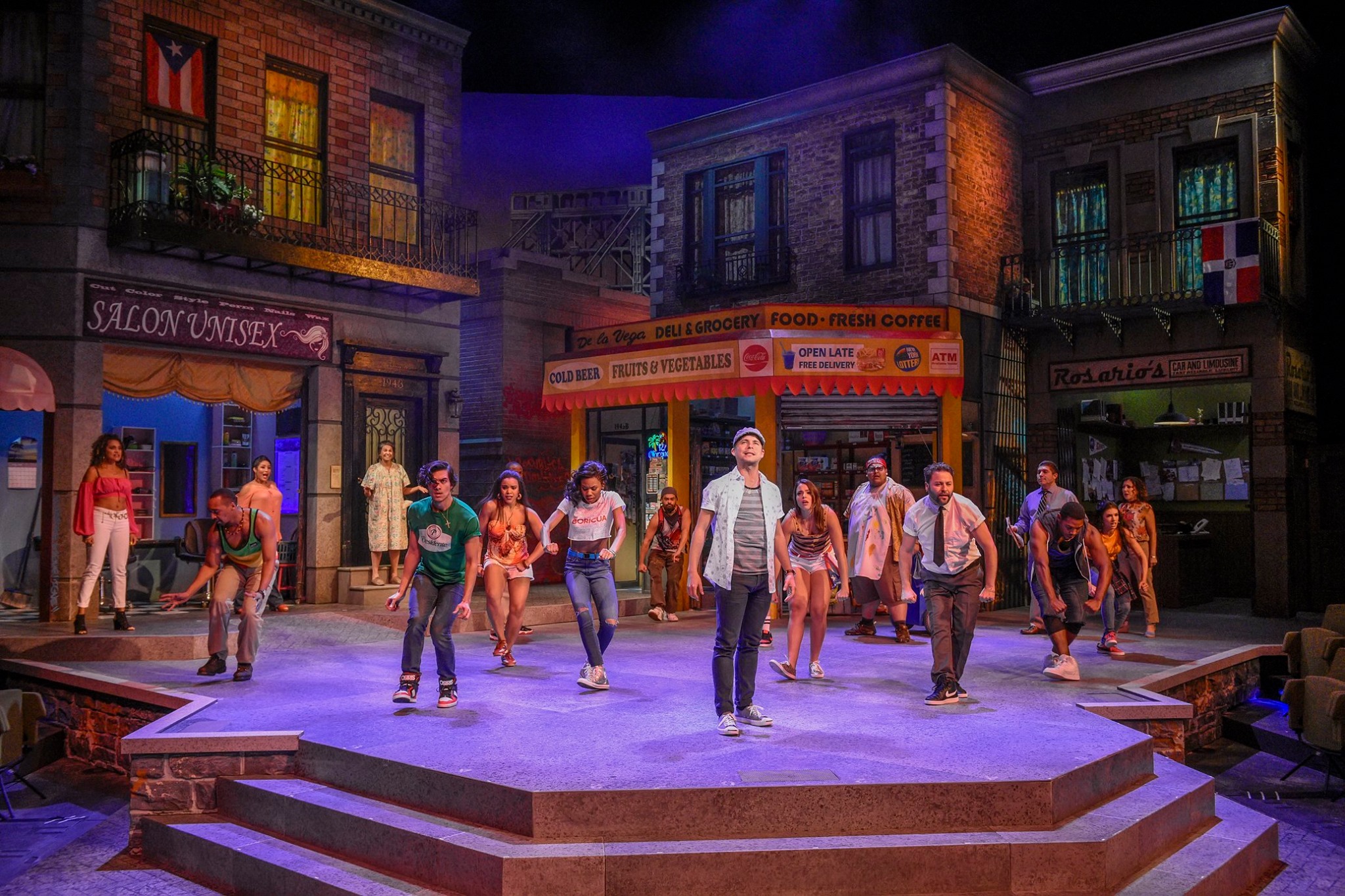
In the Heights, source: Karen Almond

4. What has been your biggest challenge as an artist and how did it influence your growth?

Like many young artists, I spent most of my twenties designing scenery as a means of self-actualization. There’s nothing inherently wrong with this, but when your self-identity becomes inextricably bound up in your vocation, every success and every failure becomes existentially overwhelming- especially since so much of creative work entails failing forward!

My approach towards scenic design evolved dramatically when I began university teaching full-time. Being an educator required me to leave my ego at the door and center the students. I realised that my strengths as a teacher came from how clearly I understood the work to be an act of service, versus the self-actualization of my artistic practice. Over the seven years I taught- first at Wake Forest University, then at Albright College, and then at Carnegie Mellon University- I was able to bring my practices as an educator to my design work, and vice versa, in ways that served both.

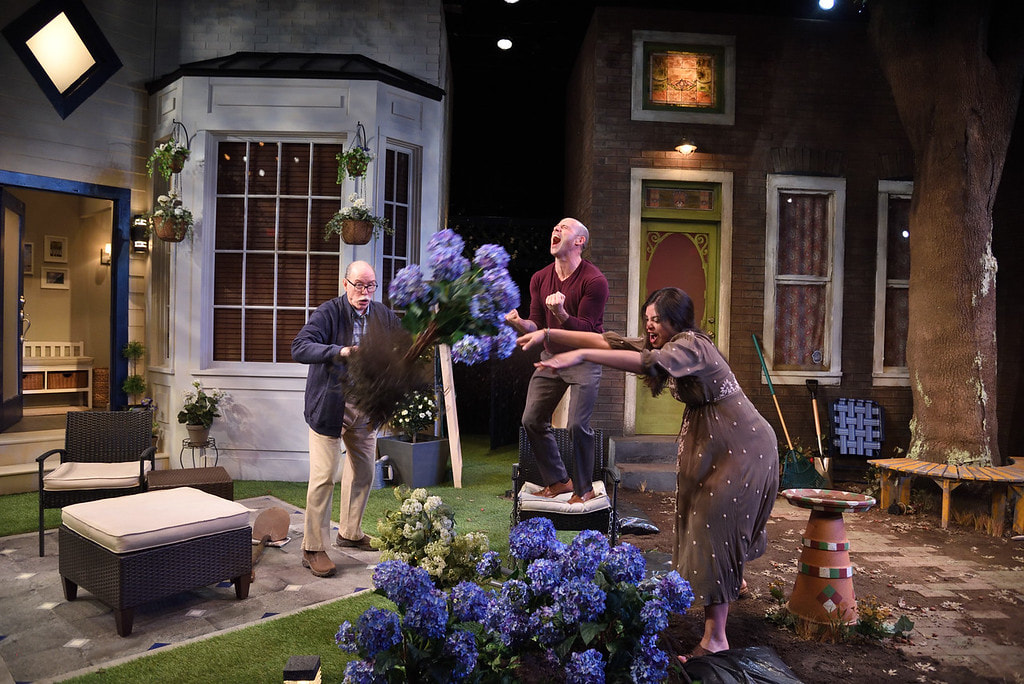
Native Gardens, source: Mark Turek

5. Who or what inspires you the most, and how is that reflected in your work?

One of the most flattering things anyone has ever said about my theatrical work was that if you placed all of my designs side-by-side, it wouldn’t be readily apparent that they were all by the same set designer. I think this speaks to how much my collaborators inspire and influence my process, and how that means that my work is likewise constantly changing.

For example, different directors have what I think of as different “first languages” when it comes to talking about theatrical storytelling and design. The most successful collaborations have been ones where I was able to speak with them in that language.

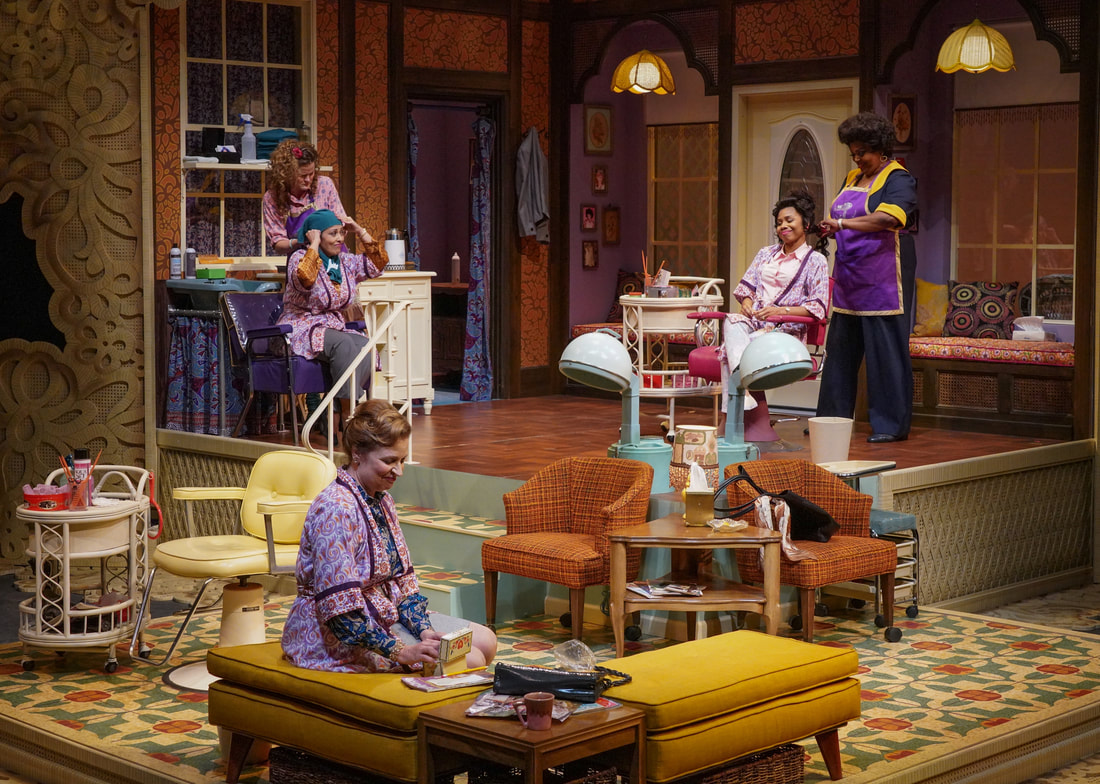
For Steel Magnolias at the Dallas Theater Center, director Joel Farrell had a background as a dancer and choreographer; our initial conversations over a table strewn with ground plans and tracing paper centered around the relationship of bodies in space.

For The Half God of Rainfall at the Wilma Theater, director Lindsay Smiling brought his experience as a member of the resident acting company to our collaboration. The exploratory nature of the rehearsal process necessitated a flexible, non-prescriptive space.

For Native Gardens, director Christie Vela, who is also an accoladed actor, brought a nuanced consideration of character to our work together. All of our design decisions were grounded in a shared understanding of what choices each character would make for their space.

Steel Magnolias, source: Karen Almond

6. What do you think is the most exciting thing happening in your field right now?

Rising costs mean that many theatre companies are pursuing:

1- More co-productions, which I think is wonderful! I believe that the more connection we can create between theatre artists regionally and nationally, the better.

2- Increasingly sustainable production practices, such as the use of recycled materials or creative reuse of scenery. I am currently working on a design that will use the same base set for three different shows set across three time periods. I am excited for the challenge! Honestly, I look forward to the day when I might work with a producing organization to design a whole season in both a dramaturgically intentional and materially sustainable way.

The Curious Incident of the Dog in the Nighttime, source: John Pankratz

7. What advice would you give to artists or creatives who are just starting out?

There is this strange idea floating around that success means making a living exclusively from your work as an artist.

This is nonsense.

I wish someone had told me the truth about life as a theatrical designer in the United States: there is not a single person in this country who is completely and consistently supporting themselves exclusively through design for theatre. They’re doing television and film and corporate work, they teach, they write books- they do a thousand other things.

The most trying and wonderful thing about being a theatre artist is that you must have your hands in many types of work at all times. All of the strange jobs I have ever had have fed my creative practice, even my retail jobs.

8. How do you hope your work will connect with people or leave an impact?

The text is dated in many ways, but I often think about William Ball’s A Sense of Direction, which describes the theatrical production process as the pursuit of unity of all elements. I also often think about the studies that have found that the heartbeats of audience members at a live performance synchronize. The hope is always that the space I have created- and the process by which it was created- facilitates unity and synchronicity.

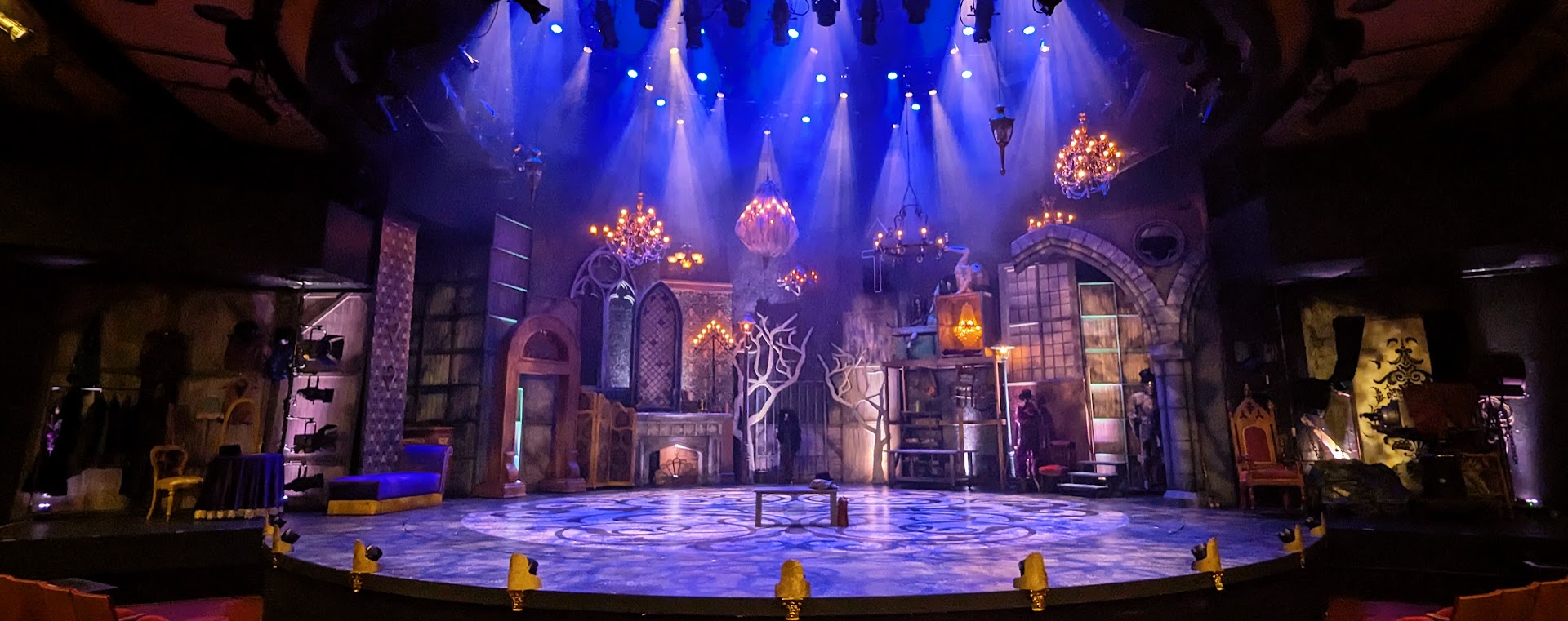
Dracula, A Comedy of Terrors, source: Karen Almond

Share this story

Leave a Reply

Your email address will not be published. Required fields are marked *

CITT Expo-Scene 2027
advertising
FREE FOR ARTISTS

Get the 2026 Performing Arts Survival Guide.

Practical career guidance for performing arts artists and makers. Take it with you.