Latest posts.

Talk-O Tuesday Ep.3

What do you want to see?

From the UK to Korea to the past — Helen Garcia-Alton, Tina Torbey, and Nia Banks share the theatre they wish they could see anywhere in the world.

Talk-O Tuesday Ep.2

What’s good right now?

Helen Garcia-Alton, Tina Torbey, and Nia Banks share what’s on stage right now that is transformative, interesting, or just plain fun.

Get Featured or Publish with Skene!

The Scenic Designer’s 3D Printing Toolkit: Printers and Materials That Actually Work

source: Minku Kang

Disclosure: Some links in this article may be affiliate links. If you make a purchase through them, we may earn a small commission at no additional cost to you. These links help support the work behind Skene.

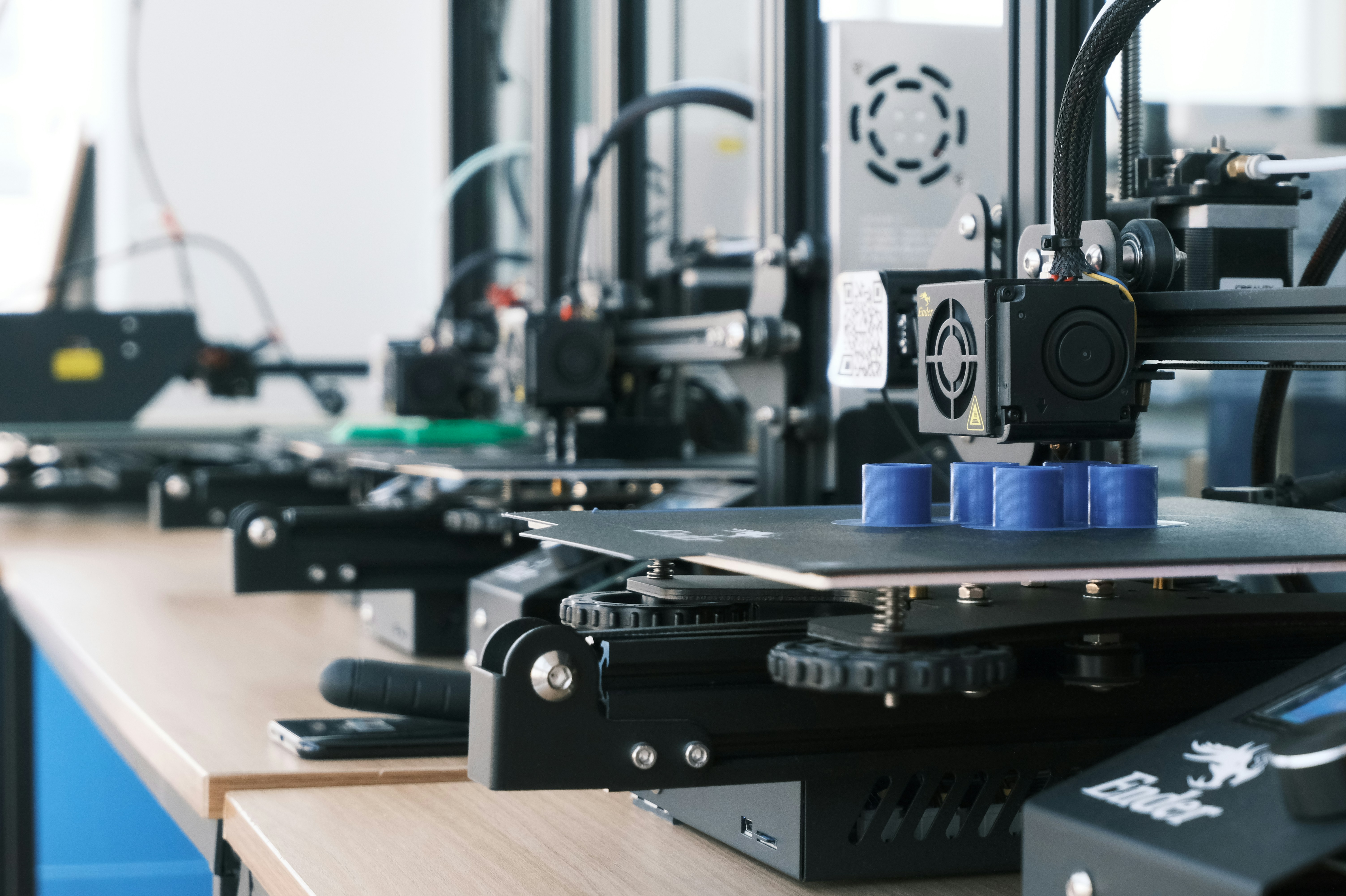
I still remember the first time I walked into a design studio where a 3D printer was humming in the corner. As a scenic designer, I had been used to foam board, glue guns, and X-Acto knives. Suddenly, here was a machine quietly building a miniature set piece layer by layer. It felt like magic. Of course, the reality is less glamorous—misprints, clogged nozzles, and materials that don’t quite look stage-ready. But when it works, 3D printing can be one of the most powerful tools in a designer’s toolkit.

While 3D printing feels like a futuristic tool, it has been around since the 1980s. Originally used for industrial prototyping, it has only recently become affordable for artists, schools, and independent theatre companies. Today, scenic designers use it to produce scale models, experiment with textures, and even create small props. The U.S. Institute for Theatre Technology (USITT) has recognized digital fabrication as a key growth area, encouraging designers to explore it as part of their professional development.

Entry-Level (Under $400)

  • Great for: Students, small theatres, or designers experimenting with scale models.
  • Pros: Affordable, reliable, lots of online tutorials.
  • Cons: Limited build size, slower print speeds, trial-and-error learning curve.
  • Use case: Printing a scale-model staircase or a backdrop texture panel.

Creality Ender 3 V3 SE

Creality Ender 3 V3 SE 3D Printer, 250mm/s Printing Speed DIY 3D Printers with CR Touch Auto Leveling, Sprite Direct Extruder Auto-Load Filament Dual Z-axis Y-axis, Printing Size 8.66x8.66x9.84 inch

The Creality Ender 3 V3 SE is an entry-level FDM printer recognized for simple setup and dependable performance.

Pros: It offers fast assembly, a sturdy frame, and improved stability compared to earlier models. The printer supports various filaments, delivers decent print quality, and has an active user community for troubleshooting.

Cons: It may require frequent manual bed leveling, fine-tuning, and upgrades to achieve optimal results. Noise levels can be high, and print speeds are modest compared to more advanced or professional-grade machines.

Anycubic Kobra 3

Anycubic Kobra 3 Combo, Multi Color 3D Printer with ACE Pro, Max 600mm/s High Speed, Intelligent Filament Drying Nozzle Clog Detection, 250 * 250 * 260mm

The Anycubic Kobra 3 is a beginner-friendly FDM printer known for fast and versatile operation.

Pros: it supports up to four-color multi-filament printing via the ACE Pro unit, boasts high speeds (up to ~600 mm/s), features auto bed-leveling, intuitive touchscreen, and a large build volume (~250 × 250 × 260 mm) .

Cons: users report occasional hardware issues—nozzle clogging, bed warping, noisy operation—and inconsistent quality control or support.

Mid-Range ($500–$1,200)

  • Great for: University theatres, freelance designers balancing cost and quality.
  • Pros: Better print quality, faster speeds, auto-bed leveling.
  • Cons: Requires upkeep; larger prints can still be time-consuming.
  • Use case: Creating detailed architectural facades or functional hinges for model doors.

Prusa MK4

Original Prusa MK4S 3D Printer kit, Removable Print Sheets, Beginner-Friendly 3D Printer DYI Kit, Fun to Assemble, Automatic Calibration, Filament Sample Included, Print Size 9.84 x 8.3 x 8.6 in

The Prusa MK4 is a high-precision, upgrade-friendly FDM printer featuring Nextruder direct drive, load-cell bed leveling, Input Shaper, and Pressure Advance for smooth, fast prints. It delivers consistently excellent first-layer adhesion and print quality, supported by robust documentation and support.

Pros: superb reliability, modular upgrades, rich community, remote printing via Prusa Connect, and strong safety features.

Cons: relatively expensive (~$1,099 assembled), lengthy and complex assembly for DIY kits, occasionally finicky Wi-Fi, and some sensor quirks (e.g., overly sensitive leveling) reported.

Creality K1C

Creality K1C 3D Printer, 600mm/s High-Speed Auto Leveling Clog-Free Robust Direct Extruder K1 SE Upgraded 3D Printer with AI Camera 300°C Printing Silent Mode Support Carbon Fiber Filaments

The Creality K1C is a printer offering blazing-fast speeds (up to 600 mm/s, 20,000 mm/s²) with a rigid die-cast frame and smart auto features.

Pros: It supports carbon-fiber and engineering filaments thanks to its 300 °C hotend and durable “Unicorn” steel-tipped nozzle, includes AI-powered camera monitoring, hands-free leveling, input shaping, and “skip failed print” functionality.

Cons: Speed can compromise print finesse unless tuned; some users report initial nozzle clogging, extruder gear issues, and minor mechanical quirks

Prusa Core One

Original Prusa CORE One, Ready-to-use 3D Printer, Assembled and Tested, Removable Print Sheets, 1kg Prusament PLA Spool Included, Print Size 9.8 x 8.6 x 10.6 in

The Prusa Core One is a fully enclosed CoreXY 3D printer designed for speed, precision, and reliability.

Pros: it features a sturdy steel frame, heated chamber for stable prints, automatic load-cell bed leveling, and high-temperature nozzle support for advanced materials. The printer integrates smoothly with PrusaSlicer and remote management via Prusa Connect, offering a user-friendly yet powerful workflow.

Cons: its cost is on the higher side, the build volume is moderate, there is no built-in camera, and firmware may require occasional updates.

Phrozen Sonic Mega 8K

Phrozen Sonic Mega 8K V2 15" LCD 3D Printer

The Phrozen Sonic Mega 8K is a large-format resin 3D printer designed for high-resolution printing.

Pros: It boasts a 33 × 18.5 × 40 cm build volume, 43 µm XY resolution, and a 15-inch 8K monochrome LCD screen, enabling detailed prints at high speeds. The printer features a robust metal frame and offers connectivity via USB and Ethernet.

Cons: It lacks built-in Wi-Fi and air filtration, and the absence of a heated print bed may affect adhesion with certain resins. Additionally, its large size requires ample workspace.

Filaments vs. Resins: What Actually Works Onstage

Choosing the right material is as important as the printer itself.

Filaments (FDM Printers)

  • PLA (Polylactic Acid): Affordable, eco-friendly, great for models. Not very heat-resistant.
  • ABS (Acrylonitrile Butadiene Styrene): Stronger, more durable, but tricky to print without an enclosure.
  • PETG (Polyethylene Terephthalate Glycol): Flexible, strong, great balance for props.

Resins (SLA Printers)

  • Standard Resin: Perfect for high-detail scale models (e.g., furniture, ornaments).
  • Tough Resin: Withstands handling—ideal for small props.
  • Flexible Resin: Mimics rubber or fabric textures.

Practical Advice for Designers

  • Start small: Don’t aim to print an entire set at once. Learn through smaller models.
  • Budget for materials: Filament and resin costs add up—factor this into your production budget.
  • Finish your prints: Sanding, priming, and painting are what make prints look professional onstage.
  • Ask for help: Many universities and libraries have makerspaces with staff who can guide you.


Final Thoughts

3D printing won’t replace traditional scenic design skills—it enhances them. Foam, wood, and paint are still essential. But adding this tool to your kit opens up creative possibilities that were once limited to well-funded productions. Whether you’re a student trying out your first Ender 3 or a professional shop manager investing in a Formlabs resin printer, the key is experimentation.

If you haven’t yet, try visiting a local makerspace or community lab. Even printing a small chair for a scale model can change the way you approach your next design. The future of scenic design is layered—literally—one filament strand at a time.

Support artists—share this

More like this, twice a month.

Off-Book is the Skene newsletter for artists and makers. Profiles, opportunities, and editorials, free. New subscribers also receive the 2026 Performing Arts Survival Guide.

About the Author

Leave a Reply

Your email address will not be published. Required fields are marked *

partner content

Related Posts

FREE FOR ARTISTS

The 2026 Performing Arts Survival Guide.

Practical career guidance for performing arts artists and makers. Take it with you.