Latest posts.

Get Featured or Publish with Skene!

Noé Morales Muñoz: Questioning the Narrative

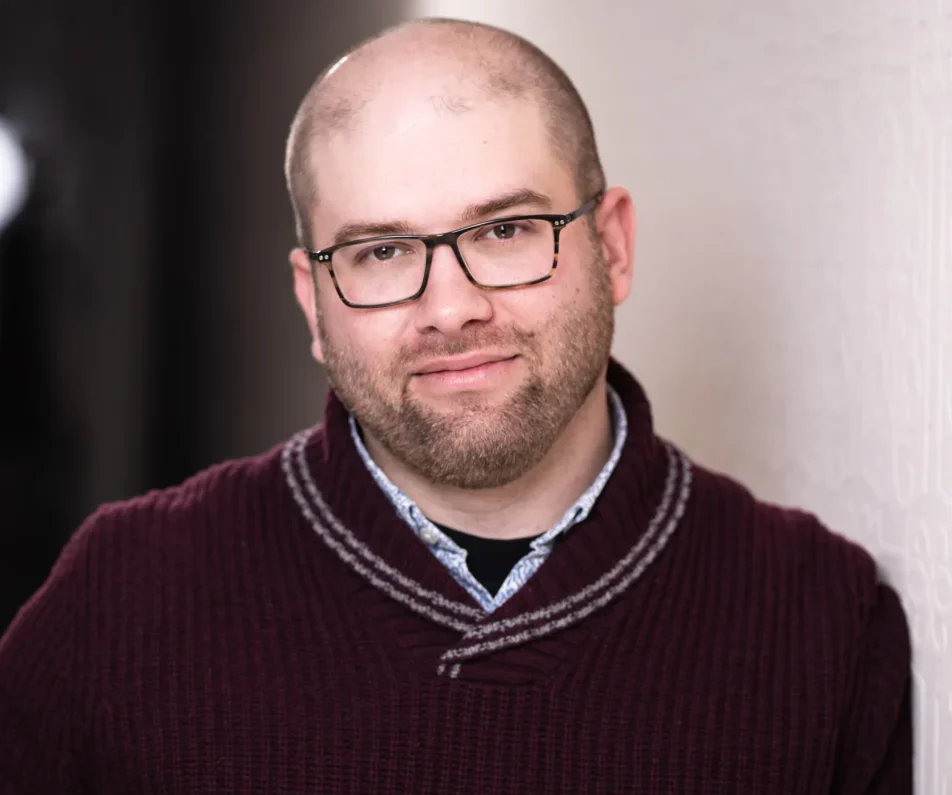
photo by Gaba Cortés

To Noé Morales Muñoz, storytelling was never just an art-it is a manner of interrogation with the world. As a playwright, theater critic, translator, and essayist, Morales Muñoz has managed to make a career out of peeling the layers beneath the official narratives, exploring the untold, overlooked, and the in-between. His interest in people, places, and the stories that shape them has led him from an early love of books to becoming a vital voice in contemporary Mexican theatre.

His work is as much about structure as it is about spontaneity. With a balance of method and instinct, he crafts stories that fight perceptions and push artistic boundaries. From Laguna Memoria, his poetic film experiment with loss and urban spaces, to plays like Hitler in My Heart, which dissects the latent cruelty of society, Morales Muñoz constantly seeks to provoke thought and stir emotions.

In this edition of PROFILES he reveals his creative process, his reflections on the evolving face of theater, and why he feels the myth of sacrifice needs to be rethought by artists. Read on to discover how he makes his way in the precarious world of theatre, the power of representation, and how he seeks to sends audiences away with more questions than answers.

partner content

Noé Morales Muñoz

he/him
Playwright & Translator
Mexico

1. What sparked your interest as an artist and how has that spark evolved over time?

I have always been fond of books and had quite an imagination. In other words, sometimes I found myself more comfortable in fiction than in reality. And I have always been very curious about people, stories, meanings. That hasn’t changed a bit since early childhood

source: Yadira Torres

2. Can you share the story behind one of your favorite works and what it means to you?

One of my favorite ones is called Laguna Memoria. It was the result of a writing lab conducted by a couple of fellow Catalan playwrights, who taught it to a group of Latin American colleagues. Nevertheless, it didn’t intend to produce plays but film materials. I was able to write, imagine and produce a very experimental and poetic short film about loss and mourning, a sort of film essay about the effects of the pandemic in urban places. I had the invaluable collaboration of director Ginna Álvarez, a super and multitalented artist who understood my proposal in ten minutes and filmed exactly what I imagined despite us being in different countries. I really enjoyed the result and the process

3. What is your creative process—do you follow a routine or does inspiration come spontaneously?

I try to maintain a 50-50 balance -I resort to some methodological skills I’ve acquired through years of practice to achieve goals while always try to save room for surprise, inspiration, spontaneity, awe and wonder.

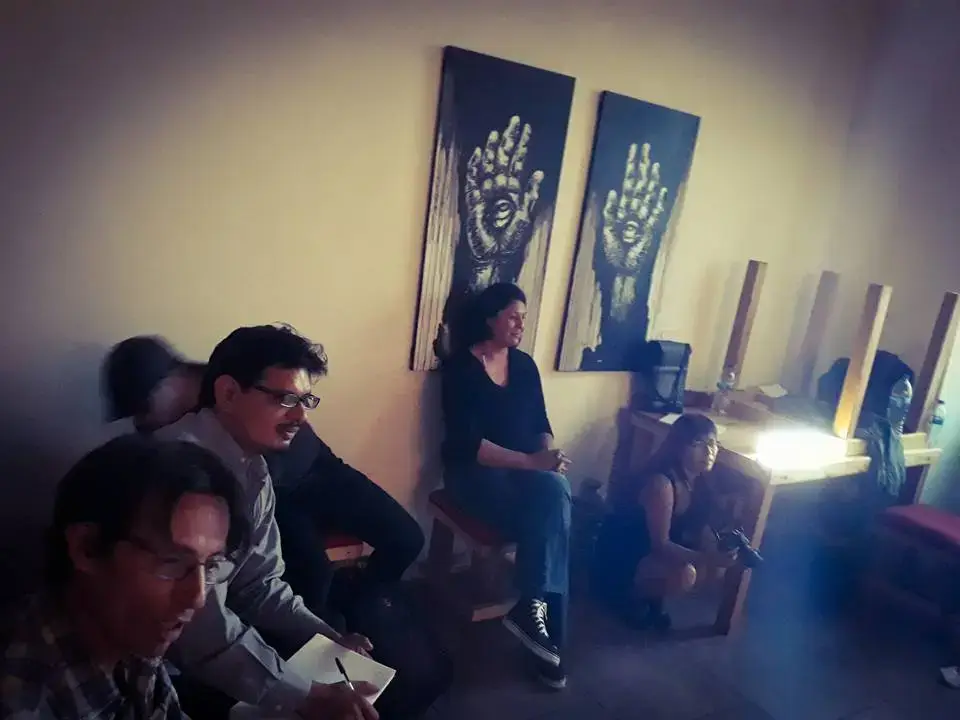
Los Prohombres, source: Blenda

4. What has been your biggest challenge as an artist and how did it influence your growth?

I reckon the biggest challenge is perseverance. At least in Mexico -but I think it’s a global issue- precariousness is a fact regarding theatre production. Sometimes it’s hard to make a living from writing or directing or performing or designing, and we must be creative to invent our own jobs. This has helped me to build my character and try to make healthier decisions regarding which projects I accept or seek.

5. Who or what inspires you the most, and how is that reflected in your work?

People, places, stories. And whatever lies under the official narratives

source: Shanghái Writers’ Association

6. What do you think is the most exciting thing happening in your field right now?

The diversity of representation models. The many ways in which art, politics and society reshape their relationships nowadays. The emergency of voices from different communities and locations

7. What advice would you give to artists or creatives who are just starting out?

To get rid ASAP of the belief that they must do any kind of sacrifice for their careers in art. And not to lose sight that the journey is at least as important as the destination, whatever it is

8. How do you hope your work will connect with people or leave an impact?

My wish is to create moving, meaningful experiences, and leave the audience with questions that might lead them to reflect on common themes and issues.

Support artists—share this

Master Your 2026 Career.

Get our free Survival Guide for Actors, Directors, and Designers.

About the Author

One Response

Leave a Reply

Your email address will not be published. Required fields are marked *

partner content

Related Posts

BACKSTAGE PASS

Master Your 2026 Career.

Get our free Survival Guide for Actors, Directors, and Designers.