Emerson Valentina: Artists, Not Products.
Theatre artist and Executive Director of the Broadway Mental Health Foundation on survival, advocacy, and rebuilding the performing arts industry.

Theatre artist and Executive Director of the Broadway Mental Health Foundation on survival, advocacy, and rebuilding the performing arts industry.

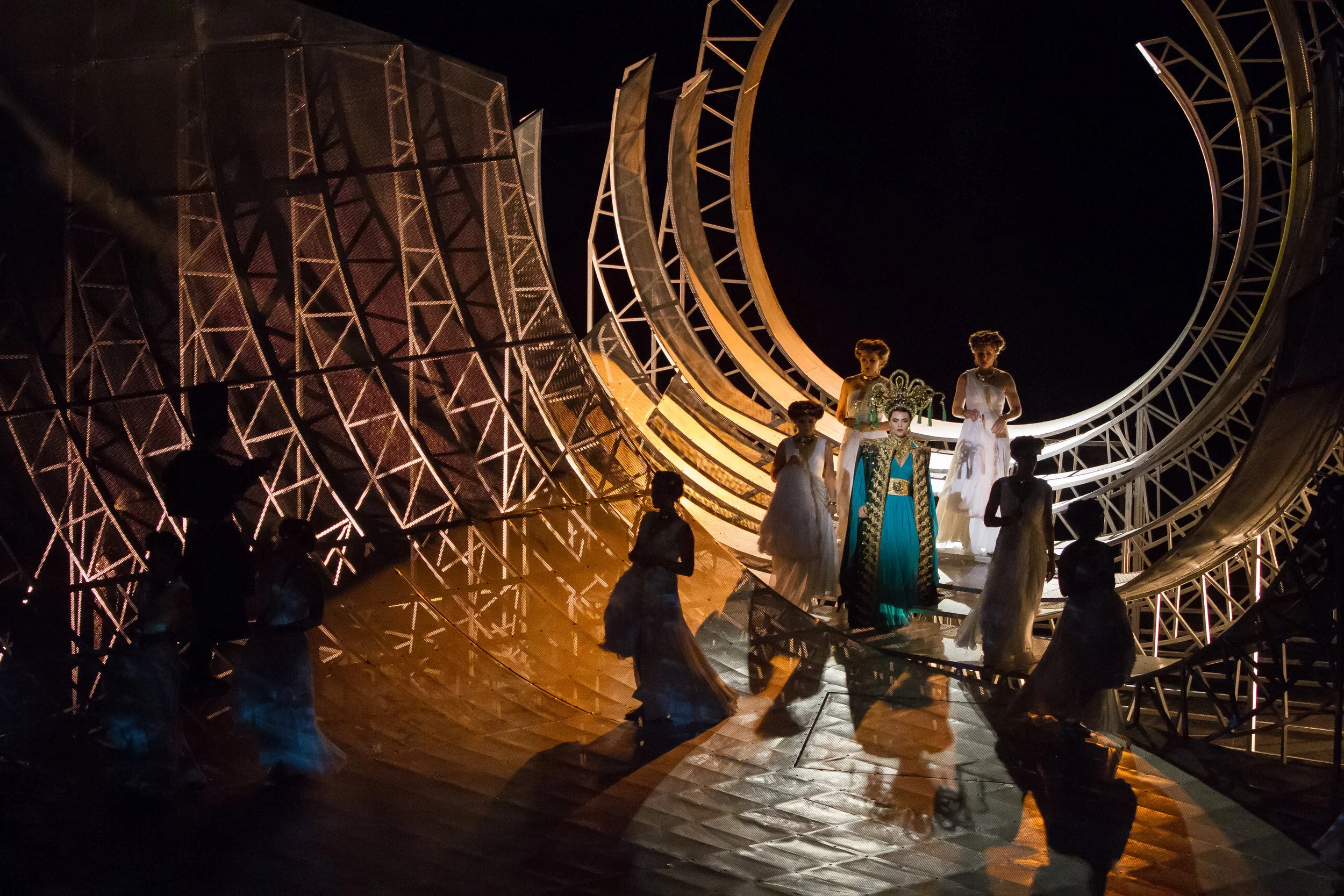
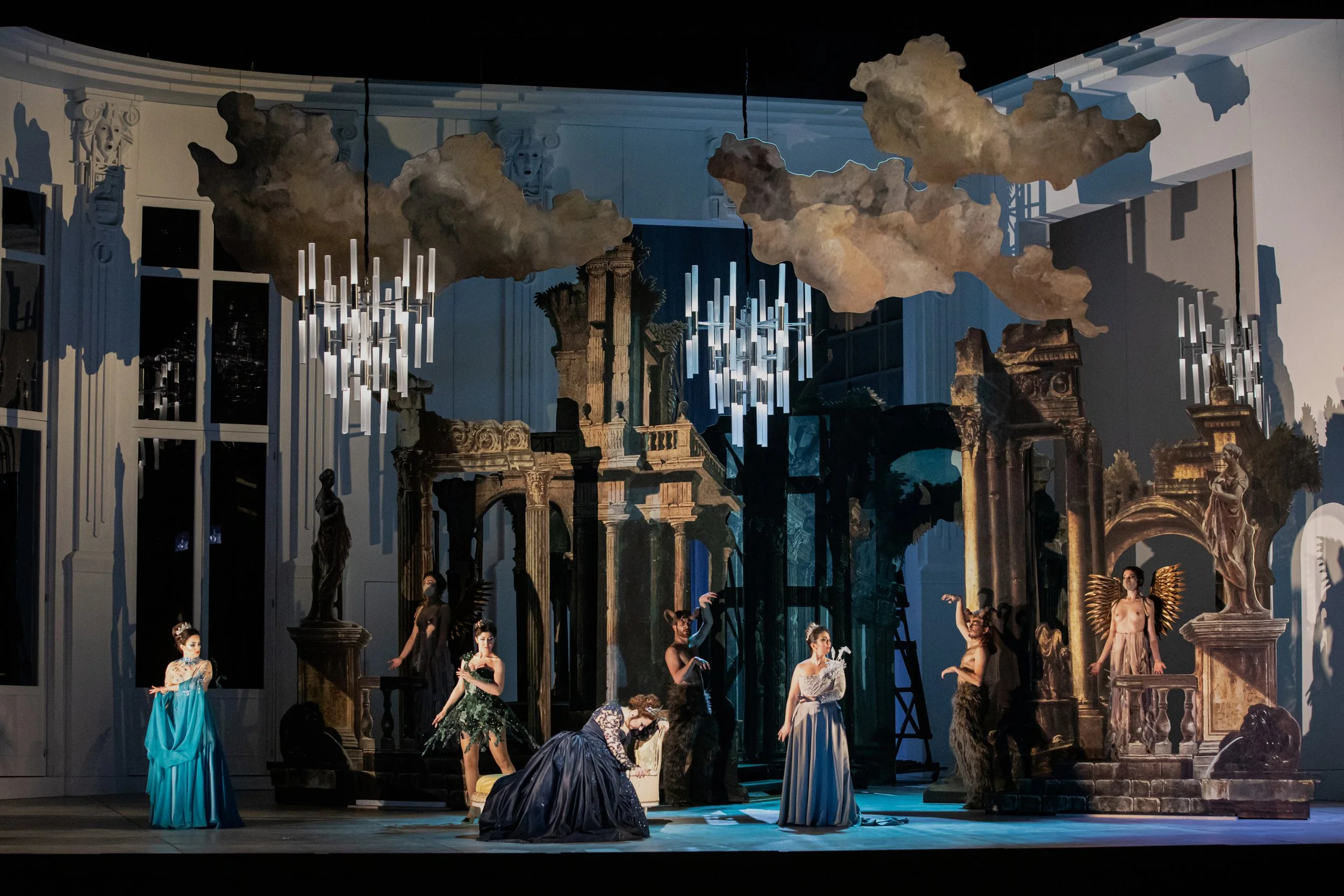
Gary McCann is an Irish scenic and costume designer whose work for opera and theatre builds immersive worlds rooted in architecture and emotion.

From the UK to Korea to the past — Helen Garcia-Alton, Tina Torbey, and Nia Banks share the theatre they wish they could see anywhere in the world.

Public domain plays for community theatres: proven box office hits, zero royalties. Reliable entertainers that fill seats.

Brandon PT Davis is a scenic designer whose research-driven practice builds spaces that dissolve into story and earn their invisibility.
Gary McCann grew up in Northern Ireland during the Troubles, in a world he describes as grey, tense, and not especially nurturing for the imagination. What saved him was not the theatre. It was Wagner. Cassette tapes listened to obsessively, alone, in a place that felt like the opposite of everything those recordings contained. That contrast, between a bleak reality and a vast operatic world, did not just offer escape. It became the fuse.
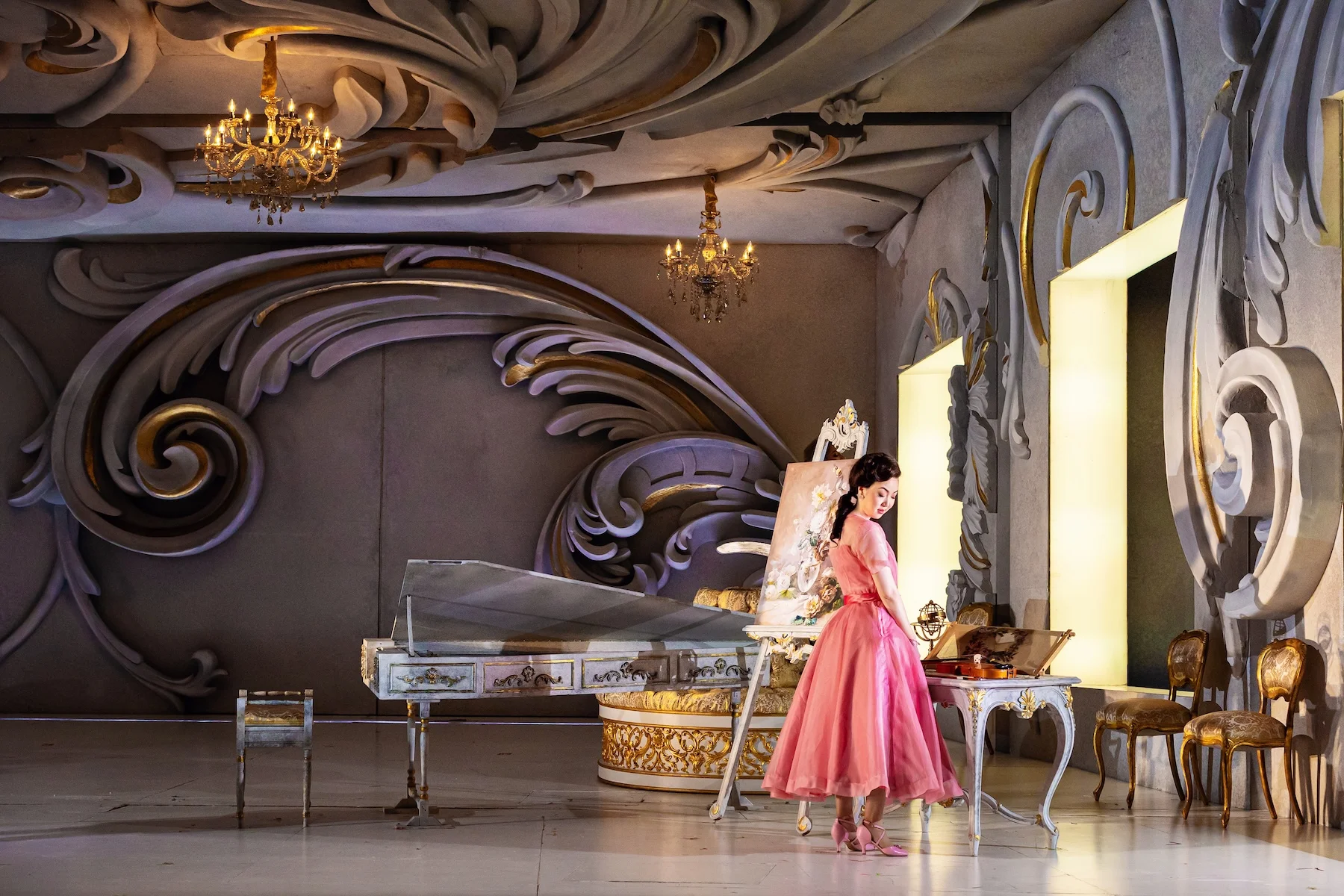
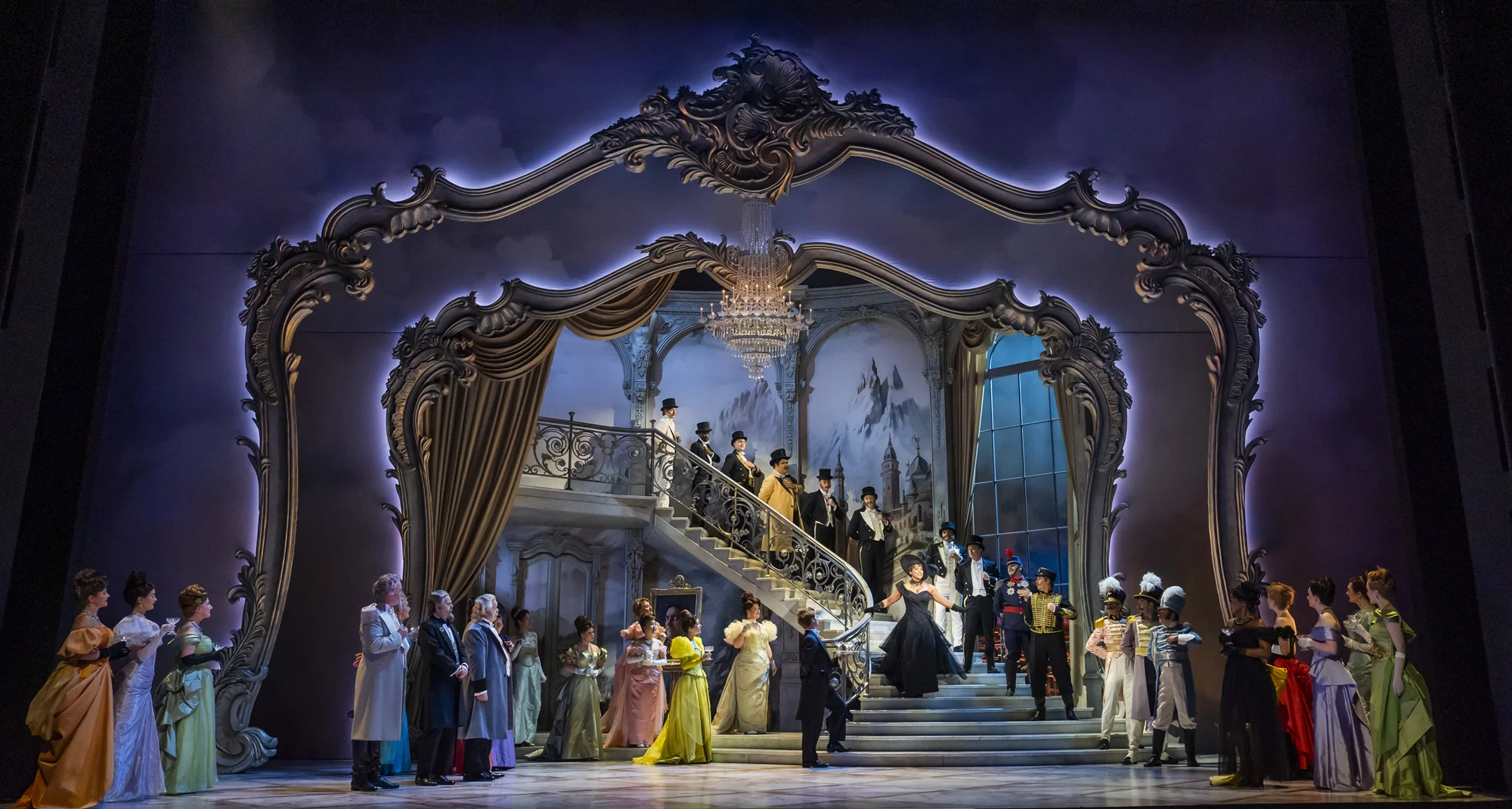
Decades later, his designs for opera and theatre carry that original tension forward. The enormous acanthus volutes that defined his Der Rosenkavalier at Garsington Opera, a production that travelled to Irish National Opera and Santa Fe Opera, did not merely frame a stage. They sculpted the air itself. Opulence and clarity held in the same breath. Architecture that carries emotional weight rather than simply occupying space.
He learned his craft close to the source, assisting William Dudley, Maria Bjornson, and Paul Brown, three of the most respected designers in British theatre. He absorbed their discipline, their sense of scale, their understanding that design is never decorative. It has to mean something.
Gary McCann designs worlds so complete that the audience does not merely witness, but inhabit them, in this special edition of PROFILES.
I grew up in Northern Ireland at a time when it felt culturally starved and dominated by the noise of the Troubles—grey, tense, and not especially nurturing for the imagination—so the impulse to create came partly as an escape. I was drawn to visual art early on, but what really stayed with me were these Wagner cassette tapes I used to listen to obsessively; they opened up a completely different, grand, emotional world that felt miles away from where I was. That contrast—between a bleak reality and this vast, operatic imagination—probably lit the fuse, and it’s something that still underpins how I think about theatre now.
During my career there have been key stepping stones—productions that quietly shift things forward—and one of those was Der Rosenkavalier at Garsington Opera, which later travelled to Irish National Opera and Santa Fe Opera. I’ve loved many projects, but this one felt like a real consolidation of my visual language. Working with Bruno Ravella, I created a grand, highly ornate architectural world that could hold the scale and elegance of the opera, while still feeling unmistakably contemporary. The space was defined by these enormous acanthus volutes that wrapped and unfurled around the set, almost sculpting the air itself. It struck a balance between opulence and clarity, and in doing so, it marked a moment where I felt my instincts as a designer becoming more fully realised.
No two days are ever the same. There isn’t a fixed routine—it’s more a constant state of responsiveness. Inspiration comes in flashes, but it’s just as often shaped by correction, by refining and editing ideas rather than chasing them. My life involves a great deal of travel, and that in itself becomes a creative engine—encountering different cultures, exhibitions, architecture, and ways of thinking. You’re continually absorbing, meeting new people, seeing new places, and all of that feeds directly into the work. It’s less about waiting for inspiration and more about staying open to it.
One of the biggest challenges has been sustaining a clear artistic voice while working within the realities of opera—budgets, time pressures, differing expectations, and the sheer scale of collaboration. Early on, there’s a temptation to over-prove yourself visually, or to bend too much to external pressures. Learning when to push, when to simplify, and when to hold your ground has been crucial. That tension has ultimately shaped my growth: it’s forced a kind of discipline and clarity, so the work becomes more precise, more intentional, and more rooted in what actually serves the piece rather than just what is possible.
I was very fortunate early on to work as an assistant to some of the most respected British designers—William Dudley, Maria Bjornson, and Paul Brown—and in many ways that’s where I learned the craft. Being close to their processes, their discipline, and their sense of scale and storytelling was formative. That influence still underpins my work: a respect for architecture within design, a clarity of visual language, and an understanding that theatre design isn’t just decorative—it has to carry meaning, structure, and emotional weight.
What excites me most is that opera continues to persist—and not just survive, but adapt and push back. In an age where technology is accelerating at an extraordinary pace, there’s still a deep, undeniable appetite for live experience. That sense of human connection—shared space, shared time, real voices—is something that can’t be replicated digitally. At the same time, the field is evolving, absorbing new technologies, new visual languages, new ways of storytelling, without losing its core. That tension between tradition and innovation is where the energy is, and it keeps the form alive, relevant, and surprisingly resilient.
Be patient with your development, but be rigorous with your standards. Learn your craft properly—there’s no shortcut to that—and don’t be afraid to start by assisting, observing, and absorbing as much as you can from people who are better than you. At the same time, protect your instincts; over time, your voice emerges through clarity and discipline, not noise. And perhaps most importantly, understand that it’s a long game—resilience, consistency, and the ability to keep going through uncertainty matter just as much as talent.
I hope the work creates a sense of immersion—that it draws people into a world that feels complete and emotionally coherent, where the design isn’t just something to look at but something that supports and deepens the experience of the piece. If it’s working properly, the audience isn’t necessarily thinking about the set at all—they’re simply inside it, feeling it. And if there’s a lasting impact, it’s that the visual world lingers in the memory alongside the music and the drama, as part of a unified emotional experience rather than something separate.
Support artists—share this
Off-Book is the Skene newsletter for artists and makers. Profiles, opportunities, and editorials, free. New subscribers also receive the 2026 Performing Arts Survival Guide.
We use cookies to optimize our website and our service functionalities.