


From the moment sunlight first struck golden flakes in riverbeds and mines, humankind has been captivated by gold—not only desiring to possess it but to wear it. With objects spanning from Algeria to Egypt; from India to Japan, the exhibition Au fil de l’or at the Musée du Quai Branly in Paris explores how gold has been woven into fabric and clothing across cultures.
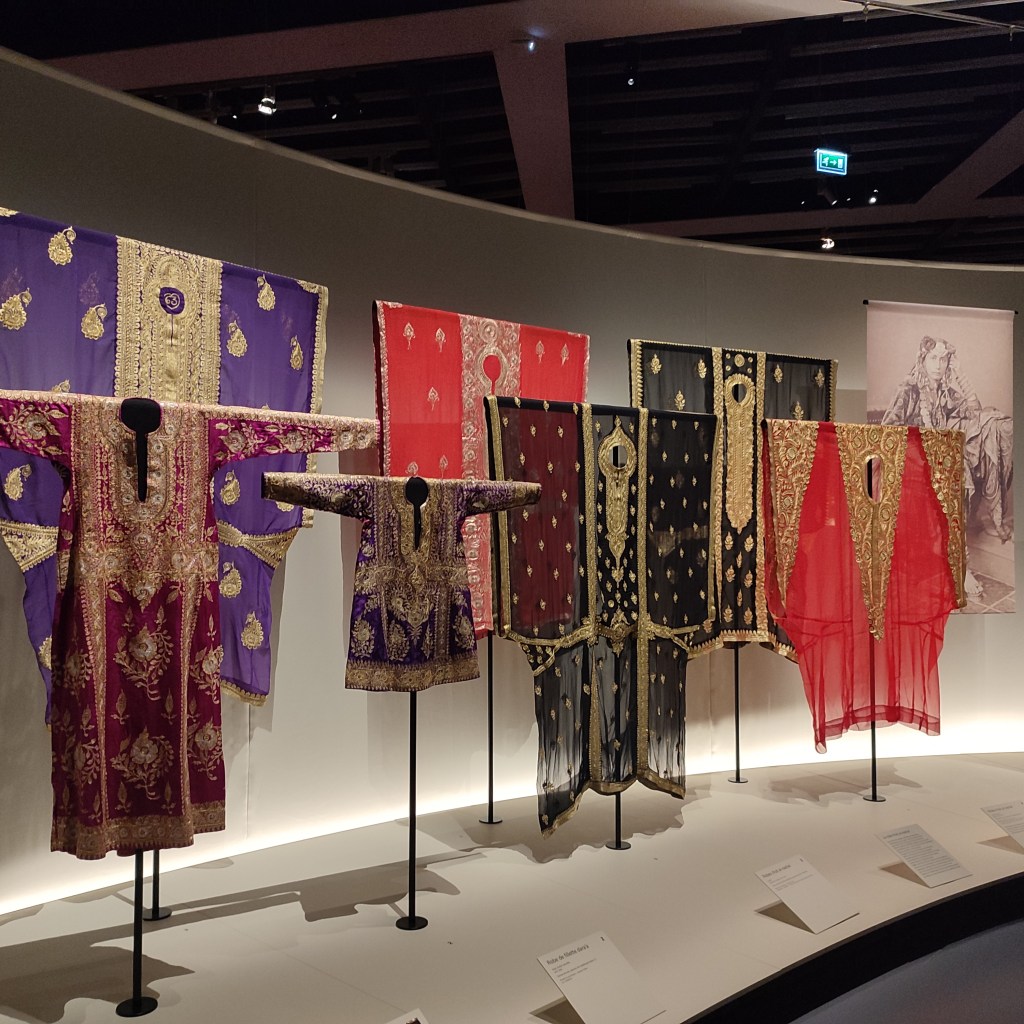
The Craft of Spun Gold
The exhibition focuses primarily on “spun” gold—gold meticulously twisted and wrapped around support threads, allowing it to be embroidered and woven into textiles. As visitors move through the exhibition, striking parallels emerge: centuries-old techniques, developed independently in different parts of the world, reveal remarkable similarities.
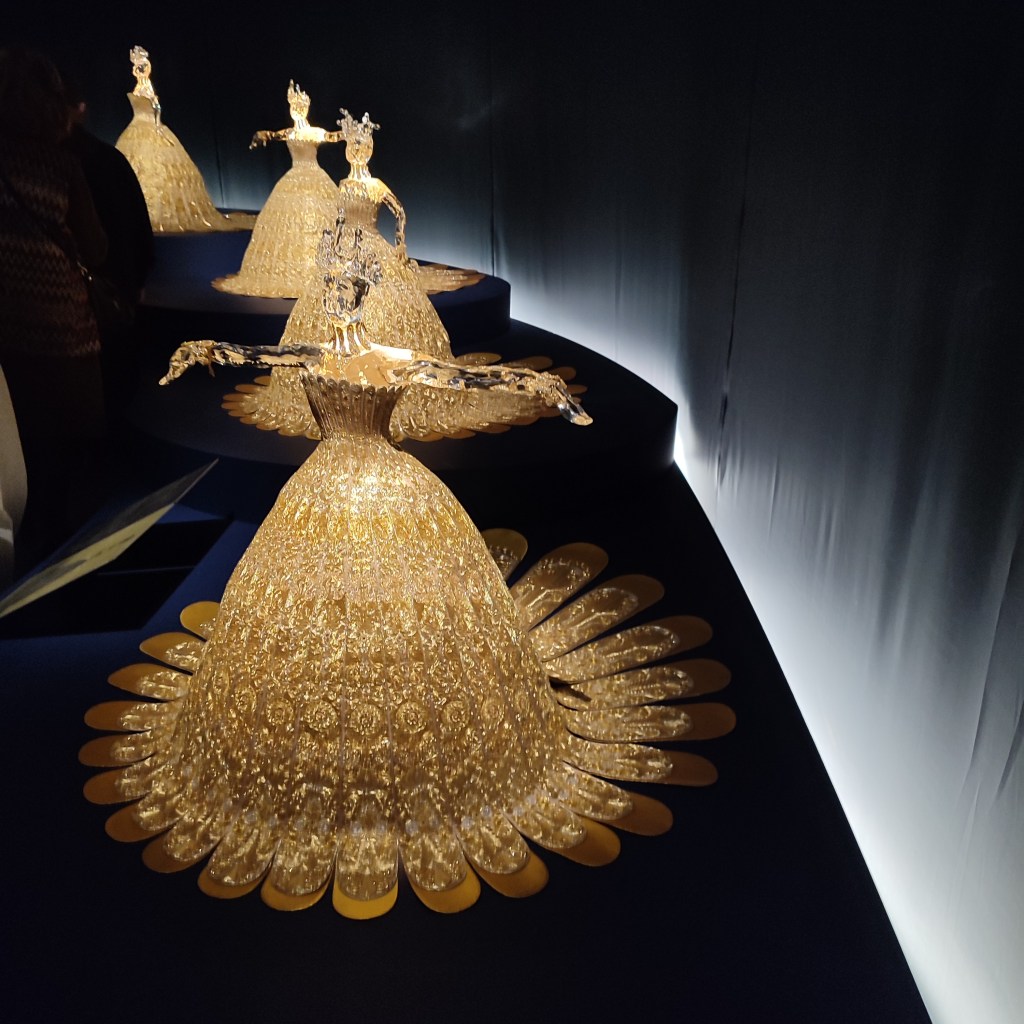
The stunning array of garments is complemented by a selection of dresses by designer Guo Pei, renowned for her exquisite craftsmanship and famed for the opulent gown worn by Rihanna at the 2015 Met Gala. Pei’s work embodies a deep respect for historical embroidery techniques, yet despite its intricacy, her use of gold does not fully capture the effortless fluidity of traditional garments on display. This contrast raises intriguing questions about how modern fashion, for all its innovation, sometimes struggles to match the delicate artistry of the past.
More Than Gold: The Allure of Other Luxurious Threads
Despite the luminous appeal of gold-embroidered textiles, one of the exhibition’s most intriguing aspects lies in its exploration of alternative luxury threads. Not all that glitters is gold: the display unveils the rare beauty of byssus (or sea silk), a particular spider silk, and a golden silk uniquely produced by a species of Cambodian silkworm.
A must-see for textile enthusiasts and lovers of decorative arts, Au fil de l’or runs until July 6, 2025.


About the author
