

by @robertoboldini
With the death of Prince Albert, Queen Victoria withdrew into a deep mourning, dressed in black and veiled in white. The new royal couple, Edward and Alexandra, became the new face of the monarchy, ushering in a sparkling and modern era that would be carried forward by their son George and the future Queen Mary. The exhibition set up at The King’s Gallery, Buckingham Palace (London) allows visitors to brush against this glittering period through a journey that weaves between the private and public spheres of the Royals. It is the elegance of the late 19th century.
Edwardian Fashion
Among the opening works, the life-sized and enchanting portrait of Princess Alexandra by Winterhalter undoubtedly captures the viewer’s attention. The delicate veils enveloping the ample crinoline, the fan, the bare, sloping shoulders—all draw the viewer into an imaginary world of waltzes and courtly balls, where everything is light and pleasant. But then again, it’s Winterhalter. The portrait dates to 1864, the beginning of what would become the Edwardian era.
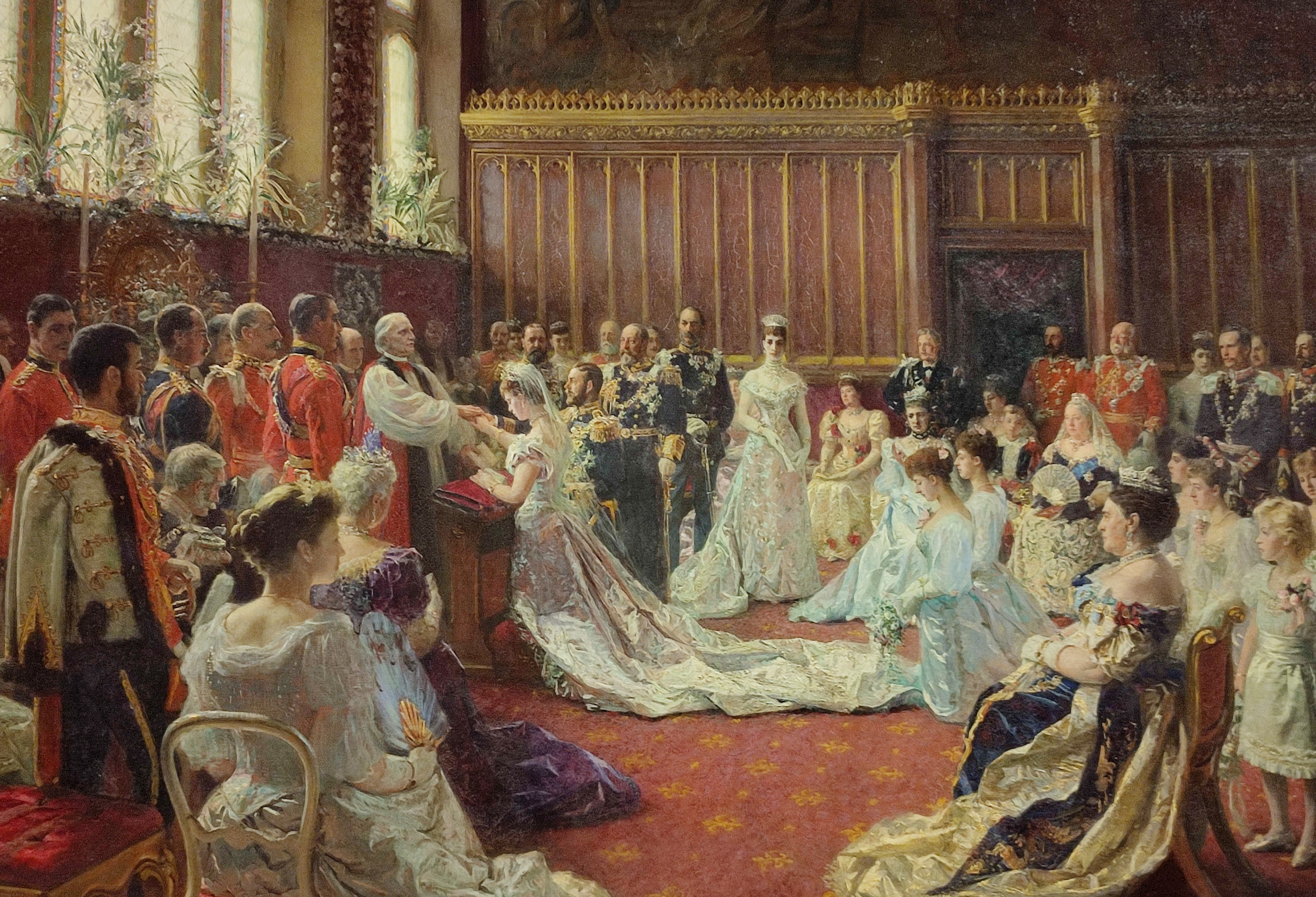
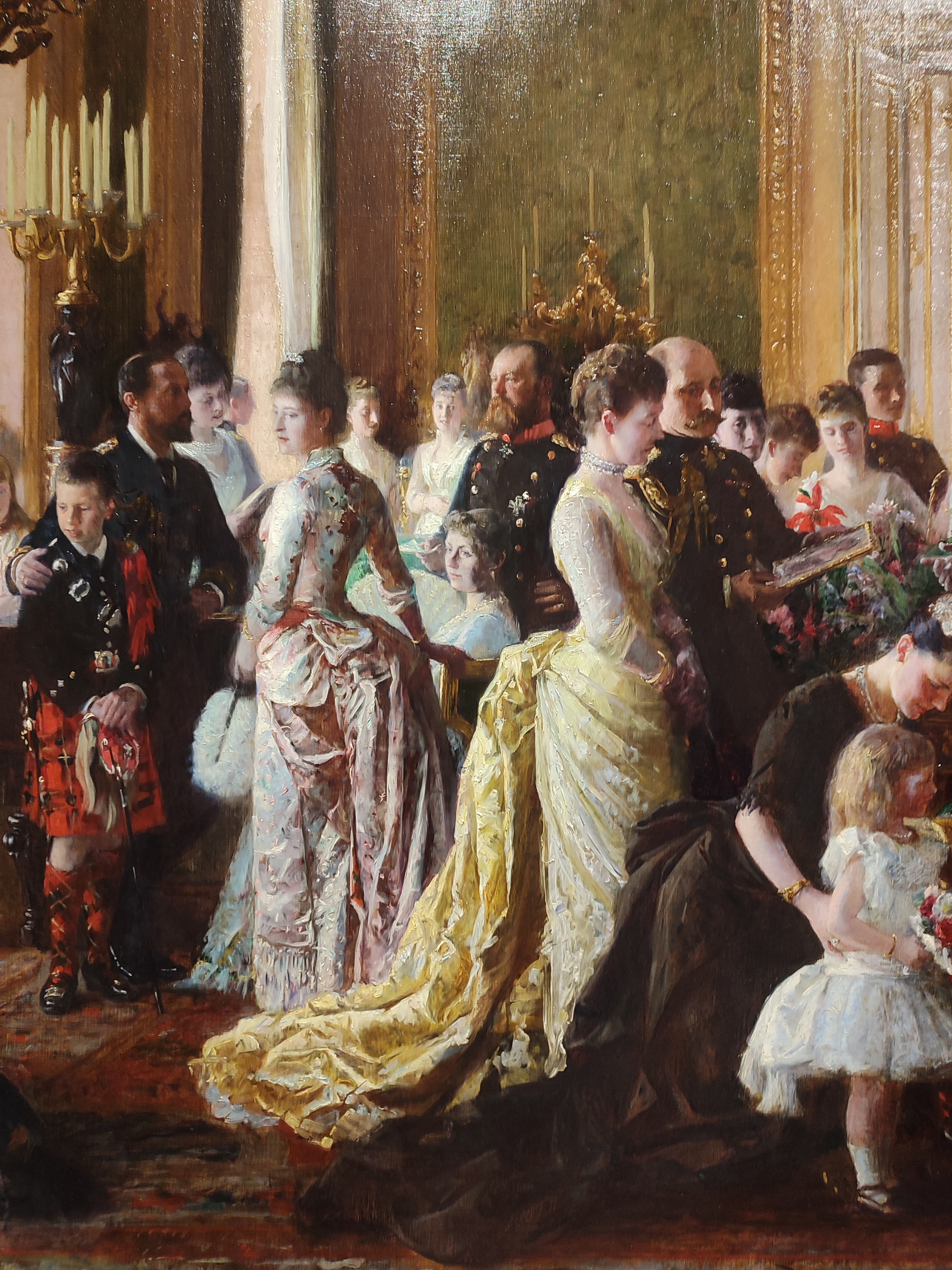
However, it is the two large group paintings that leave a lasting impression on the visitor’s mind: “Queen Victoria’s Family” (1887) and The Marriage of George, Duke of York to Princess Mary of Teck (1893), both by Laurits Tuxen. These canvases, composed like family photographs, are true fashion catalogues of the late 19th century. Their large size and the scientific precision of the brushstrokes allow for the study of styles, hairstyles, and even fabrics of Edwardian elegance. But there’s more—since they are family portraits, these two paintings also serve as tools to analyze and explore the familial ties between the British royal house and other European royal families. For example, the future Tsar Nicholas II is clearly recognizable. At the center of both paintings, always, is Victoria—nicknamed, not by chance, the Grandmother of Europe.

(Royal) Family Ties
This connection with European royal families is evident—perhaps most of all—in the objects belonging to the private lives of King Edward and Queen Alexandra. In the delicate scenes painted on the finest Copenhagen porcelain, one finds depictions of Danish royal palaces, homeland of Alexandra. The queen, born a Danish princess, remained deeply attached to her native land, as the objects on display clearly demonstrate.
The bond between Alexandra and her sister Dagmar—who would become Empress of Russia under the name Maria Fedorovna—was particularly strong, even unbreakable. Their families often spent holidays together, fostering a close relationship between their sons, George and Nicholas. It was in fact the Tsarina who introduced the great Fabergé to the British court. The refined Russian-style furnishings on display are a clear testament to this cultural and familial connection.
From the Peak of the Coronation to the End of an Era
An entire room is dedicated to the coronation of Edward and Alexandra—an event which, thanks to the queen, partially broke away from English tradition and incorporated non-British elements (the exact opposite of what the thoroughly English Queen Mary would later do). But such a cosmopolitan touch was fitting for a couple so attuned to European taste and ties. Alexandra’s throne, although adorned with national British symbols, was crafted in a distinctly French style. Not only that: the future queen entrusted a French couturier with the creation of her coronation gown and chose designs and embellishments that were unusual compared to tradition.
The gown itself, now displayed and visibly worn by the passage of time, offers only a glimpse of the magnificence of the event. It is the monumental portrait of the queen, placed directly opposite, that truly pulls us into the sparkling opulence of that unforgettable day.
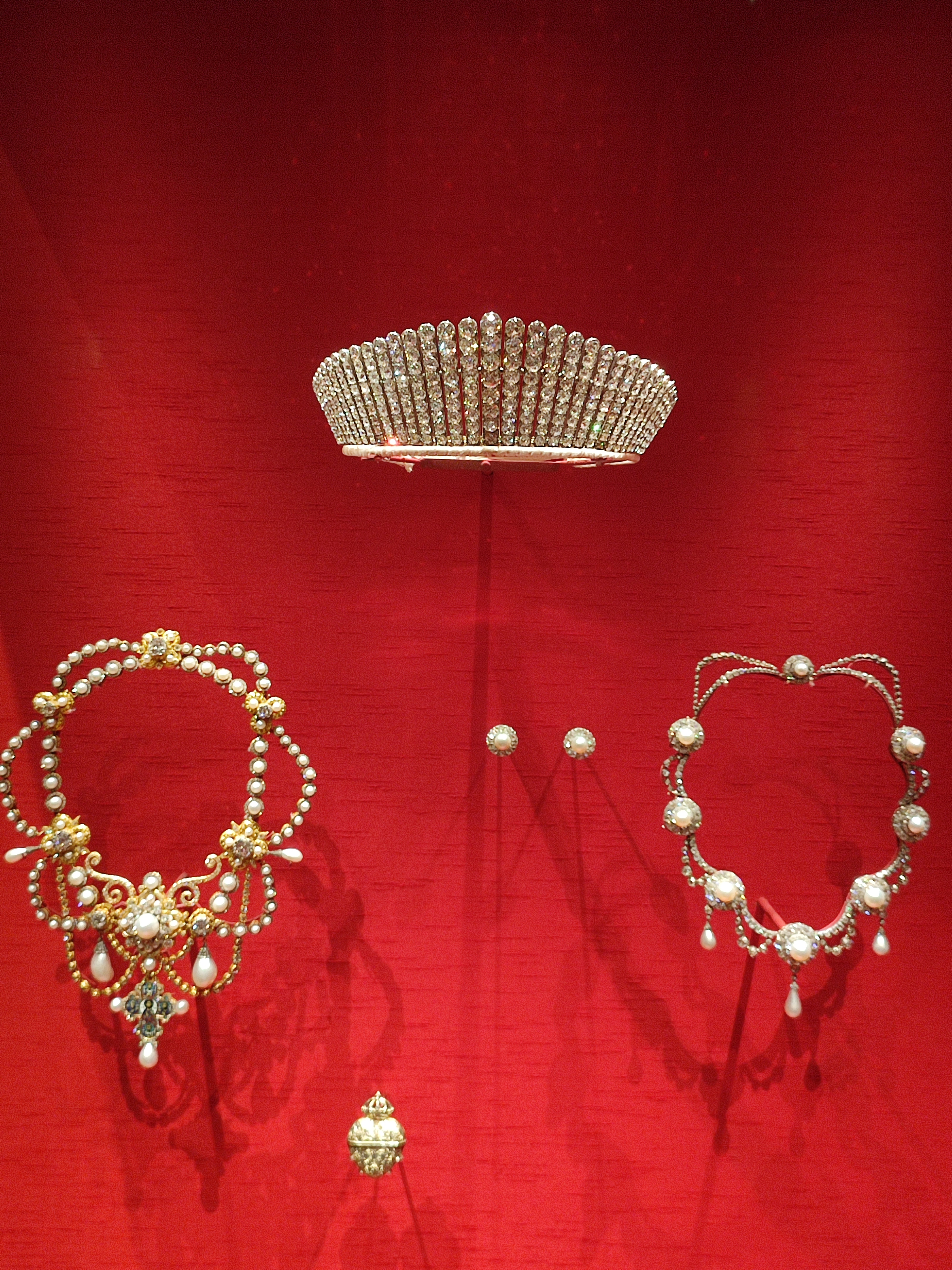
Among the many stunning works on display, perhaps none shines more brightly than Alexandra’s famous Tiara “Kokoshnik”, which the Queen had made for herself based on the model of her sister’s— the Tsarina of Russia. This object, more than any other, can be considered a symbol of the glittering age the British crown experienced during the Edwardian era—a time of elegance, wealth, and deep familial ties. The First World War—along with, among other things, the fall of the Russian Empire—would shatter the spell of this enchanted world and its bonds, giving way to a new form of monarchy.
The Exhibition will remain open until November 23, 2025.