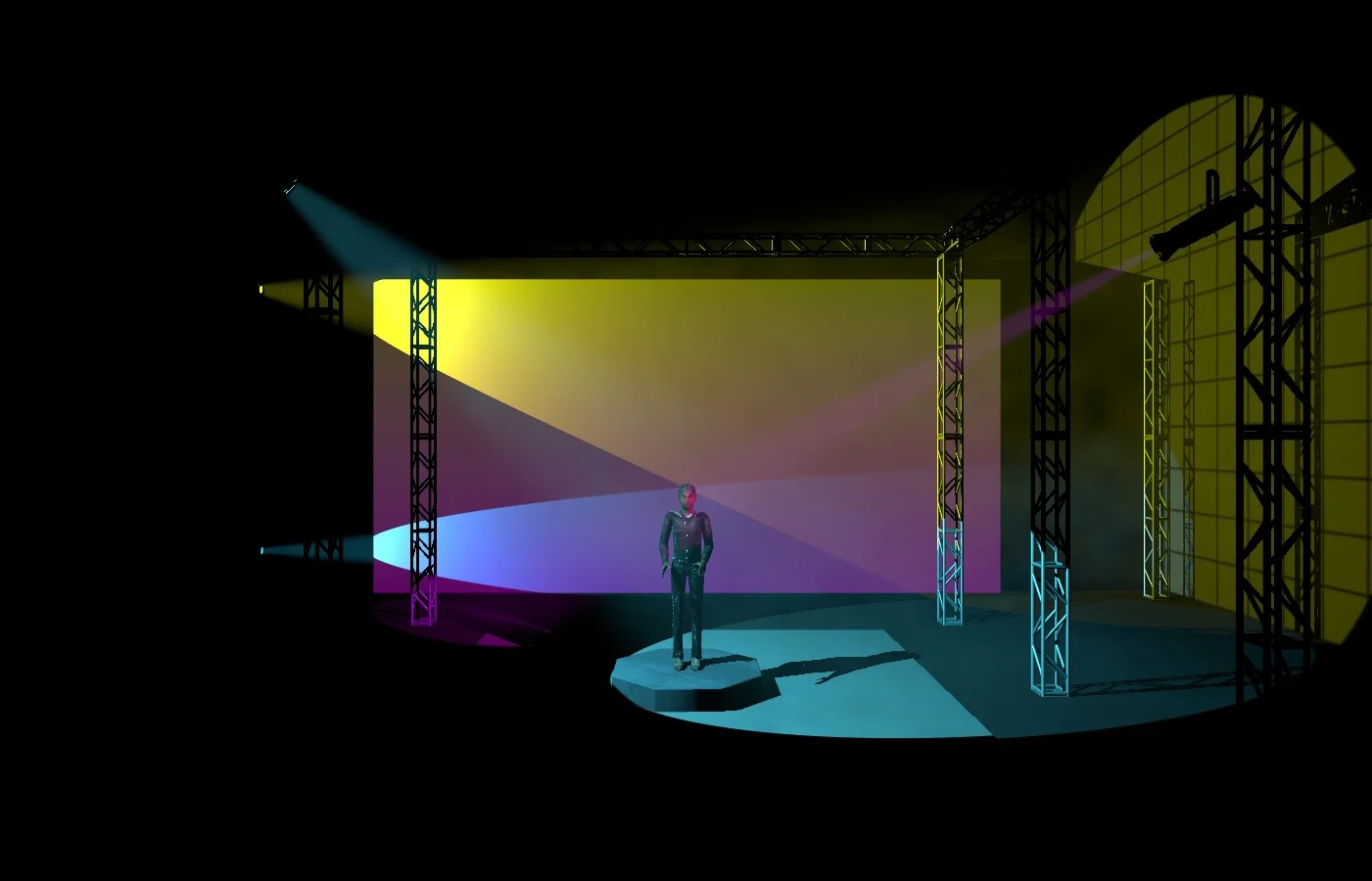
Light does more than make the stage visible. It directs attention, reveals form, creates atmosphere, and helps communicate the dramatic meaning of a scene.
In this introductory workshop, participants will explore the foundations of lighting design through guided experimentation in a virtual lighting laboratory. They will compare front, side, back, and top light; examine how instruments, angles, color, intensity, and cues work together; and analyze lighting choices in theatre, film, and reference images.
Participants will then apply these principles by creating a simple lighting composition for a dramatic moment. The goal is not to complete a full lighting design, but to develop the vocabulary, visual awareness, and practical foundation needed to begin making intentional choices with light.
Select a date and time that works for you.
Receive confirmation and payment info.
Open the class link and start learning.
Have questions about the process or need a workshop tailored to your class?
Email us at teach@skene.pub, and we’ll be happy to help.
Our instructors are internationally recognized experts in their fields, each bringing unique perspectives and extensive experience. Learn more about them below.
Elba Emicente Sánchez is a Mexican lighting designer whose artistic journey began in contemporary and classical dance. Her experience with movement introduced her to the relationship between light, space, rhythm, and emotion and led her to pursue a career in theatrical lighting.
She holds an MFA in Lighting Design and works primarily as an independent designer in the United States. Her work is informed by her Mexican heritage, cross-cultural experience, and commitment to supporting stories that resonate with Latin and Hispanic American communities. She is also passionate about education, community building, and helping emerging lighting designers develop their artistic voices.
This workshop is designed for theatre students and emerging artists interested in understanding how lighting contributes to storytelling and stage composition.
It is especially useful for beginning lighting designers, directors, scenic designers, performers, stage managers, technicians, educators, and other theatre makers who want to communicate more effectively about light.
No previous lighting design or technical theatre experience is required.

We use cookies to ensure our website functions properly, improve your browsing experience, analyze site traffic, and support personalized content. For more information, see our Cookie Policy.
Practical career guidance for performing arts artists and makers. Take it with you.