

Skene Year One: From Ghostlight to Global Stage.
Celebrate Skene’s Year One: 1.47M views across 95+ countries. From ghost light to global hub, we’re documenting the labor behind the magic.
Celebrate Skene’s Year One: 1.47M views across 95+ countries. From ghost light to global hub, we’re documenting the labor behind the magic.

A practical guide to beginner ballet gear, from shoes and attire to training tools that support safe, confident technique.

Edella Oroz Westerfield brings imagination, cultural reflection, and vibrant detail to her work as an emerging actress and singer in contemporary theatre.

Argentinian hair aerialist Martina Bakst shares her path through new circus, emotional storytelling, and the discipline of her airborne craft
How the Super Bowl halftime show became a political stage where power identity and performance collide in front of millions.
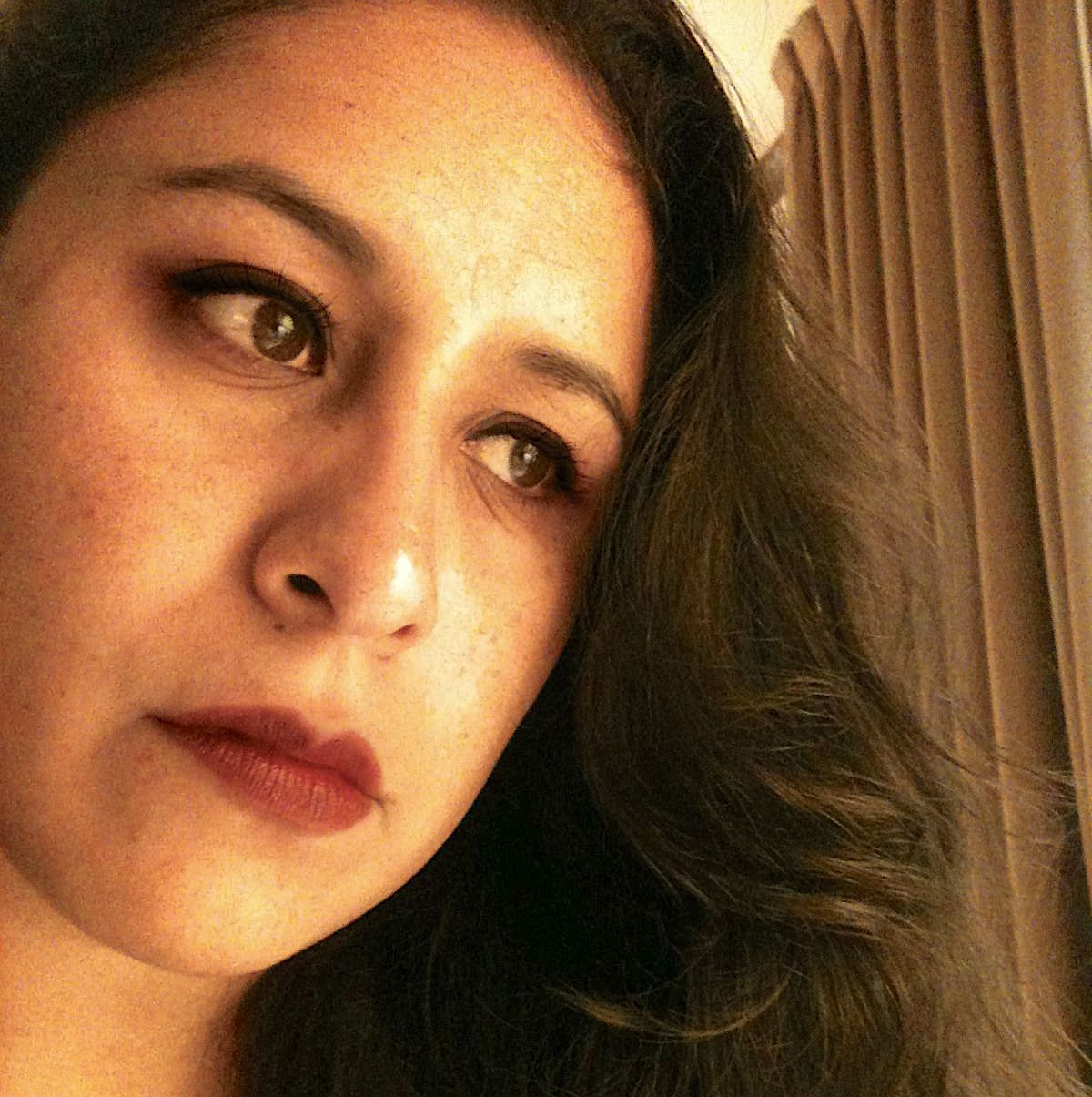
For Sonia Flores, scenography and lighting are more than technical disciplines—they are sacred spaces for emotional connection. Her journey began in childhood, fueled by a love for drawing, painting, and creativity workshops, and solidified the day she visited CEDART and discovered the Scenography program at Mexico’s Escuela de Arte Teatral. There, she explored every branch of the performing arts—costume, lighting, props, and set design—skills that would define a career spanning decades.
Her work has taken her from large-scale productions to tours through northern Mexico, where the Teatro del Norte confronts the violence of narcotraffic on stage, to festivals abroad where creativity adapts to cultural restrictions. Flores approaches each project with rigorous research—architectural references, sacred geometry, and deep dramaturgical study—believing theatre spaces should be as spiritually resonant as the rituals from which theatre was born.
Early in her career, she fought for credibility in a field with few women, proving her technical skill again and again. Today, she urges students and peers to cultivate curiosity, seek inspiration globally, and value sincerity over spectacle.
In this edition of PROFILES, Sonia Flores shares the discipline, vision, and human connection that transform her designs into immersive, emotional experiences.

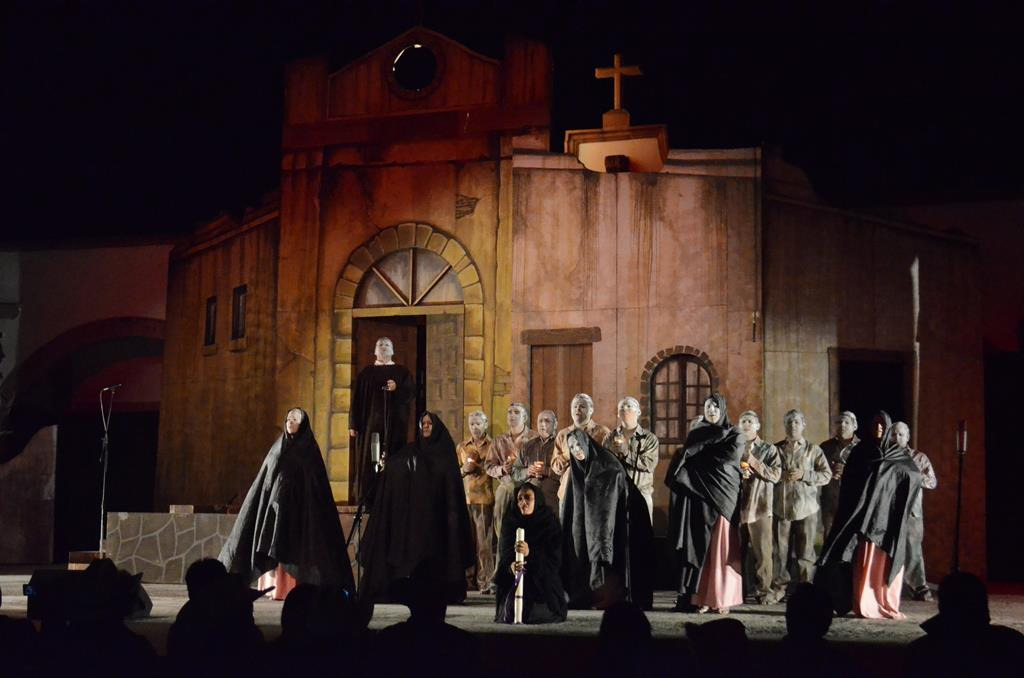
En mi infancia siempre estuve interesada en el dibujo y la pintura. Veía programas que animaban a estimular la creatividad.
En primaria y secundaria estuve siempre en talleres de Artes Plásticas, fue en secundaria cuando en clase de Psicología nos llevaron a visitar un CEDART y supe que quería estar ahí!
En CEDART que un maestro me dio el plan de estudios de la carrera de Escenografía en ese entonces la EAT, la Escuela de Arte Teatral.
Vi que las materias que impartían eran las que yo venía practicando desde hace ya tiempo! Lleve Industria del Vestido en la secu, de iluminación lo de clase en foto , pintura y dibujo nos daban en CEDART.
Así que tenia las aptitudes para hacerlo! Una carrera que conjugaba con todo lo que sabía hacer! Ha sido el gran acierto de mi vida y ha sido mi vida.
Soy una generación afortunada, pues el plan de estudios incluía todas las ramas creativas de las Artes Escénicas: Vestuario, Iluminación, Utilería y Escenografía.
He tenido la oportunidad de explorarlas todas.
También he tenido la oportunidad de ver de cerca el trabajo de dirección de maestros que han formado históricamente el Arte Escénico en México.
Algo que aprendí trabajando por más de 20 años con uno de los escenógrafos más importantes de México, Arturo Nava, es mantenerte siempre curioso!
Esta curiosidad te brinda conocimiento y te mantiene siempre actualizado en las Artes Escénicas a nivel Internacional.
Es por eso que la chispa y el amor a esta profesión nunca se pierde!
In my childhood, I was always interested in drawing and painting. I watched programs that encouraged stimulating creativity.
In elementary and middle school, I was always enrolled in Visual Arts workshops, and it was in middle school, during a Psychology class, that we were taken to visit a CEDART—and I knew I wanted to be there!
At CEDART, a teacher gave me the curriculum for the Scenography program, which at the time was part of the EAT, the Escuela de Arte Teatral (School of Theatrical Arts).
I saw that the subjects they taught were the ones I had already been practicing for some time! I took Garment Industry in middle school, learned about lighting in photography class, and painting and drawing were part of what we did at CEDART.
So I had the skills to do it—a degree that combined everything I knew how to do! It was the greatest decision of my life, and it has been my life.
I am part of a fortunate generation, as the curriculum included all the creative branches of the Performing Arts: Costume, Lighting, Props, and Scenography.
I have had the opportunity to explore them all. I’ve also had the chance to observe closely the directing work of teachers who have historically shaped the Performing Arts in Mexico.
One thing I learned from working for more than 20 years with one of Mexico’s most important scenographers, Arturo Nava, is to always stay curious! This curiosity gives you knowledge and keeps you up to date with the Performing Arts on an international level.
That’s why the spark and love for this profession never fade!
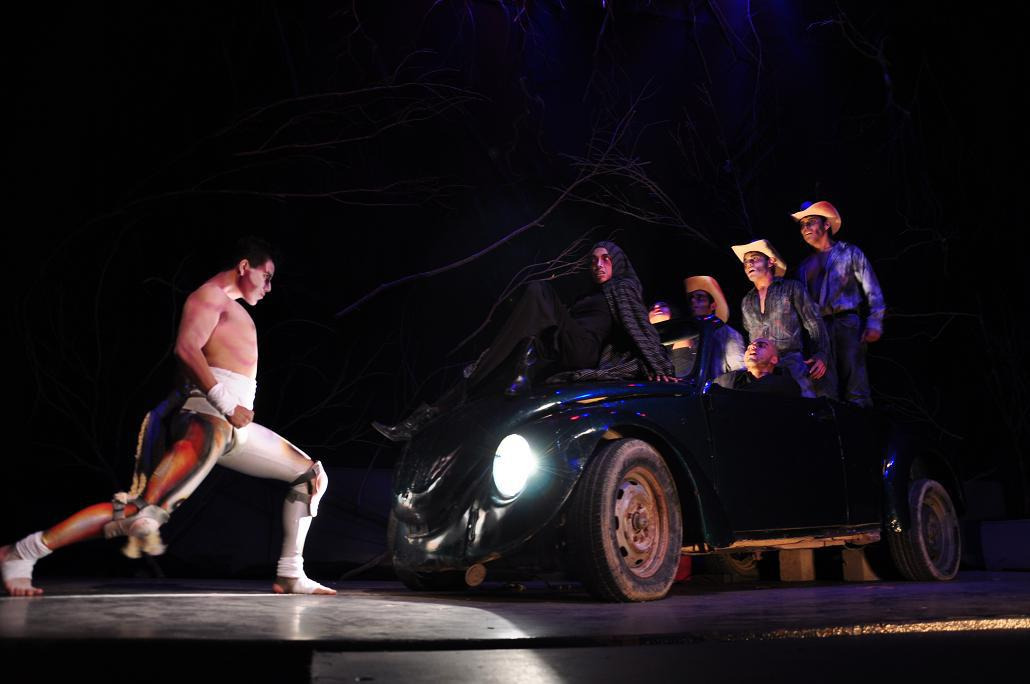
Más que una obra favorita fue la experiencia que me dejó viajar en gira por el norte del país.
Estaba yo trabajando diferentes obras con uno de los directores importantes del Teatro del Norte, Medardo Treviño.
La violencia que viven las personas en manos del narcotráfico es el tema que más se aborda en el Teatro del Norte.
Las obras requerían trabajar con utilería que ayudaría a representar esa violencia. Cada vez que viajaba con esa utilería debía embalarse muy bien y poner etiquetas con logos de Secretaría de Cultura del Estado al que iba, etiquetas que decían “solo para uso teatral”, cartas que mencionaran que la obra se iba presentar en el festival del estado, etc…
Cada vez que había un retén militar, estaba nerviosa de que me quitaran la utilería o que me detuvieran por lo que contenía cada caja!
Cuando viajamos a Colombia, para el Festival de Teatro por La Paz, no pudimos llevar toda la utilería… Cualquier tipo de arma ya sea de juguete está prohibida. Ni siquiera en las jugueterías está permitido vender juguetes bélicos. Tuve que adaptar unas pistolas de agua, darles la forma con aluminio y papel periódico.
Con Teatro del Norte, entendí que nosotros que vivimos en el centro del país estamos aislados de todos los actos violentos de nuestro país y el mundo! Tenemos una venda en los ojos que se llama indiferencia. Y cuando estas en este tipo de festivales te das cuenta del dolor que existe como herida siempre abierta y real, de aquellos que lo viven a diario.
More than a favorite play, it was the experience of touring through the north of the country that stayed with me.
I was working on different productions with one of the leading directors of Northern Theatre, Medardo Treviño. Violence at the hands of drug trafficking is the theme most often addressed in Northern Theatre.
The plays required working with props that helped represent that violence. Every time I traveled with those props, they had to be very carefully packed, labeled with the logos of the State’s Secretariat of Culture, tags that read “for theatrical use only,” letters stating that the play would be presented at the state’s festival, and so on.
Each time we passed a military checkpoint, I was nervous they would confiscate the props or detain me because of what each box contained.
When we traveled to Colombia for the Festival de Teatro por la Paz, we couldn’t bring all the props—any type of weapon, even toy ones, is prohibited. Not even toy stores are allowed to sell war-related toys. I had to adapt water pistols, shaping them with aluminum and newspaper.
With Teatro del Norte, I understood that those of us who live in the center of the country are shielded from the violent acts in our nation and the world. We wear a blindfold called indifference. And when you are at these kinds of festivals, you realize the pain that exists—like an open, real wound—for those who live it every day.
Creo que más que una rutina o la inspiración, un proceso…
Obviamente escuchar lo que quiere el director, luego investigar sobre el tema o lo que se requiera.
Soy un ratón de biblioteca! Me gusta mucho profundizar en la investigación.
Luego una investigación visual, buscó imágenes de todo lo que se quiere hablar, imágenes arquitectónicas, fotografías, puestas en escena a nivel internacional.
Después hago en bocetos una exploración de formas, trazando ejes o líneas, basándome en geometrías, a veces hasta uso la geometría sagrada o geometrías que se usaron para hacer templos.
Creo que si el Teatro nació de un rito el espacio también debe ser sagrado.
Diseñamos espacios para personajes que se basan en lo real, que también viven una cosmología y cosmogonía.
Siento que es esa mi aportación más profunda en el espacio escénico:
Crear un espacio que tiene una profundidad espiritual.
I think that more than a routine or inspiration, it’s a process…
Obviously, it starts with listening to what the director wants, then researching the topic or whatever is required.
I’m a bookworm! I love diving deep into research.
Then comes visual research: I look for images of everything we want to talk about—architectural images, photographs, stage productions from around the world.
After that, in my sketches, I explore forms, tracing axes or lines based on geometries; sometimes I even use sacred geometry or geometries used to build temples.
I believe that if theatre was born from ritual, then the space should also be sacred.
We design spaces for characters that are rooted in reality but who also live within a cosmology and cosmogony.
I feel that this is my deepest contribution to the stage space:
To create a space that has a spiritual depth.
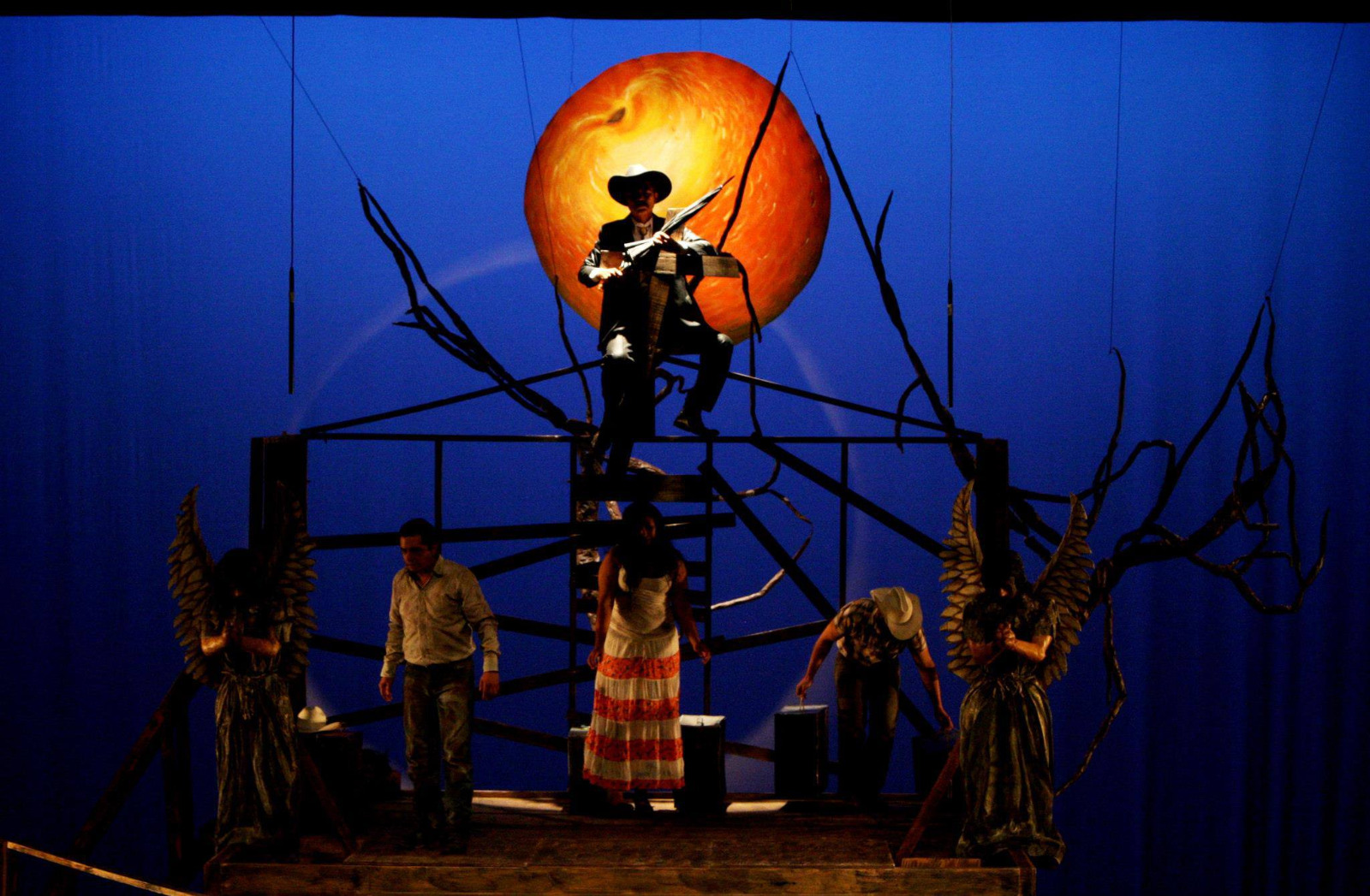
Creo que el mayor reto fue la credibilidad.
Que directores, productores, constructores y técnicos… creyeran en mi.
Cuando yo egrese de la ENAT aún no había muchas mujeres que se dedicaran a la escenografía.
Presentarme como escenógrafa en cualquier proyecto o en cualquier teatro, era primero dar muestras de mis capacidades y conocimientos. Había teatros en los que los técnicos me ponían a prueba, directores que todo el tiempo estaban pendientes de que los montajes se llevaran a cabo correctamente, productores que dudaban que pudiera coordinar los tiempos de montaje en una gira o constructores que pensaban que no podía tomar un martillo.
Creativamente cada proyecto tiene sus desafíos de diferentes formas, los desafíos en mi carrera han sido más técnicos y estos me han aportado mucho para resolver cualquier proyecto.
Sigo aprendiendo de todo, me gusta indagar en el internet! Muchas veces pareciera que estoy en las redes todo el tiempo pero más bien es que estoy viendo cosas que me ayudan a seguir creciendo.
I think the biggest challenge was credibility—getting directors, producers, builders, and technicians to believe in me.
When I graduated from ENAT, there still weren’t many women working in scenography.
Introducing myself as a scenographer in any project or theatre meant first proving my skills and knowledge. There were theatres where the technicians would test me, directors who constantly monitored whether the sets were being carried out correctly, producers who doubted I could coordinate installation schedules on a tour, or builders who thought I couldn’t handle a hammer.
Creatively, each project has its own challenges in different ways, but the challenges in my career have been more technical, and these have greatly contributed to my ability to solve any project.
I’m still learning from everything. I like to dig around on the internet—many times it might seem like I’m on social media all the time, but really, I’m looking at things that help me keep growing.
Por los años que trabaje a su lado obviamente el maestro Nava, admiro ante todo mucho su disciplina!
Es algo que a mi me cuesta mucho trabajo tener!
Y entendí por eso que todos tenemos procesos diferentes, su disciplina me inspira a ser mejor en mis procesos.
Por otro lado hace mucho tiempo tuve unas clases con la maestra Pilar Urreta, un taller que se llamó “Cartografías del cuerpo humano”, donde hacía unas analogías de algunos conceptos espirituales de culturas antiguas; ahí entendí que si ella podía llevarlo a la exploración del cuerpo, yo podía llevarlo a la exploración del espacio escénico.
Tengo guardada una investigación que ocuparía en mi tesis, aún falta aterrizarla… pero cada vez que tengo libertad creativa para desarrollar un proyecto la ocupo.
Me inspira mucho los canones y las geometrías usadas en la arquitectura antigua, su uso en civilizaciones del oriente, porque son más antiguas y desarrolladas que nuestras culturas.
Se que en algún momento tendré tiempo para estudiar también nuestras formas ancestrales para llevarlas a los espacios escénicos.
From the years I worked alongside him, I obviously admire Maestro Nava most of all for his discipline!
It’s something I find very hard to maintain myself, and it made me realize that we all have different processes. His discipline inspires me to be better in my own processes.
On another note, a long time ago I took a class with Maestra Pilar Urreta—a workshop called Cartographies of the Human Body—where she drew analogies from certain spiritual concepts of ancient cultures. That’s when I understood that if she could take it into the exploration of the body, I could take it into the exploration of the stage space.
I have a research project saved that I would use for my thesis—it still needs to be developed—but whenever I have creative freedom to design a project, I use it.
I’m greatly inspired by the canons and geometries used in ancient architecture, particularly in Eastern civilizations, because they are older and more developed than our own cultures.
I know that at some point I will have the time to study our ancestral forms as well, to bring them into stage spaces.

No sé si emocionante, pero el uso de la AI está causando un gran debate!
Todo evoluciona, cambia, se transforma… La tecnología cada vez estará más introducida en las Artes Escénicas.
Lo hemos visto con el uso de las Robóticas que en un principio se usaban sin un sentido y que poco a poco se fueron acoplando a las puestas en escena, así fue con la multimedia y ahora será la AI. Habrá que esperar resultados.
Pero en mi exploración en el internet, vi un impresionante teatro en China! Wow! Impresionante el movimiento que tiene no solo el escenario sino también la gradería!
Eso es lo más innovador hablando del Teatro como espacio arquitectónico! Donde no solo el público no sabe a dónde mirar! Es un reto para cualquier director dirigir literalmente en tres dimensiones! Lo mismo para un escenógrafo, ese espacio reta a diseñar en todas las direcciones posibles!
Tengo unos planos de ese teatro y sería bueno como práctica diseñar sobre él!
I don’t know if it’s exciting, but the use of AI is causing a huge debate!
Everything evolves, changes, transforms… Technology will become more and more integrated into the Performing Arts. We’ve seen it with the use of robotics, which at first were applied without purpose but gradually found their place in stage productions. The same happened with multimedia, and now it will be AI. We’ll have to wait and see the results.
In my online explorations, I came across an incredible theatre in China—wow! The movement it has is impressive, not only on the stage but also in the seating area. It’s the most innovative thing I’ve seen in terms of theatre as an architectural space. Not only does the audience not know where to look, but it’s also a challenge for any director to literally stage in three dimensions! The same goes for a scenographer—that space challenges you to design in every possible direction.
I even have some blueprints of that theatre, and it would be great to use them as an exercise to design for it!
Es un consejo que he dado desde que el maestro daba sus talleres.
El maestro presentaba una serie de diapositivas e imágenes sobre Teatro y Escenografía. Las imágenes yo las buscaba en internet y la recopilaba. Siempre me pedían compartir ese archivo, que porque no había libros donde ver esa información… Yo les decía que toda esa información está en internet y si le dedicas 15 minutos a las redes sociales, bien podrías dedicarle 15 minutos a buscar sobre Artes Escénicas.
Mi consejo es que internet abrió las puertas del mundo! Busca! Ten curiosidad!
Yo busco puestas en escena en China, Corea, Argentina, India, etcétera. Aveces por el idioma obviamente o logro entender, entonces busco la sinopsis del proyecto y repito el video hasta entenderlo. Si es el vestuario lo que me interesa de ese montaje busco el proceso de realización y también al diseñador, si es la escenografía o el espacio escénico busco planos y videos de su construcción, busco entrevistas para saber del concepto o la forma en que trabajan. Busco nuevos materiales para la realización escenográfica que puedan ayudar a innovar!
Imparto la de Dirección de Arte y Escenografía para una Universidad Privada, el consejo a mis alumnos es el mismo:
Tengan curiosidad!
Sin no hay intención de conocer el mundo aunque sea por medio del internet es como cerrar los ojos a lo que nos rodea.
Y ciegos no podemos recrear ese mundo en el escenario.
It’s a piece of advice I’ve been giving since the days when Maestro gave his workshops.
He would present a series of slides and images about theatre and scenography. I was the one who searched for those images online and compiled them. People would always ask me to share that file, saying there were no books where they could find that information. I would tell them that all that information is on the internet, and if you can spend 15 minutes on social media, you can just as well spend 15 minutes searching about the Performing Arts.
My advice is: the internet has opened the doors to the world! Search! Be curious!
I look for productions in China, Korea, Argentina, India, and so on. Sometimes, because of the language, I can’t immediately understand, so I’ll search for the project’s synopsis and watch the video until I do. If it’s the costumes I’m interested in, I’ll look for the making-of process and the designer; if it’s the scenography or stage space, I’ll look for blueprints and videos of its construction, as well as interviews to understand the concept and how they work. I also look for new materials to help me innovate in scenographic construction.
I teach Art Direction and Scenography at a private university, and my advice to my students is the same:
Be curious!
If you have no intention of knowing the world, even through the internet, it’s like closing your eyes to what surrounds you. And with our eyes closed, we can’t recreate that world on stage.

Cuando eres sincero con lo que haces todo conecta porque eres humano.
He visto proyectos muy pretenciosos, mucha tecnología o un diseño muy complejo, yo le digo muy barroco de cosas y de todo… y te das cuenta que solo impresiona un momento y ya!
Cuando un proyecto no se estudia a profundidad no deja huella en quien lo ve.
Sin embargo cuando he visto proyectos con poca producción la exploración escénica es más creativa y por lo tanto es más admirable e interesante, el publico queda marcado por esa puesta en escena. Y es por eso que siempre trato de profundizar en el diseño de algún proyecto, no aspiro a grandes escenografías! Prefiero poco, inundar el espacio más de sensaciones… provocar una emoción al público a través de un espacio es un hermoso reto.
He visto muchas escenografías desde grandes formatos como los son los del Festival de Bregenz hasta espacios en donde todo es ruina, he aprendido que es la sinceridad lo que llena y hace visibles esos espacios. La sinceridad es para mi una parte importante para conectar un espacio con las personas.
Los teatros son como templos donde el público entra para conectar emocionalmente. Recuerda que el teatro nace del rito y por lo tanto también es divino.
When you are sincere in what you do, everything connects—because you are human.
I’ve seen very pretentious projects, with a lot of technology or overly complex designs—what I call “very baroque,” full of things and details—and you realize they only impress for a moment, and that’s it.
When a project is not studied in depth, it leaves no mark on those who see it.
On the other hand, when I’ve seen projects with low production budgets, the stage exploration is often more creative, and therefore more admirable and interesting; the audience is left impacted by that staging. That’s why I always try to go deep into the design of any project—I don’t aspire to massive scenographies! I prefer less, to flood the space more with sensations. Provoking an emotion in the audience through a space is a beautiful challenge.
I’ve seen many scenographies—from large-scale productions like those at the Bregenz Festival to spaces where everything is in ruins—and I’ve learned that sincerity is what fills and makes those spaces visible. For me, sincerity is an essential part of connecting a space with people.
Theatres are like temples where the audience comes to connect emotionally. Remember, theatre is born from ritual, and therefore it is also divine.
Support artists—share this
Get our free Survival Guide for Actors, Directors, and Designers.


We use cookies to personalize content, provide social media features, and analyze our traffic. You can manage your preferences or accept all.
Get our free Survival Guide for Actors, Directors, and Designers.