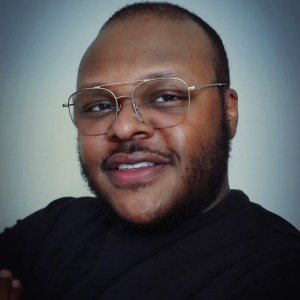
Seth Howard: Storytelling Against the Grain.
Scenic designer Seth Howard discusses immersive environments, collaboration, and taking creative risks in theatre design.

Scenic designer Seth Howard discusses immersive environments, collaboration, and taking creative risks in theatre design.

Discover Agata Uchman’s bold approach to costume design, blending Bauhaus geometry, Polish folklore, and sculptural wearable art.

From Brecht to Nottage, these six anti-war plays expose the profit, rhetoric, and human cost behind the war machine, and why theatre matters.
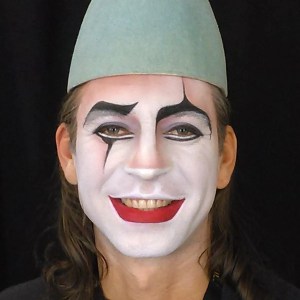
Interview with Brazilian drummer and singer Alex Reis on intuition, creative flow, global touring, and making art with purpose.

Lebanese designer Tina Torbey on blending architecture, music, and emotion to create deeply human theatrical worlds.
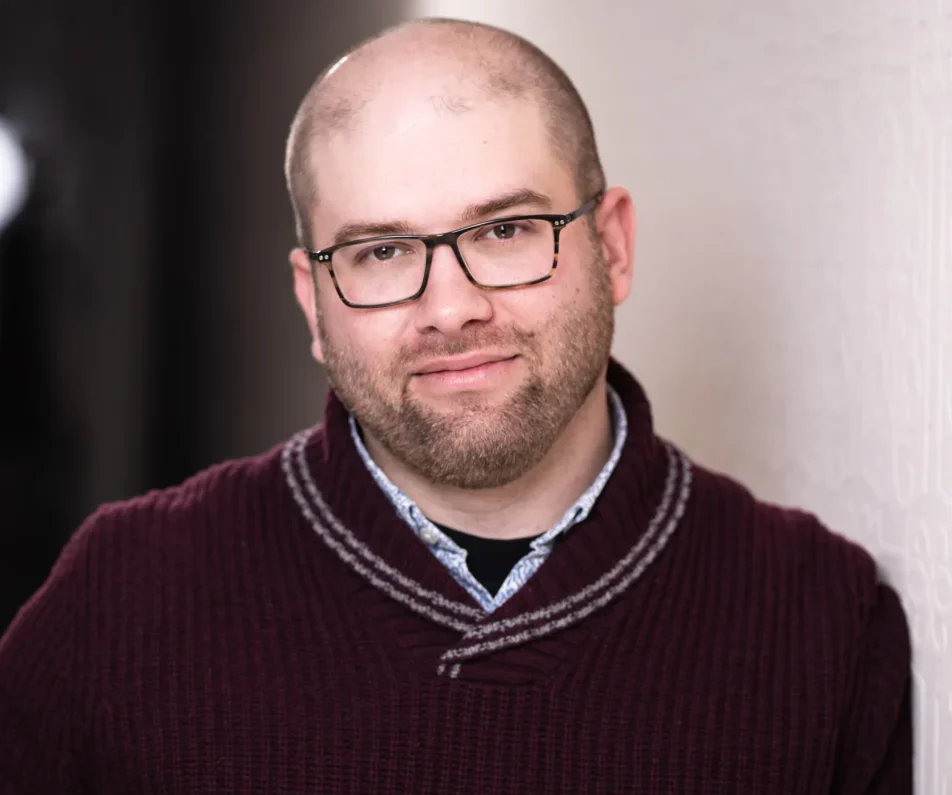
For Ian Garrett, theatre design is more than what happens on stage; it is an act of reimagining how we live, build, and share resources. A pioneer in ecoscenography and sustainable performance practice, Ian’s work bridges architecture, media, and environmental systems to reveal the invisible structures that shape our world. His journey began in Los Angeles, where smog and drought first sparked his fascination with design and ecology. That early curiosity evolved into a practice that blends artistic vision with technological and environmental research.
From projects powered entirely by renewable energy, like Vox Lumen, to experiments in augmented and extended reality, Ian’s work transforms sustainability into a creative language that makes systems visible, ethical, and participatory. Through Toasterlab and collaborations across the globe, he continues to explore how design can model the futures we want to inhabit.
In this edition of PROFILES, Ian reflects on the intersections of art, ecology, and innovation, and how making, adapting, and questioning remain essential acts of care in a changing world.
From the start, my artistic journey was about questioning the world around me. As a kid, I was always asking why things worked the way they did—and then drawing, inventing, and experimenting, sometimes to my parents’ amusement (or frustration). Growing up in Los Angeles amid smog and drought, I became involved in eco-activism early, volunteering with environmental groups and wondering how we could design better systems for living.
That sense of curiosity turned into a focus on how we use resources and build environments. I studied architecture to connect my interests in psychology, art, and systems, just as sustainable design and LEED were emerging. Through extracurriculars, I found my way to theatre and lighting—where my interest in phenomenology and architecture finally converged. A grant to attend the 2003 Prague Quadrennial opened my eyes to global design, and in 2005, during a production, I found myself wondering how we could power the whole show on solar energy. That moment crystallized my path.
What began as a childhood fascination with art and systems has become a lifelong practice of blending scenography with sustainability and ecology, making invisible systems visible and reimagining how we interact with our world.
One of my favorite works is Vox:Lumen, which we presented at Harbourfront Centre in 2015 as part of the World Stage program. It stands out because it brought together everything I had been exploring about merging performance with sustainability. Collaborating with William Yong and Zata Omm Dance Projects, we designed a show powered entirely by renewable energy captured from systems created for the performance.
I originally joined as a sustainability consultant, drawing on my experience with renewables, and worked with lighting designer Simon Rossiter to engineer how the show was lit. This evolved into designing the performance space itself to express energy and interaction through scenography. Over dozens of iterations, we found ways to integrate solar power and illumination that made energy visible.
It was the first time I saw true collaborative invention come together, letting go of fixed aesthetics and ego to focus on how an idea could best live in performance. The work also exposed the politics of energy, since even moving the batteries became a negotiation of labor and design. Vox:Lumen reminded me that design is shaped not only by objects but by the physical, social, and political systems that surround them.
My creative practice is one of iterative inquiry that combines a practical, almost scientific approach with conceptual exploration. It begins by understanding the world in which we are working, including the systems that surround the design, the available technologies and materials, the energy that powers it, and the time and resources that shape what is possible. These contextual questions define the framework of what can actually be accomplished.
At the same time, I look at the conceptual side, considering what ideas or questions the work is trying to express and what I want to communicate through it. I see this as a dialogue between form and content, where both evolve together. The process is highly collaborative, rooted in experimentation, rapid prototyping, and testing across materials, technologies, and systems.
Much like devising performance, it is a process of discovery and invention. Sometimes it moves quickly, and sometimes it takes a long time to find its form. You only know by going through the process itself. The form and meaning grow together through feedback and iteration, situating each project within its specific context, history, and environment.
My biggest challenge as an artist is navigating the gap between what I know is possible and what time and resources actually allow. You can have a clear vision of how something should work, but the available technology, funding, or schedule sometimes makes it impossible to realize exactly as imagined.
A recent example was a project built around site-specific, geolocated augmented reality performances, each created by a different artist. I had extensive experience with AR, but our budget limited us to a web-based approach rather than full app development. The work also relied on volumetric video capture, which remains technically feasible but still demanding, unstable, and unsupported across platforms. We spent months trying to solve how to deliver and stream it, only for the hosting platform to disappear just as we found a workable method.
That taught me that design is as much about adaptation as realization. Sometimes the process becomes one of simulating what cannot yet exist, or finding new forms that communicate the same core idea within the limits at hand. It shaped my practice to focus less on effects and more on how ideas persist through constraint. I like to say it’s affect over effects.
There are many sources of inspiration for me. On a personal level, my children constantly remind me to stay curious. Their questions about how things work challenge me to explain the systems behind everyday phenomena, which keeps me questioning how I understand the world myself. Seeing them encounter things without preconceptions helps me hold onto that sense of discovery in my own creative work.
The natural world also inspires me deeply. I am constantly aware of the limits of my own perception and of how much exists beyond human understanding. Observing natural phenomena reminds me that every action has a reason and consequence. That awareness shapes the way I design and the care I bring to each decision.
Collaboration is another major source of inspiration. Through Toasterlab, I work closely with my wife, Justine, and our collaborator Andrew, whose complementary skills expand how I think and create. Working with Vanesa Kelly on both Venue 13 and AI Campfire has brought that same shared curiosity, where ideas build and amplify through dialogue.
Artistically, I am influenced by Olafur Eliasson, Dorita Hannah, Keith Haring, Janet Cardiff and George Bures Miller, and by early mentors who encouraged me to bridge architecture and performance with integrity and curiosity.
I think the most exciting thing happening in my field right now is the rapid redefinition of how we interact with each other, with technology, and with the world itself. Many of the assumptions that once shaped our work no longer make sense. We are rethinking labor, energy systems, and social structures at the same time that new tools are transforming how we design and create.
For me, this moment is thrilling because performance and design can model the futures we want to live in. There are no natural laws that define civilization. It is something we continually perform into existence. Through design, we can explore alternate ways of being, interacting, and caring, using creative practice as a form of social and environmental inquiry.
The rise of extended reality has expanded this potential. Tools that once felt speculative now allow for site specific, media rich, and ecologically responsive work that connects physical and virtual experience. These technologies are changing how we perceive and participate in the world, placing the interface for understanding directly in our hands. This shift reveals new possibilities for empathy, accessibility, and imagination, inviting us to rethink what it means to design for the shared realities we are constantly creating.
The best advice I can give to aspiring artists and creatives is that done is good. It is far more valuable to make one hundred things and learn from each than to try to make the first one perfect. There is a story about two pottery students: one tries to throw the perfect vase, and the other simply keeps throwing pots. In the end, the one who made more pots learned more and produced better work.
When I work with students, I encourage them to try things constantly. Building a body of experiments, rather than waiting for one ideal piece, is what develops a creative voice. Early in my own career, I had the chance to design many productions and learned by doing, not by planning perfection. That process of iteration continues to guide my work.
I tell my students to step away from the laptop, get on their feet, and see what happens. The more they make, the less intimidating the next idea becomes. Perfection is often the enemy of progress. You can only discover what works by doing, reflecting, and trying again. Each attempt, successful or not, moves the work forward.
I hope that the work I do helps people see the world in a different way. Much of my practice is about revealing the systems that surround us, the infrastructures and decisions that shape how we live. Things do not simply end up the way they are. Every road, building, or digital platform carries the trace of intention and compromise. I want my work to make those patterns visible so that people can recognize how the world has been constructed and how it continues to change.
I also hope that this awareness encourages a better relationship with the world, one grounded in ecological balance and social justice. All systems are made by people. They are performances we have agreed to continue, which means we can also choose to change them.
If my work succeeds, it gives audiences space to question why things are the way they are and to imagine how they might be otherwise. Performance can make that act of questioning tangible. It can help people sense the possibility of building new, more equitable and sustainable ways of being. If my projects open even a small door toward that kind of reflection, then they have done their job.
Support artists—share this
Get our free Survival Guide for Actors, Directors, and Designers.
We use cookies to personalize content, provide social media features, and analyze our traffic. You can manage your preferences or accept all.